Black Teardrop Earrings: Fixing Sagging Lobes & Damage
Solve common issues with black teardrop earrings. Learn how to fix sagging lobes, repair chipped onyx or enamel, and secure heavy drop clasps.

The Biomechanics of Black Teardrop Earrings
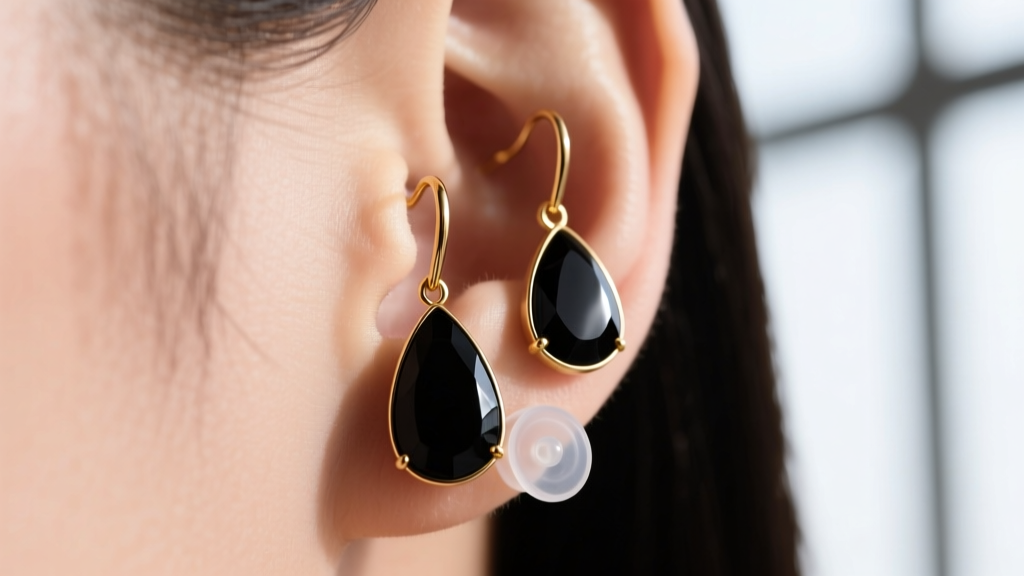
The teardrop silhouette is a staple in fine jewelry, but it presents a unique biomechanical challenge: its center of mass sits significantly below the piercing axis. When you wear black teardrop earrings—especially those crafted from dense materials like black onyx, black spinel, or solid oxidized silver—the pendulum effect creates dynamic stress on the earlobe fistula. A standard 15mm by 10mm polished onyx teardrop can weigh between 4 and 6 grams per earring. While this static weight seems negligible, the kinetic energy generated by walking, talking, and turning your head multiplies the downward force, leading to stretched piercings, bent hardware, and material degradation over time.
Troubleshooting these issues requires moving beyond generic jewelry care. You must address the specific physics of the drop shape, the metallurgical limits of the ear wires, and the unique vulnerabilities of black gemstones and dark enamels. This guide provides a comprehensive, bench-jeweler-level approach to diagnosing and repairing the most common failures associated with heavy black drop earrings.
Troubleshooting Lobe Sagging and Hardware Stress
The most frequent complaint regarding substantial black teardrop earrings is lobe sagging, where the earring pulls the piercing downward, creating an elongated, slit-like fistula. This is rarely just a weight issue; it is usually a hardware geometry issue combined with inadequate posterior support.
Upgrading the Ear Wire Gauge
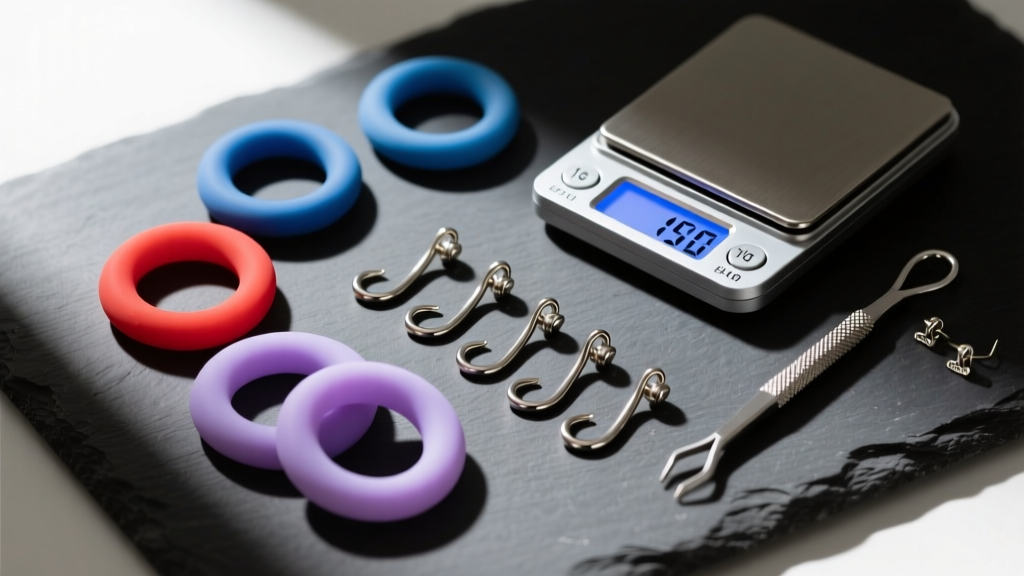
Most commercial drop earrings are fitted with 20-gauge (0.81mm) ear wires to minimize manufacturing costs and fit smaller piercings. However, a 20-gauge sterling silver or gold-filled wire will permanently deform under the dynamic load of a 5-gram teardrop. To solve this, you must upgrade the hardware:
- 18-Gauge (1.02mm): The minimum recommended thickness for drops weighing 3 to 6 grams. Provides structural rigidity while remaining comfortable for standard lobe piercings.
- 16-Gauge (1.29mm): Required for oversized teardrops exceeding 8 grams. Note that you may need to gently taper your piercing to accommodate this thickness.
- Material Selection: Swap soft metals for Grade 23 Titanium (Ti-6Al-4V ELI) or Niobium. According to Rio Grande, titanium offers a significantly higher yield strength than sterling silver, meaning it will snap back to its original fishhook shape rather than bending outward and risking loss.
Implementing Posterior Support Systems
Upgrading the wire is only half the battle. You must distribute the downward leverage across a wider surface area of the earlobe. Standard butterfly backs concentrate the fulcrum point, accelerating tissue tearing. Instead, utilize 8mm to 10mm clear silicone support discs (often sold as earring lifters). These discs sit flush against the back of the lobe, distributing the kinetic load across a broader tissue radius and physically pushing the front of the teardrop upward, restoring the correct visual angle.
Material-Specific Repairs: Identifying the Black Finish
When your black teardrop earrings suffer surface damage, the repair protocol depends entirely on the material. Black jewelry is rarely a single substance; it is usually a base material that has been dyed, oxidized, or enameled. Misidentifying the material is the leading cause of catastrophic DIY repair failures.
| Material | Mohs Hardness | Common Failure Mode | DIY Fixability |
|---|---|---|---|
| Black Onyx (Dyed Agate) | 6.5 - 7.0 | Dye leaching, micro-fractures | Low (Requires professional re-dyeing) |
| Black Spinel (Natural) | 8.0 | Chipping at the girdle/teardrop point | None (Requires lapidary recutting) |
| Black Enamel (Glass Powder) | 5.0 - 6.0 | Chipping, micro-crazing, peeling | Medium (UV resin patching) |
| Oxidized Sterling Silver | 2.5 - 3.0 | Patina rubbing off on high points | High (Liver of sulfur re-oxidation) |
Fixing Chipped Black Enamel and Resin
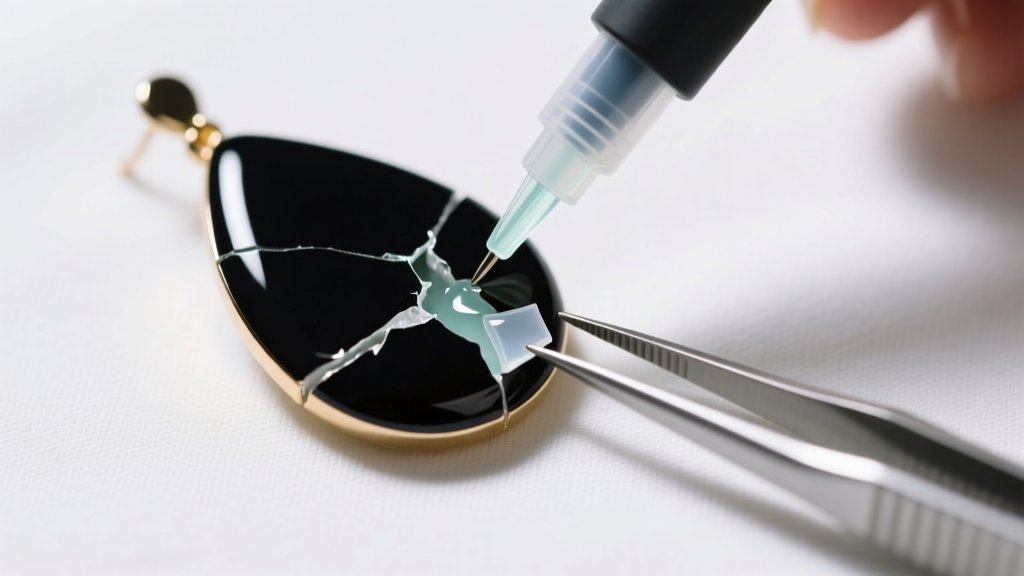
Black enamel teardrops are notoriously fragile. A minor drop onto a tile floor can cause the glass powder to chip away from the metal backing, exposing the bright silver or gold underneath. While traditional vitreous enamel requires a kiln and a master enamelist to fix, modern jewelers in 2026 frequently use advanced UV-cured optical resins for localized micro-chips.
The DIY Resin Protocol:
- Clean the chipped area with 99% isopropyl alcohol to remove skin oils.
- Apply a microscopic drop of black-pigmented UV jewelry resin into the chip using a 0.1mm micro-dabber.
- Overfill the chip by roughly 5% to account for resin shrinkage during curing.
- Cure under a 365nm UV flashlight for 60 seconds.
- Wet-sand the cured resin flush using 800-grit, then 1200-grit, and finally 3000-grit micro-mesh pads.
- Buff with a diamond polishing compound to restore the glass-like luster.
Restoring Dull or Scratched Black Onyx
It is vital to understand that almost all commercial black onyx is actually gray banded agate that has been boiled in a sugar solution and treated with sulfuric acid to carbonize the sugars, turning it permanently black. According to the American Gem Trade Association (AGTA), this dye treatment is stable but the stone remains porous. If your onyx teardrop loses its high-gloss polish and looks dull, do not use standard silver polishing cloths, which contain mild abrasives that will scratch the stone's surface. Instead, use a cerium oxide slurry applied with a soft felt Dremel bit at a low RPM (under 5,000) to re-polish the quartz matrix without generating heat-inducing fractures.
Cleaning Protocols for Porous Black Stones
The most destructive mistake owners make with black teardrop earrings is tossing them into an ultrasonic cleaner. While ultrasonic cavitation is excellent for removing dirt from diamond and sapphire, it is devastating to black teardrops.
Expert Warning: Never place dyed black onyx, black enamel, or oxidized silver in an ultrasonic cleaner. The high-frequency sound waves create microscopic vacuum bubbles that implode against the jewelry. This cavitation will shatter the glass structure of enamel, strip the carbonized dye from porous onyx, and completely blast away the intentional black patina on oxidized silver.
The Safe Cleaning Method:
- Mix a solution of distilled water and a single drop of pH-neutral dish soap.
- Use a baby-soft toothbrush (not a standard medium-bristle brush) to gently agitate the dirt from the bail and ear wire connections.
- Rinse with distilled water (tap water contains chlorine and minerals that can leave white water spots on black stones).
- Dry immediately with a lint-free microfiber cloth to prevent water spotting on the high-gloss surface.
When to Seek Professional Jeweler Intervention
While hardware swaps and minor enamel patches can be handled at home, certain structural failures require a professional bench jeweler. If the metal bail (the loop connecting the teardrop stone to the ear wire) is cracked or thinning, the kinetic swing of the earring will eventually snap it, resulting in the loss of the stone. A jeweler can use a laser welder to add new metal to the bail without applying the heat that would fracture a black spinel or onyx teardrop.
Additionally, if your black teardrop earrings feature prong settings rather than bezels, the constant pendulum motion will cause the prongs to catch on hair and clothing, slowly lifting them away from the gemstone. Have a jeweler inspect and re-tip the prongs every 18 months. For more information on gemstone durability and setting maintenance, refer to the Gemological Institute of America (GIA) guidelines on stone hardness and wearability. By understanding the specific physics and material science of your black teardrop earrings, you can transform them from fragile statement pieces into lifelong, resilient staples of your wardrobe.


