2026 Hummingbird Earring Value Guide: Price vs Material Reality
Is a premium hummingbird earring worth the cost? We break down 2026 pricing tiers, metal grades, and enamel techniques to help you assess true value.

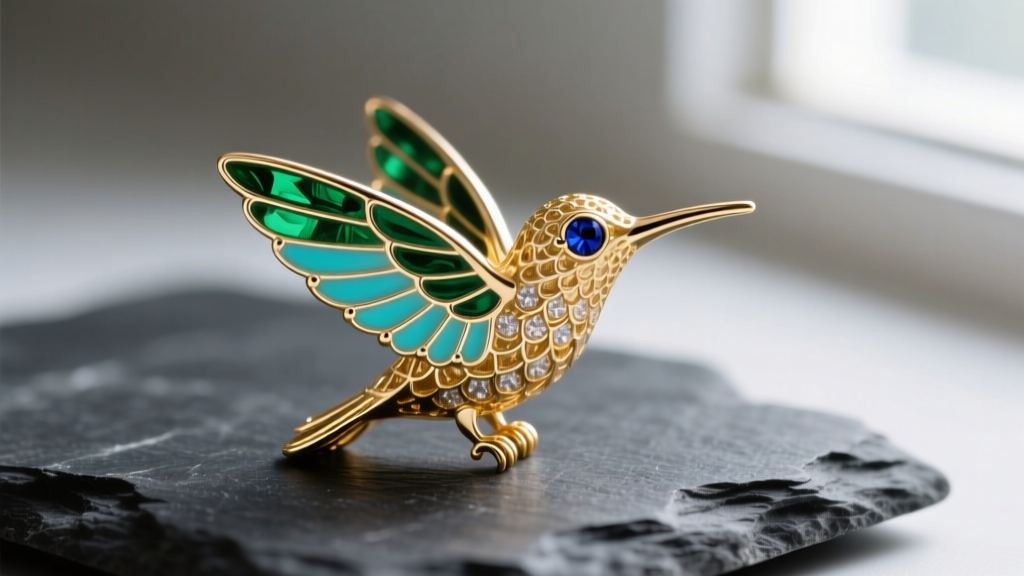
The Anatomy of a Hummingbird Earring: What Drives the Cost?
The hummingbird earring is one of the most technically demanding motifs in jewelry design. Unlike simple geometric studs or smooth hoops, a hummingbird requires complex 3D casting to capture the tapered beak, the layered primary feathers, and the fanned tail. As we navigate the 2026 jewelry market, the price disparity between a $15 fast-fashion hummingbird earring and a $1,200 artisan piece is staggering. But where does that money actually go? As a buyer, you are not just paying for the brand name; you are paying for metallurgical integrity, enamel firing techniques, and structural hardware. This guide strips away the marketing fluff to help you perform a rigorous budget and value assessment before you click 'add to cart'.
The primary cost driver is the surface area and weight of the metal. A standard 15mm wingspan hummingbird stud cast in solid 14k gold weighs approximately 2.8 to 3.4 grams. Given the fluctuating spot price of gold in 2026, the raw melt value is only a fraction of the retail price. The true cost lies in the labor: hand-polishing the microscopic crevices between the wings, setting the gemstone eye, and applying vitreous enamel without warping the gold base.
Material Tiers: From Fast Fashion to Heirloom
When evaluating a hummingbird earring, the base metal dictates its lifespan, skin safety, and ultimate value. Below is a breakdown of the three primary market tiers you will encounter.
| Tier | Base Material | 2026 Price Range | Durability & Failure Modes | Value Verdict |
|---|---|---|---|---|
| Budget | Zinc Alloy (Zamak) / Brass | $12 - $35 | High risk of nickel contact dermatitis. Beaks snap under minor pressure. Plating flakes within 3 months. | Avoid for sensitive skin or daily wear. |
| Mid-Tier | 925 Sterling Silver / Gold Vermeil | $65 - $180 | Silver provides structural strength. Vermeil (2.5 microns of gold) wears off on high-friction wing edges after 1-2 years. | Good value if you don't mind eventual re-plating. |
| Premium | Solid 14k or 18k Gold | $450 - $1,500+ | Heirloom quality. Will not tarnish. Can be polished indefinitely without losing structural integrity. | High initial cost, but lowest cost-per-wear over a lifetime. |
According to the Federal Trade Commission Jewelry Guides, terms like 'gold plated' and 'gold vermeil' have strict legal definitions regarding the thickness of the gold layer. Many budget brands use 'gold washed' or 'gold dipped' (less than 0.175 microns), which will expose the base brass or zinc alloy almost immediately upon contact with skin oils and friction.
Enamel Techniques: Cold Resin vs. Vitreous Glass
The vibrant, iridescent wings of a hummingbird earring are rarely made of solid metal; they rely on enamel to mimic the bird's natural plumage. This is where mass-market brands cut corners, and where luxury brands justify their premiums.
The Cold Enamel Trap (Epoxy Resin)
Budget and mid-tier hummingbird earrings almost exclusively use cold enamel, which is essentially a two-part epoxy resin tinted with pigment. While it looks glossy and vibrant on day one, epoxy resin is highly susceptible to UV degradation. Within 18 to 24 months of regular sun exposure, the bright greens and blues will yellow and become brittle. Furthermore, resin scratches easily, leaving your hummingbird looking dull and cloudy.
The Premium Standard: Vitreous and Plique-à-Jour
True value lies in vitreous enamel, which is finely ground glass powder fired in a kiln at temperatures exceeding 1,400°F (760°C). The glass fuses directly to the gold or silver, creating a scratch-resistant, permanently vibrant surface. The pinnacle of this craft is plique-à-jour, a technique where the enamel is suspended in gold cells with no metal backing, creating a stained-glass effect that allows light to pass through the hummingbird's wings. As noted by the Gemological Institute of America (GIA), antique and high-end vitreous enamel requires immense technical skill, as the glass can easily crack or bubble during the firing process, resulting in a high rate of artisan reject pieces. You are paying for that mastery.
Gemstone Accents: The Eye and Throat Details
High-end hummingbird earrings often feature a gemstone for the eye or the throat patch (gorget). A genuine 1.5mm round brilliant sapphire or tsavorite garnet adds $40 to $80 to the manufacturing cost but elevates the piece from costume to fine jewelry. Budget pieces use crushed glass or cubic zirconia (CZ), which lack the refractive index to catch the light in the same way, appearing as dead, flat black dots from a distance.
Hardware and Gauge Sizing: The Hidden Value Indicators
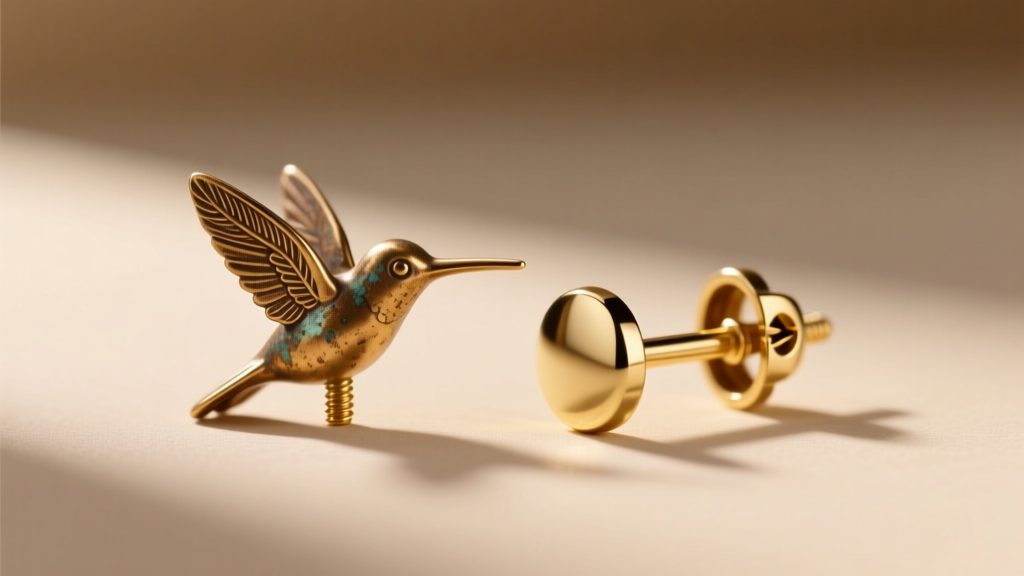
A beautiful hummingbird motif is useless if the hardware fails. Because the hummingbird shape is inherently asymmetrical and top-heavy (due to the long beak and extended wings), it requires specific engineering to sit flush against the ear.
- The Droop Factor: A solid gold hummingbird earring weighing over 3 grams will cause a standard 20-gauge (0.81mm) post to bend or droop forward on the lobe. Look for brands that utilize an 18-gauge (1.02mm) post for structural rigidity.
- Backing Mechanisms: Friction backs (butterfly clutches) are inadequate for heavy, top-heavy designs. A premium hummingbird earring should come with jumbo silicone clutches, la pousette (locking) backs, or threaded screw-backs to distribute the weight and prevent loss.
- Cartilage Considerations: If you are purchasing a hummingbird ear cuff or a helix stud, the post must be at least 16-gauge (1.29mm) to prevent the 'cheese-cutter effect,' where thin metal migrates through the delicate cartilage tissue over time.
For those with sensitive ears, verifying the nickel content is non-negotiable. The American Academy of Dermatology warns that nickel allergies can develop at any age, often triggered by prolonged exposure to cheap alloy posts. Always demand solid 14k gold, platinum, or implant-grade titanium (ASTM F136) for the post, even if the decorative front is sterling silver.
Final Verdict: How Much Should You Actually Pay?
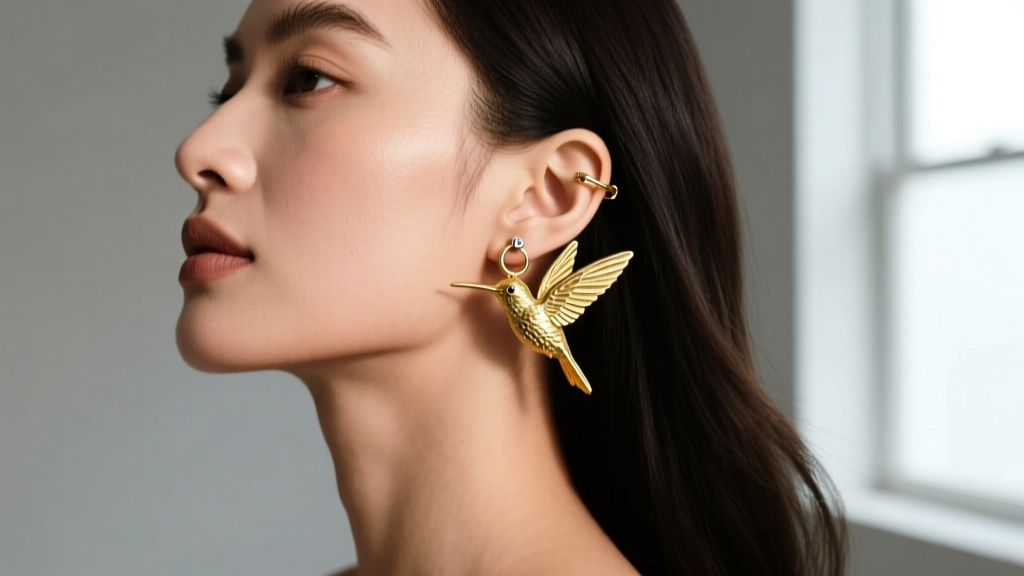
Assessing the value of a hummingbird earring requires looking past the aesthetic and inspecting the engineering. If you are buying a piece for occasional, trend-driven wear, a $45 to $80 sterling silver piece with cold enamel is a perfectly reasonable budget allocation. However, if you are seeking a daily-wear heirloom, expect to pay a minimum of $450 to $800 for a solid 14k gold piece with vitreous enamel and an 18-gauge post.
Your Pre-Purchase Checklist:
- Check the post gauge (18G minimum for lobes, 16G for cartilage).
- Ask the jeweler if the enamel is epoxy (cold) or glass (vitreous/hot).
- Verify the exact gold weight in grams to ensure you aren't paying solid gold prices for hollow-cast or heavily silver-alloyed pieces.
- Inspect the backing mechanism to ensure it can support the asymmetrical weight of the beak and wings.
By demanding transparency in materials and hardware, you ensure that your hummingbird earring remains a vibrant, secure, and valuable addition to your collection for decades to come.


