Sterling vs Argentium: Silver Earrings for Ladies Compared
Discover the metallurgical differences between sterling and Argentium silver earrings for ladies, including tarnish rates, hardness, and allergy safety.

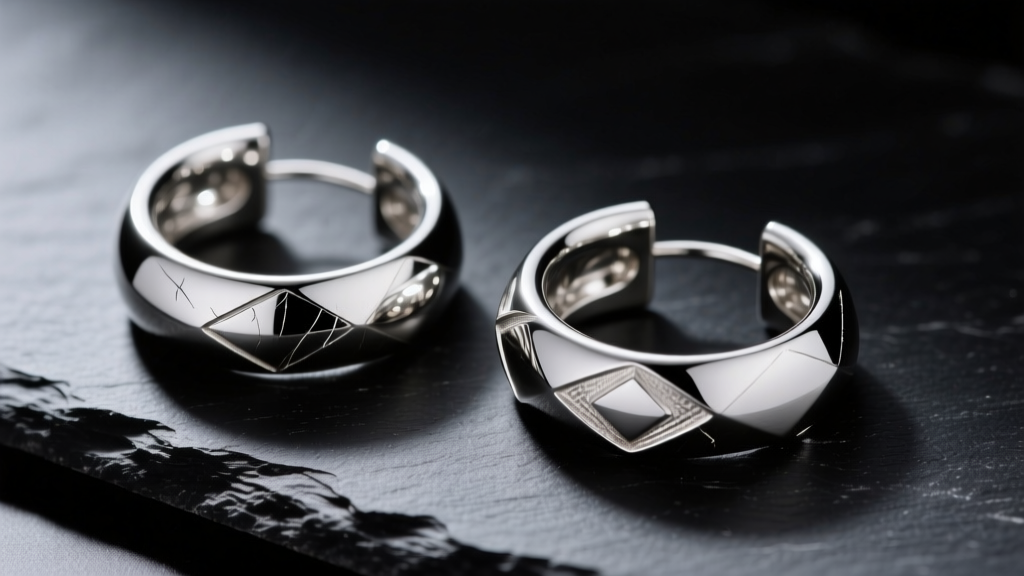
When shopping for silver earrings for ladies, the sheer volume of options can obscure a critical reality: not all silver is created equal. While the bright, moon-like luster of silver is universally beloved, the metallurgical composition of your earrings dictates their longevity, tarnish resistance, and biocompatibility. In 2026, the jewelry market has moved far beyond basic sterling silver, introducing advanced alloys that solve centuries-old problems with oxidation and metal fatigue. Whether you are investing in everyday cartilage hoops, delicate threader earrings, or statement drop styles, understanding the material science behind your jewelry is essential for making informed, lasting purchases.
The Metallurgy of Silver: Fine, Sterling, and Argentium
To evaluate silver earrings, we must first break down the alloys. Pure silver, known as Fine Silver (.999), is 99.9% silver. While it is highly hypoallergenic and resistant to tarnish, it is far too soft for functional jewelry. With a Vickers Hardness (HV) of just 25, fine silver will easily bend, scratch, and lose its shape, making it unsuitable for earring posts or structural hoops.
To solve this, jewelers historically created Sterling Silver (.925), an alloy comprising 92.5% silver and 7.5% copper. The addition of copper increases the hardness to roughly 65 HV, providing the necessary durability for daily wear. However, copper is highly reactive. When exposed to sulfur in the air, cosmetics, or human sweat, the copper in sterling silver rapidly forms copper sulfide—the black, unsightly layer we recognize as tarnish.
Enter Argentium Silver, a modern metallurgical breakthrough. Argentium replaces a portion of the copper with germanium. Available in .935 and .960 purities, Argentium is actually purer than traditional sterling, yet it achieves a hardness of up to 75 HV when age-hardened. The germanium fundamentally alters the metal's behavior, creating a transparent, self-healing oxide layer that blocks sulfur from reaching the copper atoms beneath.
Tarnish Resistance and Oxidation Rates
The most common complaint regarding silver earrings for ladies is the high-maintenance polishing required to keep them bright. Tarnish is not a flaw in the silver itself, but a chemical reaction of the alloying metals. According to the Gemological Institute of America (GIA), environmental factors such as humidity, wool, and certain foods accelerate the oxidation of copper-bearing alloys.
Furthermore, traditional sterling silver suffers from firestain (or firescale) when heated during the soldering process. When a jeweler solders a sterling silver earring post to a backing pad, the oxygen penetrates the metal, converting the internal copper into cuprous oxide, which leaves a permanent purplish-black shadow beneath the surface. Argentium silver is virtually immune to firestain, resulting in cleaner solder joints and a brighter, longer-lasting polish right out of the workshop.
| Property | Fine Silver (.999) | Sterling (.925) | Argentium (.935) |
|---|---|---|---|
| Vickers Hardness (HV) | 25 | 65 | 75 (Age-Hardened) |
| Tarnish Resistance | High | Low | Very High |
| Firestain Risk | None | High | None |
| Best Earring Type | Soft Bezel Studs | Casted Hoops & Charms | Wire-Wraps & Clickers |
Hypoallergenic Properties and Skin Sensitivities
Allergic contact dermatitis is a significant concern for those with sensitive ears. While pure silver is inherently hypoallergenic, the alloying metals and manufacturing shortcuts can trigger severe reactions.
'Contact dermatitis from jewelry is most frequently caused by nickel. Even items labeled as silver can trigger reactions if the alloy contains trace nickel or if the rhodium plating wears off, exposing base metals.'
— American Academy of Dermatology
Cheap, mass-market silver earrings often use nickel or zinc as part of the 7.5% alloy mix to cut costs, or they apply a thin rhodium flash-plating over a nickel-heavy base. Once the plating wears away—usually within six months of daily wear—the skin is exposed to the allergen. Genuine Sterling (.925) and Argentium (.935) rely on copper and germanium, both of which are generally well-tolerated by the skin. However, if you have a known copper allergy, you must seek out fine silver or platinum-group metals, as both sterling and Argentium contain copper.
Durability, Gauge Sizes, and Piercing Suitability
The structural integrity of your earrings is directly tied to the alloy's yield strength and the chosen wire gauge. Metal fatigue is a primary failure mode in earring backs; the tiny butterfly clutches or hoop latches lose their tension over time, leading to lost jewelry.
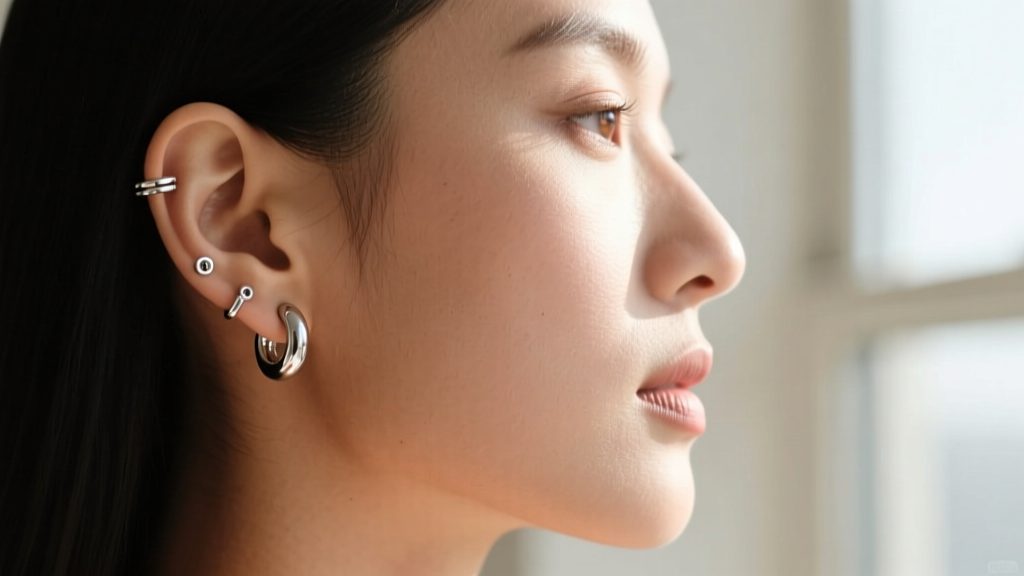
Because Argentium silver possesses a higher Vickers Hardness and superior spring-back properties, it holds tension far better than standard sterling. This makes it the superior choice for mechanical earring components, such as hinged segment rings, clickers, and omega-backs.
Standard Gauge Recommendations for Silver Earrings
- 20-Gauge (0.81mm): The standard for traditional earlobe piercings. Ideal for lightweight studs, delicate drop earrings, and standard butterfly-back posts. Fine silver can be used here if the post is soldered to a rigid backing.
- 18-Gauge (1.02mm): A thicker, more secure option for lobes, often used in high-end designer pieces to prevent the earring from drooping or tearing through the piercing hole over time.
- 16-Gauge (1.29mm): The gold standard for cartilage, helix, and tragus piercings. Cartilage requires rigid jewelry to prevent the 'cheese-cutter effect,' where thin wires slowly migrate through the tissue. Argentium's hardness makes 16g clickers incredibly secure in these high-movement areas.
Pricing Tiers and Value Retention in 2026
When evaluating the cost of silver earrings for ladies, it is crucial to separate the raw material cost from the brand premium. As of 2026, the spot price of raw silver hovers around $0.80 to $1.00 per gram. However, retail pricing is dictated by labor, alloy complexity, and brand cachet.
Sterling Silver remains the most accessible option. Mass-market brands and fast-fashion retailers offer sterling silver hoops and studs ranging from $15 to $45. Mid-tier contemporary brands like Mejuri or Catbird price their sterling collections between $48 and $120, reflecting better quality control, ethical sourcing, and superior finishing techniques.
Argentium Silver commands a premium due to the cost of germanium and the specialized training required to work with it (it requires lower soldering temperatures and cannot be quenched in water like sterling). Expect to pay $80 to $250 for artisan-crafted Argentium earrings, or upwards of $300 from luxury heritage brands like John Hardy, who utilize proprietary high-silver alloys similar in performance to Argentium.
The Verdict: Which Silver Should You Choose?
Selecting the right silver earrings for ladies depends entirely on your lifestyle, budget, and maintenance tolerance. Use this decision matrix to guide your next purchase:
- Choose Fine Silver (.999) if: You have extreme metal sensitivities, are buying bezel-set gemstone studs where the metal doesn't bear structural weight, or prefer the deep, soft luster of unalloyed silver.
- Choose Sterling Silver (.925) if: You are buying cast, heavy statement pieces, are on a moderate budget, and do not mind polishing your jewelry with a treated cloth every few months.
- Choose Argentium Silver (.935) if: You want low-maintenance, everyday wear earrings. It is the absolute best choice for cartilage clickers, wire-wrapped designs, and mechanical clasps that require high tension and resistance to environmental tarnish.
By looking past the generic 'silver' label and examining the specific alloy, gauge, and construction, you can invest in earrings that remain as brilliant and secure as the day you bought them.


