The Single Earring in Left Ear Man: A Technical Guide
Explore the technical guide to the single earring in left ear man trend. Discover gauge sizes, facial symmetry rules, and anatomical piercing details.

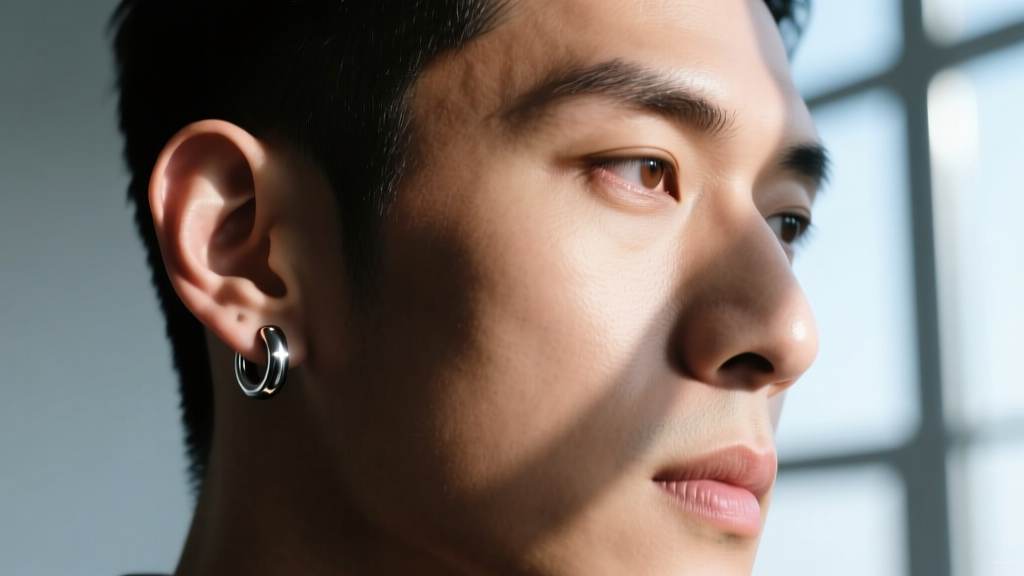
The Evolution of Asymmetry: Beyond the 1980s Code
For decades, the cultural coding of men's ear piercings was governed by rigid, often unspoken rules. The concept of the single earring in left ear man styling was heavily stereotyped in the late 20th century as a specific subcultural signal. However, as we navigate the fashion landscape of 2026, those outdated paradigms have been entirely dismantled. Today, a single left-ear piercing is a deliberate exercise in facial asymmetry, structural balance, and personal architecture. It is no longer about adhering to a coded message; it is about leveraging the anatomical canvas of the left ear to create a striking, intentional visual anchor.
From a technical perspective, executing a flawless single-ear piercing requires a deep understanding of male auricular anatomy, metallurgical biocompatibility, and facial mapping. This guide bypasses superficial style advice and dives directly into the clinical and structural specifications required to achieve a premium, long-lasting result.
Anatomical Mapping: Male Earlobe Density and Vascularity
Male earlobes present unique anatomical challenges compared to female earlobes. On average, male lobular tissue features a higher density of collagen fibers and increased vascularization. This density means that the tissue is more resistant to puncture but also more prone to blunt-force trauma if improper tools are used.
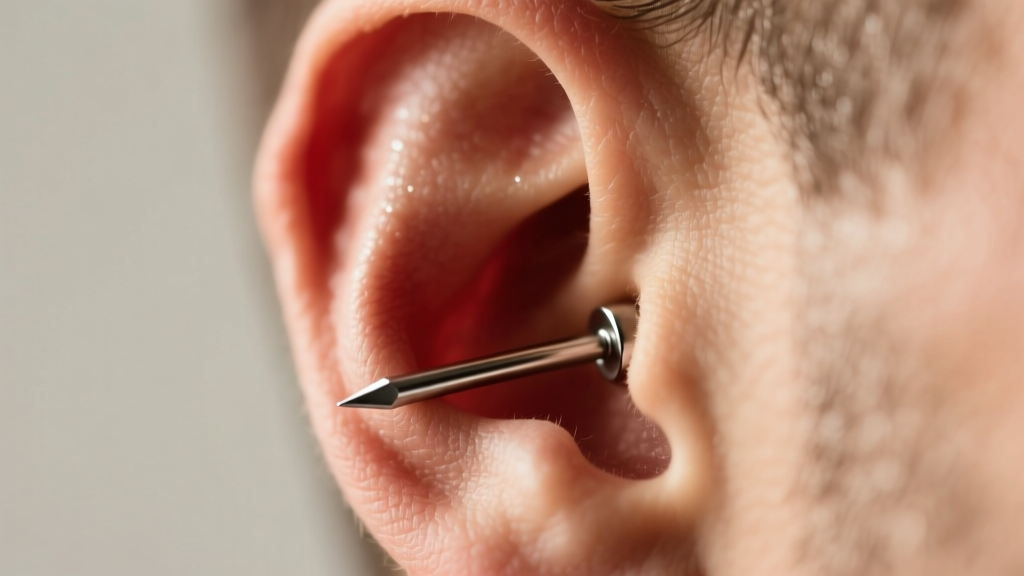
The use of piercing guns is categorically contraindicated for male ear tissue. Guns rely on blunt force to push a sharpened stud through the skin, which causes micro-tears, crushes the dense collagen matrix, and significantly increases the risk of hypertrophic scarring. Instead, a professional piercer must use a sterilized, single-use hollow needle with a tri-bevel tip. The tri-bevel geometry creates a clean, crescent-shaped incision that removes a microscopic core of tissue, allowing the jewelry to glide through the fistula without causing surrounding tissue trauma. For a standard male lobe, the entry angle should be perfectly perpendicular to the plane of the ear, or slightly angled forward to match the natural resting posture of the auricle.
Technical Specifications: Gauges, Metals, and Hardware
When selecting the hardware for a single left-ear statement piece, gauge thickness and metal composition are paramount. Standard commercial earrings are typically 20-gauge (0.8mm) or 18-gauge (1.0mm), which often look disproportionately delicate on a masculine jawline and ear structure. For a balanced, substantial aesthetic that minimizes the 'cheese-cutter effect' (where thin wire slowly migrates through the tissue), thicker gauges are required.
| Gauge Size | Millimeter (mm) | Best Application | Structural Benefit |
|---|---|---|---|
| 16g | 1.2mm | Standard lobe piercings, lightweight dangles | Reduces migration risk compared to 18g/20g |
| 14g | 1.6mm | Statement studs, heavy hoops, masculine aesthetic | Optimal balance of presence and tissue preservation |
| 12g | 2.0mm | Heavy industrial pieces, deliberate semi-stretching | Maximum stability, eliminates cheese-cutter effect |
Metallurgical Standards: Titanium vs. Steel
The Association of Professional Piercers (APP) strictly recommends specific metal grades for initial and long-term wear. Avoid 'surgical steel' (316L) if you have any nickel sensitivity, as it contains up to 10% nickel which can leach into the fistula when exposed to the body's slightly acidic pH.
- ASTM F136 Implant-Grade Titanium: The gold standard for initial piercings. It contains zero nickel, is highly biocompatible, and is lightweight. Ideal for the dense male earlobe.
- Niobium: A highly reactive metal that is anodized to create colors without using paints or dyes. Excellent for custom single-ear pieces.
- 14k or 18k Solid Gold: Must be nickel-free and alloyed for biocompatibility. Avoid gold-plated or gold-filled jewelry, as the friction of a single, frequently touched earring will wear away the plating, exposing base metals to the fistula.
Facial Symmetry and the Left-Ear Advantage
Why choose the left ear? In facial aesthetics, true symmetry is a myth; every face has a dominant and a recessive side. The decision to place a single earring in the left ear should be driven by your hair architecture and facial topography.
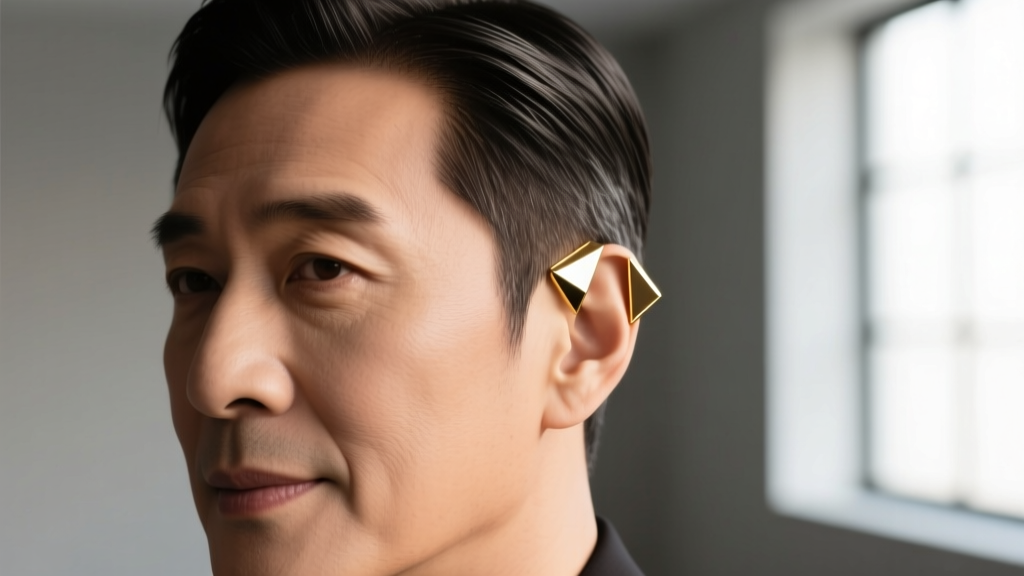
If you part your hair on the right side and sweep it across your forehead, your left ear becomes the primary exposed anchor point on your head. Placing a single, high-quality earring in the left ear balances the visual weight of the hair on the right. Furthermore, according to principles of facial mapping, the eye is naturally drawn to areas of high contrast and metallic reflection. By isolating the jewelry to the left ear, you create a deliberate focal point that breaks up facial monotony without overwhelming your features. Men with prominent jawlines or existing tattoos on the right side of their neck or face often use a left-ear piercing to create a diagonal visual flow that guides the observer's eye across the face.
Advanced Aftercare for Dense Tissue
Healing a piercing in dense male earlobe tissue requires strict adherence to a sterile protocol. The healing timeline for a 14g or 12g lobe piercing typically ranges from 8 to 12 weeks, but complete fistula maturation can take up to 6 months.
According to dermatological research published in the National Center for Biotechnology Information (NCBI), improper aftercare and mechanical irritation are the leading causes of localized contact dermatitis and hypertrophic scarring in auricular piercings.
The Protocol:
- Sterile Saline Only: Use a sterile, 0.9% sodium chloride wound wash with no additives, preservatives, or essential oils. Spray directly onto the entry and exit points twice daily.
- Zero-Touch Policy: Do not rotate the jewelry. The old advice of 'twisting the earring' breaks the fragile epithelial cells forming inside the fistula and introduces surface bacteria into the wound.
- Moisture Management: After showering, gently dry the area using a non-woven gauze or a blast of cool air from a hairdryer. Avoid cotton swabs, which can leave microscopic fibers tangled in the healing tissue.
Troubleshooting: Hypertrophic Scarring and Migration
Even with perfect technique, complications can arise. If you notice a raised, red bump adjacent to the exit hole, this is likely a hypertrophic scar or an irritation bump, not a keloid. This is almost always caused by mechanical stress—sleeping on the left ear, catching the earring on clothing, or using jewelry with a backing that applies too much pressure.
To resolve this, switch to a flat-back labret stud made of ASTM F136 titanium. The flat disc distributes pressure evenly against the back of the earlobe, eliminating the localized friction caused by traditional butterfly backings. Apply a warm, sterile saline compress for three minutes daily to encourage lymphatic drainage. If the jewelry feels like it is shifting or the hole appears elongated, you are experiencing migration. Downsize the jewelry length immediately to prevent the body from rejecting the hardware entirely. By respecting the technical boundaries of tissue density, metallurgy, and anatomical placement, the single left-ear piercing transcends trend status and becomes a permanent, flawlessly executed element of your personal architecture.


