Fixing & Styling Heavy Purple Drop Earrings: Expert Guide
Discover expert troubleshooting for heavy purple drop earrings. Learn how to fix sagging lobes, bent posts, and tarnished settings.
The Hidden Cost of Statement Jewelry
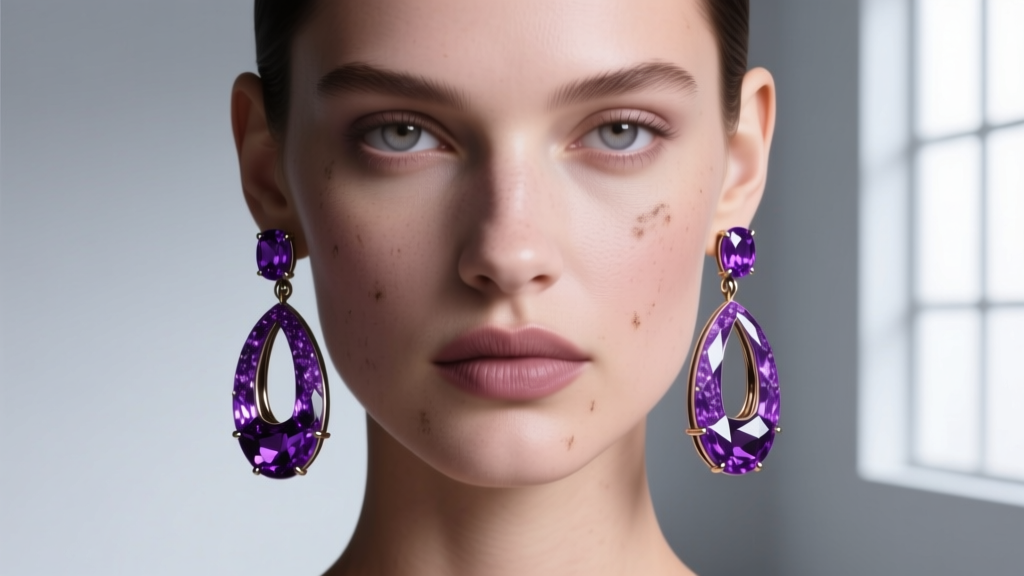
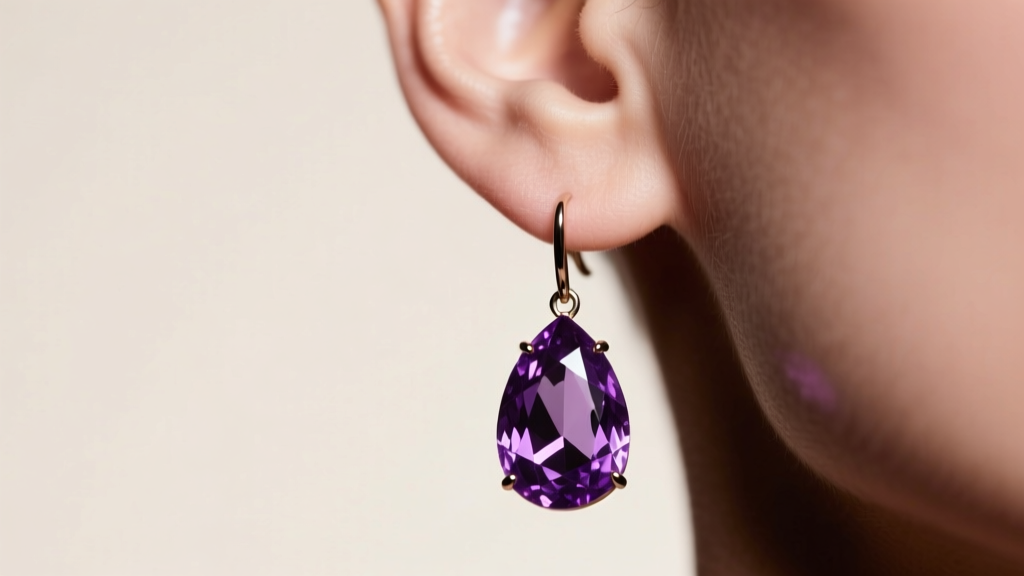
Purple drop earrings are a cornerstone of bold, expressive style. Whether they feature deep violet amethyst, rare tanzanite, vibrant purple chalcedony, or intricate guilloché enamel, these elongated silhouettes draw the eye and frame the face beautifully. However, as jewelry trends in 2026 continue to favor oversized, architectural drops, wearers are increasingly facing a common set of structural and anatomical problems. Heavy drop earrings do not just sit on the ear; they interact with gravity, leverage, and delicate tissue in ways that can cause permanent damage to both your earlobes and the jewelry itself.
At Jewel Style Radar, we believe that luxury and comfort should not be mutually exclusive. If your favorite purple drops are causing earlobe sagging, bending at the post, or suffering from gemstone damage, this comprehensive troubleshooting guide will help you diagnose the failure points and engineer lasting solutions.
Diagnosing the Droop: The Physics of Earlobe Stress
To troubleshoot a sagging earring, you must first understand the physics of the 'droop.' The problem is rarely just about weight; it is about torque. Torque is the rotational force exerted on an axis—in this case, your ear piercing.
A standard flush-fitting stud weighing 4 grams exerts almost zero torque because its center of gravity is aligned directly with the piercing hole. Conversely, a 4-gram purple drop earring that hangs 50 millimeters below the lobe creates a lever arm. This leverage multiplies the downward shear force on the fistula (the piercing tunnel). When you introduce heavy materials like solid 14k gold settings or large, uncut gemstones, the total weight can easily exceed 10 to 15 grams per ear. Over time, this constant mechanical stress causes the collagen and elastin fibers in the earlobe to stretch, leading to permanent elongation of the piercing hole.
Identifying Your Earring's Failure Point
- The Post Bend: The earring wire angles sharply downward immediately after exiting the back of the lobe.
- The Lobe Crease: A visible indentation or 'smile' forms at the base of the piercing hole when the earring is worn.
- The Jump Ring Gap: The small metal ring connecting the drop to the ear wire pulls open, threatening to lose the gemstone.
4 Actionable Fixes for Heavy Earring Syndrome
If your purple drop earrings are failing structurally or causing discomfort, do not relegate them to the back of your jewelry box. Use these professional troubleshooting methods to restore their wearability.
1. Upgrade the Wire Gauge and Clasp Type
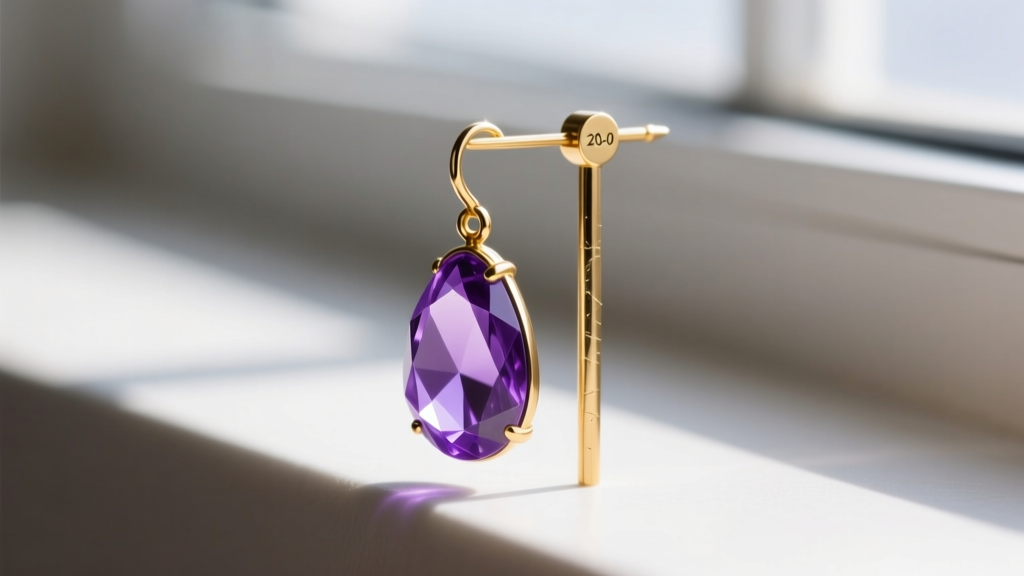
Most commercial drop earrings are manufactured with 20-gauge (0.81mm) or 18-gauge (1.02mm) wire to save on precious metal costs. For heavy purple drops exceeding 8 grams, 20-gauge wire is entirely insufficient and will inevitably bend. Take your earrings to a bench jeweler and request an upgrade to a 16-gauge (1.29mm) or 14-gauge (1.63mm) ear wire.
Additionally, switch from a standard French wire to a leverback clasp or an Omega back. Leverbacks snap securely into place, preventing the earring from sliding forward and shifting the center of gravity, while Omega backs provide a wide, flat surface area that hugs the back of the earlobe, distributing the weight across a broader patch of tissue.
2. Implement Silicone Support Patches
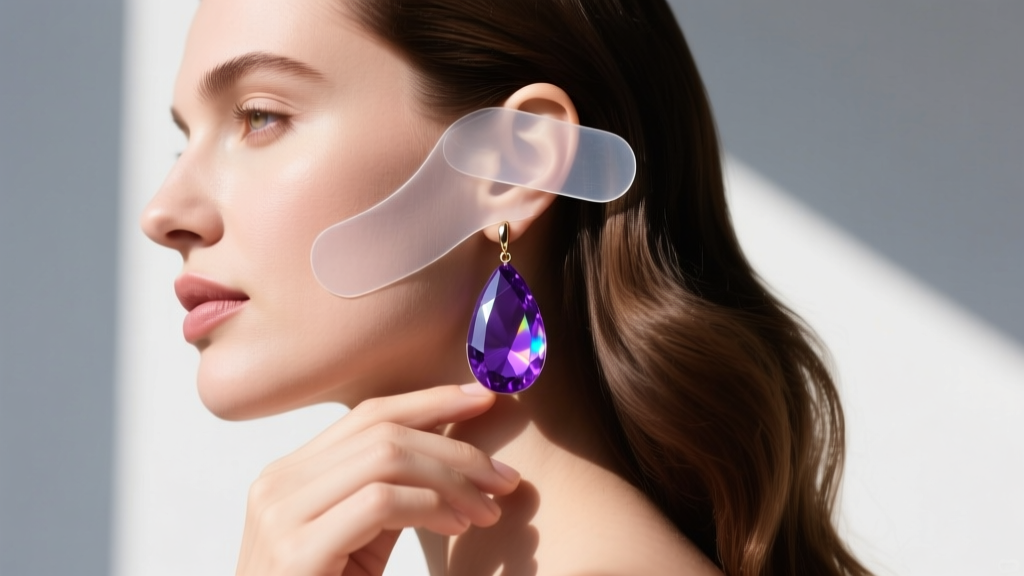
For immediate relief without altering the jewelry, use silicone or polyurethane earring support patches (often sold under brand names like LobeWonder). These adhesive discs adhere to the back of the earlobe and feature a reinforced center that prevents the earring post from cutting through the tissue. They effectively increase the surface area bearing the earring's weight by 400%, neutralizing the torque and keeping the purple drop upright and facing forward.
3. Re-engineer the Jump Ring Connection
Heavy drops often detach because the jump ring connecting the gemstone setting to the ear wire pulls apart. Inspect the jump ring on your earrings. If it is unsoldered (meaning there is a visible slit where the wire ends meet), the lateral swinging of a heavy drop will eventually pry it open. Have a jeweler laser-weld or solder the jump ring shut. If the design requires movement, request a 'split ring' (which functions like a miniature keychain ring) to ensure the connection remains permanently closed.
4. Balance the Center of Gravity
If a purple drop earring constantly flips upside down or twists, the issue is a top-heavy ear wire. A jeweler can add a small, decorative gold or platinum bead to the back of the ear wire, acting as a counterweight. This shifts the center of gravity closer to the piercing, drastically reducing the forward pull on the lobe.
Gemstone & Enamel Troubleshooting Guide
Purple jewelry utilizes a diverse range of materials, each with specific vulnerabilities. Troubleshooting damage requires understanding the mineralogy and material science of your specific piece. According to the Gemological Institute of America (GIA), proper care is dictated by the Mohs scale of hardness and the gemstone's cleavage properties.
| Material | Mohs Hardness | Primary Vulnerability | Troubleshooting & Care |
|---|---|---|---|
| Amethyst | 7 | UV Fading & Thermal Shock | Avoid prolonged direct sunlight. Never clean in an ultrasonic cleaner if the stone has liquid inclusions. |
| Tanzanite | 6.5 | Perfect Cleavage (Chipping) | Highly prone to chipping if the drop swings and hits a surface. Must be set in protective bezels or halos. |
| Sugilite | 5.5 - 6.5 | Porosity & Chemical Damage | Avoid contact with perfumes and lotions. Clean only with a damp, untreated microfiber cloth. |
| Purple Enamel | N/A (Glass-based) | Impact Fracturing | Store separately in soft pouches. Never use chemical dips, which can strip the vitreous finish. |
For deeper insights into rare violet gems, the GIA's Tanzanite profile emphasizes that tanzanite's single perfect cleavage plane makes it uniquely susceptible to splitting if the earring is dropped on a hard tile floor. Always put your drop earrings in over a carpeted surface or a soft towel.
How to Safely Straighten a Bent Earring Post
If your 925 sterling silver or 14k gold ear wire has already bent under the weight of your purple drops, you must be extremely careful when attempting to straighten it. Metals undergo work hardening—a process where the crystalline structure of the metal becomes rigid and brittle as it is manipulated. If you simply bend the post back and forth with your fingers or standard steel pliers, the metal will fatigue and snap.
Pro Tip: Never use standard steel needle-nose pliers on jewelry wire. The hardened steel teeth will gouge the precious metal, creating micro-fissures that guarantee a future break.
The Correct Method: Use nylon-jaw pliers. Grip the bent section of the wire firmly and apply slow, steady pressure to bend it back into alignment in a single, continuous motion. Do not wiggle or oscillate the wire. If the post is heavily kinked, a jeweler must anneal the metal (heating it to relieve internal stress) before straightening it.
When to Retire or Redesign the Piece
Sometimes, troubleshooting reaches its limit. If your earlobe tissue has become paper-thin, or if the piercing hole has stretched into a permanent slit, no amount of jewelry modification will safely support a 15-gram purple drop earring. In these cases, consult a dermatologist or plastic surgeon regarding earlobe repair, a common and highly effective minor procedure.
Alternatively, take the jewelry to a master setter and have the heavy purple gemstones removed and reset into lighter, more lobe-friendly configurations, such as a pair of purple huggies or a single statement ear cuff that distributes weight across the cartilage rather than the soft tissue of the lobe.
Final Thoughts on Maintenance
Heavy purple drop earrings are an investment in both artistry and personal style. By understanding the physics of leverage, upgrading your wire gauges, utilizing support patches, and respecting the mineralogical limits of your gemstones, you can ensure your statement pieces remain as structurally sound as they are visually stunning. Regular maintenance and mindful wearing habits are the keys to keeping your earlobes healthy and your jewelry pristine for decades to come.


