The Metallurgy and Biomechanics of Crafting Beer Cap Earrings
Discover the technical guide to crafting safe beer cap earrings. Learn about metallurgy, biocompatible sealing, and lobe biomechanics.

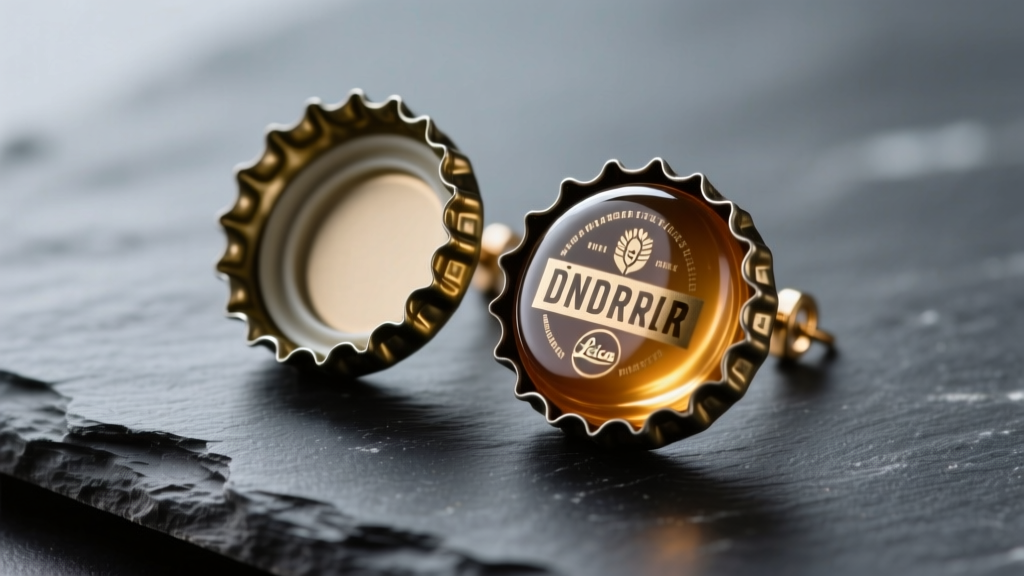
The upcycled jewelry market has exploded, but few items present as many hidden metallurgical and biomechanical challenges as beer cap earrings. While transforming a vintage craft brewery cap into a wearable accessory seems like a simple DIY project, the reality of human skin contact, oxidation, and earlobe weight distribution requires a professional metalsmithing approach. In this expert deep dive, we bypass the basic glue-and-stick tutorials to explore the material science, biocompatibility protocols, and structural engineering required to fabricate high-quality, dermatologically safe upcycled earrings.
The Metallurgical Reality of Crown Caps
To safely engineer beer cap earrings, you must first understand the base material. The modern crown cork (invented by William Painter in 1892) is typically manufactured from one of two metals: tinplate steel or aluminum. Tinplate is not pure tin; it is a low-carbon steel sheet coated with a microscopic layer of tin to prevent corrosion. While the tin coating is generally hypoallergenic, the underlying steel alloy often contains trace amounts of nickel and iron.
When amateur crafters punch holes or sand the edges of tinplate caps, they breach the tin barrier. This exposes the iron to ambient moisture (leading to rapid iron oxide, or rust, formation) and exposes the nickel to the wearer's skin. According to the American Academy of Dermatology, nickel allergy is one of the most common causes of allergic contact dermatitis, affecting up to 36% of women. Therefore, raw, unsealed tinplate must never sit directly against the earlobe or piercing tract.
Aluminum caps, increasingly popular for their lightweight properties and BPA-free liner compatibility, present a different challenge. Aluminum rapidly forms a passivation layer of aluminum oxide when exposed to air. While this oxide layer prevents rust, it makes traditional silver-soldering nearly impossible without the use of highly specialized, zinc-chloride-based fluxes that can be toxic if not properly neutralized and cleaned post-soldering.
Fabrication Methods: Connection Integrity
Attaching the earring post to the cap is the most common point of structural failure. Cyanoacrylate (super glue) and standard hot glue are entirely unsuitable for jewelry; they degrade rapidly when exposed to the natural sebum (skin oils) and fluctuating body temperatures. Below is a technical comparison of professional connection methods utilized in upcycled metalsmithing.
| Connection Method | Shear Strength | Thermal Risk | Best Application |
|---|---|---|---|
| Silver Soldering (Hard) | High (>15,000 PSI) | High (Melts aluminum) | Tinplate caps with brass posts |
| Cold Riveting | Medium (Mechanical lock) | None | Aluminum caps, mixed metals |
| Two-Part Jeweler's Epoxy | Medium-High (3,500 PSI) | None | Flat-backed caps with pad findings |
| Laser Welding | Very High (Metallurgical bond) | Localized | High-end production, all metals |
For independent jewelers without access to a laser welder, cold riveting or utilizing a high-shear, two-part epoxy (such as Devcon 5-Minute Steel) over a scored surface area provides the most reliable bond without risking the melting of the cap's exterior paint or interior plastisol liner.
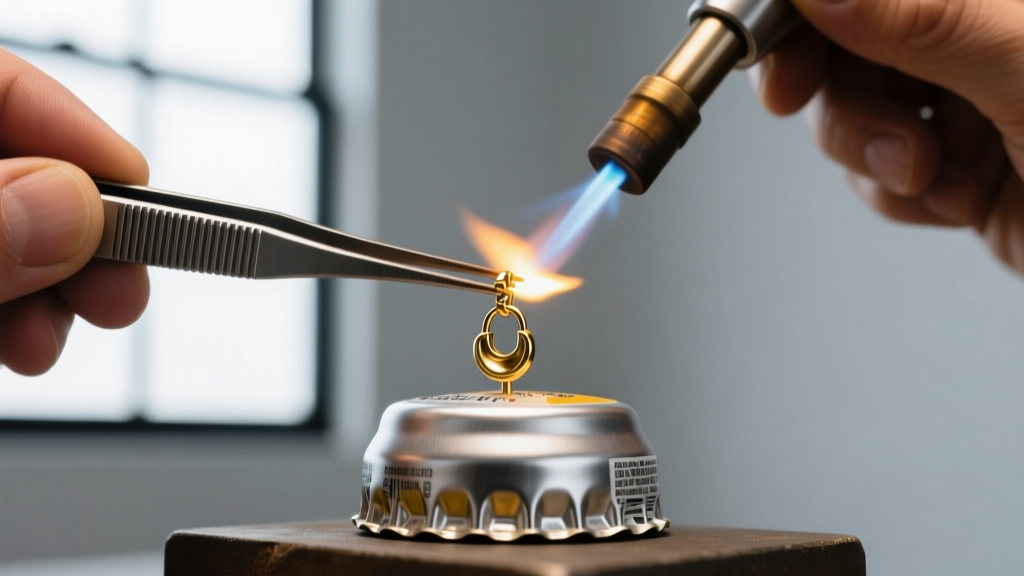
Biocompatibility and the Sealing Protocol
Because the interior of a beer cap features a crimped skirt and often retains residue from the bottle's sealing process, it must be hermetically sealed before wear. The industry standard for sealing porous or reactive upcycled metals is a two-part, food-safe, UV-resistant epoxy resin.
The sealing protocol requires a meticulous approach. First, the cap must be ultrasonically cleaned in a mild alkaline solution to remove any microscopic glass shards, yeast residue, or oxidized metal dust. Once dried, a doming resin is poured into the interior cavity. This resin serves a dual purpose: it encapsulates any exposed reactive metals (preventing nickel leaching and rust) and adds a glass-like aesthetic finish that highlights the cap's interior branding. For the exterior painted surfaces, a micro-thin coat of polyurethane clear coat prevents the friction of hair and clothing from wearing away the brewery's logo over time.
Lobe Biomechanics: Solving the Weight Problem
A standard 26mm crown cap weighs approximately 2.1 grams. Once you add the interior resin dome (approx. 1.8 grams), the metal finding, and the earring back, the total mass of a single beer cap earring can easily exceed 4.5 grams. While 4.5 grams may seem trivial in the hand, the biomechanics of the earlobe dictate that this weight is concentrated on a piercing tract with a surface area of less than 8 square millimeters.
Over time, this concentrated downward force causes the piercing tract to elongate, leading to the dreaded 'cheese-cutter effect' where the earring slowly migrates downward through the tissue. To combat this, professional fabricators employ two specific engineering solutions:
- Upgrading the Wire Gauge: Standard lobe earrings use 20-gauge (0.81mm) wire. For heavy upcycled pieces, stepping up to an 18-gauge (1.02mm) or even 16-gauge (1.29mm) wire increases the surface area distributing the weight, reducing the localized pressure on the earlobe tissue by up to 60%.
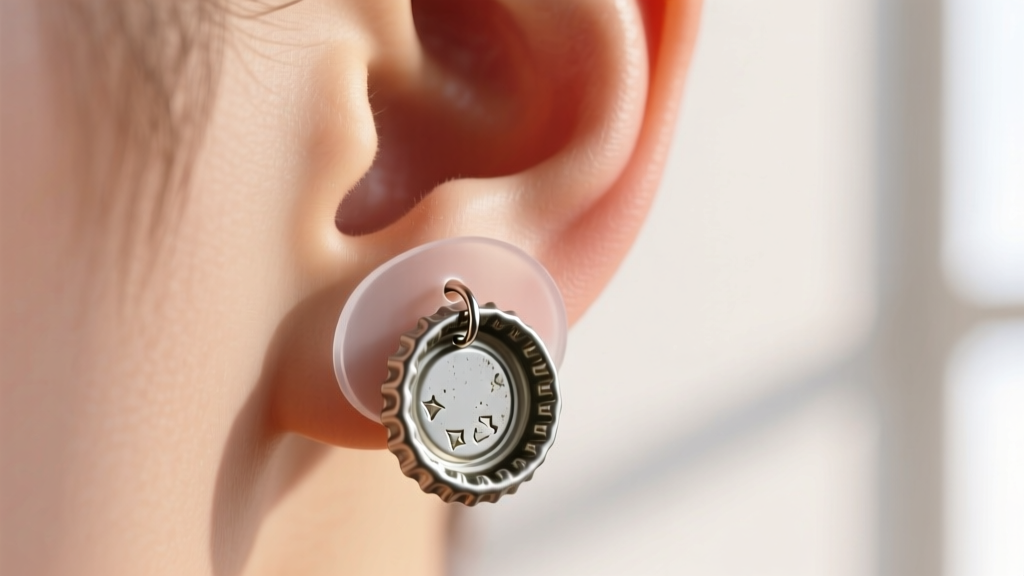
- Ovoid Silicone Backings: Standard butterfly clutches concentrate pressure on a single point behind the ear. Utilizing wide, ovoid silicone support patches (often sold as 'earring lifters' or 'support discs') distributes the 4.5g load across a 15mm span of the posterior earlobe, neutralizing the downward drag.
The Post Material Imperative
When fabricating beer cap earrings, the post that actually passes through the body must be treated as a temporary medical implant. Sourcing cheap, mystery-metal posts from bulk online marketplaces is a critical failure point. The post must be machined from Implant-Grade Titanium, specifically adhering to the ASTM F136 standard (Titanium 6AL-4V ELI). This specific alloy contains aluminum and vanadium for strength but zero nickel, ensuring that even if the wearer has a severe contact allergy, the piercing tract remains completely unaffected. Niobium is an acceptable secondary alternative, as it is a highly reactive metal that forms a completely inert oxide layer, though it lacks the tensile stiffness of titanium, making it prone to bending under the weight of a heavy resin-filled cap.
Technical Assembly Protocol
For metalsmiths looking to produce a professional run of upcycled brewery merchandise, follow this sequential fabrication protocol to ensure structural integrity and dermatological safety:
- Preparation: Ultrasonically clean the raw caps. Lightly score the exterior center-back with 400-grit sandpaper to create a mechanical tooth for adhesion.
- Post Attachment: Apply a high-shear jeweler's epoxy to an 18-gauge, ASTM F136 titanium pad-post finding. Clamp to the scored center-back and allow a full 24-hour cure time in a temperature-controlled environment (70°F/21°C).
- Interior Sealing: Mix a two-part UV-resistant doming resin. Pipette the resin into the interior cavity, ensuring it flows into the crimped flutes. Use a butane torch to quickly pop surface micro-bubbles.
- Curing: Allow the resin to self-level and cure for 48 hours. Do not use a UV lamp unless the specific resin formula requires it, as rapid heat-curing can warp the thin aluminum or tinplate.
- Quality Control: Perform a 5-pound tensile pull-test on a sacrificial sample from the batch to verify the epoxy bond strength before releasing the batch for retail sale.
True craftsmanship in upcycled jewelry isn't just about the aesthetic of the reclaimed material; it is about applying rigorous material science to ensure the piece is as safe and durable as fine jewelry cast from precious metals.
By respecting the metallurgy of the base materials and the biomechanics of the human ear, artisans can elevate beer cap earrings from fragile novelty items into robust, heirloom-quality accessories that safely celebrate craft brewing culture.


