Cross Earrings for Guys: The Ultimate Material Durability Guide
Discover the best metals for cross earrings for guys. We compare titanium, steel, and gold for durability, skin safety, and daily wear.


Why Material Dictates the Lifespan of Men's Cross Earrings
The landscape of men's jewelry has evolved dramatically. In 2026, cross earrings for guys are no longer viewed as fleeting fashion statements; they are permanent, everyday staples. However, the unique geometry of a cross pendant introduces specific mechanical stresses that standard round studs do not face. A long Latin cross or a heavy Gothic cruciform acts as a lever, creating a pendulum effect that places continuous torque on the earlobe and the earring post.
Choosing the right material is not just about aesthetics; it is about structural integrity, hypoallergenic safety, and resistance to the corrosive effects of sweat and environmental friction. Below, we break down the metallurgical properties of the most common metals used in men's cross earrings, providing a data-driven framework to help you select a piece that will last a lifetime.
The Big Four: Material Breakdown for Cross Pendants
Implant-Grade Titanium (ASTM F136)
When discussing titanium, it is vital to distinguish between commercial-grade titanium and implant-grade titanium. According to the Association of Professional Piercers, only titanium that meets the ASTM F136 standard is guaranteed to be biocompatible and completely nickel-free. For men who wear their cross earrings to the gym or in humid climates, titanium is the undisputed champion. It is 45% lighter than stainless steel, reducing the drag on the earlobe, and it will never tarnish, rust, or react with your skin's natural acidity. The primary drawback is that titanium is difficult to cast, meaning designs are often CNC-machined, resulting in sharper, more modern, and minimalist cross silhouettes rather than ornate, vintage styles.
316L vs. 904L Surgical Stainless Steel
Stainless steel remains the most accessible and affordable option for cross earrings for guys. The industry standard is 316L steel, an alloy containing chromium, molybdenum, and a small percentage of nickel. While the nickel is generally bound tightly within the alloy, prolonged exposure to sweat can cause trace leaching, which triggers contact dermatitis in highly sensitive individuals. The Mayo Clinic notes that nickel allergy is one of the most common causes of allergic contact dermatitis. If you have sensitive skin but prefer the look of steel, seek out 904L steel (often used in luxury watchmaking). It contains higher levels of chromium and nickel but forms a vastly superior passive oxide layer, making it highly resistant to corrosion from chlorinated water and sweat, though it is much rarer in budget jewelry.
Solid 14k vs. 18k Gold
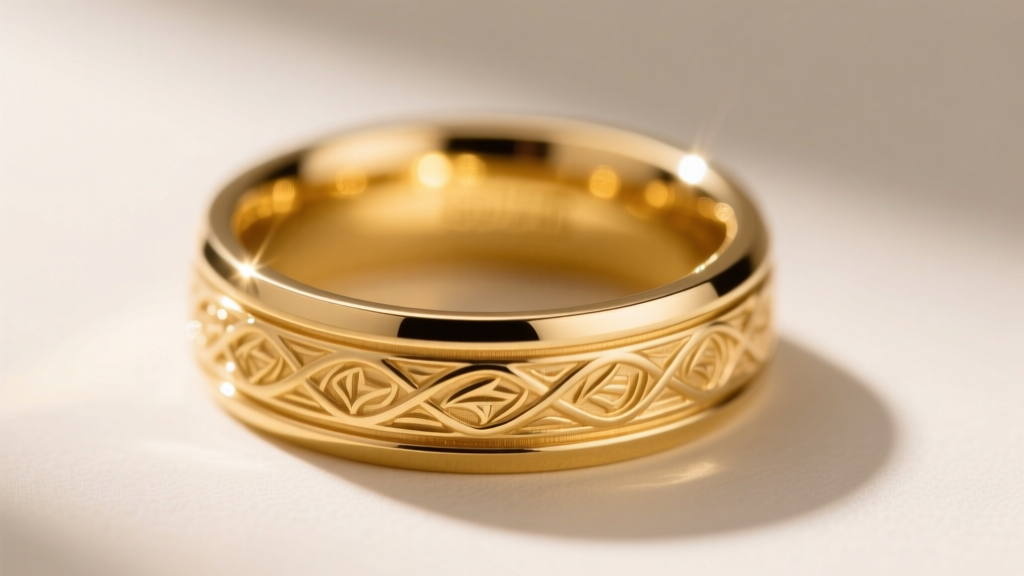
Gold is a classic choice, but purity dictates durability. Pure 24k gold is far too soft for daily wear. When evaluating gold cross earrings, you must look at the Vickers hardness scale. 18k gold (75% pure gold) is rich in color but relatively soft, making it prone to scratching and bending if the cross pendant catches on a hoodie or towel. 14k gold (58.5% pure gold) is alloyed with metals like copper, zinc, and silver, significantly increasing its tensile strength. As noted by the Gemological Institute of America (GIA), these alloys not only change the color but fundamentally alter the metal's durability. For a men's cross earring that might feature small diamond or onyx inlays, 14k gold provides the necessary prong strength to prevent stone loss over years of wear.
Tungsten Carbide & Black Ceramic
For guys who want a cross earring that is virtually scratch-proof, tungsten carbide and high-tech ceramics (like zirconium dioxide) are exceptional. Scoring an 8.5 to 9 on the Mohs hardness scale, these materials will not scuff against keys, tools, or gym equipment. They also carry a satisfying, heavy weight. However, this extreme hardness comes with a critical failure mode: brittleness. If a tungsten cross earring is dropped onto a hard tile floor, it can shatter. Furthermore, because these materials cannot be soldered, sizing adjustments or post replacements are impossible once manufactured.
Head-to-Head Material Comparison Chart
Use this matrix to evaluate which metal aligns with your lifestyle, budget, and skin sensitivity.
| Material | Mohs Hardness | Nickel Content | Price Range (Single) | Best Use Case |
|---|---|---|---|---|
| ASTM F136 Titanium | 6.0 | None | $40 - $120 | Active lifestyles, sensitive skin, sleepers |
| 316L Surgical Steel | 5.5 | Trace (8-12%) | $15 - $45 | Budget-friendly, casual wear |
| 14k Solid Gold | 3.5 - 4.0 | Varies by alloy | $150 - $400+ | Heirloom pieces, professional settings |
| Tungsten Carbide | 8.5 - 9.0 | None (usually) | $30 - $80 | Heavy-duty work environments, scratch resistance |
The Physics of the Cross: Gauge Sizing and Backing Mechanics
The most common mistake men make when buying cross earrings is ignoring the post gauge and backing mechanism. A standard fashion earring uses a 20-gauge (0.81mm) or 18-gauge (1.02mm) post with a friction butterfly back. Because a cross pendant hangs vertically and swings, it creates a lever effect. Over time, a thin 20G post will literally bend backward from the weight and motion of the cross, eventually snapping or stretching your piercing hole.
"For any pendant-style earring, especially asymmetrical shapes like crosses, I always recommend upgrading to a 16-gauge or 14-gauge post. The increased surface area distributes the pendulum weight evenly, preventing lobe migration and tearing."
Furthermore, abandon the traditional butterfly clutch. The grooves on a standard post trap dead skin and bacteria, and the clutch can easily be pulled off by a towel or pillowcase. For men's cross earrings, the optimal hardware is an internally threaded or threadless push-pin flat-back labret post. The flat disc sits flush against the back of the earlobe, providing a wide, comfortable base that prevents the heavy cross from pulling the jewelry backward through the piercing.
Maintenance, Tarnish, and Real-World Troubleshooting
Even the most durable metals require specific care routines to maintain their finish, especially when exposed to the elements.
- White Gold Maintenance: If you choose a 14k white gold cross, be aware that it is plated with rhodium to achieve a bright silver color. Friction from sleeping on the earring will wear this plating away in 12 to 18 months, revealing the slightly yellowish underlying alloy. You will need to budget for professional re-rhodium plating, or opt for palladium-white gold, which does not require plating.
- Steel and Titanium Cleaning: While these metals won't tarnish, they accumulate sebum and soap scum around the post junction. Soak the earrings in a solution of warm water and a few drops of mild, fragrance-free dish soap for ten minutes, then gently brush the crevices of the cross with a soft-bristled baby toothbrush.
- The Chlorine Warning: Never wear 14k gold or 904L steel cross earrings in a hot tub or heavily chlorinated pool. Chlorine attacks the alloy metals (like copper and zinc) in gold, causing microscopic stress fractures that can eventually cause the post to snap off the pendant entirely.
Final Verdict: Which Metal Should You Choose?
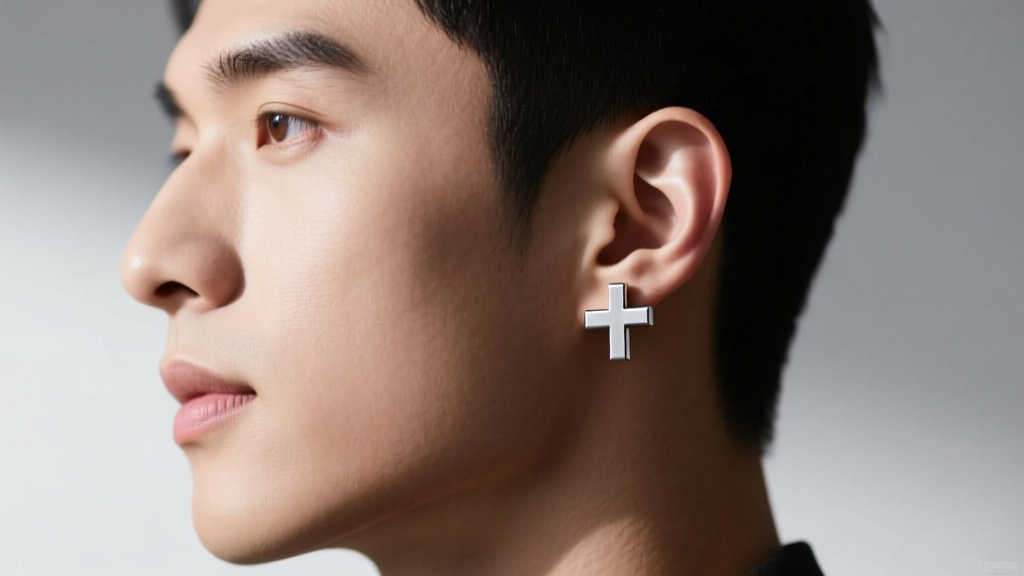
Ultimately, the best material for your cross earrings depends entirely on your daily routine. If you are an athlete, work with your hands, or have a history of metal allergies, ASTM F136 Titanium is the only logical choice. It offers unmatched biocompatibility and a lightweight feel that won't stretch your lobe. If you are looking for a premium, timeless piece for professional or formal environments, a 14k Yellow Gold cross on a 16-gauge flat-back post provides the perfect balance of luxury, structural hardness, and heirloom value. Avoid cheap, unverified alloy metals at all costs; when it comes to men's jewelry that sits in a piercing 24/7, metallurgical integrity is non-negotiable.


