Cross Pearl Earrings: A Metal and Pearl Material Guide
Compare metals and pearl types for cross pearl earrings. Discover durability, luster grades, and hypoallergenic properties to find your perfect pair.

The Intersection of Symbolism and Organic Gemology
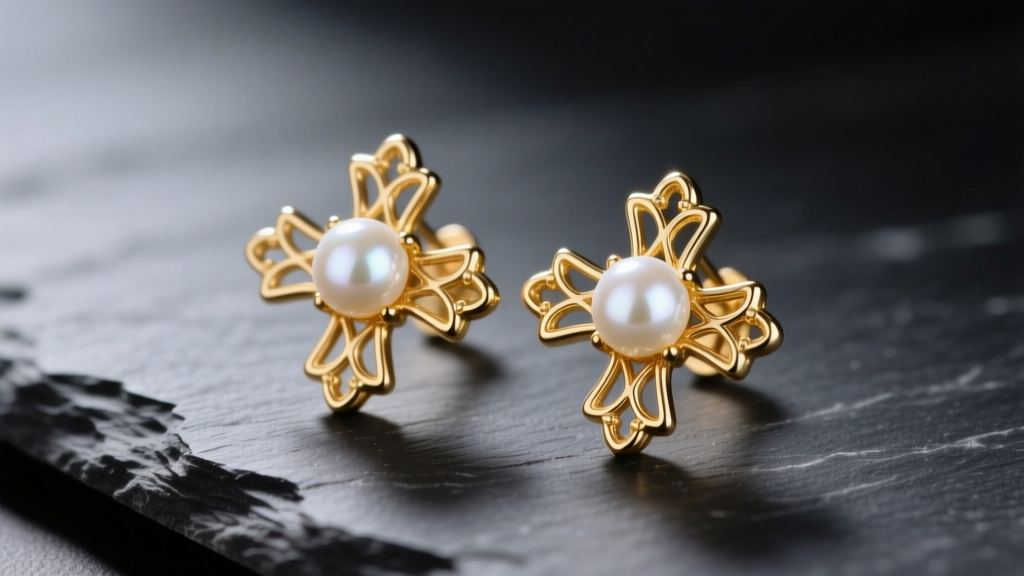
Cross pearl earrings represent a unique intersection in jewelry design: the rigid, geometric symbolism of the cross paired with the soft, organic luster of a pearl. However, because pearls are organic gemstones formed by living mollusks, their material properties differ vastly from traditional faceted stones like diamonds or sapphires. When selecting cross pearl earrings, understanding the specific material grades, metal alloys, and structural mounting techniques is critical for ensuring both longevity and aesthetic brilliance. This guide breaks down the exact material properties you need to evaluate before making a purchase.
Decoding Pearl Types: Freshwater, Akoya, and Tahitian
The pearl serves as the focal point of the cross design, often mounted at the intersection or dangling from the bottom arm. The three primary pearl types used in these settings possess distinct nacre thicknesses, luster qualities, and price points.
Freshwater Pearls: The Versatile Standard
Modern freshwater pearls, particularly bead-nucleated "Edison" pearls, offer exceptional value. Ranging from 6.0mm to 9.0mm, they are frequently used in fashion-forward cross designs. When evaluating freshwater pearls, look for an AAA grading, which indicates a clean surface (95%+ blemish-free) and a sharp, mirror-like reflection. While they possess a slightly softer luster compared to saltwater varieties, high-grade freshwater pearls offer a thick nacre layer (often 2.0mm to 4.0mm), making them highly resistant to chipping and peeling over decades of wear. Expect to pay between $50 and $150 for a well-crafted pair of 14k gold freshwater cross studs.
Akoya Pearls: The Mirror-Like Benchmark
Akoya pearls are the traditional standard for fine jewelry. Cultivated primarily in Japan and China, they are renowned for their sharp, high-contrast luster and perfect spherical shapes. For cross earrings, Akoya pearls typically range from 6.0mm to 8.5mm. The critical metric here is nacre thickness; according to the Gemological Institute of America (GIA), an Akoya pearl with nacre thinner than 0.4mm is prone to "peeling," where the outer layers flake off to reveal the shell bead nucleus beneath. Always seek out "Hanadama" certified Akoya pearls, which guarantee a minimum nacre thickness of 0.4mm and exceptional luster. Pricing for authentic Akoya cross earrings generally falls between $250 and $600.
Tahitian Pearls: Dark Exotics for Statement Crosses
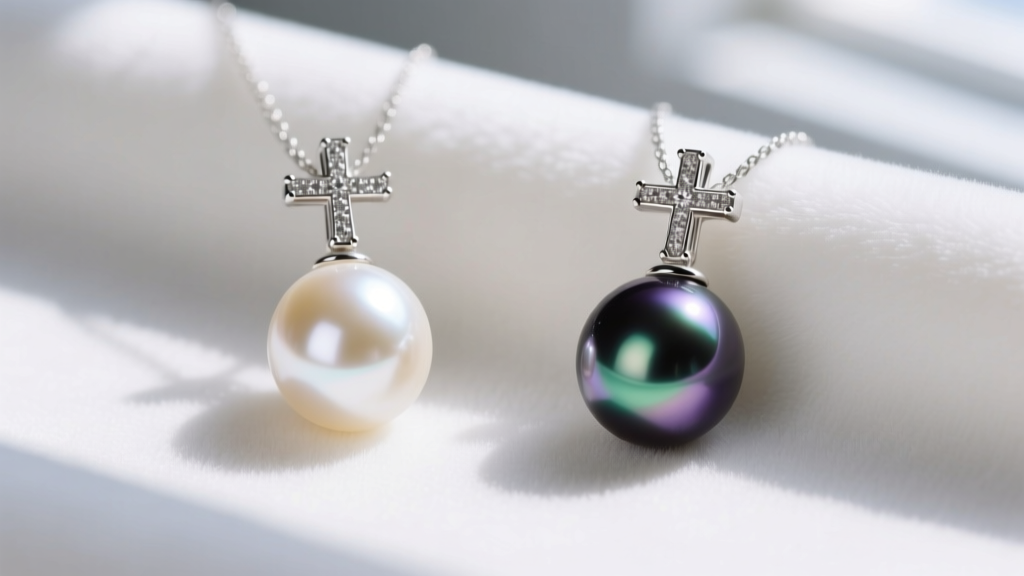
For larger, statement-style cross dangles, Tahitian pearls (8.0mm to 12.0mm) provide striking dark body colors with peacock, aubergine, or pistachio overtones. Because they are larger, the cross setting must be proportionally heavier to support the gem's weight without pulling on the earlobe. Tahitian pearls are naturally dark and rarely treated, but their nacre is susceptible to etching from acidic perspiration, requiring diligent aftercare.
Metal Alloys: Hypoallergenic Properties and Tensile Strength
The metal forming the cross structure must provide adequate tensile strength to hold the pearl securely while remaining biocompatible with the earlobe. The post gauge for standard lobe earrings is typically 20G (0.81mm) or 18G (1.02mm). Thinner 22G posts should be avoided in pearl earrings, as the weight of the pearl can cause the post to bend, leading to tearing of the earlobe piercing.
14k vs. 18k Gold
14k gold (58.5% pure gold) is alloyed with copper, silver, and zinc. It offers superior hardness and scratch resistance compared to 18k gold (75% pure gold), making it an excellent choice for the structural arms of the cross. However, if you are purchasing white gold, be aware that it is often alloyed with nickel to achieve a white color. According to the Mayo Clinic, nickel is a leading cause of contact dermatitis. While the rhodium plating on white gold initially prevents skin contact, this plating wears off within 6 to 12 months, potentially triggering allergic reactions.
Platinum and Implant-Grade Titanium
For those with severe metal sensitivities, Platinum (95% pure, usually alloyed with ruthenium) is the ultimate hypoallergenic choice. It is dense, heavy, and naturally white, requiring no plating. Alternatively, ASTM F136 Implant-Grade Titanium (Ti-6Al-4V ELI) is completely nickel-free and highly biocompatible, though it is more commonly found in modern, minimalist cross cartilage studs rather than traditional fine jewelry.
Expert Insight: Never assume "surgical steel" is hypoallergenic. The term is unregulated in jewelry, and many "surgical steel" cross earrings contain up to 10% nickel. Always look for the specific designation "Implant-Grade Titanium" or "Niobium" if you have sensitive piercings.
Material Comparison Matrix
| Material Combination | Mohs Hardness | Hypoallergenic Rating | Estimated Price Range | Best Use Case |
|---|---|---|---|---|
| 14k Yellow Gold + Freshwater Pearl | Gold: 2.5-3 / Pearl: 2.5-4.5 | Moderate (Check alloys) | $80 - $150 | Everyday wear, durable |
| 18k White Gold + Akoya Pearl | Gold: 2.5 / Pearl: 2.5-4.5 | Low (Rhodium wears off) | $300 - $600 | Formal events, high luster |
| Platinum + Tahitian Pearl | Plat: 4-4.5 / Pearl: 2.5-4.5 | Excellent | $500 - $1,200+ | Heirloom pieces, sensitive skin |
| Grade 23 Titanium + Edison Pearl | Ti: 6 / Pearl: 2.5-4.5 | Excellent | $60 - $120 | Cartilage piercings, active lifestyles |
Structural Integrity: Peg Mounts and Adhesive Failure Modes
Unlike diamonds that are secured with metal prongs, pearls in cross earrings are almost exclusively attached using a "peg mount" system. A metal post is soldered to the cross's intersection, and a corresponding hole is drilled into the pearl. The two are bonded using a jeweler's adhesive.
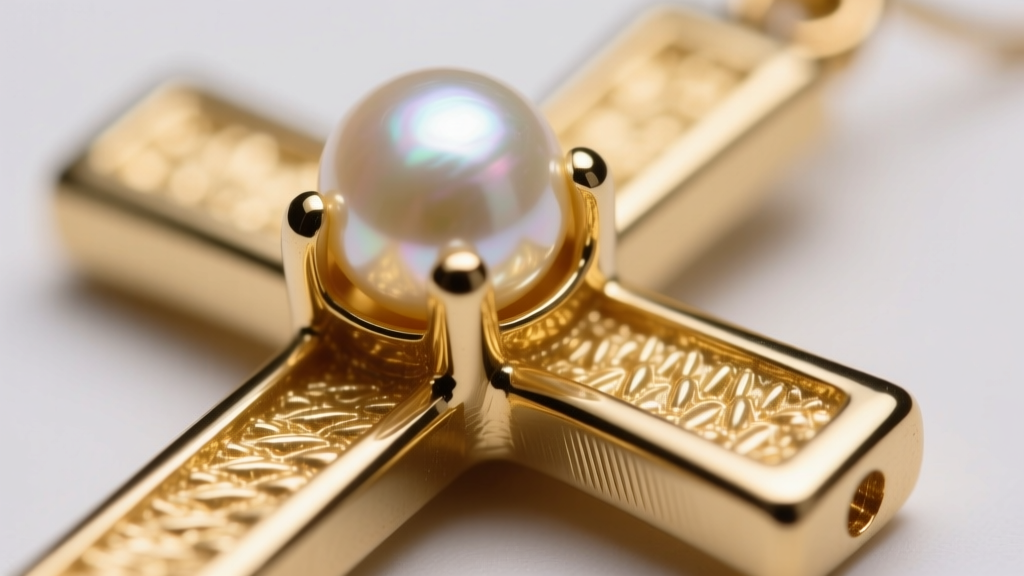
The primary failure mode in cross pearl earrings is adhesive degradation. Cheap manufacturers use standard cyanoacrylate (super glue), which becomes brittle over time and shatters upon impact. High-end jewelers use specialized two-part epoxies or G-S Hypo Cement, which retains slight flexibility. Furthermore, the metal peg must be deeply scored or textured with a laser to increase the surface area for the adhesive to grip. If you are buying vintage or second-hand cross pearl earrings, gently test the pearl for rotational movement; if the pearl spins on the peg, the adhesive bond has failed and requires professional re-cementing.
Material-Specific Care and Mohs Hardness Realities
The Jewelers of America emphasizes that organic gems require vastly different care than crystalline gems. Pearls rank between 2.5 and 4.5 on the Mohs hardness scale, meaning they can be easily scratched by dust (which contains quartz, ranking 7).
Never place cross pearl earrings in an ultrasonic cleaner. The high-frequency vibrations will not only shatter the adhesive bond of the peg mount but can also cause the nacre of thin-skinned Akoya pearls to fracture. Instead, wipe the pearls with a damp, lint-free microfiber cloth after each wear to remove acidic skin oils, and store them flat in a soft pouch, separate from harder metal jewelry that could gouge the cross arms or the pearl's surface.
Final Verdict: Matching Material to Lifestyle
Selecting the right cross pearl earrings requires balancing aesthetic desires with material realities. For daily wearers seeking durability and affordability, 14k yellow gold paired with AAA-grade bead-nucleated freshwater pearls offers the best resistance to bending and chipping. For collectors and formal occasions, the unmatched mirror-luster of Hanadama-certified Akoya pearls set in platinum provides a breathtaking, hypoallergenic heirloom piece. By prioritizing nacre thickness, post gauge, and proper peg-mount scoring, you ensure your earrings remain structurally sound and visually radiant for a lifetime.


