Cuff Earring Piercing Guide: Sizing, Metals & Care
Discover everything about the cuff earring piercing. Learn ideal gauge sizes, hypoallergenic metals, placement options, and aftercare tips for 2026.

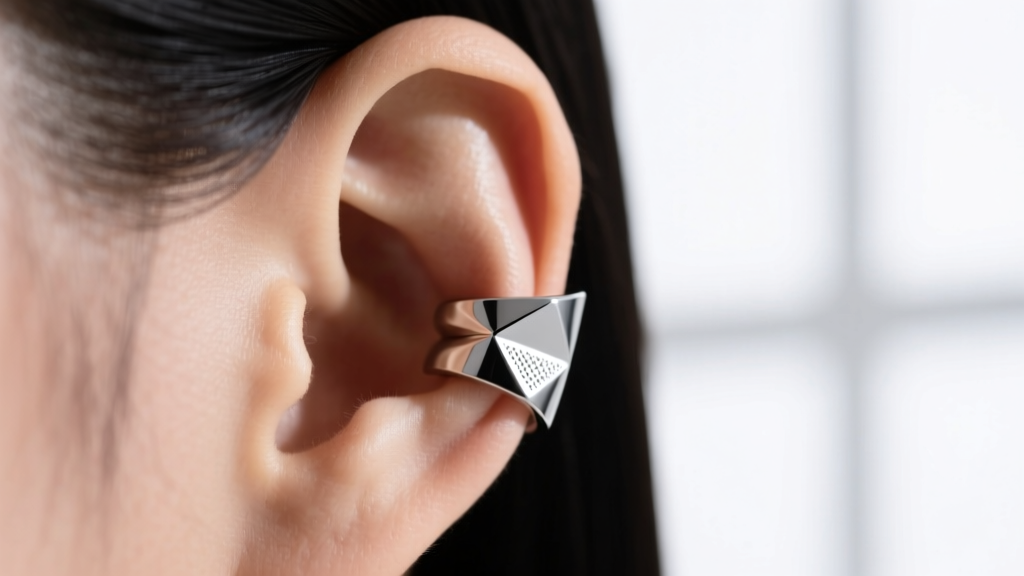
Understanding the Cuff Earring Piercing Concept
When enthusiasts and jewelers discuss a cuff earring piercing, they are typically referring to one of two things: a strategically placed cartilage piercing designed to anchor a specialized cuff, or the use of hinged cuff-style rings that wrap around the ear's outer rim without relying on painful, circulation-restricting tension. In 2026, the jewelry industry has largely moved away from non-pierced tension cuffs for daily wear due to the high risk of pressure necrosis and cartilage damage. Instead, the modern cuff earring piercing relies on precision-pierced helix, auricle, or conch placements paired with anatomically curved, hinged, or threadless cuff attachments.
This buying guide will break down the exact specifications, material grades, and hardware mechanics you need to know before investing in high-end cartilage cuffs. Whether you are visiting a professional piercer for a new placement or upgrading your current setup, understanding the biomechanics of the outer ear is crucial for long-term wearability and aesthetic success.
Ideal Placements and Gauge Specifications
Cartilage is significantly less forgiving than the earlobe. It lacks its own blood supply, relying on the perichondrium (the surrounding tissue) for nutrients and healing. Therefore, the gauge and inner diameter of your cuff earring piercing must be exact to prevent migration, rejection, or hypertrophic scarring.
| Piercing Placement | Standard Gauge | Typical Inner Diameter | Best Cuff Style |
|---|---|---|---|
| Mid-Helix / Auricle | 16g (1.2mm) | 6mm - 7mm | Hinged Segment Ring with Cuff Wrap |
| Upper Helix | 16g (1.2mm) | 5mm - 6mm | Threadless Press-Fit Cuff End |
| Outer Conch | 14g (1.6mm) | 8mm - 10mm | Large Diameter Hinged Hoop with Cuff |
| Forward Helix | 18g (1.0mm) or 16g | 5mm - 6mm | Miniature Flat-Back Cuff Cluster |
According to the Association of Professional Piercers (APP), starting a fresh cartilage piercing at 16g or 14g provides the necessary structural integrity to support the slightly heavier weight of cuff-style jewelry once fully healed. Downsizing from a standard 20g or 18g lobe wire is a critical failure point that leads to the "cheese-cutter effect," where thin wire slowly migrates through the cartilage under the weight of a decorative cuff.
Material Grades: The 2026 Standard for Cartilage
Because a cuff earring piercing sits snugly against the skin and traps heat and moisture, material biocompatibility is non-negotiable. Cheap alloys will cause contact dermatitis, which in a cartilage piercing can quickly escalate into a severe perichondritis infection.
Implant-Grade Titanium (ASTM F-136)
This is the gold standard for initial piercings and sensitive healed ears. ASTM F-136 titanium is entirely nickel-free, highly polished, and lightweight. Brands like BVLA (Body Vision Los Angeles) and Neometal manufacture threadless cuff ends from this exact alloy, ensuring that the part of the cuff wrapping around your ear will not trigger allergic reactions or oxidize over time.
Solid 14k and 18k Gold
For luxury buyers, solid gold remains a premier choice. However, you must verify that the gold is alloyed for biocompatibility. Many commercial jewelers use nickel as a hardening agent in white gold. Always look for reputable body jewelry brands that explicitly state their gold is nickel-free and cadmium-free. Avoid gold-plated or gold-filled cuffs for cartilage, as the microscopic friction of a cuff wrapping around the ear will eventually wear through the plating, exposing the reactive base metal underneath.
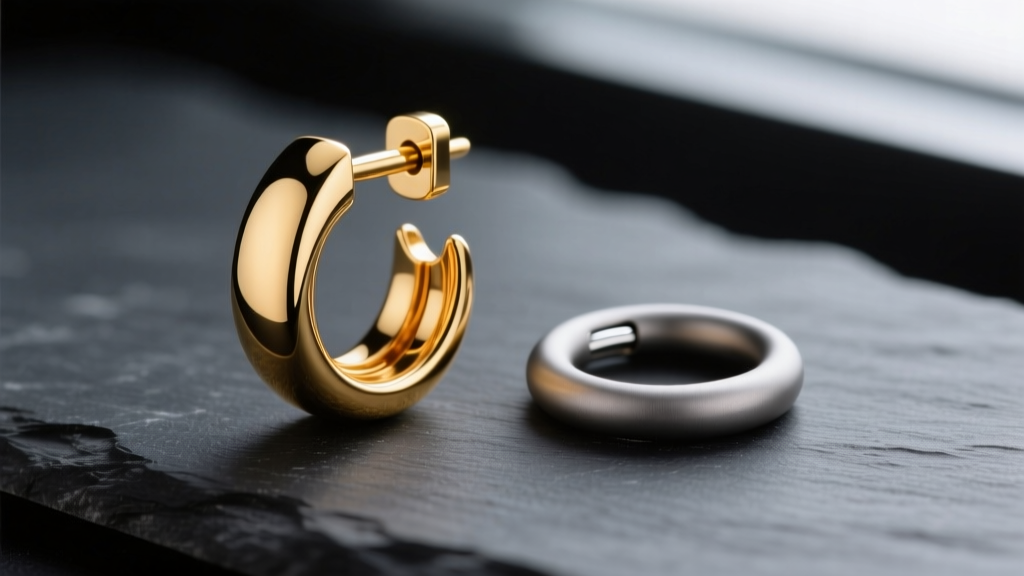
Niobium
An excellent, budget-friendly alternative to titanium. Niobium is a highly inert elemental metal that can be anodized into various colors without using reactive dyes or coatings. While slightly heavier than titanium, it is exceptionally well-tolerated by the body and perfect for colorful, anodized cuff wraps.
Hardware Anatomy: Hinged vs. Tension-Fit Cuffs
The mechanical design of your cuff earring piercing jewelry dictates both its security and its safety. Here is a breakdown of the two primary mechanisms you will encounter when shopping:
1. Tension-Fit (Non-Pierced Style on Pierced Ears)
Tension cuffs rely on a C-shaped spring mechanism that squeezes the cartilage to stay in place. Do not use these for extended wear on a pierced hole. The constant compressive force restricts blood flow to the perichondrium, leading to tissue death (necrosis) and severe migration of the piercing channel. Furthermore, tension cuffs are notorious for snagging on hair and sweaters, which can violently rip the jewelry out of the ear.
2. Hinged and Threadless Cuff Attachments
The modern, safe approach utilizes a secure base—either a hinged segment ring that clicks shut with a micro-clasp, or a threadless (press-fit) straight post. The decorative "cuff" portion is either seamlessly integrated into the hinged ring or slides onto the threadless post as a friction-fit end. This creates the illusion of a wrapped ear cuff while placing zero compressive stress on the cartilage.
"The biggest mistake clients make is buying fashion mall-kiosk cuffs and forcing them onto healed cartilage piercings. True body jewelry cuffs are engineered with specific inner diameters to glide over the tissue without pinching. If you feel a pulse in your ear after putting on a cuff, it is too tight and must be removed immediately." — Senior Piercer, Safe Piercing Certified
Step-by-Step Aftercare and Troubleshooting
Cartilage piercings take anywhere from 6 to 12 months to fully heal, and sometimes up to 18 months for complex placements like the conch. Introducing a cuff-style hoop too early will introduce rotational movement, dragging bacteria into the fistula and causing irritation bumps.
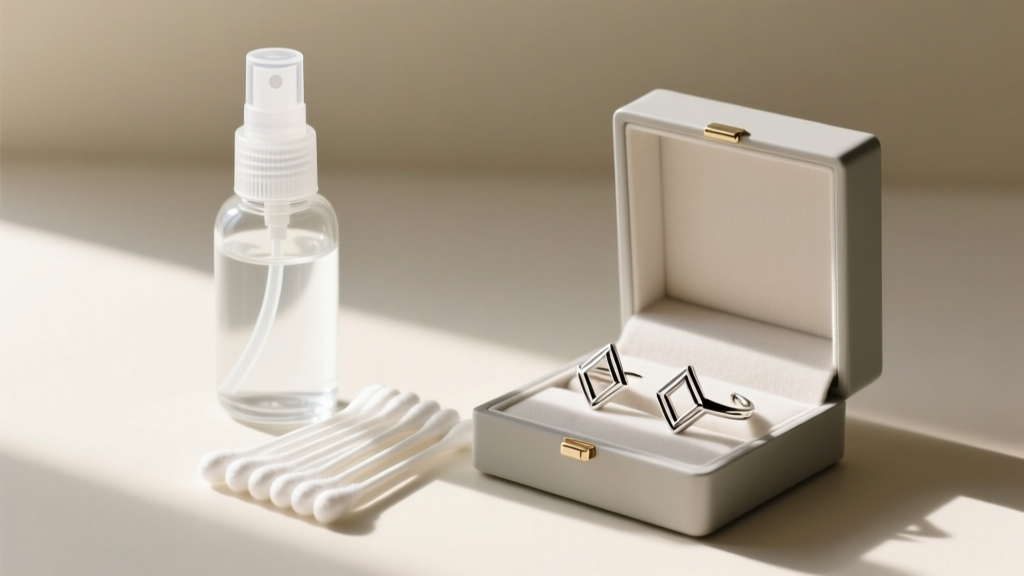
The 2026 Aftercare Protocol
- Cleanse: Use a sterile 0.9% sodium chloride wound wash (with no additives, preservatives, or benzalkonium chloride) twice daily. The APP Aftercare Guidelines strongly advise against homemade sea salt soaks, as improper ratios can dehydrate and damage healing tissue.
- Dry: Gently dry the area with a hairdryer on the cool setting or use non-woven gauze. Avoid cotton balls or Q-tips, which leave microscopic fibers tangled in the cuff mechanism.
- Sleep: Use a travel neck pillow, positioning your ear in the center hole to prevent compression while sleeping. Sleeping on a healing cuff earring piercing is the leading cause of angled healing and hypertrophic scarring.
Troubleshooting Irritation Bumps
If you develop a small, fleshy bump adjacent to your cuff earring piercing, evaluate the jewelry's fit. Is the inner diameter of the hoop too small, causing the cuff to press into the skin? Is the material reactive? Downsize or upsize the hoop to a neutral 16g titanium hinged ring, apply a sterile warm saline compress for 3-5 minutes, and avoid touching the jewelry. If the bump persists or is accompanied by heat and throbbing pain, consult a medical professional to rule out a cartilage infection.
Final Buying Checklist: What to Look For
Before clicking "checkout" on your next cartilage accessory, run it through this quick E-E-A-T quality checklist:
- Verify the Metal: Ensure the listing explicitly states ASTM F-136 Titanium, Niobium, or solid 14k/18k nickel-free gold. Avoid "surgical steel" or "stainless steel" for fresh or sensitive piercings.
- Check the Closure: Opt for hinged click-closures or threadless press-fit ends. Avoid spring-loaded tension clips.
- Measure Your Ear: Use a digital caliper to measure the thickness of your cartilage fold and the inner diameter required to wrap it comfortably without pinching.
- Research the Brand: Stick to professional body jewelry manufacturers (e.g., BVLA, Anatometal, Maria Tash, Neometal) rather than fast-fashion accessory brands.
By prioritizing anatomical fit and biocompatible metals, your cuff earring piercing will remain a stunning, secure, and comfortable staple in your jewelry collection for years to come.


