Troubleshooting Amber Stud Earrings: Cracks, Clouding & Fakes
Fix cloudy, cracked, or loose amber stud earrings. Learn expert troubleshooting, authenticity tests, and care tips for organic gemstones.

The Unique Vulnerabilities of Organic Gemstones
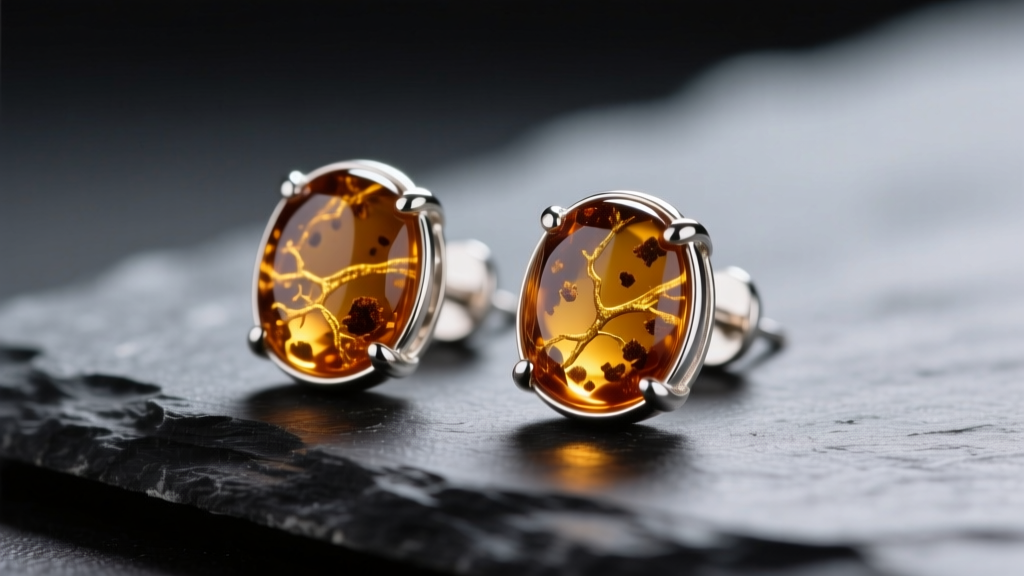
Amber is not a mineral; it is fossilized tree resin, primarily sourced from the Baltic region or the Dominican Republic. This organic origin gives amber stud earrings their mesmerizing warmth, unique inclusions, and lightweight comfort. However, it also introduces a specific set of structural vulnerabilities that standard gemstones like diamonds or sapphires simply do not possess. With a Mohs hardness rating of just 2.0 to 2.5, amber is softer than a copper coin and highly susceptible to chemical and thermal damage.
According to the Gemological Institute of America (GIA), amber's low hardness and amorphous structure mean it requires specialized care. Many owners mistakenly treat their amber studs like standard crystal jewelry, leading to irreversible clouding, micro-fractures, or post separation. In this comprehensive troubleshooting guide, we will diagnose the most common failures associated with amber earrings and provide actionable, jeweler-grade solutions to restore and protect them.
Troubleshooting Common Amber Earring Problems
Problem 1: Clouding and Loss of Polish
The Symptom: Your once-glossy amber studs now look matte, cloudy, or chalky.
The Root Cause: Amber is highly porous and sensitive to solvents. Daily exposure to ethanol-based perfumes, hairsprays, hand sanitizers, and even the natural acidic oils from your skin will degrade the surface polish over time. Ultrasonic cleaners, which are safe for diamonds, will literally vibrate the surface of amber into a cloudy mess.
The Fix: Never use commercial jewelry dips or alcohol-based cleaners. To restore a mild haze, wash the earrings in lukewarm water with a drop of pH-neutral dish soap, using only your fingertips. Dry immediately with a microfiber cloth. For deeper clouding, apply a micro-drop of pure olive oil or mineral oil to a soft cloth and gently buff the amber in circular motions. The oil will temporarily fill microscopic surface abrasions, restoring the optical clarity and warm glow. Wipe away any excess oil before wearing.
Problem 2: Micro-Cracks and Crazing
The Symptom: A network of tiny, internal fractures (crazing) or visible surface cracks appears on the cabochon.
The Root Cause: Thermal shock and extreme dryness. Amber has low thermal conductivity. Moving from a freezing winter outdoor environment directly into a heavily heated, dry indoor space causes the outer layer of the resin to expand or contract faster than the core, resulting in stress fractures.
The Fix: Unfortunately, cracked amber cannot be 'healed.' However, if the crack is superficial, a jeweler can stabilize it using a low-viscosity, UV-cured optically clear resin to prevent moisture ingress and further splitting. If the crack compromises the structural integrity of the stud, it is time to retire the stone to prevent it from shattering in your ear.
Problem 3: The Post Separation Issue
The Symptom: The metal earring post detaches from the flat back of the amber cabochon.
The Root Cause: Amber is too soft to be prong-set or drilled for a threaded post without a high risk of shattering. Therefore, most amber stud earrings rely on a flat-back pad glued directly to the resin. Factory adhesives often degrade when exposed to skin oils and humidity, and the differing expansion rates of metal and resin cause shear stress.
The Fix: Do not use cyanoacrylate (Super Glue). It dries brittle, fails under shear stress, and leaves a permanent white 'bloom' stain on the porous amber. Instead, carefully scrape away the old adhesive from both the metal pad and the amber using a wooden toothpick (never metal). Re-seat the post using a flexible, two-part jeweler's epoxy or a specialized adhesive like G-S Hypo Cement, which allows for slight thermal flexing without breaking the bond.
Authenticity Check: Is Your Amber Real or Plastic?
The market is flooded with imitation amber, ranging from young, untreated copal resin to dyed plastics and glass. If your 'amber' studs feel unusually heavy, cold to the touch, or completely flawless, they may be synthetic. Use this diagnostic framework to verify your jewelry.
| Diagnostic Test | Real Baltic Amber | Copal (Young Resin) | Plastic / Glass |
|---|---|---|---|
| Saltwater Float Test | Floats (in 1:2 salt-to-water ratio) | Floats | Sinks |
| Hot Needle Test | Emits a piney, resinous smoke | Smells sweet, melts/sticky | Acrid chemical smell or no reaction (glass) |
| UV Blacklight | Glows pale blue, green, or milky white | Weak or no fluorescence | No glow |
| Acetone Rub | No reaction, stays hard | Becomes tacky and sticky | No reaction (or melts if cheap plastic) |
Note: Perform the hot needle test on an inconspicuous area, such as the flat back of the stud, as it will leave a tiny burn mark. For mounted earrings, rely on the UV and saltwater tests to avoid damaging the metal settings.
Metal Sensitivities: The Hidden Culprit Behind 'Amber' Allergies
Many wearers report itching, redness, or weeping piercings after wearing amber stud earrings, mistakenly blaming the organic gemstone. Amber itself is entirely hypoallergenic. The true culprit is almost always the metal post and the adhesive used to secure it.
Most commercial amber studs are fitted with 925 Sterling Silver or 'Surgical Steel' posts. Sterling silver contains 7.5% copper, which oxidizes and reacts with sulfur in the skin. Meanwhile, standard 316L Surgical Steel contains up to 14% nickel, a notorious contact allergen. If you are experiencing piercing irritation, the troubleshooting step is to have a professional jeweler carefully snip off the offending post and laser-weld or epoxy an Implant Grade Titanium (ASTM F136) post to the amber base. Titanium is completely biocompatible, non-magnetic, and will eliminate the allergic response, allowing your piercing to heal while still enjoying your favorite amber stones.
Preventative Care Framework for Organic Gems
To minimize future troubleshooting, adopt the LAST ON, FIRST OFF protocol for your amber stud earrings:
- Last On: Put your amber earrings on only after your perfume, hairspray, and skincare products have fully dried. This prevents chemical etching of the resin's polish.
- First Off: Remove them immediately upon returning home, before changing clothes or washing your face, to prevent accidental snags or exposure to harsh facial cleansers.
- Proper Storage: Never toss amber studs loosely into a jewelry box. Because amber is a 2.5 on the Mohs scale, metal zippers, diamond rings, and even harder gemstones like quartz (Mohs 7) will severely scratch the surface. Store them individually in a soft, anti-tarnish flannel pouch.
- Hydration: If you live in an arid climate or use indoor heating heavily during winter, occasionally wipe your amber with a barely damp cloth to prevent the resin from drying out and crazing over time. Data from Mindat.org confirms that organic resins require stable humidity levels to maintain their structural integrity over decades.
Conclusion
Troubleshooting amber stud earrings requires a shift in mindset from treating them as standard minerals to respecting them as ancient, organic artifacts. By avoiding ultrasonic cleaners, utilizing the correct flexible epoxies for post repairs, verifying authenticity through non-destructive testing, and upgrading to titanium posts for sensitive ears, you can ensure your amber jewelry remains vibrant, secure, and comfortable for a lifetime.


