Custom Earring Card Engineering: Material Specs and Die-Cut Tolerances
Master the technical specs of custom earring card packaging. Explore die-cut tolerances, GSM paper weights, eco-materials, and hole-punch engineering.

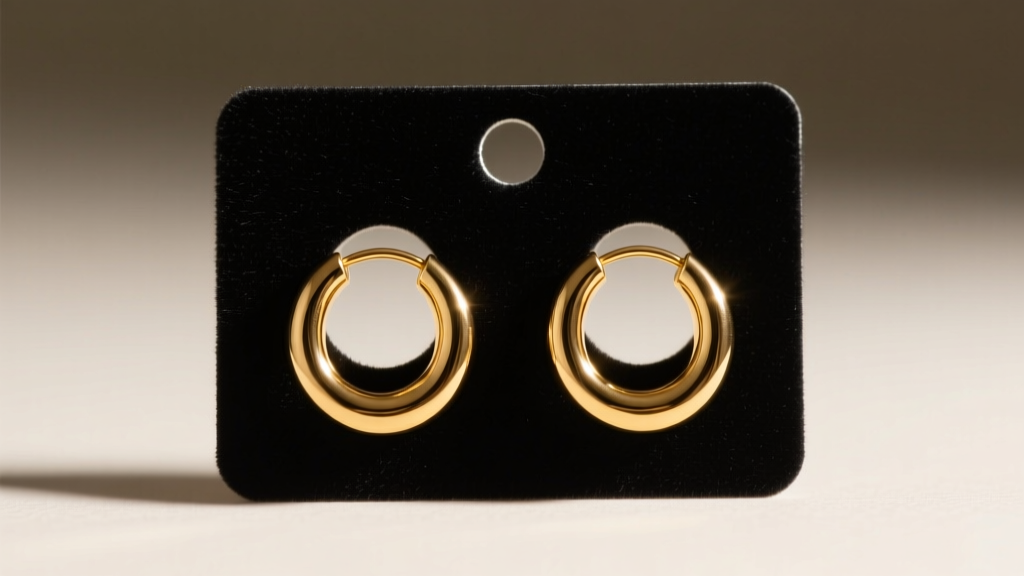
The Anatomy of a High-Performance Custom Earring Card
Designing a custom earring card is not merely an exercise in graphic design; it is a rigorous practice in structural packaging engineering. For jewelry brands, the backing card serves as the primary load-bearing interface between the product and the consumer. A poorly engineered card will sag under the weight of heavy drop earrings, tear at the die-cut slits during transit, or accelerate the oxidation of raw silver and copper components. To achieve a premium unboxing experience and ensure product integrity, makers and packaging engineers must meticulously specify substrate weight, grain direction, die-cut tolerances, and surface chemistry.
Substrate Selection: GSM, Caliper, and Tensile Strength
The foundation of any custom earring card is its substrate. While amateur brands often default to standard 250 GSM (Grams per Square Meter) cardstock, high-end jewelry packaging requires materials with superior tensile strength and puncture resistance. The industry standard for premium earring displays ranges from 350 GSM to 600 GSM.
Understanding Caliper and Ply
GSM measures weight, but caliper measures thickness, typically expressed in points (pt) or microns. A 14pt Solid Bleached Sulfate (SBS) board is common for lightweight studs, but heavy geometric brass drops or gemstone-laden dangles require a 24pt to 32pt caliper. For ultra-premium brands, duplex or triplex board—created by gluing multiple sheets of uncoated cotton stock together—yields a rigid, edge-painted canvas that resists bending entirely.
According to the Paperboard Packaging Council, the tensile strength of the board must be evaluated against the dynamic shear forces experienced during shipping. A heavy hoop earring can act as a pendulum; if the substrate lacks internal fiber cohesion, the 1.5mm die-cut slit will elongate and tear, resulting in a detached earring and a damaged customer experience.
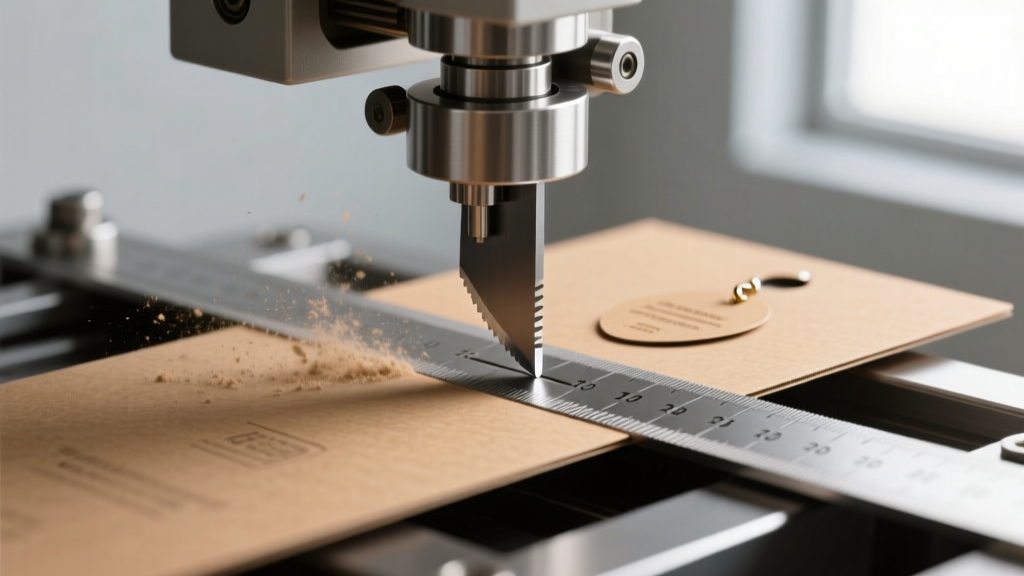
Grain Direction and Folding Mechanics
For brands utilizing tent-style or folded custom earring cards, grain direction is a critical, often overlooked variable. Paper fibers align in a specific direction during the manufacturing process. Folding a card parallel to the grain yields a crisp, clean hinge. Folding against the grain causes the fibers to fracture, resulting in micro-tears, uneven creases, and a compromised structural hinge that will eventually snap.
- Long Grain: Fibers run parallel to the longest dimension. Ideal for tall, vertical tent cards.
- Short Grain: Fibers run parallel to the shortest dimension. Required for wide, horizontal folding displays.
- Scoring vs. Creasing: For boards over 300 GSM, a simple score is insufficient. Engineers must specify a matrix crease, which displaces the fibers rather than cutting them, ensuring the fold remains intact under repeated stress.
Die-Cut Engineering and Hole-Punch Tolerances
The interface between the earring post, wire, or hinge and the card itself requires precision die-cutting. The margin for error in automated packaging lines or hand-assembly is less than 0.1mm. Steel rule dies are standard for runs over 500 units, while laser cutting is reserved for prototyping or ultra-intricate lattice designs.
Slit vs. Puncture Mechanics
Stud earrings typically require a slit rather than a full hole punch. A slit (often an 'H' cut or a simple linear kerf) allows the post to pass through while the paper fibers close tightly around the metal, providing friction that holds the earring in place without relying solely on the backing clutch. Conversely, lever-back wires and thick hoop gauges require fully removed matrix material (hole punches) to prevent the paper from tearing when the wire is threaded.
| Earring Type | Cut Style | Dimensions (mm) | Min. GSM Required |
|---|---|---|---|
| Standard Studs (20g-22g) | Linear Slit / H-Cut | 1.5 x 0.5 | 300 GSM |
| Lever-back / French Wire | Full Hole Punch | 2.0 x 2.0 | 350 GSM |
| Heavy Hoops / Huggies | Reinforced Slot | 15.0 x 2.0 | 400 GSM |
| Ear Cuffs (Non-pierced) | Contour Notch | Custom Profile | 500 GSM |
Anti-Tarnish Integration and Surface Chemistry
Jewelry packaging must actively protect the product. Sterling silver, copper, and brass are highly susceptible to oxidation caused by atmospheric sulfur and humidity. A standard custom earring card can actually accelerate tarnishing if the paper pulp contains high levels of acidity or sulfur-based bleaching agents.
To combat this, premium brands specify acid-free, pH-neutral substrates. Furthermore, integrating anti-tarnish technology directly into the packaging is a hallmark of expert-level engineering. This can be achieved by utilizing specialized zinc-impregnated paper stocks or by designing a micro-pocket into the die-cut pattern that houses a 3M Anti-Tarnish strip. These strips absorb corrosive gases, extending the shelf life of the silver jewelry by up to two years while it remains mounted on the display card.
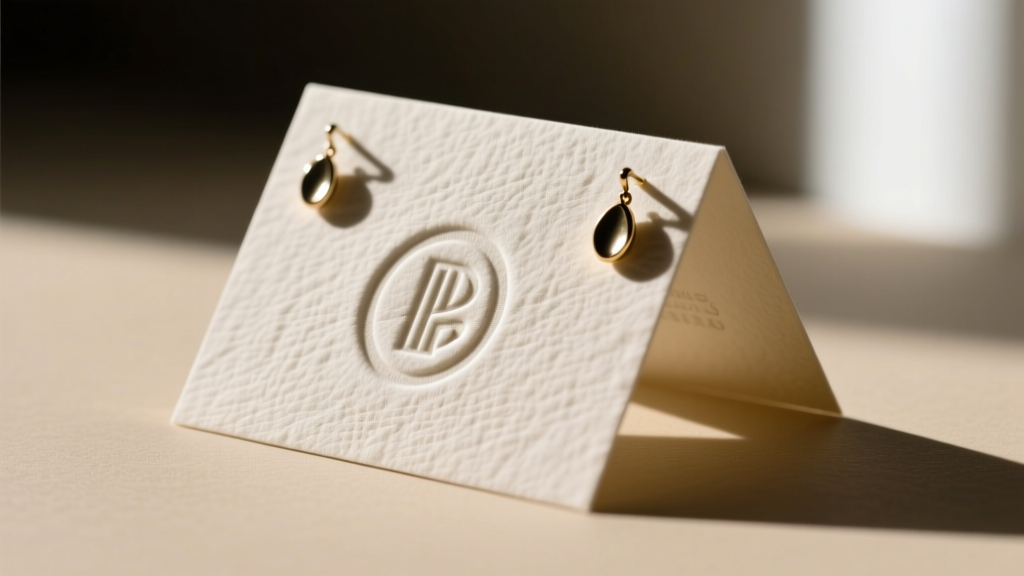
Print Finishing and Surface Tension
The visual and tactile finish of the card dictates the perceived value of the earrings. However, applying coatings to heavy-weight substrates introduces surface tension challenges.
Foil Stamping vs. Spot UV on Recycled Stocks
Uncoated, eco-friendly stocks like recycled kraft or cotton rag are highly porous. If a brand desires a high-gloss Spot UV or metallic foil stamp, the porous surface will absorb the UV resin or fail to provide a smooth base for the foil, resulting in a mottled, uneven finish. To resolve this, engineers apply a base layer of soft-touch BOPP (Biaxially Oriented Polypropylene) lamination or a specialized aqueous primer. This seals the substrate, creating a glass-like surface tension that allows the foil stamp to adhere with crisp, mirror-like edges.
Expert Insight: When sourcing eco-friendly materials, always verify certifications. The Forest Stewardship Council (FSC) provides the gold standard for chain-of-custody tracking, ensuring that the virgin fibers used in high-caliper packaging boards are harvested from responsibly managed forests, rather than relying on vague 'green' marketing claims.
Sustainability Metrics and End-of-Life
As the jewelry industry faces increasing scrutiny regarding environmental impact, the custom earring card must be designed for circularity. Lamination, while excellent for foil stamping and moisture resistance, renders a paper board unrecyclable in standard municipal facilities.
Forward-thinking brands are pivoting to water-based barrier coatings and soy or algae-based inks. These alternatives provide the necessary scuff resistance to survive transit from the manufacturer to the retail display, while allowing the end consumer to compost or recycle the card without separating plastic films from paper fibers.
Sourcing and Volume Cost Matrix
The unit economics of custom earring cards scale dramatically with volume, primarily due to the amortization of the steel rule die and the setup time for offset printing. Below is a generalized cost breakdown for a standard 350 GSM, 2x3 inch, full-color custom card with a matte aqueous coating and two die-cut slits.
- 500 Units: $0.85 - $1.20 per unit (Digital print, laser cut)
- 2,500 Units: $0.35 - $0.55 per unit (Offset print, steel rule die)
- 10,000 Units: $0.12 - $0.22 per unit (Offset print, automated die-cut, bulk pallet shipping)
By mastering the technical specifications of substrate weight, grain alignment, and die-cut tolerances, jewelry brands can elevate their custom earring card from a disposable afterthought into a vital, protective, and premium component of their product architecture.


