How to Stop Large Square Earrings from Drooping and Tearing
Struggling with heavy large square earrings? Discover expert troubleshooting tips to prevent earlobe stretching, post bending, and corner snagging.

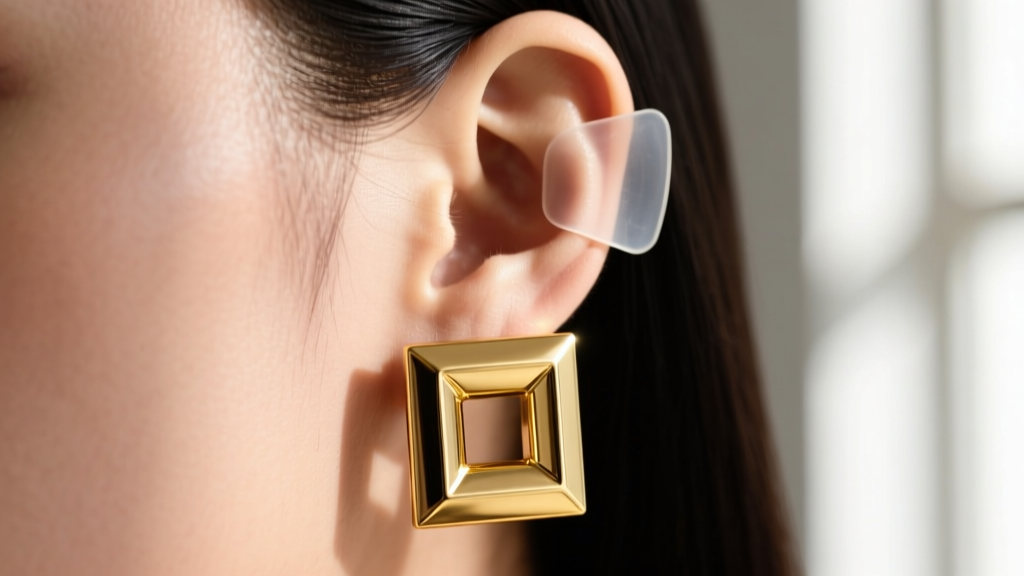
The architectural jewelry trend has firmly cemented large square earrings as a staple of modern, brutalist fashion. However, their bold geometric footprint introduces unique biomechanical challenges that standard studs and hoops simply do not face. When you wear a 40mm by 40mm solid metal square, you are not just dealing with weight; you are battling torque, leverage, and surface-area friction.
If your favorite geometric pieces are pulling your lobes forward, bending at the post, or catching on your clothing, you are experiencing the physics of top-heavy jewelry. This comprehensive troubleshooting guide breaks down the exact material grades, hardware upgrades, and support systems required to wear heavy square earrings comfortably and safely in 2026.
The Biomechanics of Earlobe Droop
Unlike a circular hoop where the mass is distributed evenly around a central axis, a square earring concentrates significant material in its bottom corners. This creates a low center of gravity that pulls the earring forward, causing the dreaded 'droop' where the decorative face points toward the floor rather than sitting flush against the cheek.
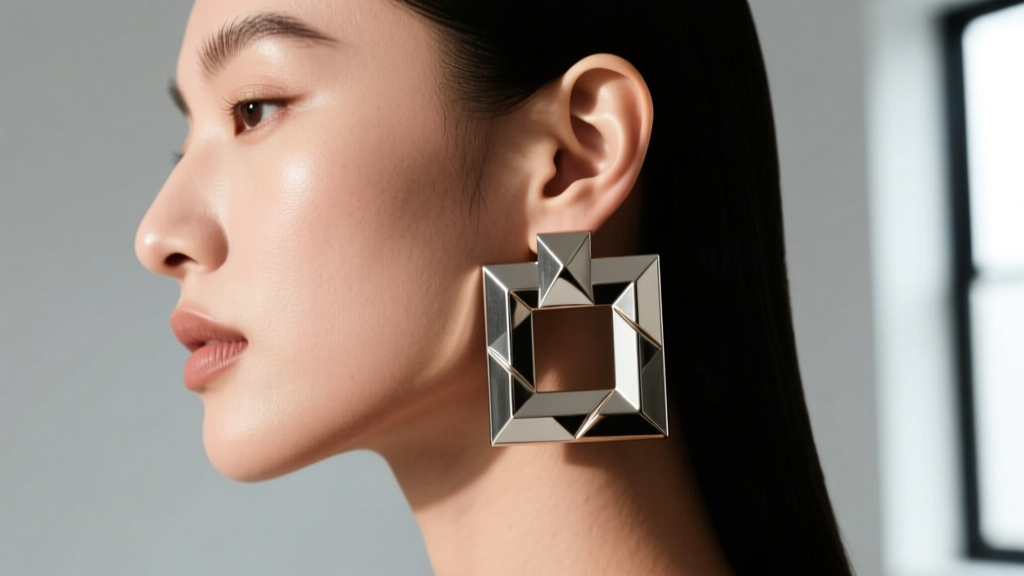
The rotational force (torque) exerted on the earlobe piercing is calculated by multiplying the earring's weight by the distance from the post to the bottom edge. A 15-gram brass square earring with a 20mm drop exerts significantly more tearing force on the fistula (the piercing hole) than a 15-gram circular stud that sits directly on the post. Over time, this continuous downward leverage causes micro-tears in the tissue, leading to permanent earlobe stretching and elongation.
Upgrading Your Hardware: Posts and Backs
The most common failure point for large square earrings is the earring post. Most commercial fashion jewelry uses 20-gauge (0.81mm) or 18-gauge (1.02mm) brass or silver posts. Under the leverage of a heavy square face, these thin posts will inevitably bend, creating a permanent tilt.
The 16-Gauge Titanium Solution
To solve post bending, you must increase the post diameter and upgrade the metallurgy. According to the Association of Professional Piercers (APP), implant-grade titanium (ASTM F136) offers superior tensile strength compared to standard sterling silver or brass. Upgrading to a 16-gauge (1.29mm) or 14-gauge (1.63mm) titanium post provides the structural rigidity needed to support up to 25 grams of decorative weight without warping.
Ditching Standard Butterfly Backs
Standard friction backs (butterfly clasps) fail on heavy earrings because the tension of the metal loops relaxes over time, allowing the earring to slide forward. Replace them with:
- La Pousette Locking Backs: These feature a mechanical locking mechanism that snaps securely into a groove on the post, making forward-sliding physically impossible.
- Jumbo Silicone Discs (10mm-12mm): A wide silicone disc distributes the clamping pressure across a broader area of the back of the earlobe, acting as a counterweight and stabilizer.
Material Weight Comparison Chart
If your large square earrings are simply too heavy for your tissue to support, the issue may be the base material. The Gemological Institute of America (GIA) notes that metal density drastically impacts the final wearability of statement jewelry. Consider this density matrix when shopping for or commissioning large geometric pieces:
| Material | Density (g/cm³) | Weight of 40x40x2mm Square | Comfort Rating |
|---|---|---|---|
| Solid Brass | 8.53 | ~27.2 grams | Poor (High Droop Risk) |
| Sterling Silver (925) | 10.36 | ~33.1 grams | Very Poor (Tearing Risk) |
| 14k Yellow Gold | 13.00 | ~41.6 grams | Unwearable (Surgical Risk) |
| Grade 5 Titanium | 4.43 | ~14.1 grams | Excellent (All-Day Wear) |
| Hollow Acrylic Resin | 1.18 | ~3.7 grams | Superior (Zero Fatigue) |
Pro-Tip: If you love the look of solid gold but cannot bear the weight, seek out 'electroformed' large square earrings. This process creates a microscopic shell of gold over a wax or resin core, reducing the weight by up to 70% while maintaining the exact exterior dimensions.
Solving the Snag and Scratch Corner Problem
Sharp 90-degree corners are the enemy of delicate fabrics and long hair. Large square earrings act like hooks, catching on silk blouses, winter scarves, and sweater knits. This sudden snagging applies violent, instantaneous shock-load to the earlobe, which can cause acute lobe tearing.
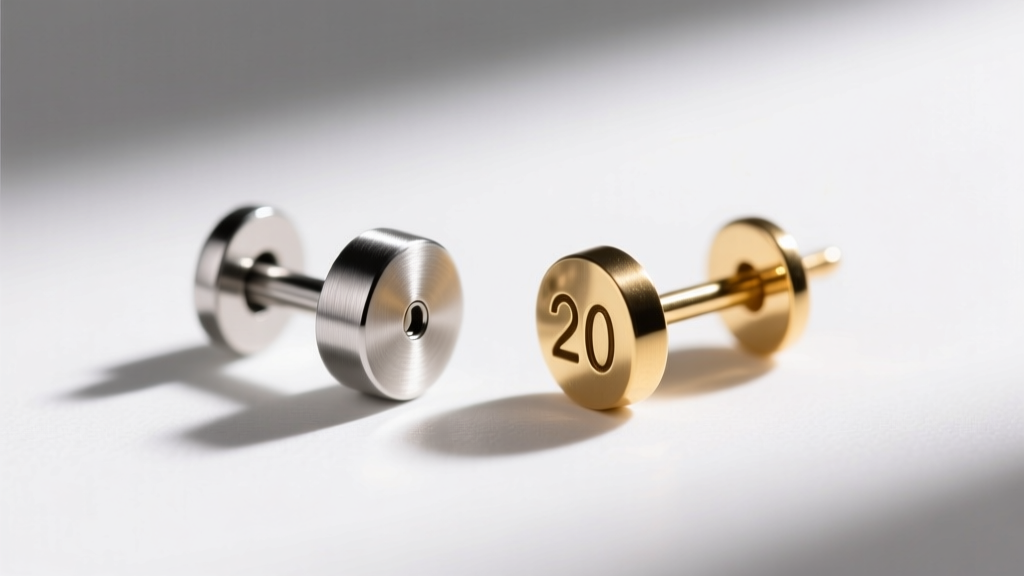
Edge Profiling and Chamfering
When evaluating large square earrings, inspect the edge profile. You want to avoid 'sheared' edges, which are left sharp from the metal stamping process. Instead, look for:
- Chamfered Edges: The 90-degree corner is filed down to a 45-degree flat bevel, reducing the hooking profile.
- Tumbled Finishes: The metal is placed in a vibratory tumbler with ceramic media, naturally rounding all microscopic sharp points.
- Epoxy Resin Coating: Some artisan jewelers coat the outer rim in clear, jeweler-grade epoxy, creating a smooth, frictionless barrier that glides past hair and fabric.
Non-Pierced Solutions: Clip-On Conversions
For those without pierced ears, wearing heavy square earrings requires specialized tension mechanics. Standard paddle clip-ons will slip off the ear cartilage within minutes due to the top-heavy pendulum effect of the square shape.
Omega-Back vs. Magnetic Converters
If you are converting a heavy square post earring to a clip-on, avoid spring-hinge paddles. Instead, use an Omega-back clip-on converter. The Omega back features a hinged, curved wire that wraps entirely around the lower earlobe, utilizing the natural anatomy of the ear as a physical shelf to bear the weight. Alternatively, for pieces under 15 grams, neodymium N52 magnetic converters can be used, provided you place a thin silicone cushion between the magnet and the skin to prevent necrosis from prolonged capillary restriction.
Emergency Troubleshooting Matrix
Keep this quick-reference guide handy to diagnose and fix common issues with your geometric jewelry collection:
| Symptom | Root Cause | Immediate Fix | Permanent Solution |
|---|---|---|---|
| Earring face points down | Top-heavy leverage; weak back | Layer two silicone friction backs | Install La Pousette locking backs |
| Post is bent at base | Post gauge too thin (20G/18G) | Gently bend back using nylon-jaw pliers | Solder on a 16G titanium post |
| Lobe feels sore/red | Friction and micro-tearing | Remove and apply hydrocolloid patch | Use LobeWonder support patches daily |
| Corners catch on hair | Sheared, sharp 90-degree edges | Apply clear nail polish to corners | Have a jeweler file and polish edges |
Large square earrings are a powerful style statement, but they demand respect for the physics of jewelry design. By upgrading your post gauge, utilizing wide-base silicone stabilizers, and paying close attention to edge chamfering, you can transform an uncomfortable, drooping burden into a comfortable, all-day wearable masterpiece.


