Daisy Hoop Earrings: Technical Guide to Fit & Metals
Explore the technical anatomy of daisy hoop earrings. Learn about gauge sizes, clasp mechanisms, enamel durability, and hypoallergenic metal grades.

The Engineering Behind Whimsical Jewelry
Daisy hoop earrings represent a unique intersection of delicate aesthetic design and rigorous structural engineering. While the floral motif evokes a sense of naturalism, the underlying hoop architecture must withstand the biomechanical stresses of daily wear, cartilage swelling, and environmental degradation. As a jewelry metallurgist and design evaluator, I approach these pieces not merely as accessories, but as micro-mechanical devices. This deep dive dissects the material science, gauge tolerances, and clasp physics that separate heirloom-quality daisy hoops from fast-fashion failures.
Base Alloys: Tensile Strength and Biocompatibility
The foundation of any hoop earring is its base alloy. The metal must possess enough tensile strength to maintain its circular geometry under tension, while remaining biocompatible for prolonged skin contact. According to the American Academy of Dermatology, nickel contact dermatitis is the most common metal allergy, making the precise alloy composition of gold and silver hoops a critical health factor.
| Alloy / Material | Grade / Standard | Tensile Strength | Nickel Content | Avg. Price (15mm Hoop) |
|---|---|---|---|---|
| Titanium | ASTM F136 (Implant Grade) | High (895 MPa) | 0% | $45 - $120 |
| Yellow Gold | 14k (58.5% Au) | Medium (350 MPa) | Trace (Alloy dependent) | $180 - $450 |
| Sterling Silver | 925 (Rhodium Plated) | Low-Med (250 MPa) | 0% (if properly plated) | $30 - $85 |
For cartilage piercings like the helix or conch, ASTM F136 implant-grade titanium is the undisputed standard. Its high tensile strength allows for thinner gauge hoops that resist warping, while its complete lack of nickel eliminates allergic contact dermatitis risks. Conversely, 18k gold (75% Au) is often too soft for the structural demands of a hinged clicker clasp, making 14k gold the superior technical choice for intricate daisy hoop earrings due to its higher copper and zinc alloy content, which increases structural rigidity.
When opting for 925 sterling silver, the technical specification to look for is flash-plated rhodium thickness. A standard flash plate is 0.05 microns, which will wear through in weeks, exposing the copper-rich silver to sulfur and causing rapid tarnishing. Premium manufacturers apply a 0.5-micron layer of rhodium over a palladium barrier, ensuring the silver hoop remains inert and untarnished for years.
Manufacturing the Daisy Motif: Failure Modes
The daisy embellishment is typically integrated into the hoop via three distinct manufacturing techniques. Each method carries specific failure modes that buyers and collectors must understand.
Vitreous vs. Cold Enamel
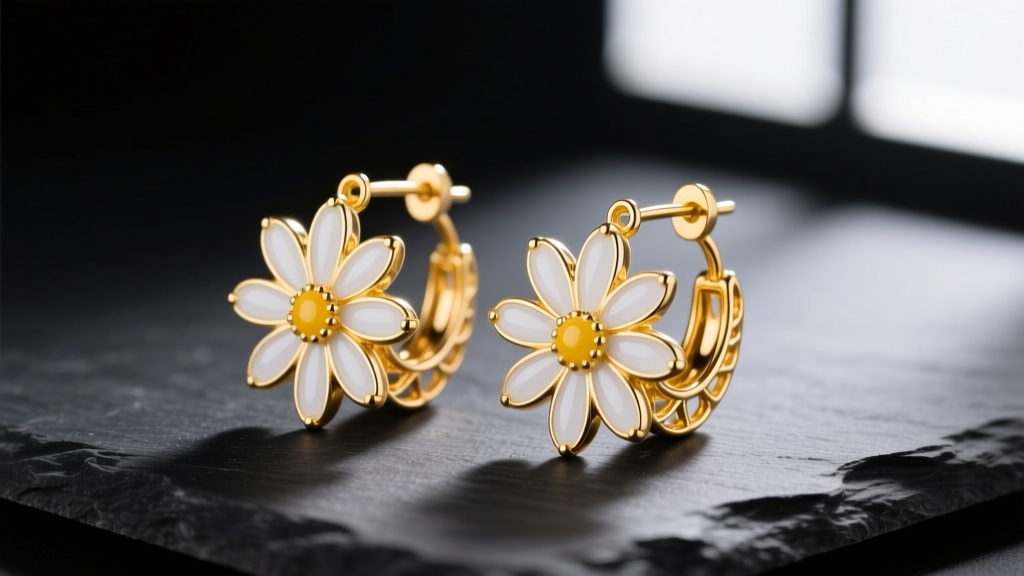
Enamel daisy hoops are incredibly popular, but the chemistry of the enamel dictates its lifespan. Vitreous enamel is essentially fused glass, fired at temperatures exceeding 1400°F. It bonds at a molecular level with the gold or silver substrate, offering extreme UV resistance and hardness (Mohs 5-6). Cold enamel (epoxy resin), however, is merely painted and cured. Over 12 to 18 months of daily wear, cold enamel will yellow from UV exposure, chip upon minor impacts, and degrade when exposed to the sulfur compounds in human sweat.
Micro-Pavé Setting Integrity
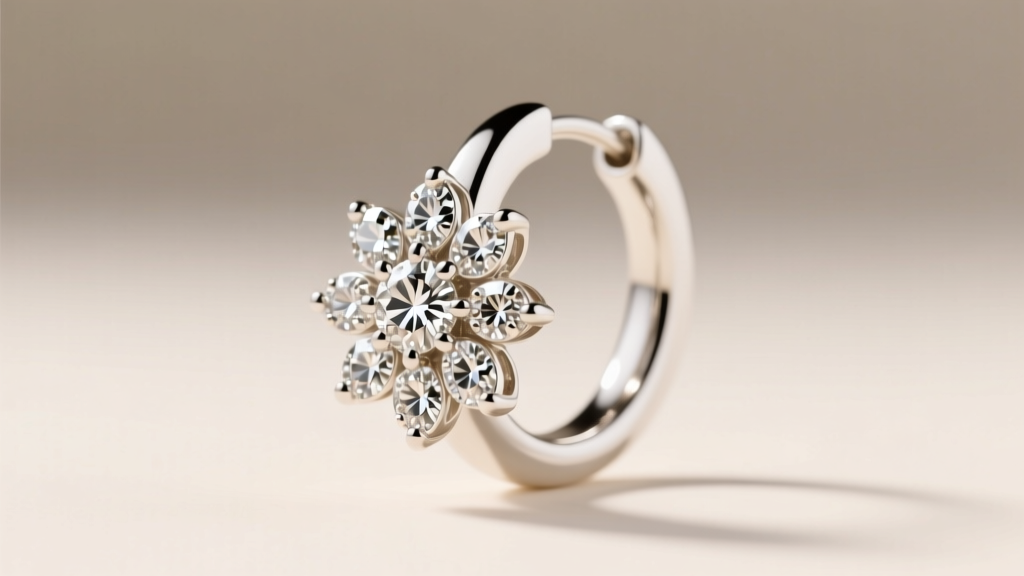
When the daisy motif is rendered in diamonds or moissanite, jewelers utilize micro-pavé settings. The technical risk here is prong fatigue. Because the petals are incredibly small, the metal beads (prongs) holding the stones are often less than 0.4mm thick. Repeated stress from taking the hoops on and off can bend these micro-prongs, leading to stone loss. High-end manufacturers mitigate this by using laser-welded platinum settings for the pavé, even if the base hoop is 14k gold.
Cast Integration vs. Soldered Charms
"A soldered charm creates a localized stress riser on the hoop wire. Under torsional stress, the hoop will almost always snap at the exact point of the solder joint." — Master Jeweler's Bench Manual
The most structurally sound daisy hoop earrings feature the motif cast directly into the continuous wire of the hoop, or CNC-milled from a single block of metal. Soldered charms act as pendulums, creating kinetic drag that stresses the clasp and the solder joint.
Gauge Thickness and Biomechanical Fit
Selecting the correct gauge (thickness) and inner diameter (ID) is vital for preventing migration and tissue tearing. The standard dimensions vary strictly by piercing placement:
- Standard Lobe (18G / 1.0mm): Ideal for lightweight enamel or hollow-cast daisy hoops. An ID of 10mm to 12mm provides a "huggie" fit that prevents the heavy motif from dragging the earlobe downward.
- Cartilage / Helix (16G / 1.2mm): Cartilage requires a thicker wire to prevent the "cheese-cutter effect," where a thin wire slowly migrates through the tissue under the weight of the daisy charm. An ID of 8mm to 10mm is standard for helix placements.
- Conch / Orbital (14G / 1.6mm): For larger orbital piercings, 14G titanium is required. The daisy motif must be counterbalanced on the opposite side of the hoop to maintain even weight distribution across the fistula.
Clasp Mechanisms and Tension Calibration
The clasp is the most common point of mechanical failure in hoop earrings. When dealing with the asymmetrical weight distribution of a daisy motif, the choice of closure is paramount.
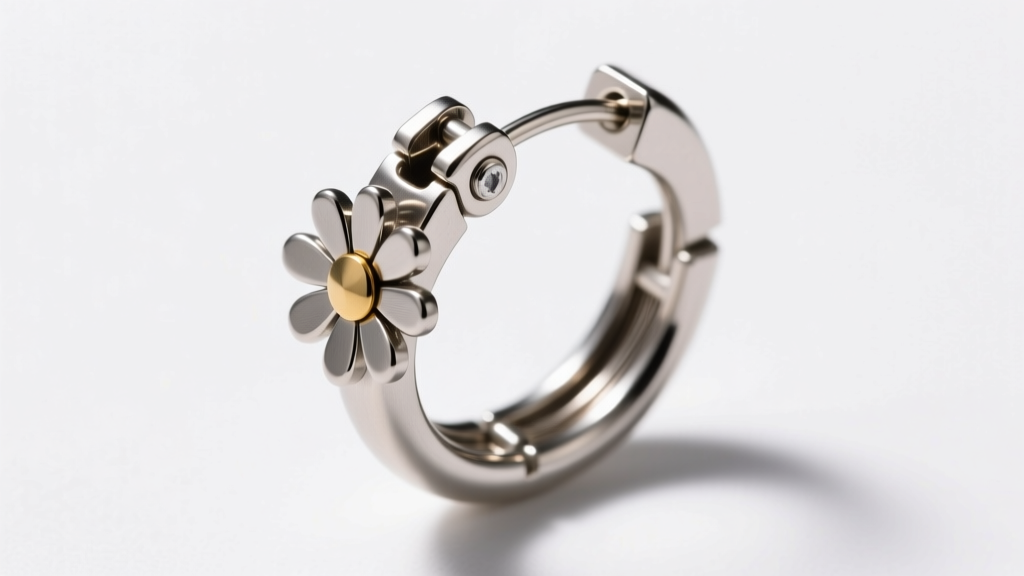
Hinge Clickers: The gold standard for daisy hoops. A precision-machined hinge and a tension-calibrated snap closure ensure the hoop remains perfectly circular. The internal post must feature a distinct "click" upon closure, indicating the locking groove is fully seated.
Threadless (Press-Fit) Ends: For cartilage placements where traditional hinged clickers cause irritation due to the bulky hinge joint, modern jewelers have adapted threadless closures. In this system, the daisy motif acts as the decorative end, attached to a bent titanium pin that slides into a hollow 16G or 14G receiving tube. The tension of the bent pin against the inner wall of the tube creates a mechanical lock that is virtually impossible to dislodge without deliberate pinching, making it the safest option for active wearers.
Continuous (Endless) Hoops: These rely on the tensile memory of the metal wire. The thin post threads through the hollow center of the opposite tubing. While visually seamless, they require significant manual dexterity to insert and can permanently deform the hoop's circular geometry if forced.
Expert Maintenance and Ultrasonic Risks
Proper maintenance of daisy hoop earrings requires an understanding of the materials involved. Never place enamel or micro-pavé daisy hoops in an ultrasonic cleaner. The high-frequency cavitation bubbles will shatter vitreous enamel, dissolve the epoxy of cold enamel, and vibrate micro-pavé stones out of their fragile settings.
Instead, utilize a non-ammonia, pH-neutral jewelry cleaning solution. Apply with a soft-bristled infant toothbrush, gently agitating the crevices around the daisy petals to remove sebum and cosmetic buildup. Rinse with distilled water to prevent hard water spotting, and dry with a lint-free microfiber cloth to maintain the optical clarity of any gemstones or polished metal surfaces.
Storage is equally critical. Hoops should never be tossed loosely into a jewelry box, as the resulting friction will scratch high-polish gold and dull pavé diamonds. Store each pair in an individual, anti-tarnish polyethylene ziplock bag with a silica gel desiccant packet to control ambient humidity. For hoops with delicate enamel petals, use a hard-shell travel case with individual padded compartments to prevent crushing forces from compromising the enamel-to-metal bond.


