Dangle Flower Earrings Buying Guide: What to Look For
Discover how to choose the perfect dangle flower earrings. Our buying guide covers materials, gauge sizes, face shapes, and pricing tiers.

The Anatomy of Botanical Dangles
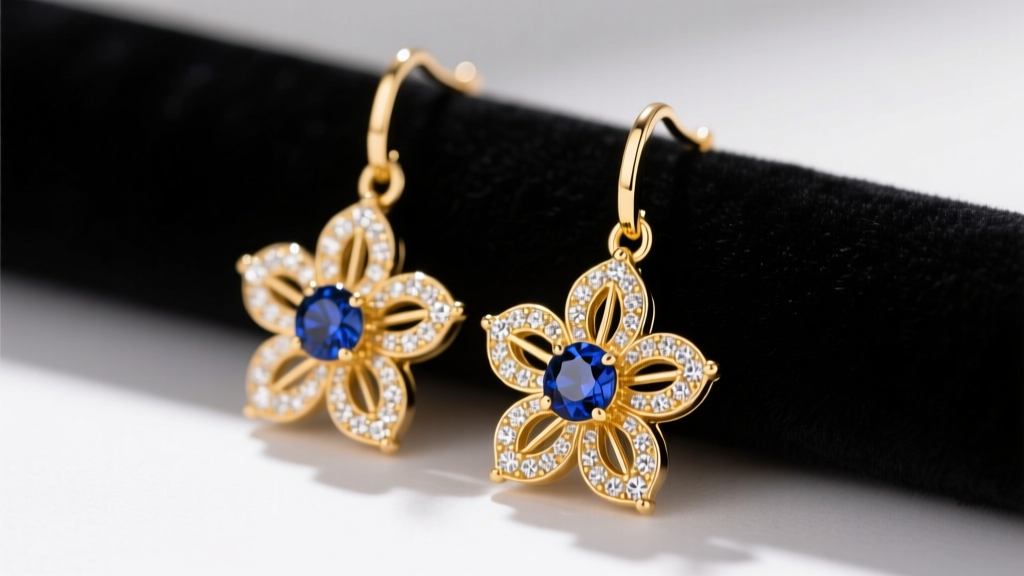
As we navigate the jewelry trends of 2026, the botanical motif has evolved far beyond simple stamped-metal studs. Today, dangle flower earrings are kinetic sculptures. Unlike static jewelry, dangles rely on movement, meaning the 'flower' component acts as a pendulum that catches the light and draws attention to the neckline. When shopping for these intricate pieces, understanding their anatomy is crucial. A well-crafted floral dangle consists of three main parts: the primary suspension loop (or bail), the drop chain or articulated links, and the floral head itself. The articulation points are where most cheap jewelry fails, making the engineering of these earrings just as important as their aesthetic appeal.
Metal Purity & Petal Materials
The longevity and wearability of your earrings depend heavily on material selection. According to guidelines from Jewelers of America, consumers should always verify the base metal, especially for pieces that will be worn for extended periods.
- Implant-Grade Titanium (ASTM F136): For sensitive or newly healed piercings, look for ASTM International F136 certified titanium. It is entirely nickel-free and significantly lighter than steel, making it ideal for larger floral silhouettes.
- Solid Gold vs. Vermeil: 14k or 18k solid gold is the standard for fine jewelry. If opting for gold vermeil, ensure it is heavily plated (a minimum of 2.5 microns of gold over a sterling silver base). Anything less will wear off rapidly due to the friction of the earring moving against the neck and hair.
- Enamel Work: Many floral dangles feature colored enamel. Vitreous enamel (fired glass) is highly durable, scratch-resistant, and retains its color indefinitely. Cold enamel (epoxy resin) is cheaper but prone to yellowing, chipping, and peeling within a year of regular wear.
Wire Gauge, Weight, and the Cheese-Cutter Effect
The most common failure mode in heavy dangle flower earrings is not the clasp breaking, but the earring slowly slicing through the earlobe tissue. This is known in the industry as the 'cheese-cutter effect.' If a heavy floral dangle hangs on a thin wire, the concentrated downward pressure restricts blood flow and gradually migrates the piercing downward.
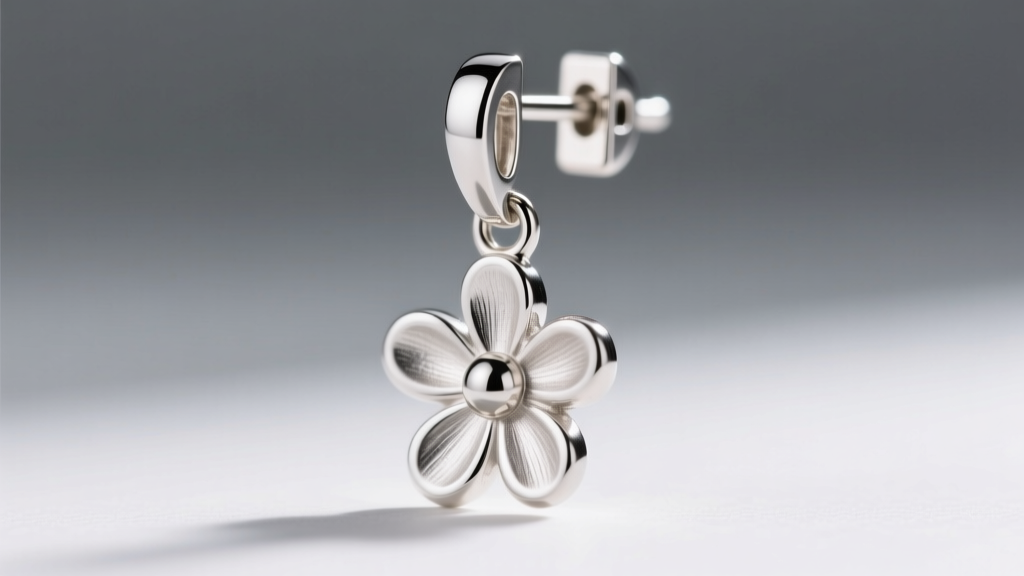
Standard lobe piercings are typically done at 20-gauge (0.81mm) or 18-gauge (1.02mm). However, as the weight of the earring increases, the wire gauge must increase proportionally to distribute the load. Below is a critical decision matrix for matching earring weight to wire thickness and necessary lobe support.
| Earring Weight (Per Ear) | Minimum Wire Gauge | Recommended Backing/Support |
|---|---|---|
| Under 5g | 20g (0.81mm) | Standard silicone stopper |
| 5g – 15g | 18g (1.02mm) | Jumbo silicone disc or French wire stopper |
| 15g – 25g | 16g (1.29mm) | Lobe support patches + locking leverback |
| Over 25g | 14g (1.63mm) or harness | Ear chain harness or clip-on conversion |
Expert Tip: If you already own heavy floral dangles with thin wires, purchase invisible adhesive lobe support patches. These small, matte stickers distribute the weight across a wider surface area of the earlobe, preventing tearing and migration.
Proportion, Drop Length, and Face Shapes
The visual impact of dangle flower earrings is heavily dictated by the 'drop length' (the distance from the piercing to the bottom of the flower) and the 'petal spread' (the horizontal width of the floral head). Matching these dimensions to your facial structure ensures the earrings enhance rather than overwhelm your features.
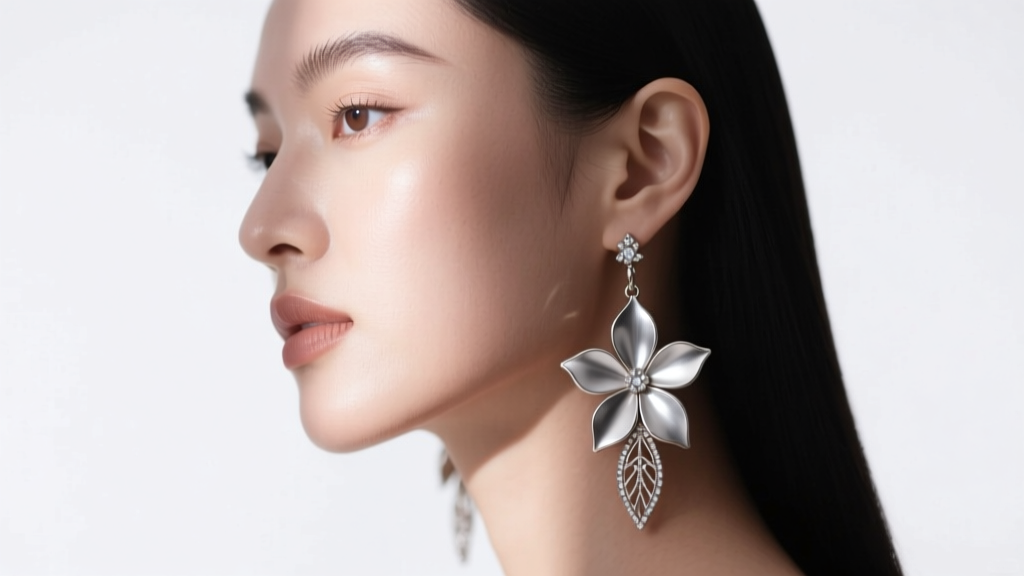
Matching Silhouettes to Facial Geometry
- Round Faces: Opt for elongated, linear floral drops. A single, dangling orchid or lily suspended from a delicate chain creates verticality, elongating the face. Avoid wide, clustered daisy hoops or short, broad sunflowers that sit directly on the jawline, as these emphasize width.
- Square Faces: Choose soft, rounded petals with curved drop lines. Peonies, roses, or lotus flowers with organic, asymmetrical edges help soften angular jawlines and prominent cheekbones. Avoid stiff, geometric floral designs.
- Heart-Shaped Faces: Teardrop-shaped floral dangles (like a dangling bluebell or tulip) are ideal. The wider top and narrower bottom of the flower perfectly balance a broader forehead and a narrow, pointed chin.
- Oval Faces: The universal shape. You can confidently wear anything from dramatic, shoulder-grazing chandelier florals to tight, clustered posy dangles. When evaluating gemstone accents on these pieces, consult the GIA Gem Encyclopedia to understand the durability of the stones used in the floral centers.
Clasp Mechanisms & Failure Modes
The clasp is the unsung hero of the dangle earring. Because floral dangles catch on hair, scarves, and high-collared clothing, the suspension mechanism must be secure.
- French Wire (Shepherd Hook): The most common and elegant clasp, but it has a high failure rate for heavy dangles. Hair snagging can easily pull the earring out. If you buy French wire dangles, you must use silicone stoppers or 'earring nuts' to secure them.
- Leverback: The gold standard for dangle flower earrings. A hinged latch clicks securely into place behind the earlobe. It prevents loss and provides a slightly thicker wire gauge at the hinge point, offering better structural integrity.
- Threadless/Internally Threaded Labret Conversions: For those wearing floral dangles from cartilage piercings (like the flat or tragus), traditional hooks will not work. Look for jewelers who offer 'dangle charms' that feature a press-fit pin or internal threading, allowing you to attach the flower to a secure, flat-back labret post.
Pricing Tiers & Market Realities
Understanding where a piece sits in the market helps you assess its true value and expected lifespan.
Fast Fashion ($15 – $45)
Typically made from plated brass or zinc alloys with cold enamel. The wires are usually a flimsy 22-gauge. While fun for a single event, these carry a high allergy risk and the plating will tarnish rapidly when exposed to sweat and friction.
Demi-Fine ($80 – $250)
The sweet spot for everyday luxury. Expect heavy gold vermeil or sterling silver, semi-precious stones (like carved chalcedony, moonstone, or mother-of-pearl), and 18-gauge leverback clasps. Brands in this tier offer excellent botanical designs that balance quality with accessibility.
Fine Jewelry ($800 – $5,000+)
Heirloom-quality pieces crafted from solid 18k gold or platinum. These feature vitreous enamel, natural diamonds or sapphires, and custom-engineered hinges. The floral elements are often hand-carved or cast using the lost-wax method, ensuring no two petals are exactly alike.
Final Maintenance Advice: Dangle flower earrings require specific storage. Never toss them loosely into a jewelry box. The chains and articulated petal links will inevitably tangle and bend. Always hang them from a dedicated earring tree or lay them flat in a compartmentalized velvet tray. Clean the hinge mechanisms monthly with a soft brush and mild dish soap to remove lotion buildup that can stiffen the drop movement.


