Decoding the Earring Tag: A Material Properties Guide
Learn to decode any earring tag to verify metal grades. We compare titanium, gold, and platinum properties for safe, lasting ear piercings.

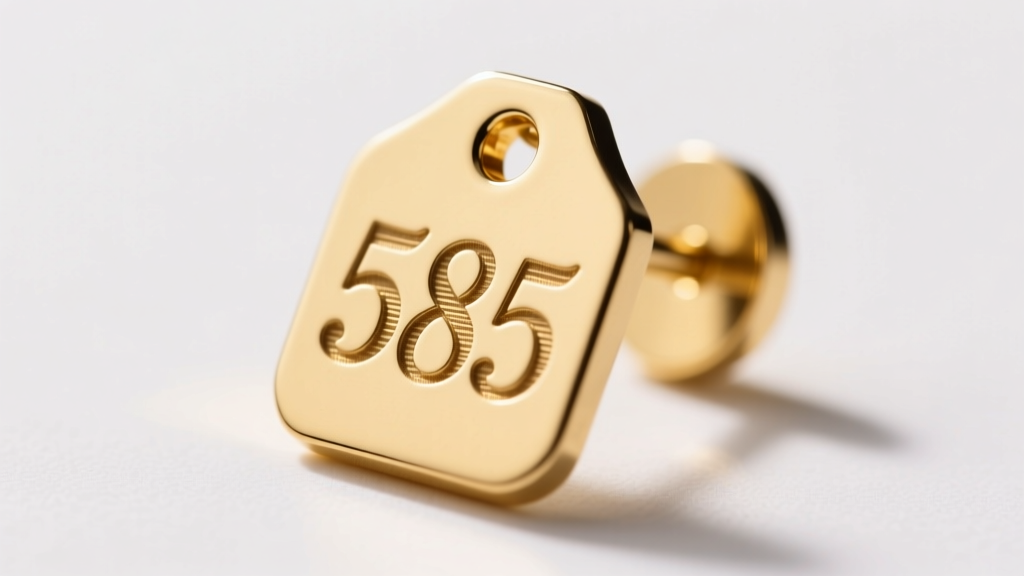
When investing in fine jewelry or body-safe pieces for sensitive piercings, the physical metal composition is everything. Yet, consumers often rely on vague marketing terms rather than verifiable data. The most critical piece of evidence on any piece of jewelry is the earring tag—the microscopic hallmark, laser-etched post identifier, or manufacturer hangtag that dictates the metallurgical reality of the piece. Understanding how to read these tags is the difference between a lifelong heirloom and a severe contact dermatitis reaction.
In this guide, we bypass the marketing fluff and dive deep into the material properties, industry standards, and authentication tags that define modern earring manufacturing.
The Anatomy of an Earring Tag: Stamps, Lasers, and Hangtags
Before comparing metals, we must understand how material grades are communicated. As of 2026, earring identification generally falls into three categories:
- Traditional Stamped Tags: A physical metal plate soldered onto a hoop or clasp, or a deep strike stamp on a thick post. Common for platinum and heavy gold pieces.
- Laser-Etched Tags: Micro-engravings on the earring post or backing. Because standard lobe earrings are often 20-gauge (0.81mm) or 18-gauge (1.02mm), traditional stamping would compromise the structural integrity of the post. Lasers etch the hallmark without removing material.
- Retail Hangtags: The physical card or tag attached to the packaging. While useful for brand tracking, the FTC strictly regulates the claims made on these tags, though enforcement in imported fast-fashion jewelry remains a challenge.
"A genuine hallmark or earring tag is a legal guarantee of purity. If a piece lacks a tag, stamp, or verifiable laser etching, you are purchasing blind."
Material Comparison: What Your Earring Tag Actually Means
The stamp on your earring tag translates to specific alloy ratios, hardness levels, and biocompatibility. Let us break down the most common high-end and body-safe materials.
Implant-Grade Titanium (ASTM F136) vs. Commercial Titanium
Titanium is the gold standard for fresh piercings and hyper-sensitive ears. However, not all titanium is equal. An earring tag reading simply "Titanium" is a red flag. You are looking for ASTM F136 (Ti-6Al-4V ELI), which is implant-grade and entirely nickel-free. Commercial titanium (Grades 1 through 4) is generally safe but lacks the specific alloying elements (aluminum and vanadium) that give F136 its superior tensile strength and mirror-polish capabilities, which reduce bacterial adhesion in the piercing fistula.
Niobium: The Unstamped Hypoallergenic Alternative
Niobium is a highly reactive, hypoallergenic elemental metal. Unlike titanium, niobium is exceptionally soft and malleable. Because of this, you will rarely find a traditional stamped earring tag on a pure niobium piece; the stamping process would warp the jewelry. Instead, reputable brands use laser etching on the packaging or a tiny laser mark on the post. Niobium cannot be anodized to the same vibrant spectrum as titanium, but it offers a darker, gunmetal-grey aesthetic when heat-treated or anodized to black.
Gold Alloys: Decoding 14k vs. 18k Tags
Pure 24k gold is too soft for earring posts, which would easily bend and lose their securing nuts. Therefore, gold is alloyed. An earring tag stamped 585 or 14k means the piece is 58.5% pure gold. A tag stamped 750 or 18k indicates 75% purity.
The danger lies in white gold. To achieve a silver color, 14k white gold is often alloyed with nickel. If your earring tag does not specify "Nickel-Free" or "Palladium Alloy," a 14k white gold post can trigger severe allergic reactions. For cartilage piercings, always verify the alloying metals beyond the karat tag.
Platinum (PT950): The Heavyweight Standard
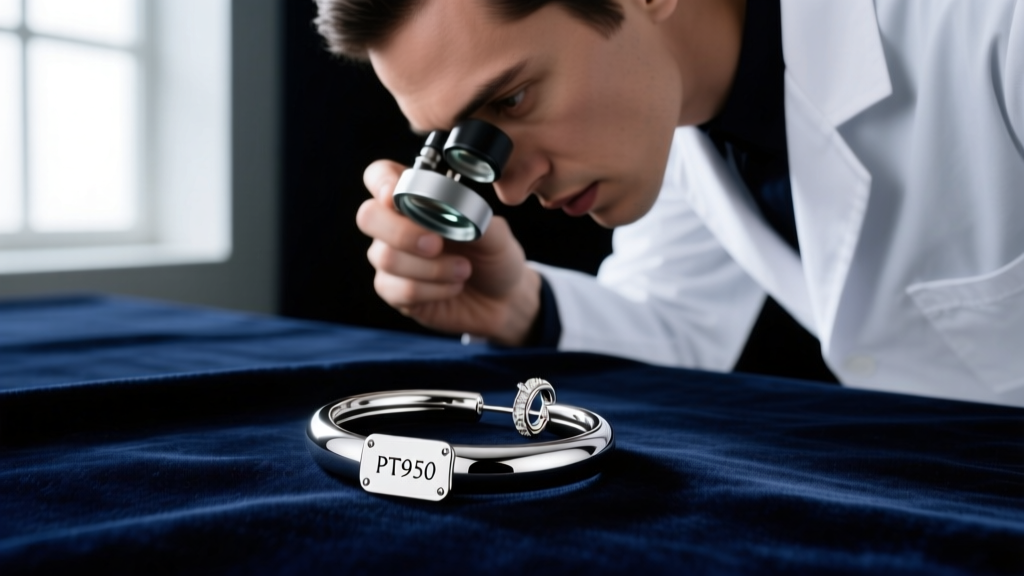
Platinum tags usually read PT950 or PT900, indicating 95% or 90% pure platinum, typically alloyed with ruthenium or iridium for hardness. Platinum is incredibly dense (21.45 g/cm³) and will not tarnish or oxidize. However, its weight makes it less ideal for large, heavy cartilage hoops or dangles, as the sheer mass can cause migration or lobe stretching over time. It is best reserved for small, secure studs or huggies.
The Earring Tag Data Matrix: Density, Hardness, and Biocompatibility
To make informed purchasing decisions, you must look beyond the aesthetic and understand the physical properties dictated by the earring tag. The table below synthesizes the metallurgical data you need to know.
| Material Grade | Common Tag Stamp | Density (g/cm³) | Vickers Hardness (HV) | Biocompatibility & Notes |
|---|---|---|---|---|
| Implant Titanium | ASTM F136 / Ti6Al4V | 4.43 | 310 - 350 | Flawless. Non-magnetic, anodizable, zero nickel. |
| Pure Niobium | 99.9% Nb (Rarely stamped) | 8.57 | 60 - 100 | Excellent. Very soft, highly biocompatible. |
| 14k Yellow Gold | 585 / 14k | 13.0 - 14.0 | 130 - 160 | Good. Ensure copper/silver alloy, avoid nickel. |
| 18k Yellow Gold | 750 / 18k | 15.0 - 16.0 | 120 - 140 | Good. Softer than 14k, higher pure gold content. |
| Platinum | PT950 | 21.45 | 110 - 130 | Excellent. Heavy, hypoallergenic, highly durable. |
| Surgical Steel | 316L / 316LVM | 8.00 | 150 - 190 | Fair. Contains 8-10% nickel; avoid for fresh piercings. |
Red Flags: Fake Tags and Misleading Material Claims
The Federal Trade Commission (FTC) Jewelry Guides strictly dictate how precious metals must be marked and advertised. However, the market is flooded with misleading terminology. Watch out for these red flags on earring tags and packaging:
- "Surgical Steel" without a grade: If the tag does not specify 316L or 316LVM, you may be receiving cheap 304 stainless steel, which corrodes easily and leaches high amounts of nickel.
- "Hypoallergenic": This is a marketing term, not a metallurgical standard. Even "hypoallergenic" stainless steel contains nickel. Always look for specific elemental tags like Titanium or Niobium.
- "Silver-Plated" or "Tibetan Silver": These tags often hide base metals like brass, zinc, or lead. Genuine silver will always be tagged 925 or Sterling.
Expert Verification: Testing Beyond the Tag
While the earring tag is your first line of defense, sophisticated counterfeiters can laser-etch fake hallmarks onto base metals. According to the Association of Professional Piercers (APP), relying solely on visual tags for implant-grade verification is insufficient for professional studios. How can you verify the material?
1. X-Ray Fluorescence (XRF) Testing
XRF analyzers bounce X-rays off the metal to determine its exact elemental breakdown in seconds. This is the only way to verify if a piece tagged "18k Palladium White Gold" actually contains palladium instead of nickel. Many high-end jewelers and professional piercing studios now keep handheld XRF scanners on-site.
2. The Magnet Test (For Titanium Verification)
Implant-grade titanium (ASTM F136) is entirely non-magnetic. If an earring tagged as "Titanium" sticks to a neodymium magnet, it is likely a ferromagnetic stainless steel with a titanium-colored PVD coating. Note that this test does not differentiate between titanium and niobium, as both are non-magnetic.
3. Anodization Voltage Testing
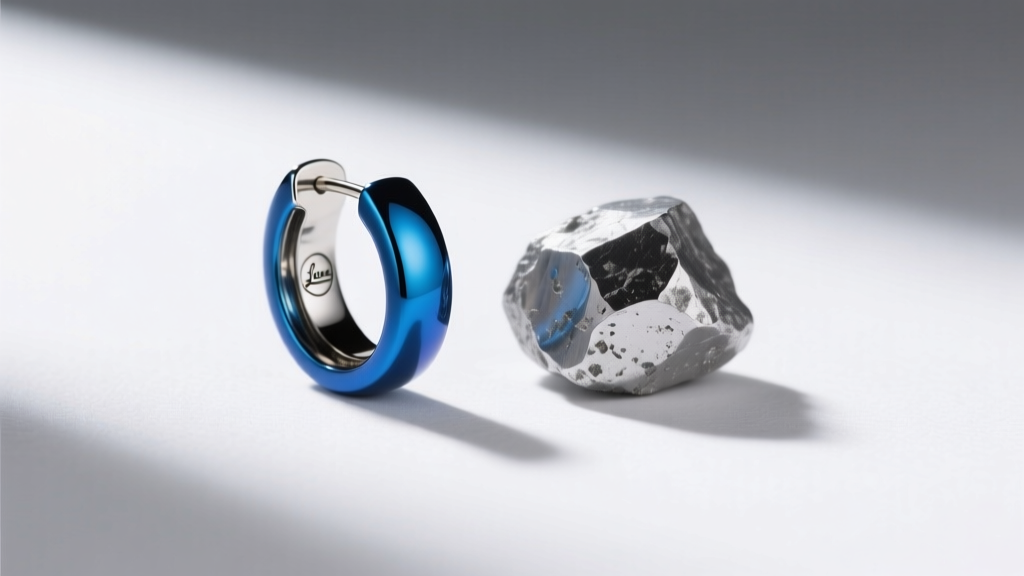
Titanium and niobium react to electrical currents by shifting colors (anodization). By using a programmable anodizer, experts can verify the metal based on the voltage required to reach specific colors. For example, titanium turns a vibrant blue at roughly 15-20 volts, while niobium requires different voltage thresholds to achieve similar hues.
Conclusion
The earring tag is far more than a microscopic stamp or a retail hangtag; it is a metallurgical passport. Whether you are selecting a 20-gauge titanium stud for a fresh helix piercing or investing in heavy PT950 platinum huggies, demanding verifiable tags and understanding the underlying material properties ensures your jewelry remains safe, beautiful, and structurally sound for decades. Always prioritize specific alloy grades and ASTM standards over vague marketing buzzwords, and when in doubt, utilize XRF testing to confirm the metal's true identity.


