Nina Ricci Pearl Earrings: 2026 Vintage Material Guide
Explore the materials, faux pearl glass properties, and base metal compositions of vintage Nina Ricci pearl earrings in our 2026 collector's guide.

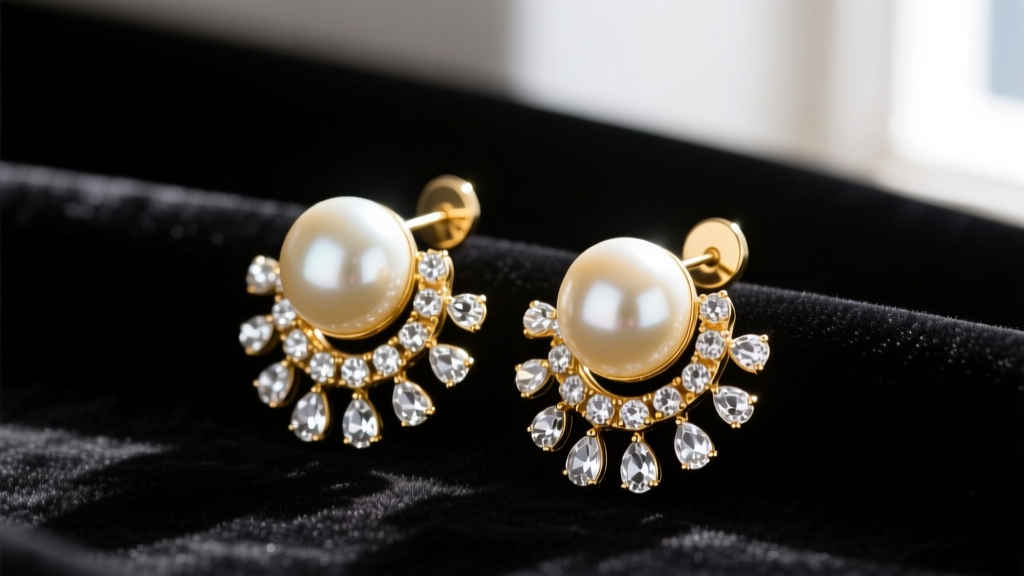
The Allure of Mid-Century Couture Costume Jewelry
In the 2026 vintage jewelry market, few names command as much respect in the realm of couture costume jewelry as Nina Ricci. While modern collectors often obsess over fine gemstones, the true connoisseur understands that Nina Ricci pearl earrings represent a masterclass in material manipulation, artistic design, and mid-century manufacturing prowess. Unlike fine jewelry, which derives its value from intrinsic gemstone worth, vintage Ricci earrings are valued for their architectural silhouettes, provenance, and the highly specific material properties of their faux components. Understanding the exact metallurgical and chemical compositions of these pieces is essential for authentication, valuation, and proper preservation.
Deconstructing the 'Pearl': Glass Cores and Guanine Coatings
The most critical material misconception surrounding vintage Nina Ricci pearl earrings is the assumption that they utilize cultured or natural pearls. In reality, the vast majority of Ricci's iconic pearl designs utilize high-end faux pearls. However, calling them 'fake' diminishes the complex chemical engineering involved in their creation. According to the Gemological Institute of America (GIA), high-quality imitation pearls are typically crafted using a glass bead core coated with essence d'orient.
This pearlescent coating is historically derived from guanine, a crystalline substance extracted from fish scales, suspended in a lacquer or binding agent. When applied to a dense glass bead, the guanine crystals align to mimic the light-refracting properties of natural nacre. The glass core provides a specific gravity (roughly 2.5 to 4.2) that gives the earrings a substantial, luxurious weight on the earlobe, often making them heavier than equivalently sized freshwater pearls. Collectors can identify these vintage faux pearls by their flawless, mathematically perfect spherical shapes and a distinct 'glassy' click when two beads are gently tapped together, contrasting with the soft, chalky friction of real nacre.
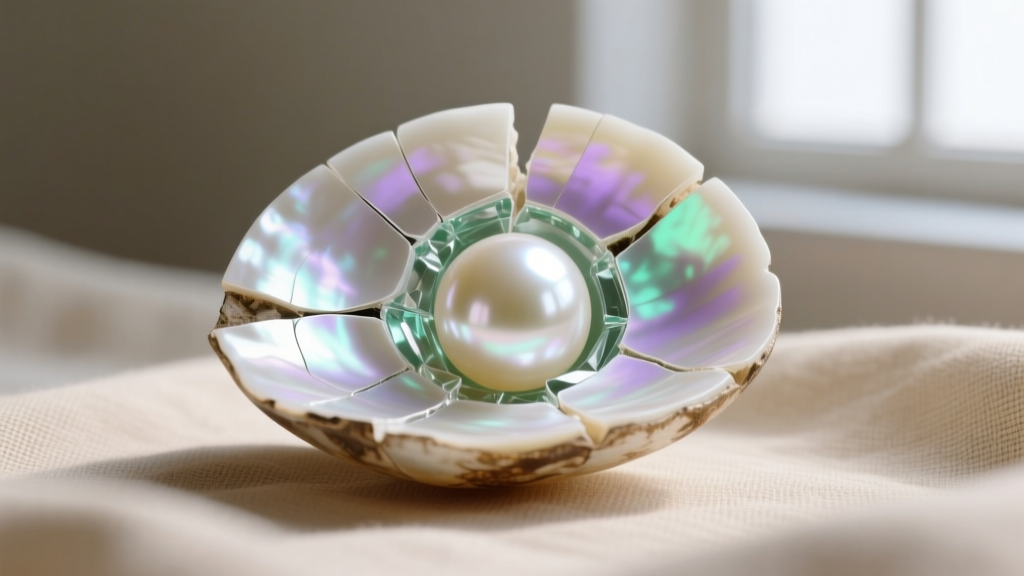
The Gripoix Connection: Poured Glass Mastery
Some of the most highly prized Nina Ricci pearl earrings from the 1950s and 1960s feature components supplied by the legendary Maison Gripoix. Gripoix specialized in pâte de verre (poured glass) techniques. Unlike mass-produced molded glass, Gripoix pearls and cabochons were created by hand-pouring molten glass into intricate metal frameworks. The defining material property of Gripoix glass is the presence of microscopic, trapped air bubbles within the matrix. Under a 10x jeweler's loupe, these bubbles serve as a primary authentication marker, proving the artisanal, non-industrial origin of the material. The refractive index of this poured glass creates a deep, internal glow that modern resin or acrylic pearls simply cannot replicate.
Base Metallurgy and Plating Properties
The structural foundation of vintage Nina Ricci earrings relies on specific base metal alloys, commonly referred to in the industry as 'pot metal' or white metal. These alloys were primarily composed of zinc, tin, copper, and occasionally lead or antimony, chosen for their low melting points and ability to capture highly detailed, three-dimensional castings of leaves, bows, and floral motifs.
Because these base metals are prone to oxidation and lack an inherent precious luster, they were heavily plated. Vintage Ricci pieces typically feature gold electroplating or rhodium flashes. The material durability of these earrings in 2026 is directly tied to the thickness of this original plating. Mid-century couture plating was substantially thicker than modern 'flash' plating, often measuring between 2 to 5 microns. This thickness allowed the gold wash to withstand decades of wear, though it also developed a highly specific wear pattern known as 'brassing,' where the underlying copper or zinc alloy becomes visible at high-friction points, such as the hinge of a clip-back.
Plating Degradation and Patina
Collectors must differentiate between destructive corrosion and desirable patina. Rhodium-plated Nina Ricci earrings, designed to mimic platinum or white gold, are highly resistant to tarnish but can suffer from micro-flaking if the underlying base metal expands due to temperature fluctuations. Gold-washed pieces, conversely, develop a soft, muted patina in the recesses of the casting. This accumulation of microscopic debris and oxidation in the crevices actually enhances the three-dimensional relief of the design and should never be aggressively polished away.
Hardware Analysis: Clip-Backs and Tension Mechanisms
The hardware of Nina Ricci pearl earrings provides vital chronological and material data. Because these pieces were designed as costume jewelry, the mechanisms had to securely hold substantial weight without the benefit of a pierced earlobe.
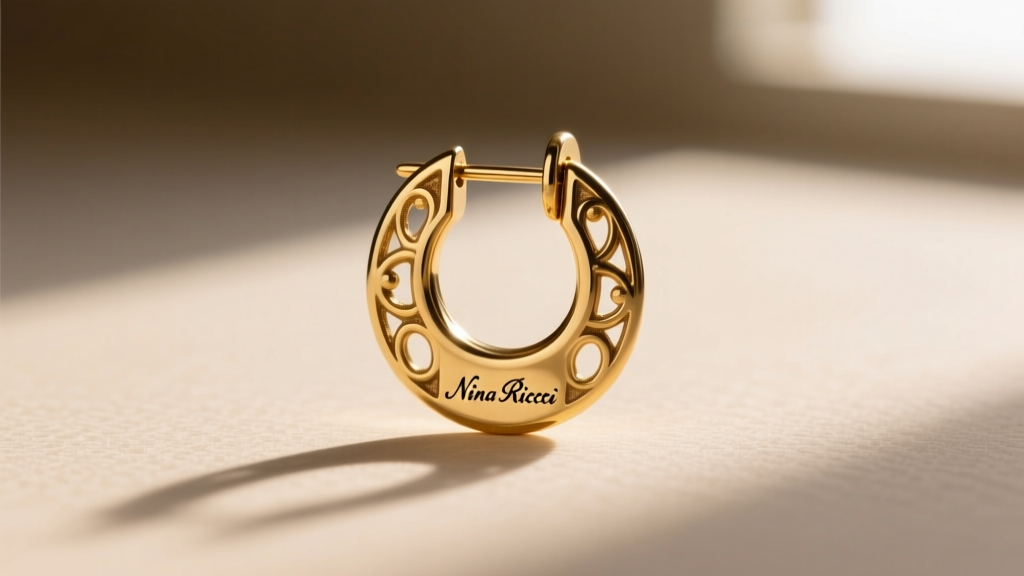
The Evolution of the Omega Clip
During the 1960s and 1970s, the omega clip became the industry standard for heavy couture earrings. The omega clip utilizes a hinged, curved lever that snaps over a central post, distributing the weight of the earring across a wider surface area of the earlobe. The material properties of the spring steel used in the internal tension mechanism were crucial; if the steel was too rigid, it would cause pain, and if too soft, the earring would slip. Examining the tension spring on a vintage Ricci omega clip reveals the high-grade steel alloys used by French manufacturers, which often retain their mechanical snap even after sixty years. Later 1980s pieces frequently transitioned to convertible post-and-clip mechanisms, utilizing brass posts with stainless steel friction nuts.
Material Comparison: Faux vs. Fine
To understand the specific material advantages and limitations of vintage Nina Ricci pearl earrings, it is helpful to compare their core components against both natural pearls and modern imitation alternatives.
| Material Property | Vintage Nina Ricci Faux Pearl | Natural/Cultured Nacre Pearl | Modern Acrylic/Resin Pearl |
|---|---|---|---|
| Core Composition | Dense Lead-Free Glass Bead | Conchiolin and Aragonite | Injection-Molded Polymer |
| Surface Coating | Guanine (Essence d'Orient) | Natural Nacre Secretion | Synthetic Pearlescent Paint |
| Specific Gravity (Weight) | High (Heavy on the ear) | Medium (2.60 - 2.85) | Low (Extremely lightweight) |
| UV Fluorescence | Inert (Glass core) | Variable (Often creamy/white) | Inert or artificial brighteners |
| Degradation Risk | Coating flaking, glass chipping | Dehydration, acid etching | Yellowing, polymer cracking |
Authentication Markings and Hallmarks
Material analysis must be paired with hallmark verification. Authentic Nina Ricci pearl earrings will bear specific stampings on the metal hardware. Early pieces (pre-1955) may lack the copyright symbol (©), as the Universal Copyright Convention was not fully adopted and enforced in jewelry stamping until the mid-1950s. Post-1955 pieces will typically feature 'Nina Ricci ©', often accompanied by 'Made in France' or 'Paris'. As noted by The Metropolitan Museum of Art, the transition of costume jewelry from mere accessory to protected artistic design heavily influenced these hallmarking practices. The font depth and crispness of the stamp on the soft base metal are critical indicators; modern laser etchings look fundamentally different from the deep, die-struck stamps of the mid-century era.
Preservation Protocols for Glass and Guanine
The material properties of Nina Ricci pearl earrings dictate strict, non-negotiable care protocols. The most common catastrophic failure mode for these earrings is the use of ultrasonic jewelry cleaners. The high-frequency acoustic cavitation bubbles generated by ultrasonic cleaners will violently strip the delicate guanine coating from the glass core, leaving behind a bare, transparent bead. Furthermore, the vibrations can cause microscopic fractures in the poured Gripoix glass, leading to sudden structural failure.
Chemical cleaners containing ammonia or alcohol are equally destructive, as they dissolve the binding agents holding the pearlescent flakes to the glass. The only safe cleaning method involves a barely damp, lint-free microfiber cloth to gently wipe away sebum and cosmetic residue from the pearls, followed by immediate drying. For the metal components, a soft-bristled brush can be used to gently dislodge debris from the intricate castings, but abrasive silver polishes must be strictly avoided, as they will instantly remove the micron-thin gold or rhodium plating, exposing the highly reactive pot metal beneath to rapid oxidation.


