Troubleshooting Purple Color Stone Earrings: Fading and Fakes
Discover expert troubleshooting for purple color stone earrings. Learn how to fix fading amethyst, spot dyed fakes, and safely clean porous gems.

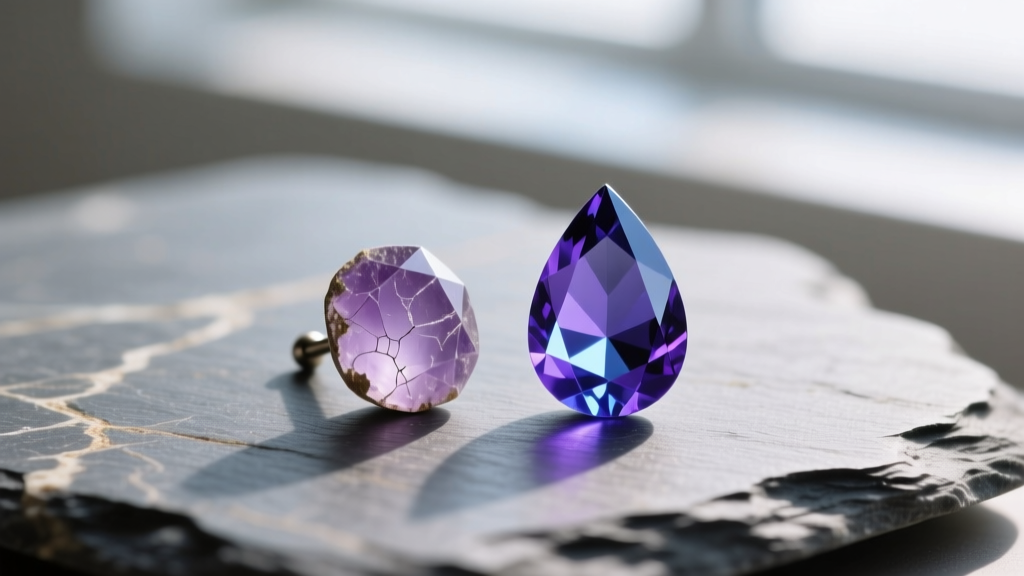
The Hidden Vulnerabilities of Purple Gemstones
Purple gemstones offer a regal, captivating aesthetic, but they also present some of the most complex gemological challenges in the jewelry industry. When troubleshooting purple color stone earrings, collectors and casual wearers alike frequently encounter issues ranging from irreversible UV damage to catastrophic cleaning mistakes. Unlike diamonds or sapphires, many popular purple stones possess unique crystalline structures, varying degrees of porosity, and specific cleavage planes that demand highly specialized care. Whether you are dealing with a pair of heirloom tanzanite drops or everyday amethyst studs, understanding the exact failure modes of these minerals is critical to preserving their value and structural integrity.
Problem 1: UV-Induced Fading in Amethyst & Kunzite
The most common complaint among owners of purple quartz and spodumene earrings is sudden, unexplained color loss. Amethyst derives its purple hue from iron impurities and natural irradiation within the crystal lattice. However, prolonged exposure to ultraviolet (UV) light triggers photo-oxidation, causing the iron to change its oxidation state. This results in the stone turning a dull, muddy brown or grey. Similarly, kunzite (a purple variety of spodumene) is notorious for rapid fading when exposed to direct sunlight.
Diagnostic Testing for Sun Damage
To determine if your earrings have suffered UV degradation, examine them under a 5000K daylight-equivalent LED lamp. Compare the color saturation near the girdle (the edge of the stone) to the culet (the bottom point). If the culet retains a deeper purple while the table (top facet) appears washed out, the stone has likely experienced directional UV bleaching. According to the Gemological Institute of America (GIA), natural amethyst can fade if left in direct sunlight for extended periods, making window-display storage a critical error.
Reversal and Prevention Tactics
Unfortunately, UV-induced fading in amethyst and kunzite is generally irreversible without resorting to artificial re-irradiation, which is rarely cost-effective for standard jewelry. Prevention is your only viable strategy. Store your purple color stone earrings in UV-blocking jewelry boxes lined with anti-tarnish cloth, and never wear them during prolonged outdoor activities like beach vacations or high-altitude hiking where UV index levels are extreme.
Problem 2: Spotting Dyed Quartz and Glass Imposters
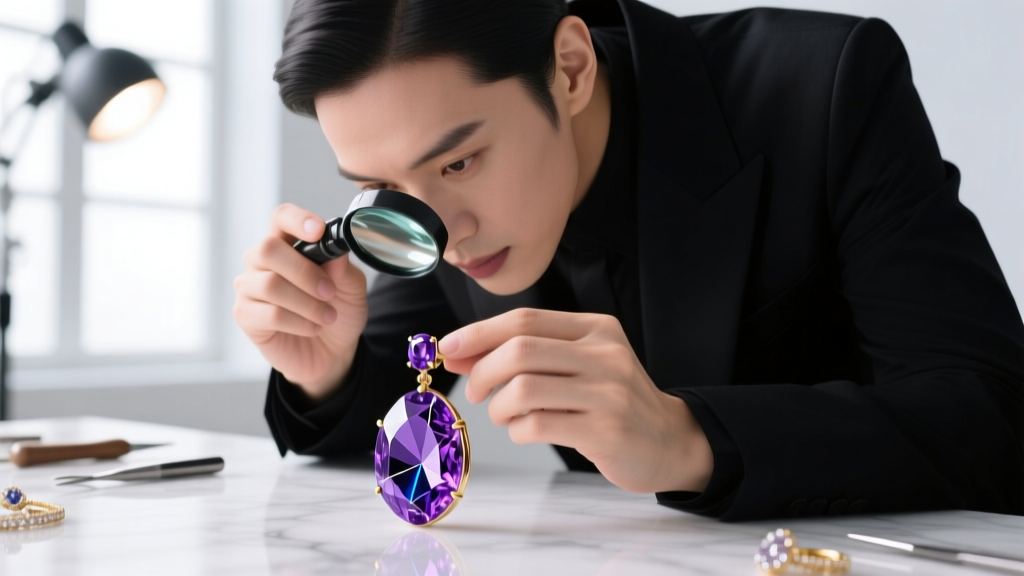
The market is saturated with fraudulent purple stones, particularly dyed agate, dyed low-grade quartz, and purple glass imitations. Troubleshooting authenticity requires a systematic approach using basic gemological tools.
- The Loupe Test (10x Magnification): Inspect the stone's surface-reaching fractures. In dyed quartz, you will see concentrated pools of purple pigment gathering in the microscopic cracks, resembling spiderwebs of dark ink. Natural amethyst will show color zoning (angular bands of light and dark purple) but never concentrated dye in fractures.
- Thermal Conductivity: Hold the earring against your cheek or inner wrist. Real crystalline quartz and sapphire are excellent thermal conductors and will feel distinctly cold to the touch for several seconds. Glass and cubic zirconia will warm up almost instantly.
- The Swirl and Bubble Check: If you spot perfectly spherical gas bubbles or sweeping, curved swirl marks inside the stone, you are looking at molded glass, not a natural crystalline structure.
Comprehensive Purple Stone Troubleshooting Matrix
Use the following data matrix to identify the specific vulnerabilities of your earrings based on their mineral composition. This chart outlines exact Mohs hardness ratings, UV sensitivity, and safe cleaning protocols.
| Gemstone | Mohs Hardness | UV Fading Risk | Ultrasonic Safe? | Avg. Price per Carat (2026) |
|---|---|---|---|---|
| Amethyst (Quartz) | 7.0 | High (Prolonged Sun) | Yes (with mild heat) | $15 - $40 |
| Tanzanite (Zoisite) | 6.5 | Low | No (Cleavage Risk) | $300 - $800 |
| Sugilite | 5.5 - 6.5 | Moderate | No (Highly Porous) | $50 - $150 |
| Charoite | 5.0 - 6.0 | Low | No (Fibrous Structure) | $20 - $60 |
| Purple Sapphire | 9.0 | None | Yes | $800 - $2,500+ |
Problem 3: Catastrophic Cleaning Mistakes
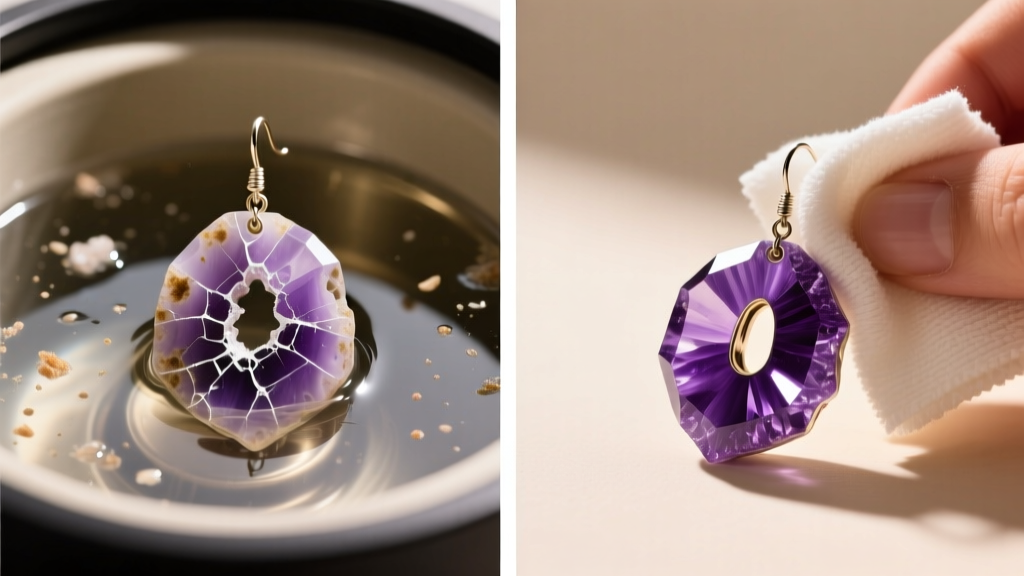
One of the fastest ways to destroy purple color stone earrings is by using the wrong cleaning method. While ultrasonic cleaners and steamers are perfectly safe for purple sapphires, they are utterly destructive to porous and fibrous stones like sugilite and charoite.
Sugilite possesses a micro-porous structure. When submerged in an ultrasonic bath, the high-frequency cavitation bubbles implode against the stone, forcing microscopic pockets of water and cleaning solvents deep into the mineral matrix. This causes internal stress fractures, leading to a cloudy, chalky appearance that cannot be polished out. Furthermore, chemical cleaners containing ammonia or bleach will strip the natural waxes and oils used to polish charoite, leaving the stone dull and brittle. The GIA Tanzanite Care Guide similarly warns against ultrasonics for tanzanite due to its distinct cleavage planes, which can split under vibrational stress.
The Fix: For all porous purple stones, use only a soft, lint-free microfiber cloth dampened with distilled water. Avoid soap entirely, as surfactants can become trapped in the stone's pores and attract dirt over time.
Setting Failures: Why Your Tanzanite Keeps Chipping
Tanzanite is a spectacular, highly pleochroic purple-blue stone, but it suffers from perfect cleavage in one direction. This means that a sharp blow to a specific crystallographic plane will cause the stone to split cleanly, much like a diamond. However, unlike diamonds, tanzanite is much softer (Mohs 6.5).
If your tanzanite earrings are set in standard four-prong or bezel settings, the corners of the stone are highly vulnerable to chipping against everyday objects. When troubleshooting chipped tanzanite, examine the metal setting. The stone must be secured using V-prongs—specialized prongs shaped like a 'V' that completely cap and protect the sharp corners of the gem. If your earrings feature flat-tipped prongs over the corners, take them to a master jeweler immediately to have the setting modified before the stone suffers a catastrophic fracture.
Galvanic Reactions and Metal Allergies
When sweat and skin oils penetrate the porous matrix of stones like sugilite, they can create a galvanic bridge between the skin and the metal alloy of the earring post. If the earrings are set in low-karat gold (10k or 14k) or sterling silver, the copper and zinc alloys can oxidize, turning the skin green and degrading the stone's polish from the inside out. To troubleshoot this, upgrade your earring posts and backs to ASTM F136 implant-grade titanium or 18k solid gold, which are highly inert and will not react with the moisture trapped in porous purple stones.
Final Diagnostic Checklist
- Identify the Mineral: Confirm whether your stone is crystalline (amethyst, sapphire) or porous/fibrous (sugilite, charoite).
- Inspect for Dye: Use a 10x loupe to check fractures for concentrated pigment pooling.
- Evaluate the Setting: Ensure tanzanite and other cleavable stones are protected by V-prongs.
- Audit Your Cleaning Routine: Immediately remove porous stones from ultrasonic and steam cleaning rotations.
- Check Storage Conditions: Move UV-sensitive amethyst and kunzite into dark, climate-controlled environments.
By applying these gemological troubleshooting frameworks, you can salvage damaged pieces, avoid costly counterfeit purchases, and ensure your purple color stone earrings remain vibrant and structurally sound for decades.


