Gay Earring Left or Right: Decoding the Code and Modern Trends
Explore the gay earring left or right historical code, its cultural origins, and how modern gender-fluid ear curation has rewritten the rules.

The Origins of the "Gay Earring" Code
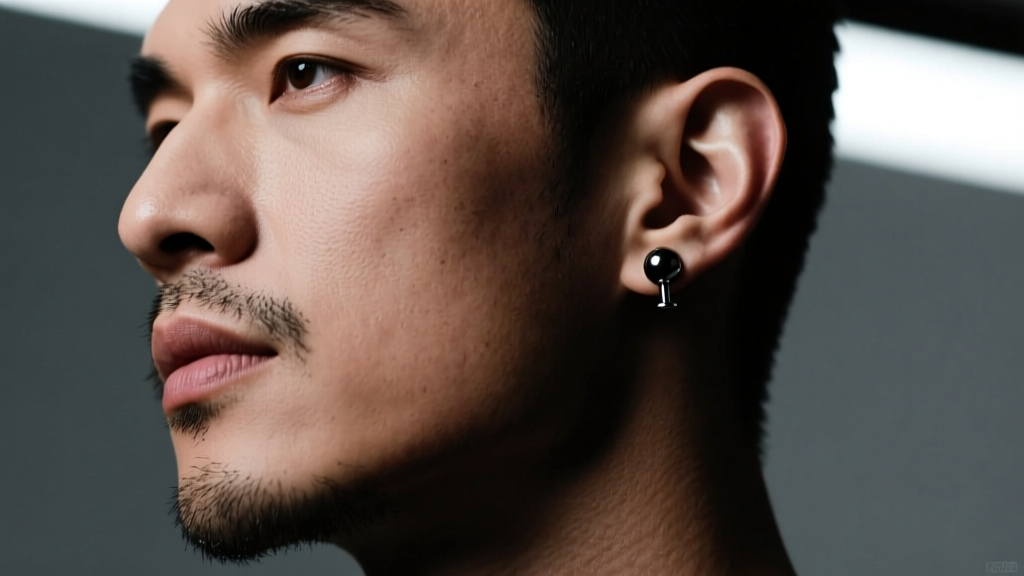
For decades, the sartorial world was governed by unspoken rules and underground signaling. Among the most fiercely debated and historically significant of these was the "gay earring left or right" code. Emerging prominently in the 1970s and peaking in the 1980s, this cultural phenomenon served as a covert method for queer men to identify one another in a society that was largely hostile to open LGBTQ+ expression. Much like the hanky code, which utilized colored bandanas in back pockets to signal specific preferences, ear piercing placement became a vital tool for community building and safe social navigation.
According to archives maintained by the GLBT Historical Society, the right ear became the designated signaling point for homosexuality in Western cultures, particularly in the United States and the UK. The left ear was strictly coded as heterosexual. This binary was so deeply ingrained in the cultural zeitgeist that it spawned offensive schoolyard rhymes and widespread anxiety among straight men who accidentally pierced the "wrong" ear. However, understanding this history is crucial for appreciating how far men's jewelry and gender-fluid fashion have evolved today.
Left vs. Right: Breaking Down the Historical Data
To truly understand the shift from rigid signaling to modern self-expression, we must look at how the cultural perception of ear placement has shifted over the last fifty years. The table below maps the sociological meaning of ear piercing placement across three distinct fashion eras.
| Era | Left Ear Only | Right Ear Only | Both Ears |
|---|---|---|---|
| 1970s - 1980s | Heterosexual signaling | Queer/Gay signaling | Punk/Counter-culture rebellion |
| 1990s - 2000s | Mainstream male fashion | Ambiguous / Pop-culture adoption | Hip-Hop and Rock mainstream |
| 2020s - 2026 | Personal aesthetic curation | Personal aesthetic curation | Asymmetrical & Gender-fluid styling |
By the late 1990s, the "gay earring left or right" rule began to fracture. Pop culture icons, athletes, and actors began wearing right-ear earrings purely for aesthetic rebellion, stripping the placement of its exclusive queer coding. Today, the idea that a specific ear denotes sexual orientation is widely considered an outdated relic of a bygone era.
The Death of the Binary: Asymmetry and Gender-Fluid Curation
In 2026, the conversation has entirely shifted from "which ear means what" to "how do I curate my ear anatomy for maximum visual impact?" The modern approach to masculine and androgynous ear styling relies heavily on asymmetry, texture mixing, and cartilage utilization. As noted by The Guardian in their analysis of gender-fluid fashion trends, the dissolution of rigid gender codes in jewelry has allowed for a renaissance in male and non-binary ear curation.
Rather than worrying about the gay earring left or right dichotomy, modern style enthusiasts are focusing on the architectural layout of the ear. This involves combining traditional lobe piercings with helix, tragus, and conch placements to create a curated "ear party" that reflects personal aesthetics rather than sexual orientation.
Modern Ear Curation for Masculine and Androgynous Styles
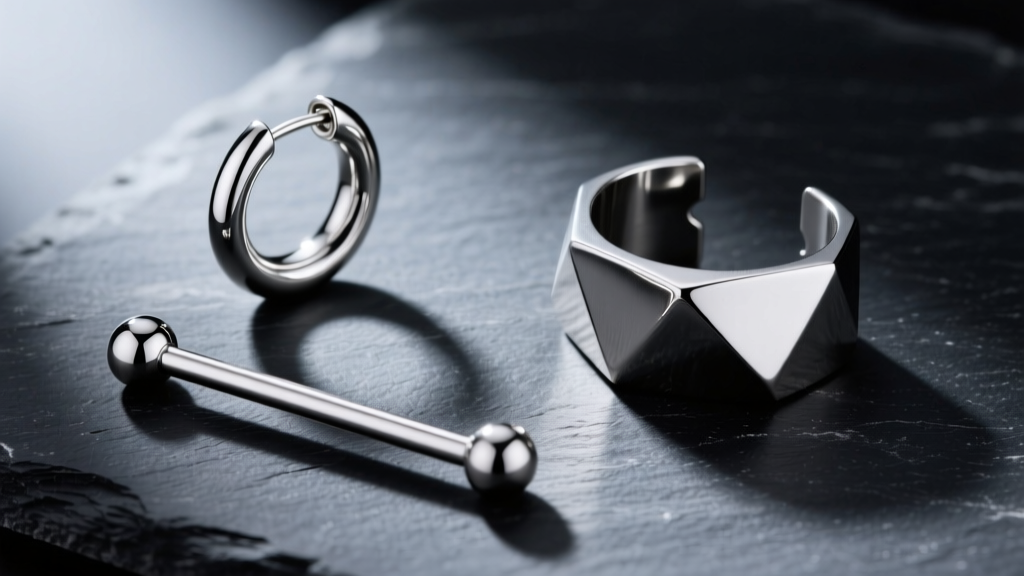
- The Industrial Anchor: Utilizing a 14-gauge industrial barbell across the upper cartilage to create a bold, structural line that contrasts with softer facial features.
- The Lobe-Helix Bridge: Pairing a thicker, textured 12-gauge gold hoop in the lower lobe with a delicate, prong-set 18g diamond stud in the mid-helix.
- The Cuff Illusion: For those hesitant to commit to multiple cartilage piercings, high-tension ear cuffs made from hardened brass or sterling silver offer a non-pierced way to test asymmetrical layouts.
Technical Specs: Sizing, Gauges, and Materials
A common mistake when transitioning into curated ear styling is ignoring the technical specifications of the jewelry. The Association of Professional Piercers (APP) provides strict guidelines on body-safe materials, which is especially critical for cartilage piercings that are prone to hypertrophic scarring and contact dermatitis.
When selecting jewelry for a masculine or gender-neutral aesthetic, gauge thickness plays a massive role in the visual weight of the piece. Standard women's fashion earrings are typically 20-gauge (0.81mm) or 18-gauge (1.02mm). However, for a more substantial, masculine-leaning look, upgrading to 16-gauge (1.29mm) or 14-gauge (1.63mm) provides a bolder silhouette that sits more securely in the tissue.
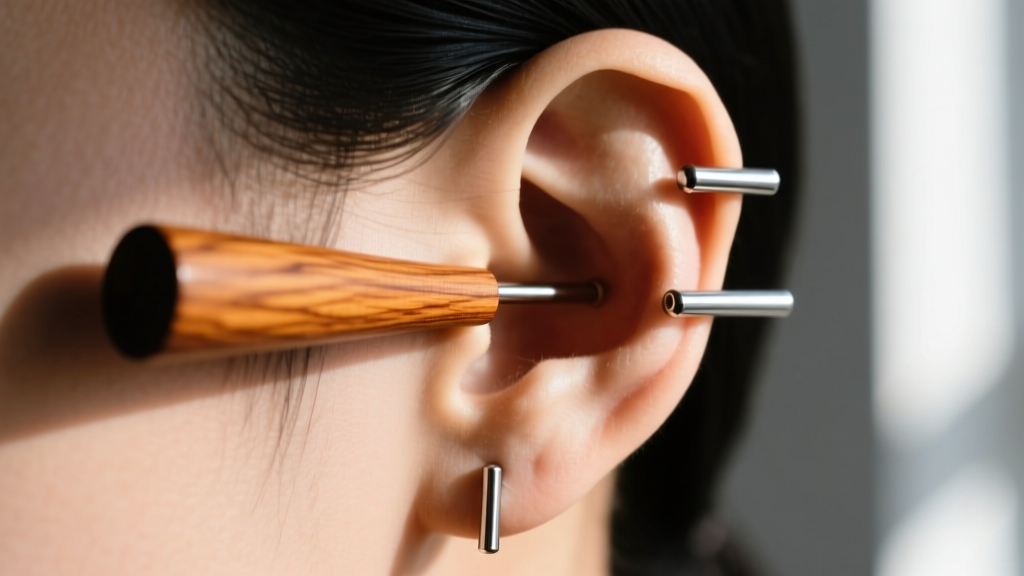
Material selection is equally paramount. Avoid "surgical steel" or 316L stainless steel for fresh piercings or sensitive skin, as the nickel content can cause severe allergic reactions. Instead, invest in implant-grade titanium (ASTM F136). Brands like BVLA (Body Vision Los Angeles) and Maria Tash specialize in high-polish, nickel-free titanium and solid 14k/18k gold pieces that are engineered for long-term wear without tarnishing or irritating the fistula.
How to Style Asymmetrical Ear Arrangements Today
If you are moving past the outdated gay earring left or right rule and want to embrace modern asymmetrical styling, follow this practical decision framework to balance your facial aesthetics:
- Map Your Face Shape: If you have a highly symmetrical face, an asymmetrical ear curation (e.g., a heavily stacked left ear with a single, bold 14g stud on the right) creates dynamic visual interest. If your face is naturally asymmetrical, balance it by placing heavier, darker metals on the side of the face that requires visual grounding.
- The Rule of Three: When stacking one ear, stick to odd numbers. A three-piece stack (e.g., lobe hoop, mid-helix stud, upper-helix cuff) is visually satisfying and prevents the ear from looking cluttered.
- Mix Textures, Match Metals: To maintain a cohesive, intentional look, keep the metal color consistent (all yellow gold or all silver-toned titanium) but mix the textures. Pair a high-polish seamless ring with a matte-finished or hammered stud.
- Consider the Hairline: If you wear your hair long or tucked behind one ear consistently, designate that side as your "canvas" ear for more intricate cartilage arrangements, leaving the hidden side with a simple, low-profile lobe stud.
Conclusion: Beyond the Code
The historical obsession with the gay earring left or right paradigm is a fascinating chapter in the sociology of fashion, serving as a reminder of how marginalized communities innovate to find one another. However, as we navigate the style landscape of 2026, the ear has been reclaimed as a blank canvas for pure, unadulterated self-expression. Whether you are opting for a single, minimalist black titanium stud or a fully curated, asymmetrical array of gold cartilage hoops, the only rule that matters today is wearing what resonates with your personal identity. Fashion has finally caught up to freedom.


