Decoding Product Images: Earrings Budget & Value
Learn how to decode online product photos to assess earring value, spot cheap plating, and make smart budget decisions on solid gold and gemstones.

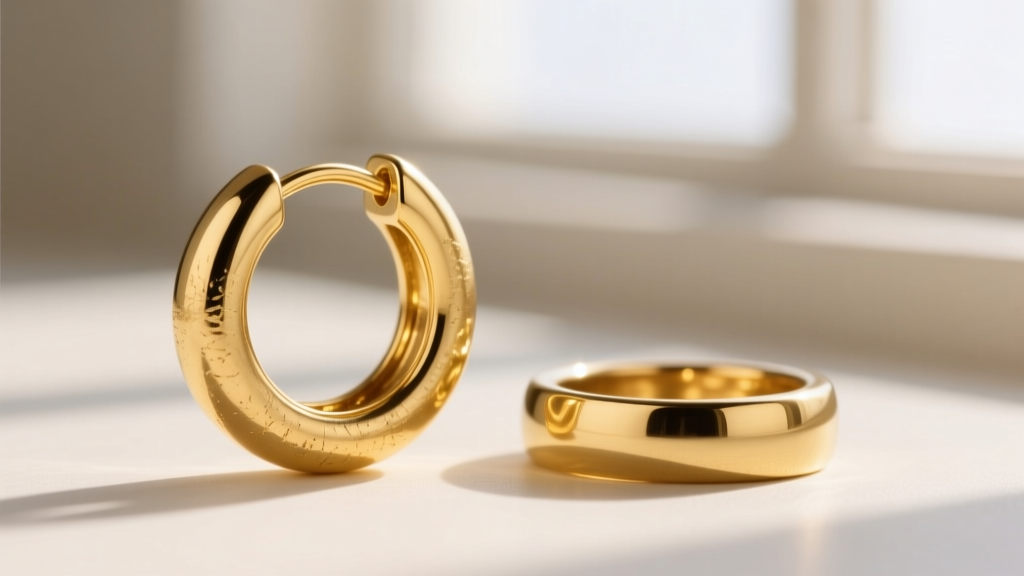
E-commerce in 2026 is dominated by ultra-high-definition macro photography, AI-enhanced lighting, and flawless digital retouching. While this makes browsing for jewelry incredibly convenient, it creates a massive blind spot for budget-conscious buyers. Many shoppers type 'images earrings' into search engines hoping to find visual comparisons, but understanding what you are actually looking at requires a trained eye. A $40 pair of gold-plated brass hoops can look virtually identical to a $450 pair of solid 14k gold hoops in a well-lit studio shot. This guide breaks down how to visually audit earring listings, decode material claims, and assess true value before you click 'Add to Cart'.
The Illusion of E-Commerce Photography
Modern jewelry photography relies heavily on focal stacking—a technique where multiple images taken at different focus distances are combined to create a perfectly sharp, edge-to-edge macro shot. While beautiful, this strips away the natural depth and shadow that help the human eye perceive volume and texture. Furthermore, color temperature manipulation can make a base metal like brass or stainless steel appear identical to high-karat gold. When assessing budget earrings online, you must look past the overall aesthetic and focus on the micro-details: the porosity of the metal, the sharpness of the edges, and the behavior of light on the surface.
Spotting Material Quality in High-Res Photos
Solid Gold vs. Gold Plated: The Luster Test
The most common trap in budget earring shopping is mistaking PVD (Physical Vapor Deposition) coated brass for solid gold. Solid 14k gold (which is 58.5% pure gold alloyed with metals like copper and zinc) has a distinct, warm, and slightly muted luster. It absorbs light softly. In contrast, PVD-plated earrings often mimic 18k or 24k gold, resulting in an overly yellow, almost greenish tint that looks highly reflective and mirror-like. Zoom in on the edges and the post of the earring. If you see a stark, razor-sharp contrast between the matte and polished areas, or if the edges look artificially perfect, you are likely looking at a plated base metal. Solid cast gold tends to have microscopic, natural softening on its edges.
Gemstone Verification: Glass, Resin, or Real?
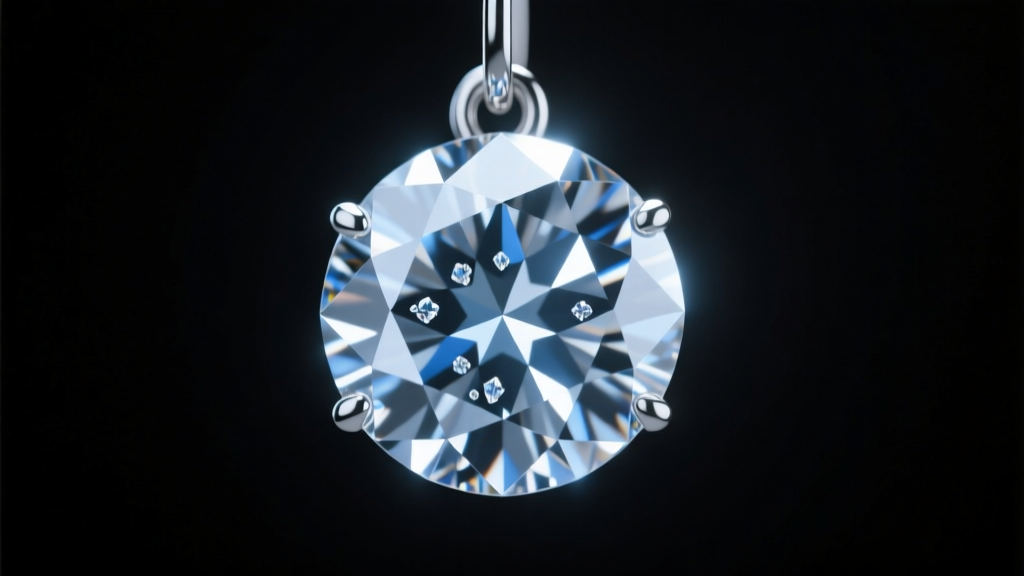
When evaluating gemstone earrings, macro images are your best tool for identifying synthetics or simulants. According to the Gemological Institute of America (GIA), natural and high-grade lab-grown diamonds feature incredibly sharp facet junctions. Glass or resin simulants, which are often molded rather than cut, will show rounded, worn-looking facet edges under magnification. Furthermore, look closely at the setting. Budget earrings frequently use glue to secure cubic zirconia or glass stones into bezel settings. If you spot a slight, cloudy residue around the girdle of the stone in the product photo, you are looking at a glued-in simulant, not a professionally prong-set gemstone.
Structural Integrity: Identifying Hollow vs. Solid
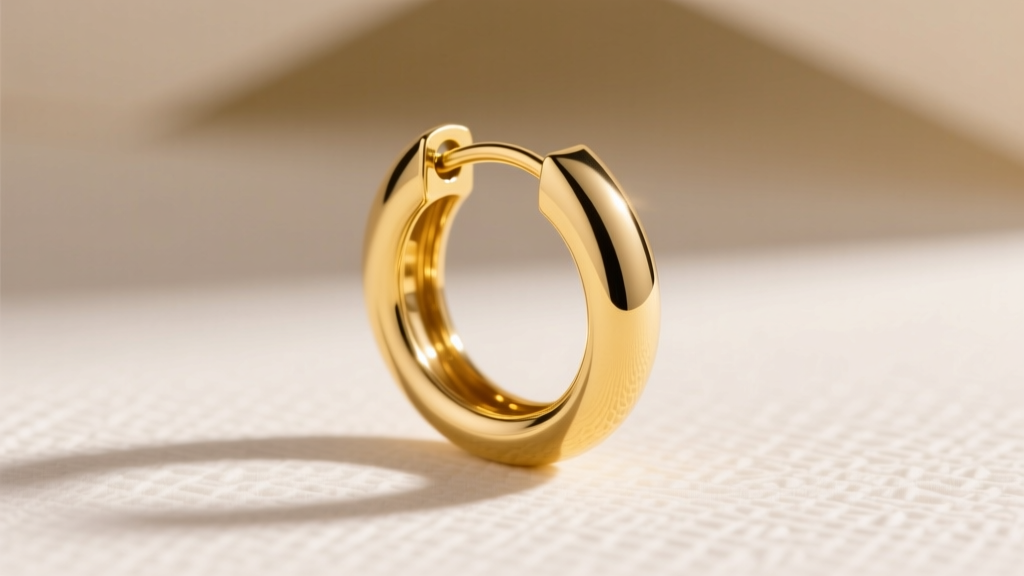
One of the most critical aspects of earring value assessment is determining whether a piece is solid cast or hollow. Many large hoop earrings and chunky huggies are created using a process called electroforming, where gold is deposited over a wax or resin core that is later melted away. This results in a massive, lightweight earring that looks substantial but lacks structural integrity. While electroformed pieces are technically solid gold, they dent easily and cannot be resized or repaired by a jeweler. In product images, look at the clasp and the hinge. Hollow hoops often feature a disproportionately bulky clasp mechanism to hide the thin walls of the tubing, whereas solid cast hoops have seamless, integrated hinges.
| Material / Construction | Visual Cue in Photos | Typical Weight (20mm Hoop) | Fair 2026 Price Range |
|---|---|---|---|
| Solid 14k Gold (Cast) | Warm luster, thick seamless hinge | 3.5g - 4.5g | $220 - $310 |
| Solid 14k Gold (Electroformed) | Flawless surface, slightly duller | 1.2g - 1.8g | $110 - $150 |
| Brass with PVD Gold Plating | Overly yellow/greenish, sharp edges | 2.0g - 2.5g | $25 - $45 |
| Stainless Steel (Gold IP) | Cooler undertone, rigid clasp | 2.8g - 3.2g | $15 - $30 |
The 2026 Pricing Framework: What You Should Actually Pay
To accurately assess value, you must understand the raw material costs. In 2026, with gold prices hovering around $2,100 per troy ounce, the scrap value of 14k gold is approximately $39 per gram. If you are looking at a pair of solid 14k gold huggie earrings that weigh 2.5 grams, the raw gold value alone is nearly $100. Add in labor, stone setting, and retail markup, and a fair price for that pair should be no less than $160 to $200. If a brand is advertising 'solid gold' earrings with substantial visual weight for $45, they are either misrepresenting the material (violating FTC Jewelry Guides regarding metal stamping) or using an extremely low-karat alloy that is prone to tarnishing and skin irritation.
The Clasp, Hinge, and Post Tell
The mechanical components of an earring are rarely faked in high-end jewelry because they require precision engineering. When analyzing product images, zoom in on the ear post. A standard lobe earring post should be 20-gauge (0.81mm) or 18-gauge (1.02mm). If the post looks unusually thick or features visible soldering marks where it meets the earring body, it is likely a mass-produced budget piece. For clicker hoops and huggies, examine the hinge pin. High-value earrings use a flush, nearly invisible pin, while budget manufacturers often leave a visible, unpolished divot on the side of the hinge where the pin was inserted.
The Visual Inspection Checklist for Budget Buyers
Before committing to a purchase, run the product images through this rapid assessment checklist:
- Check the Stamp: Zoom in to see if a '14k', '585', or '925' stamp is visible. While easily faked, its absence on a purportedly solid piece is a major red flag. For international gold standards, hallmarking data from The London Assay Office provides excellent context on legitimate stamping practices.
- Analyze the Shadows: Look at the shadows cast by the earring. If the shadow is completely uniform and lacks the soft gradient of a rounded object, the image has been heavily flattened in post-production, likely to hide surface pitting common in cheap cast alloys.
- Inspect the Prongs: If the earring features gemstones, ensure the prongs are distinct, rounded, and individually shaped. Budget pieces often use 'cast-in-place' settings where the prongs are just vague, blob-like lumps of metal.
- Look for Skin Reactions in Reviews: Cross-reference the pristine studio images with user-uploaded photos. If user photos show the earring posts turning green or black after a few weeks, you are dealing with a copper-heavy base metal disguised by a thin flash plating.
Conclusion
Budget shopping for earrings does not mean you have to compromise on quality, but it does require a shift in how you consume product media. By training your eye to spot the subtle differences in luster, structural weight, and mechanical precision, you can easily separate genuine value from deceptive e-commerce photography. Always demand detailed macro shots, verify the weight-to-volume ratio, and trust the material math over the marketing copy.


