Deer Antler Earrings: Material Science, Carving & Care Guide
Explore the material science, carving techniques, and hardware integration of deer antler earrings. An expert guide to organic jewelry care.

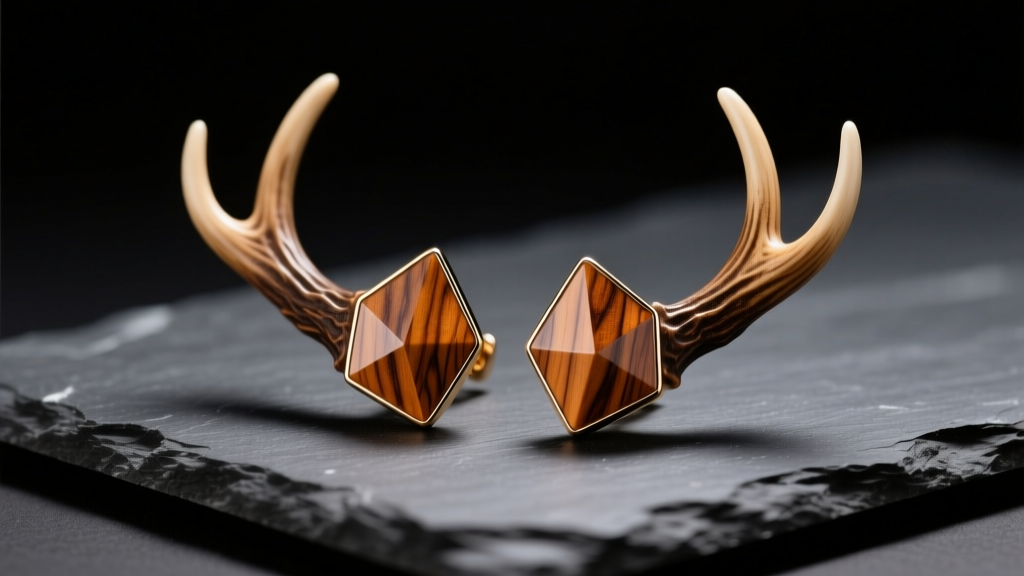
As the jewelry industry in 2026 continues to pivot toward sustainable, ethically sourced, and nature-derived accessories, organic materials have moved from niche craft fairs to high-end artisan studios. Among the most captivating of these materials is shed antler. However, working with biological materials requires a profound understanding of their structural limitations and chemical properties. This expert deep dive explores the material science, technical carving processes, and hardware integration required to produce heirloom-quality deer antler earrings.
The Material Science of Shed Antler
To understand how to craft and care for antler jewelry, one must first understand its biological composition. Unlike horns, which are made of keratin, antlers are true bone. They are composed primarily of hydroxyapatite (a calcium phosphate mineral) and collagen. According to the GIA Gem Encyclopedia, organic gems and materials require specialized handling due to their inherent porosity and sensitivity to environmental changes.
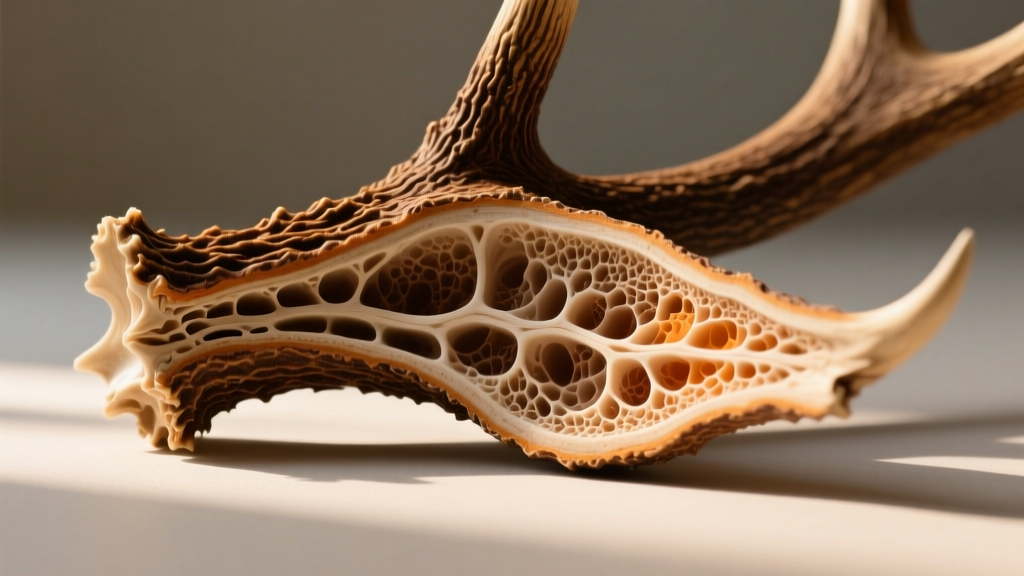
Structurally, an antler consists of two distinct layers:
- Cortical Bone (Compact): The dense, hard outer layer. This is the primary material used in high-quality deer antler earrings due to its structural integrity, low porosity, and ability to take a high polish.
- Cancellous Bone (Spongy): The porous, honeycomb-like inner core. While visually interesting, it is structurally weak, highly absorbent, and prone to harboring bacteria if not properly sealed.
The density of the cortical bone in species like the Odocoileus virginianus (whitetail deer) or Cervus elaphus (red deer) typically ranges between 1.8 and 2.0 g/cm³. This makes it comparable in hardness to softer gemstones like turquoise or malachite, but its organic nature means it possesses a natural moisture content that fluctuates with ambient humidity.
Sourcing, Ethics, and CITES Regulations
Ethical sourcing is paramount in organic jewelry. Premium artisans exclusively use naturally shed antlers collected after the winter dropping season. This ensures no harm comes to the animal. When sourcing internationally, jewelers must be aware of wildlife trade regulations. While naturally shed antlers of common species are generally exempt from strict permitting, the CITES species database strictly regulates the cross-border trade of endangered cervids (such as certain species of elk or rare deer) to prevent poaching disguised as shed collection.
Technical Carving and Hardware Integration
The most common point of failure in mass-produced organic earrings is the hardware integration. You cannot simply glue a standard earring post to porous bone and expect it to withstand the mechanical stress of daily wear.
The Carving Process
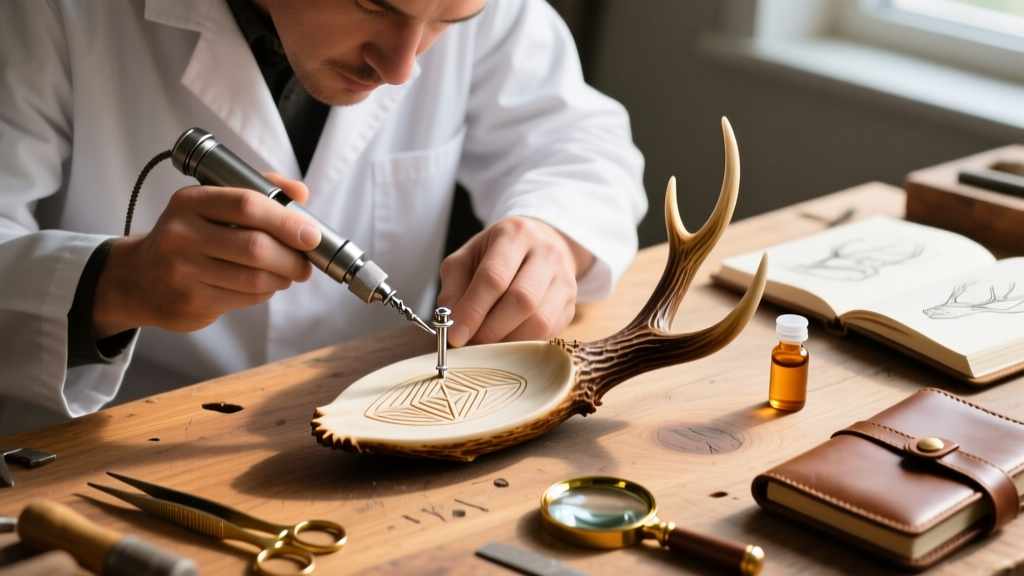
Artisans begin by cutting blanks from the densest part of the cortical layer using diamond-blade lapidary saws. Shaping is done with high-speed rotary tools equipped with carbide burrs. Because antler can emit a distinct, unpleasant odor when burned by friction, carvers must use low RPMs and continuous water cooling or work in short bursts to prevent thermal degradation of the collagen matrix.
Sanding requires a progressive grit sequence, typically starting at 220 grit and moving through 400, 800, 1200, and finally 2000+ micro-mesh to achieve a glass-like finish without the need for chemical polishes.
Hardware Integration and Gauge Sizing
For standard lobe piercings, 18-gauge (1.0mm) or 20-gauge (0.8mm) posts are standard. For stretched lobes or cartilage, 16-gauge (1.2mm) or 14-gauge (1.6mm) may be required. The expert method for securing hardware involves:
- Drilling a precise pilot hole using a micro-drill press to ensure perfect perpendicular alignment.
- Tapping the hole or using a threaded ASTM F136 implant-grade titanium post.
- Securing the post with a two-part structural jeweler's epoxy (such as 330 epoxy) rather than cyanoacrylate (super glue), which becomes brittle over time and fails under shear stress.
Expert Insight: Never use friction-posts or butterfly backs with heavy antler dangles. The weight distribution will cause the earlobe to droop and the post to bend. Always opt for secure screw-backs or heavy-duty lever-back hooks integrated directly into the antler via a flush-set sterling silver or titanium bezel cup.
Sealing, Finishing, and Biocompatibility
Because antler is a biological material, it will absorb skin oils, sweat, and environmental moisture. If left unsealed, the earrings will eventually develop a rancid odor and become a breeding ground for bacteria. Selecting the right sealant is a balance of biocompatibility, durability, and aesthetics.
| Sealant Type | Durability | Biocompatibility | Aesthetic Finish | Best Use Case |
|---|---|---|---|---|
| Cyanoacrylate (CA Glue) | Medium | Low (can cause contact dermatitis if uncured) | High Gloss | Quick craft projects, not recommended for sensitive ears |
| Jewelry-Grade Epoxy Resin | Very High | High (once fully cured) | Glass-like, can look artificial | Statement pieces, heavy dangles requiring maximum protection |
| Food-Safe Mineral Oil & Beeswax | Low (requires reapplication) | Very High | Natural, matte to satin | Purist organic jewelry, minimalist studs |
| Polyurethane Varnish | High | Medium | Plastic-like sheen | Avoid for fine jewelry |
For high-end deer antler earrings, a multi-layer application of thin cyanoacrylate followed by a micro-crystalline wax buff provides a durable, moisture-resistant barrier while maintaining the natural tactile feel of the bone.
Maintenance, Care, and Failure Modes
Owning organic jewelry requires a shift in maintenance habits. The primary failure modes for antler earrings are delamination of the post, humidity-induced cracking, and surface degradation from harsh chemicals.
What to Avoid
- Ultrasonic Cleaners: The high-frequency vibrations will shatter the microscopic crystalline structure of the bone and instantly detach glued hardware.
- Chemical Dips: Silver polishing liquids and alcohol-based cleaners will strip natural waxes and degrade epoxy bonds.
- Prolonged Water Exposure: Showering or swimming with unsealed or poorly sealed antler will cause the bone to swell, leading to micro-fractures along the grain.
Proper Cleaning Protocol
To clean your earrings, simply wipe them with a slightly damp, lint-free microfiber cloth after wear to remove sebum and sweat. Once a month, apply a microscopic amount of jojoba oil or specialized organic jewelry wax, let it sit for five minutes, and buff it to a soft satin glow. Store them in a climate-controlled environment away from direct sunlight, which can bleach the natural ivory and brown marbling of the antler over time.
By respecting the material science of shed antler and employing rigorous jewelry-making techniques, artisans can transform a naturally discarded forest artifact into a durable, hypoallergenic, and stunning piece of ear adornment.