Diamond Cut Gold Hoop Earrings: Karat Comparison & Durability
Discover how karat purity and alloy blends affect the brilliance and durability of diamond cut gold hoop earrings in our expert material guide.

The Geometry of Brilliance: What Makes a Diamond Cut?
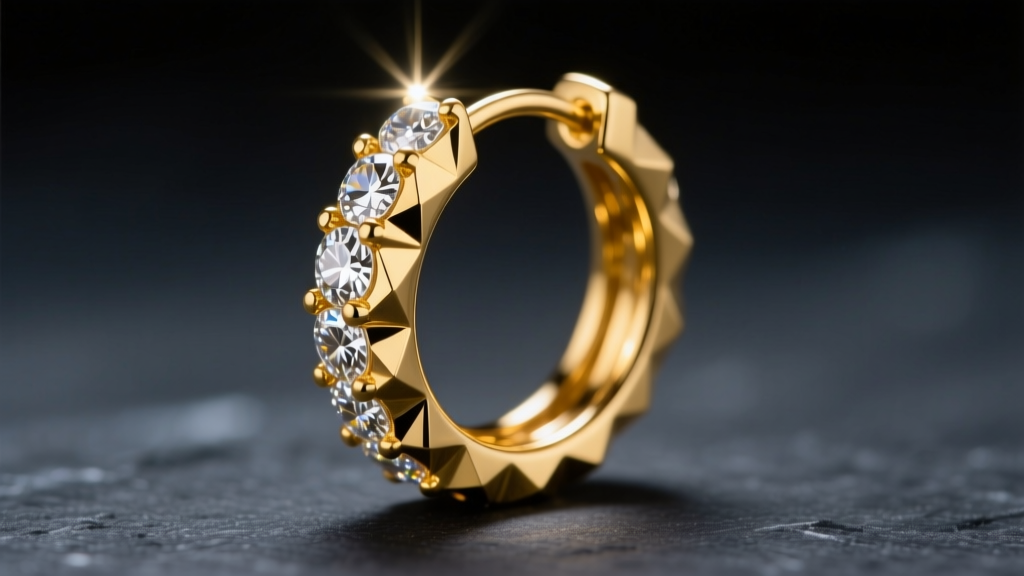
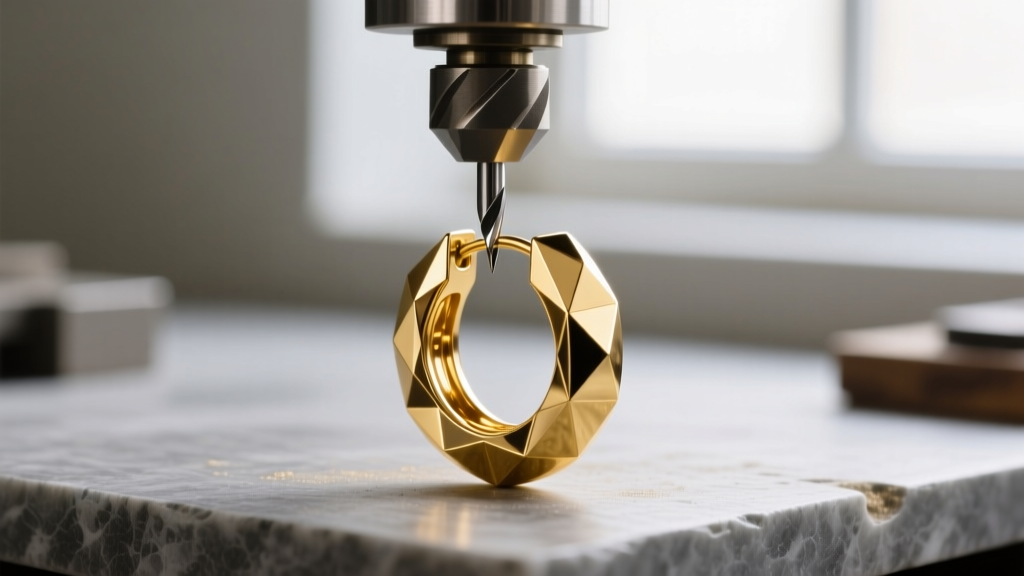
When shopping for diamond cut gold hoop earrings, it is a common misconception that the term refers to gold hoops embedded with actual diamonds. In reality, 'diamond cut' refers to a specialized metallurgical faceting technique. Jewelers use precision diamond-tipped chisels or, increasingly in 2026, CNC micro-milling lasers to carve geometric facets directly into the surface of the gold. This process dramatically increases the surface area of the metal, allowing it to catch and refract light in a manner similar to a brilliant-cut gemstone.
The optical success of this technique relies entirely on the angles of the cuts. Master jewelers typically carve facets at 45 to 58-degree angles. However, the ability of the gold to hold these crisp, light-reflecting edges over years of daily wear depends entirely on the material properties of the specific gold alloy used. Not all karats are created equal when subjected to the physical stress of faceting.
Metallurgical Hardness: The Vickers Scale in Jewelry
To understand why certain diamond cut gold hoop earrings maintain their sparkle while others dull and deform, we must look at the Vickers Hardness Test (HV), which measures a metal's resistance to permanent indentation and scratching. Pure gold is exceptionally soft, making it entirely unsuitable for faceted jewelry.
10K and 14K Gold: The Durability Champions
10K gold (41.7% pure gold) and 14K gold (58.3% pure gold) are alloyed with high percentages of copper, silver, and zinc. This results in a Vickers hardness rating between 170 HV and 210 HV. When a diamond cut is applied to 14K gold, the resulting facet edges are incredibly rigid. They can withstand the friction of hair brushing, sleeping, and accidental impacts without the edges rounding off or collapsing. For everyday wearers who refuse to baby their jewelry, 14K is the undisputed king of facet retention.
18K Gold: The Optic Sweet Spot
18K gold (75% pure gold) sits at approximately 135 HV to 150 HV, depending on the specific alloy mix. It is soft enough to allow for exceptionally deep, clean cuts during the manufacturing process, resulting in sharper initial light refraction than 14K. However, the edges are slightly more prone to micro-abrasions over a decade of wear. It offers the perfect compromise between the rich, warm color of high-purity gold and the structural integrity required to maintain a diamond cut.
22K and 24K Gold: Why Soft Metals Fail the Test
22K gold (91.6% pure) and 24K gold (99.9% pure) possess a Vickers hardness of roughly 25 HV to 45 HV. Attempting a traditional diamond cut on these metals is an exercise in futility. The metal is so malleable that the pressure of the cutting tool can warp the hoop, and the facet edges will crush and smooth out within weeks of being worn. According to the World Gold Council, high-karat gold is best reserved for cast, hammered, or smooth-polished designs rather than precision geometric faceting.
Alloy Composition and Light Refraction
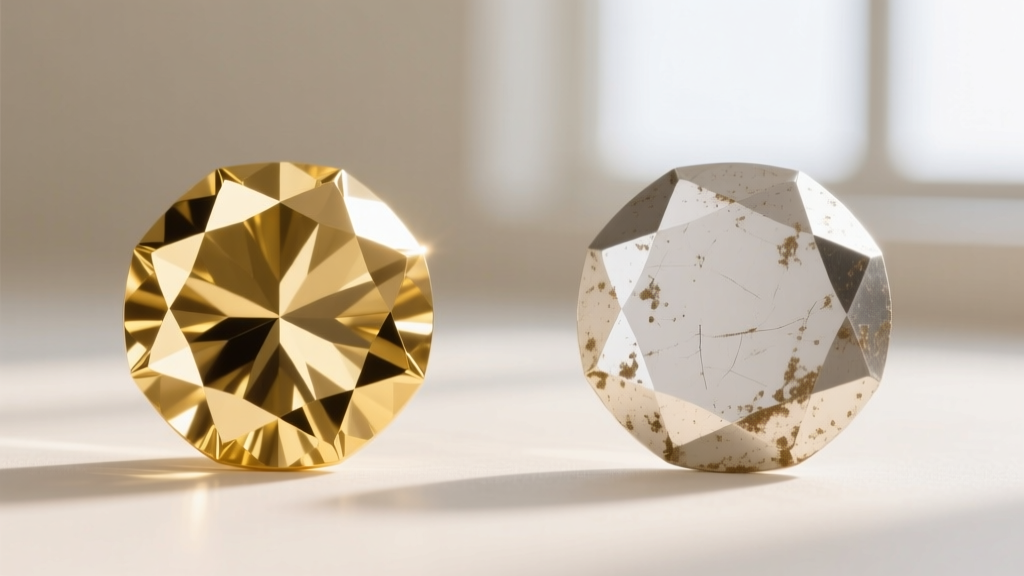
The brilliance of diamond cut gold hoop earrings is not just about the physical cut; it is deeply influenced by the elemental alloy mix, which dictates the metal's base color and reflective index. As highlighted by gemological research from the Gemological Institute of America (GIA), the trace metals in gold alloys absorb and reflect different wavelengths of light.
- Yellow Gold (Gold + Copper + Silver): The silver content adds a bright, greenish-yellow reflectivity that bounces beautifully off the facets, creating a 'sparkle' that mimics white light.
- Rose Gold (Gold + High Copper): Copper absorbs blue and green light waves, resulting in a warm, reddish glow. Diamond-cut rose gold produces a romantic, fiery flash rather than a sharp, icy sparkle.
- White Gold (Gold + Palladium/Nickel + Rhodium): White gold presents a unique structural problem for diamond cuts. The bright white color comes from a microscopic rhodium plating (usually 0.1 to 0.5 microns thick). On a faceted surface, the sharp edges of the diamond cut cause the rhodium to wear off rapidly, exposing the slightly yellowish palladium alloy underneath. For diamond cut hoops, yellow or rose gold is vastly superior to white gold.
Material Comparison Matrix
| Karat | Gold Purity | Hardness (HV) | Facet Edge Retention | Optimal Use Case |
|---|---|---|---|---|
| 10K | 41.7% | ~210 | Exceptional | Active lifestyles, thick structural hoops |
| 14K | 58.3% | ~170 | Excellent | Everyday wear, intricate multi-facet designs |
| 18K | 75.0% | ~140 | Very Good | High-end luxury, deep pavilion cuts |
| 22K | 91.6% | ~45 | Poor | Not recommended for diamond cutting |
Structural Gauge Requirements for Faceted Hoops
A critical, often overlooked aspect of material properties in diamond cut gold hoop earrings is the physical gauge (thickness) of the metal wire or tubing used to form the hoop. The diamond cutting process removes material. A standard deep facet can penetrate 0.3mm to 0.5mm into the gold.
If a jeweler attempts to diamond cut a delicate 1.0mm thick wire hoop, the cutting process will remove nearly half the structural mass at the deepest points, creating severe weak spots. These weak points are highly susceptible to snapping at the hinge or the clasp mechanism. For a structurally sound diamond cut hoop, the starting material must be a minimum of 2.5mm in width and 1.8mm in thickness (gauge). This ensures that even after a 0.5mm deep facet is carved, over 1.3mm of solid gold remains to support the tension of the clasp and the weight of the earring.
Maintenance and Tarnish Resistance of Faceted Surfaces
The very feature that makes diamond cut gold hoop earrings beautiful—the increased surface area and microscopic crevices of the facets—also makes them magnets for environmental debris. Sebum, lotions, and airborne dust easily become trapped in the geometric valleys of the cut.
Because 10K and 14K gold contain higher amounts of copper and silver, they are slightly more prone to surface oxidation (tarnish) than 18K gold, especially when trapped moisture sits in the facet crevices. To maintain the optical brilliance of your hoops:
- Avoid Ultrasonic Cleaners: While ultrasonic waves are great for smooth metals, the intense vibrations can sometimes cause micro-fractures in deeply cut, thin-gauge gold hoops.
- Use a Surfactant Soak: Soak the earrings in warm water with a few drops of mild, phosphate-free dish soap. The surfactant breaks the surface tension, allowing the water to penetrate the microscopic facet lines.
- Soft Bristle Agitation: Use an extra-soft baby toothbrush to gently sweep across the facets. Never use hard bristles or abrasive polishing cloths, as these will physically sand down the sharp edges of the diamond cut, permanently dulling the earring's ability to refract light.
Final Verdict: Choosing Your Ideal Alloy
Selecting the right material for diamond cut gold hoop earrings requires balancing your desire for rich color against the physical demands of your lifestyle. If you prioritize absolute durability and plan to wear your hoops daily without removal, 14K yellow or rose gold provides the necessary Vickers hardness to keep the geometric edges razor-sharp for decades. If you are purchasing a luxury piece for occasional wear and demand the deepest, most vibrant golden hue, 18K gold offers superior optical warmth, provided you are willing to store the earrings carefully to protect the facet edges from abrasive contact. By understanding the metallurgical realities of gold alloys, you can invest in faceted hoops that remain as brilliant in ten years as they are on the day you purchase them.


