Buyer's Guide: What to Look For & How Do You Clean Diamond Earrings
Discover what to look for when buying diamond studs and learn exactly how do you clean diamond earrings to maintain their brilliance and value.

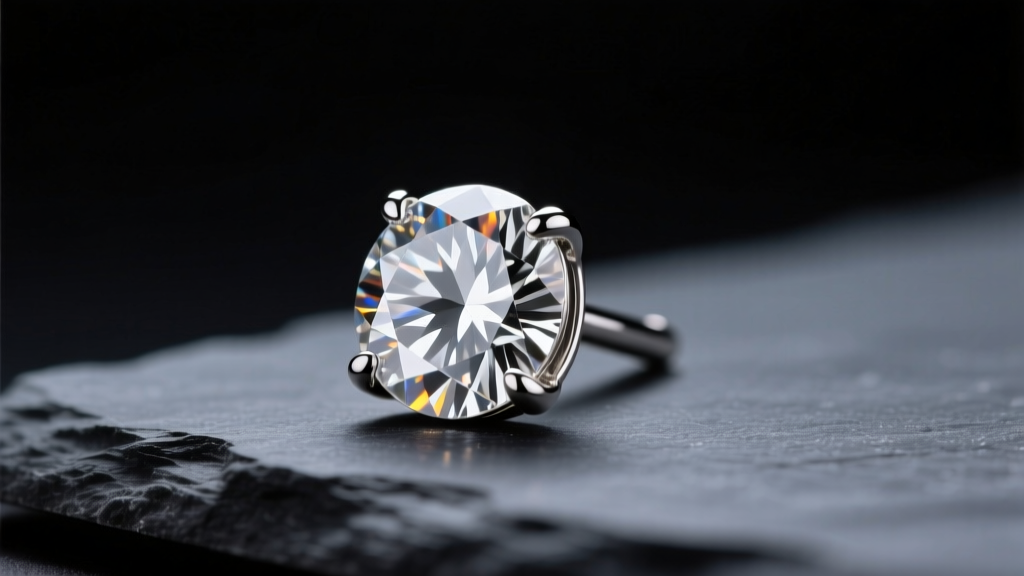
The Ultimate Buyer's Guide to Diamond Earrings
When investing in diamond earrings, most buyers immediately focus on the 4Cs, prioritizing carat weight and sparkle. However, an earring is a dynamic piece of jewelry that interacts daily with skin oils, hair products, and environmental pollutants. Understanding what to look for during the purchasing process—including the hardware, setting style, and metal composition—is critical for long-term wearability. Equally important is knowing how to maintain that initial brilliance. This comprehensive guide breaks down the exact specifications you should demand from a jeweler and answers the most common maintenance question: how do you clean diamond earrings safely and effectively?
The 4Cs Optimized for Earrings
Unlike engagement rings, which are subjected to intense, close-up scrutiny, earrings sit further from the observer's eye and are constantly in motion. This physical reality allows savvy buyers to optimize their budget without sacrificing visual impact.
- Cut: Never compromise here. An Excellent or Ideal cut is mandatory for round brilliants to ensure maximum light return. A poorly cut diamond will look dull, regardless of its color or clarity.
- Color: G to H color grades are the sweet spot for studs. Once set in white gold or platinum, the slight warmth of a near-colorless diamond is entirely masked by the metal reflection and the wearer's skin tone.
- Clarity: VS1 to VS2 is ideal. These stones are 100% eye-clean to the naked eye. Avoid SI2 or I1 clarities for everyday studs, as large inclusions can compromise the stone's structural integrity over decades of wear and cleaning.
- Carat: Beware the "total carat weight" (TCW) marketing trap. A 1.00 CTW pair means each ear gets a 0.50ct stone. Always verify the exact per-ear weight and millimeter diameter before purchasing.
Settings, Metals, and Backings
The hardware of your earring dictates both its security and its ongoing maintenance requirements. The setting style directly impacts how much light enters the stone and how easily debris accumulates.
Prong vs. Bezel Settings
A classic 4-prong martini setting allows maximum light entry from all angles, maximizing brilliance. However, prongs create small crevices where lotion, dead skin, and soap scum accumulate. A bezel setting offers superior security and a sleek, modern profile, but it limits light from the sides. More importantly, bezel settings require meticulous cleaning to remove buildup trapped under the metal rim, which can cause the diamond to look cloudy from the top down.
Metal Choices and Maintenance
Platinum is the gold standard for security. Its density means prongs hold firm and rarely require retipping, though it develops a soft patina over time. 14k or 18k white gold requires rhodium plating every 1 to 2 years to maintain its bright white appearance; harsh cleaning chemicals can accelerate the wear of this delicate plating. For those with metal sensitivities, solid 14k yellow gold or commercially pure titanium posts are the safest bets.
Backing Mechanisms
Friction backs (butterfly clutches) are the most common but the least secure. Their coiled metal springs are notorious for trapping sebum and are difficult to clean. Upgrade to screw-backs or La Pousette locking backs for everyday wear. If choosing screw-backs, you must carefully clean the threaded posts with a soft brush to prevent cross-threading caused by hardened dirt buildup.
Answering the Core Question: How Do You Clean Diamond Earrings?
Diamonds are naturally lipophilic, meaning they attract and hold onto oils from your skin, hair products, and lotions. This microscopic oil film drastically reduces the stone's refractive index, making a brilliant diamond look dull, gray, and cloudy. So, how do you clean diamond earrings effectively without damaging the precious metal setting or loosening the stone?
According to the Gemological Institute of America (GIA), the safest and most effective at-home method is a mild degreasing soak. This routine should be performed weekly to maintain optimal light performance.
The Weekly Degreasing Routine
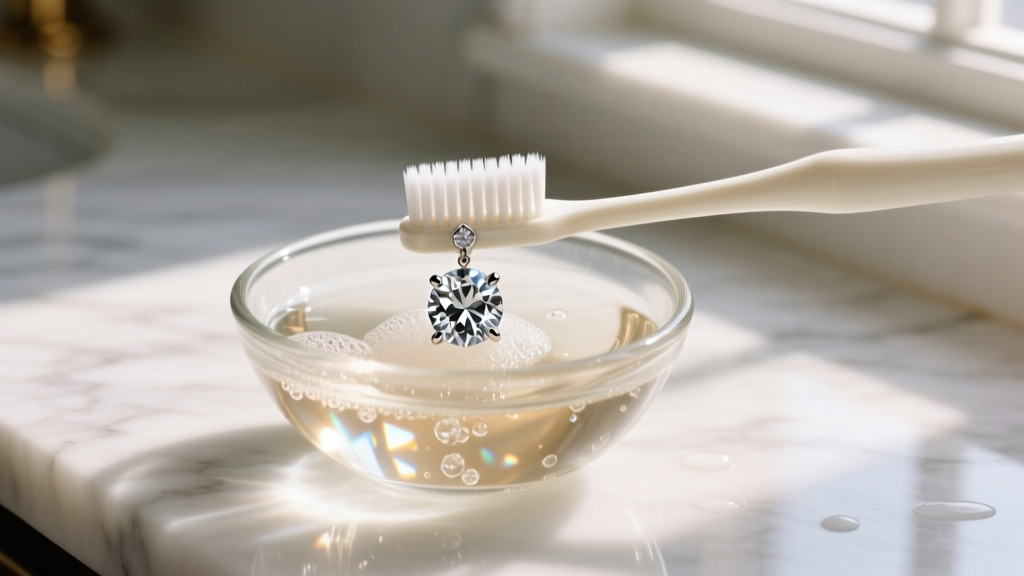
- The Soak: Fill a small glass bowl with warm (not hot) water and add a few drops of a mild, ammonia-free degreasing dish soap (such as original Dawn). Let the earrings soak for 20 to 30 minutes. This breaks down the lipid bonds of skin oils and cosmetics.
- The Agitation: Remove the earrings and gently brush them using an extra-soft baby toothbrush. Focus heavily on the pavilion (the underside of the diamond) and the gallery where the culet meets the setting. Never use a hard-bristled brush, as it can scratch gold and platinum.
- The Rinse: Rinse thoroughly under lukewarm running water. Crucial Safety Step: Always place a stopper in the sink or use a mesh strainer over the drain to prevent a catastrophic loss.
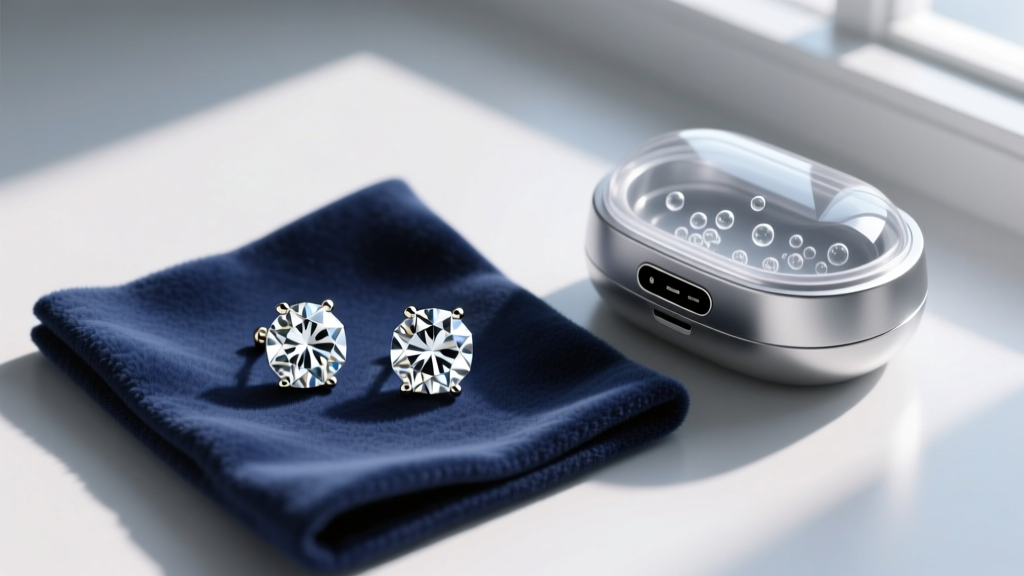
- The Dry: Pat dry with a lint-free microfiber jewelry cloth. Avoid paper towels or tissues, as their wood fibers can leave microscopic scratches on polished metals.
Advanced Cleaning Methods & Risk Factors
For a more intensive restore, buyers often look to commercial solutions or mechanical cleaners. While these can restore factory-level sparkle, they come with specific risk profiles that every owner must understand.
| Cleaning Method | Solution / Mechanism | Best Used For | Risk Level |
|---|---|---|---|
| Mild Soap Soak | Degreasing dish soap + warm water | Weekly maintenance, all settings | Zero |
| Ammonia Solution | 1 part ammonia to 6 parts water | Monthly deep clean (unfilled diamonds only) | Low (can degrade lower-karat gold alloys over time) |
| Ultrasonic Cleaner | High-frequency sound waves in liquid | Heavy buildup on secure, solid settings | Medium (vibrations can loosen worn prongs) |
| Steam Cleaner | Pressurized, high-heat steam | Professional-level sparkle restoration | High (thermal shock risk for treated stones) |
When to Avoid Mechanical Cleaning
Ultrasonic cleaners are fantastic for blasting away microscopic debris from the gallery wire and prong tips. However, they are strictly prohibited for fracture-filled diamonds (such as Yehuda-treated stones) or diamonds with significant internal feathers, as the intense vibrations can cause the stone to shatter or the filling to cloud. Similarly, steam cleaners should be left to professional jewelers; the sudden thermal shock of high-pressure steam can cause internal stress fractures in diamonds that have been laser-drilled or clarity-enhanced.
Post Gauge, Weight Distribution, and Ear Health
A frequently overlooked aspect of buying diamond earrings is the post gauge (thickness). Standard earring posts are typically 20-gauge (0.81mm) or 18-gauge (1.02mm). If you are purchasing heavy carat weights (1.00ct or larger per ear), insist on an 18-gauge post in solid platinum. Thicker posts distribute the weight of the diamond more evenly across the earlobe, preventing the lobe from drooping and reducing the risk of the post bending. A bent post not only causes discomfort but creates a micro-crease in the metal where bacteria and dirt will permanently accumulate, complicating your cleaning routine.
Protecting Your Investment Long-Term
Routine maintenance goes far beyond simply knowing how do you clean diamond earrings at home. You should have your earring prongs inspected by a certified gemologist every 12 months. A professional jeweler will use a 10x triplet loupe to check for prong lift, metal fatigue, and post bending. As noted by Blue Nile's jewelry care experts, catching a lifted prong early prevents the total loss of the diamond. Finally, always store your earrings in a fabric-lined box with individual compartments. Diamonds rank a 10 on the Mohs hardness scale, meaning they can easily scratch each other, your gold settings, and any other jewelry they come into contact with if tossed loosely into a drawer.


