Are Diamond Leaf Earrings Worth It? 2026 Value Guide
Discover if diamond leaf earrings are worth the investment in 2026. Compare lab-grown vs. natural pricing, metal grades, and value retention.

The Enduring Appeal and True Cost of Nature-Inspired Jewelry
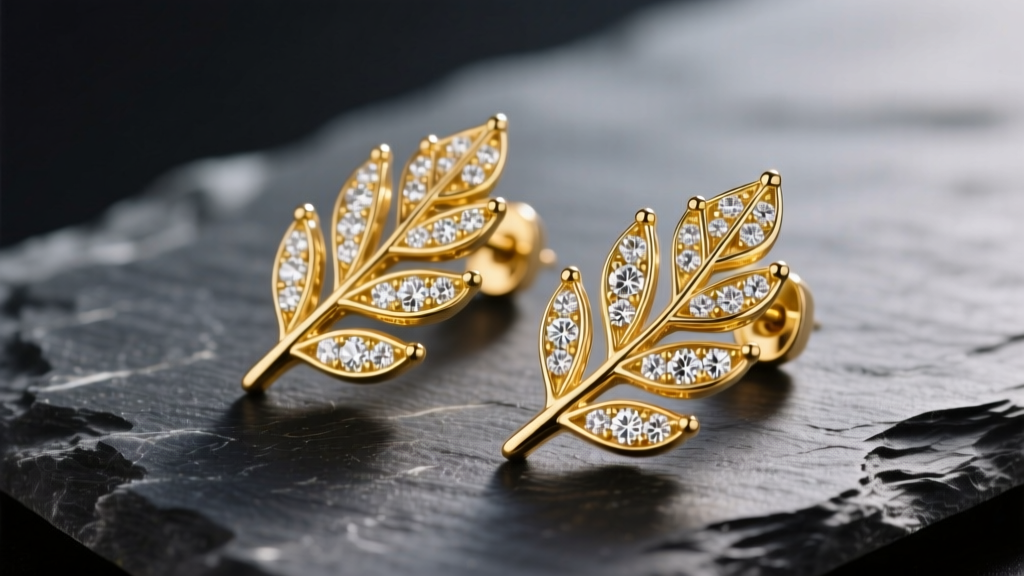
Nature-inspired jewelry has maintained a stronghold on the fine jewelry market for decades, but few motifs balance organic elegance with structural complexity quite like the leaf. When you introduce diamonds into this equation, the result is a piece that catches the light with every subtle movement. However, as we navigate the jewelry market in 2026, consumers are increasingly asking a critical question: are diamond leaf earrings actually worth the investment, or are you simply paying a premium for intricate metalwork? To accurately assess the budget and value of these pieces, we must look past the aesthetic and dissect the material costs, labor intensity, and the rapidly shifting landscape of diamond sourcing.
The Anatomy of Diamond Leaf Earrings: What Drives the Price?
Unlike a classic diamond solitaire stud, where the value is overwhelmingly tied to a single center stone, diamond leaf earrings derive their cost from a combination of melee diamonds, precious metal weight, and highly specialized labor.
Understanding Melee Diamonds in Leaf Motifs
The 'leaves' in these designs are typically paved with melee diamonds—small stones ranging from 0.005 to 0.15 carats each. According to the Gemological Institute of America (GIA), melee diamonds are rarely graded individually with full dossiers. Instead, they are sorted into parcels by wholesalers based on approximate color and clarity ranges. When evaluating a pair of diamond leaf earrings, you are usually looking at stones in the G-H color range and SI1-SI2 clarity. Because these stones are so small, inclusions are virtually invisible to the naked eye, meaning you should never pay a premium for 'VVS' clarity in a pave leaf design. The true value driver here is the cut; a well-cut melee diamond will reflect light brilliantly, making the leaf look dewy and vibrant, whereas poorly cut stones will make the metalwork look flat and dull.
The Labor Factor: Casting vs. Hand-Fabrication
The intricate veins, serrated edges, and curved stems of a leaf motif require significant labor. Mass-market budget options (typically under $400) are cast from molds and feature basic bead-setting for the diamonds. High-value, semi-fine pieces (ranging from $800 to $2,500) often feature hand-engraved milgrain edges, sandblasted matte backgrounds to contrast with high-polish veins, and shared-prong settings that allow maximum light penetration. You are paying for the artisan's time, which inherently holds its value better than mass-produced castings.
The 2026 Market: Natural vs. Lab-Grown Diamonds
The most significant factor affecting the budget assessment of diamond leaf earrings today is the origin of the stones. The price gap between natural and lab-grown diamonds has widened dramatically over the last few years.
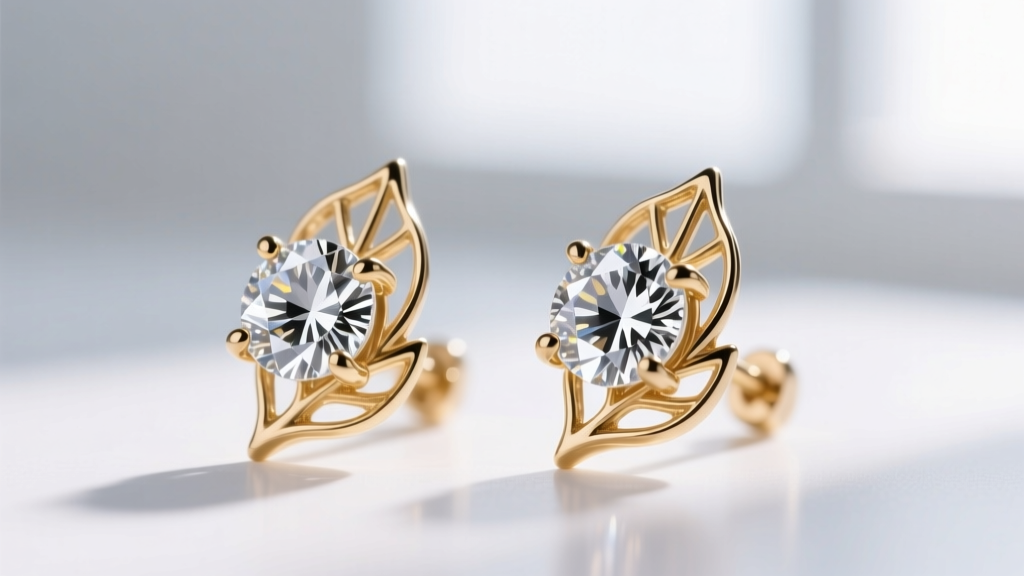
In 2026, lab-grown diamonds are chemically, physically, and optically identical to mined diamonds, but they are priced at a fraction of the cost. The Federal Trade Commission (FTC) mandates clear disclosure regarding lab-grown origins, ensuring market transparency. For a nature-inspired design like a leaf earring, which requires dozens of small stones to create a cohesive shape, lab-grown melee allows buyers to achieve a higher total carat weight (CTW) and better color consistency without the exponential price jumps associated with natural diamond parcels.
Price Comparison Chart: Natural vs. Lab-Grown (1.00 CTW Pair)
| Material & Diamond Type | Metal Purity | Estimated Retail Price (2026) | Value Proposition |
|---|---|---|---|
| Lab-Grown Melee (1.00 CTW) | 14k Solid Gold | $650 - $950 | Best for everyday wear, fashion-forward buyers, and strict budgets. |
| Natural Melee (1.00 CTW) | 14k Solid Gold | $2,800 - $3,500 | Traditional buyers seeking intrinsic earth-mined rarity. |
| Lab-Grown Melee (1.50 CTW) | 18k Gold or Platinum | $1,200 - $1,800 | Ideal for heirloom-quality metal with maximum diamond sparkle. |
| Natural Melee (1.50 CTW) | Platinum | $5,500 - $7,200 | High jewelry tier; retains metal value but suffers high retail markup. |
Metal Matters: Gold Karats and Platinum in Leaf Motifs
When assessing value, the metal choice is just as critical as the diamonds, particularly because leaf designs feature delicate 'stems' and pointed 'tips' that are prone to snagging and bending.
Durability vs. Cost in Intricate Designs
While 18k gold (75% pure gold) offers a richer, warmer yellow hue and is hypoallergenic, it is a relatively soft metal. For a diamond leaf earring with a long, sweeping stem or a delicate drop mechanism, 18k gold may bend out of shape if caught on a sweater. 14k gold (58.5% pure gold) is alloyed with stronger metals like copper and zinc, providing superior tensile strength. From a strict value and longevity perspective, 14k gold is the smartest budget choice for intricate leaf silhouettes. Platinum, while exceptionally durable and naturally white, adds significant weight and cost to the piece, which may not be justifiable unless the earrings feature high-carat natural diamonds.
Security Features: Earring Backings
A hidden cost in budget diamond leaf earrings is the backing mechanism. Heavy pave leaf drops require more than standard friction backs (butterfly clasps), which can easily slip off, resulting in the loss of the earring. High-value pieces will include La Pousette backs (which lock with a mechanical click) or silicone disc reinforcements. If a retailer is charging over $1,000 for a pair of drop leaf earrings but includes cheap friction backs, the overall value proposition is severely compromised.
How to Assess Value: A Buyer’s Checklist
To ensure you are getting a fair deal and not falling victim to deceptive marketing tactics, run any potential purchase through this rigorous assessment framework.
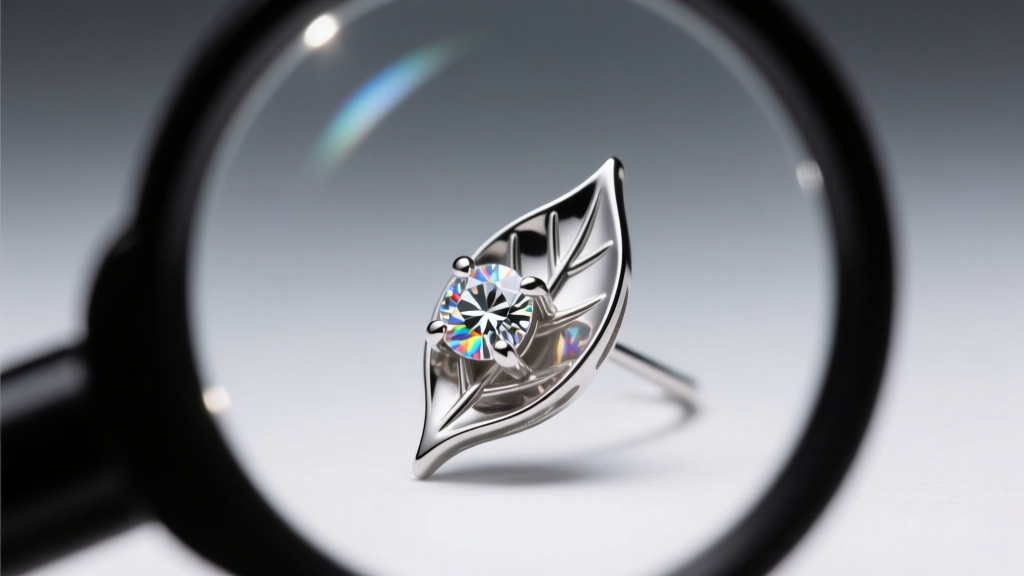
- Verify the CTW Disclosure: Retailers often advertise '1-Carat Diamond Earrings.' You must check the fine print to see if this is 1.00 Carat Total Weight (0.50ct per ear) or 1.00ct per ear. The price difference is massive.
- Inspect the Prongs: Use a macro lens or jeweler's loupe to examine the pave setting. The tiny metal beads holding the melee diamonds should be smooth and flush. Snaggy or rough prongs indicate poor factory finishing and will ruin your clothing and hair.
- Check for Metal Hallmarks: Ensure the earring post or backing is stamped with '14k', '18k', 'PT950', or '925' (for sterling silver). Unmarked metals are a major red flag for budget assessments.
- Evaluate the Contrast: The best leaf designs use contrasting metal finishes—such as a matte or brushed finish on the 'veins' and a high-polish finish on the edges. This labor-intensive technique makes the diamonds pop and justifies a higher price point.
- Review the Upgrade Policy: If you are buying natural diamonds as a stepping stone, check if the jeweler offers a 100% credit trade-up program toward future purchases.
Resale Value vs. Sentimental and Intrinsic Value
It is vital to address the elephant in the room: diamond leaf earrings are not financial investments. Like almost all retail jewelry, they depreciate the moment they leave the store. The secondary market for melee diamonds is virtually non-existent because the cost of extracting and sorting tiny stones outweighs their intrinsic melt value. Therefore, your 'value assessment' must be based on cost-per-wear and emotional resonance rather than resale potential. A well-crafted pair of 14k gold and lab-grown diamond leaf earrings worn weekly over ten years offers a vastly superior cost-per-wear value compared to a fragile, high-priced natural diamond pair that sits in a safe.
Final Verdict: Are They a Good Investment?
If your definition of investment is purely financial, diamond leaf earrings fall short. However, if you are assessing value through the lens of artisanal craftsmanship, daily wearability, and aesthetic joy, they can be an excellent addition to your collection. For the modern buyer in 2026, the sweet spot for value lies in the $800 to $1,500 range, opting for 14k solid gold, lab-grown melee diamonds (1.00 to 1.50 CTW), and secure locking backings. By prioritizing cut quality in the melee stones and structural integrity in the metalwork, you secure a piece of wearable art that will endure for a lifetime without breaking the bank.


