Budget Guide: Diamond Linear Drop Earrings Value in 2026
Discover how to evaluate diamond linear drop earrings in 2026. Compare lab-grown vs. natural pricing, metal grades, and value retention strategies.

The Anatomy of Linear Drop Earrings: Where the Money Goes
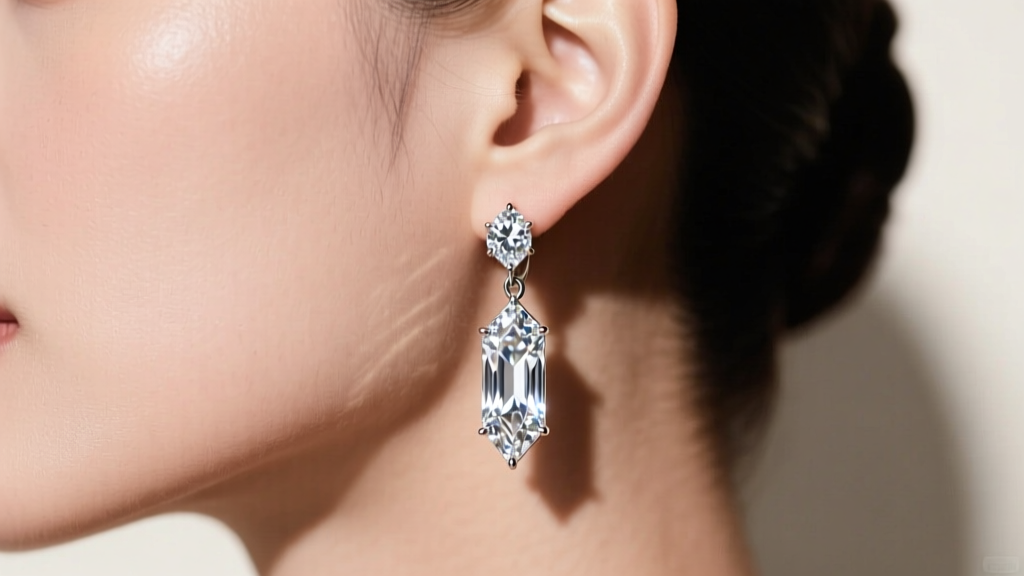
When assessing the budget and true value of diamond linear drop earrings, you must look beyond the total carat weight. Linear drops are an exercise in structural engineering as much as they are in gemology. Unlike standard studs, a linear drop earring consists of three distinct cost centers: the primary stud (or hook), the articulation joint, and the suspended linear diamond segment. Understanding how jewelers allocate their budget across these three components is the key to spotting a genuine value proposition versus a cleverly disguised markup.
The most critical, yet frequently overlooked, specification in linear drop earrings is the wire gauge used for the drop segment. The primary post that pierces the ear is typically an 18-gauge (1.0mm) or 20-gauge (0.8mm) wire. However, the linear wire holding the cascading melee diamonds is often drawn down to 22-gauge (0.6mm) or even 24-gauge (0.5mm) to save on precious metal costs. While this makes the earring lighter and cheaper to produce, 24-gauge wire is highly susceptible to bending when you pull a sweater over your head or brush your hair. A true value-driven piece will use a reinforced 20-gauge or 22-gauge wire for the drop segment, ensuring structural longevity without adding excessive weight.
Natural vs. Lab-Grown: The 2026 Pricing Reality
The market for diamond linear drop earrings has undergone a massive correction over the last few years. According to industry analysis from JCK Online, the wholesale pricing for lab-grown diamonds has continued to drop, drastically altering the retail landscape in 2026. For linear drops, which often rely on multiple smaller melee diamonds rather than a single large solitaire, lab-grown stones offer an unparalleled advantage in visual spread without the exponential price jumps associated with natural diamonds.
| Carat Total Weight (CTW) | Diamond Origin | Avg. Color / Clarity | Metal Setting | Est. 2026 Retail Price |
|---|---|---|---|---|
| 1.00 CTW | Lab-Grown (CVD) | F-G / VS1 | 14k White Gold | $850 - $1,200 |
| 1.00 CTW | Natural Earth-Mined | G-H / SI1 | 14k White Gold | $3,200 - $4,500 |
| 2.00 CTW | Lab-Grown (CVD) | F-G / VS1 | 14k White Gold | $1,400 - $1,900 |
| 2.00 CTW | Natural Earth-Mined | G-H / SI1 | 14k White Gold | $7,500 - $11,000 |
As the table illustrates, opting for lab-grown diamonds in a linear drop design allows you to double the carat weight and upgrade the color/clarity grades for less than half the price of a modest 1.00 CTW natural pair. The Gemological Institute of America (GIA) maintains strict grading standards for lab-grown stones, ensuring that a GIA-graded F/VS1 lab diamond will offer the exact same optical brilliance and fire as its natural counterpart.
Metal Selection: Balancing Weight and the Pendulum Effect
When buying drop earrings, the choice of metal impacts both your budget and the physical comfort of the earring. Platinum is often marketed as the ultimate premium metal, but for linear drop earrings, it can actually be a detriment. Platinum is roughly 1.6 times denser than 14k gold. In a linear drop design, excess metal weight at the bottom of the earring creates a pendulum effect. This shifts the center of gravity downward, causing the top stud to pull forward and the earlobe to droop uncomfortably.
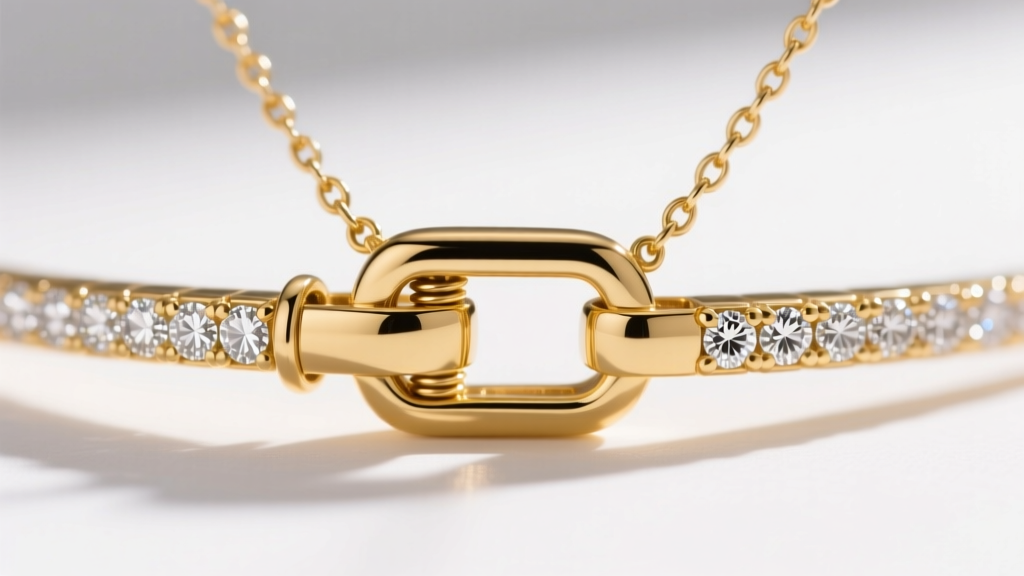
For optimal value and wearability, 14k or 18k gold (white, yellow, or rose) is the superior choice. 14k white gold offers an excellent balance of rigidity and affordability, though it requires periodic rhodium plating to maintain its bright white finish. If you prefer a low-maintenance option, 18k yellow gold provides a rich, warm contrast to the diamonds and will never require replating, making it a smarter long-term budget choice for everyday wear.
The Hidden Cost of Earring Backs and Security
A common budget trap is ignoring the earring backing mechanism. Standard friction backs (butterfly backs) are notoriously insecure for linear drops. Because the drop segment catches on clothing and hair, the leverage applied to the earring can easily pull a standard friction back off, resulting in a lost diamond earring. High-value linear drops should come equipped with La Pousette backs, screw-backs, or a secure leverback hinge. If a retailer is selling a $2,000 pair of linear drops with cheap friction backs, factor in an additional $75 to $150 to have a jeweler upgrade the posts and backs to secure mechanisms.
Common Failure Modes and How to Avoid Them
To truly assess value, you must anticipate how a piece of jewelry will fail over time. Linear drop earrings have two primary failure modes that budget-conscious buyers should watch out for:
- The Forward Flip: If the top stud is too light and the diamond drop is too heavy, the earring will constantly flip upside down, hiding the diamonds behind your earlobe. To prevent this, look for designs where the top stud features a slightly larger diamond or a wider metal base to act as a counterweight.
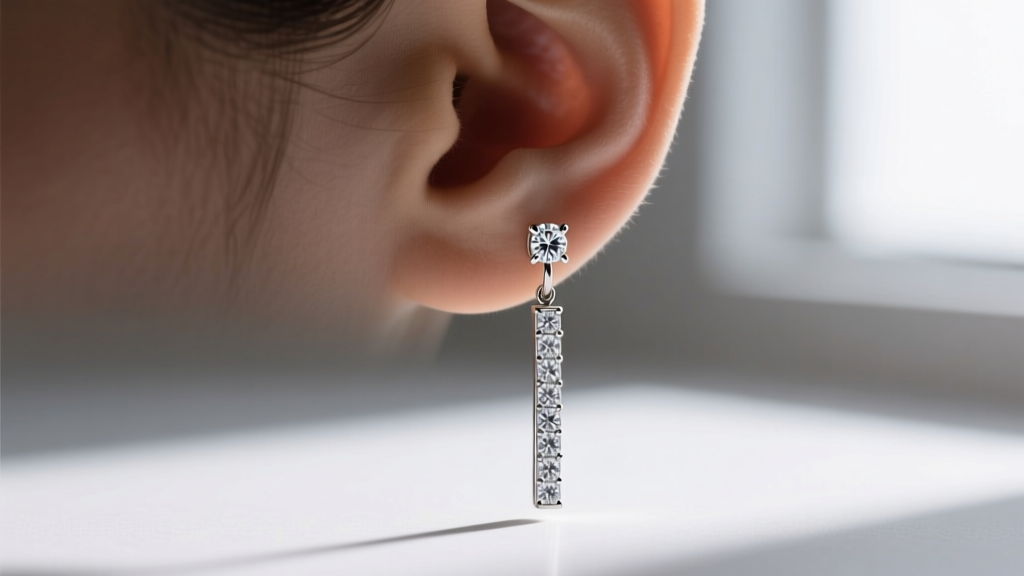
- Melee Fallout: Linear drops utilize micro-prong settings to hold dozens of tiny melee diamonds. If the prongs are cast too thinly to save on gold weight, they will wear down and release the stones. Always inspect the prongs under a 10x loupe before purchasing; they should be rounded, smooth, and securely covering the girdle of each melee stone.
Value Assessment Framework: Reading the Specs
When evaluating a specific pair of diamond linear drop earrings, use this quick framework to determine if the asking price is justified:
- Verify the Melee Quality: Many jewelers use I1 or I2 clarity diamonds for the linear drop portion, assuming the stones are too small for inclusions to be visible. However, heavy inclusions in melee diamonds block light return, making the drop look dark and gray. Insist on SI1 or better clarity for the entire linear segment.
- Check the Articulation: Hold the earring by the top stud and gently tap the drop. It should swing freely and return to center immediately. If the joint is stiff, it means the manufacturing tolerances are poor, and the metal will eventually fatigue and snap at the hinge point.
- Demand Proper Disclosure: The Federal Trade Commission (FTC) requires clear disclosure of lab-grown diamonds and exact metal purity. Ensure your receipt explicitly states 'Lab-Grown' or 'Natural' and lists the precise gold karatage, rather than vague terms like 'diamond earrings' or 'gold settings'.
Resale Value and Investment Reality
It is crucial to separate 'value' from 'investment.' Diamond jewelry, particularly fashion-forward styles like linear drops, is not a financial investment. Natural diamond linear drops typically retain 20% to 30% of their retail purchase price on the secondary market, largely due to the high retail markups applied by brick-and-mortar jewelers. Lab-grown diamond earrings currently retain less than 10% of their retail value upon resale.
Therefore, the 'value' of a lab-grown linear drop earring lies entirely in its upfront cost savings and its visual impact. By spending $1,500 on a high-quality, 2.00 CTW lab-grown pair instead of $9,000 on a natural equivalent, you are achieving the exact same aesthetic result while keeping $7,500 liquid for other investments. If brand retention is important to you, purchasing pre-owned linear drops from signed contemporary designers (such as Anita Ko or Maria Tash) can offer a middle ground, as the designer brand premium helps stabilize the secondary market value better than unsigned mall-jeweler pieces.
Conclusion: Final Verdict on Smart Purchasing
Navigating the market for diamond linear drop earrings in 2026 requires a shift in perspective. The smartest buyers are no longer paying exorbitant premiums for natural earth-mined melee diamonds in linear settings. Instead, they are leveraging lab-grown stones to maximize carat weight and color grades, while directing their budget toward superior metalwork, secure leverback mechanics, and proper structural gauge sizes. By prioritizing the physical engineering of the earring alongside the gemological specs, you can secure a pair of linear drops that offers brilliant visual impact, all-day comfort, and exceptional long-term wearability without breaking your budget.


