How to Make Authentic Pirate Costume Earrings Step-by-Step
Learn how to craft authentic pirate costume earrings with our step-by-step guide. Master aging techniques, gauge sizing, and historical accuracy.

The Anatomy of Historical and Theatrical Pirate Earrings
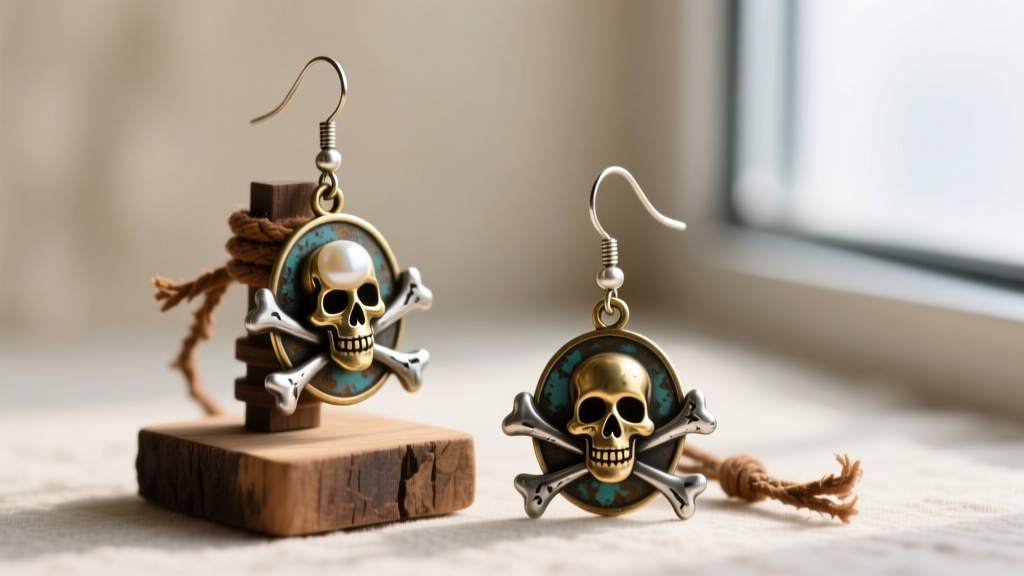
When assembling a swashbuckling ensemble for the 2026 cosplay season or a local theater production, the details separate a cheap party-store outfit from a screen-accurate masterpiece. Pirate costume earrings are a vital focal point. Historically, sailors and privateers in the 17th and 18th centuries did wear earrings, though the exaggerated, multi-charm pirate look we know today is heavily influenced by Howard Pyle's 19th-century illustrations and Hollywood cinema. According to the Royal Museums Greenwich, earrings served a highly practical purpose: they were often forged from precious metals like gold or silver, acting as portable wealth that could pay for a proper Christian burial if a sailor's body washed ashore. For your modern build, balancing this historical nugget with dramatic, theatrical flair is the ultimate goal.
Materials and Tools: Sourcing the Right Hardware
To craft durable pirate hoops that will not turn the wearer's ears green or cause contact dermatitis, you must select the correct base metals and wire tempers. Shiny, factory-made jewelry instantly breaks the illusion of a weathered sea captain.
Wire Gauges and Metal Types
- 12-Gauge (2.05mm) or 14-Gauge (1.63mm) Wire: Ideal for the main structural hoop. It is thick enough to mimic historical, heavy-duty jewelry and will not easily bend out of shape when bumped.
- 18-Gauge (1.02mm) or 20-Gauge (0.81mm) Wire: Best for creating jump rings, wire-wrapping charms, or making intricate dangles.
- Metals: Opt for solid brass, copper, or bronze. Brass is an alloy of copper and zinc, making it highly reactive to chemical patinas. Avoid nickel-silver or cheap plated wires, as the plating will chip and flake during the aging process. Understanding the metallurgical properties of your chosen wire is paramount. If you are building props for a professional theater company where actors have metal allergies, you must isolate the brass from the skin using a polyurethane coating or by swapping the ear wire for hypoallergenic surgical steel.
Essential Jewelry-Making Tools
- Flush cutters (for clean, flat wire cuts without pinching)
- Round-nose and chain-nose pliers
- A stepped ring mandrel (for sizing hoops perfectly)
- Cup burr or needle files (crucial for smoothing sharp wire ends)
Step-by-Step: Forging Your Pirate Costume Earrings
Follow this precise methodology to construct a classic, weathered hoop with a dangling charm that looks like it survived a century on the high seas.
Step 1: Shaping and Finishing the Hoop
Cut an 8-inch length of 14-gauge half-hard brass wire. Half-hard temper is critical; dead-soft wire will warp and lose its circular shape when the actor or cosplayer touches it. Wrap the wire around a 35mm stepped mandrel to form a perfect circle. If you lack a stepped mandrel, you can wrap the wire around a sturdy wooden dowel or a PVC pipe of the desired diameter, but be aware that softer cylindrical objects may compress slightly under the tension of 14-gauge wire, resulting in a slightly oval hoop. Overlap the ends by about 5mm. Using your flush cutters, snip the overlap so the ends meet flush. Pro Tip: Use a needle file or a rotary tool with a cup burr to round off the very tip that will pass through the ear piercing. A sharp edge will tear the earlobe, especially if the hoop is heavy.
Step 2: Adding the Loot (Charms and Findings)
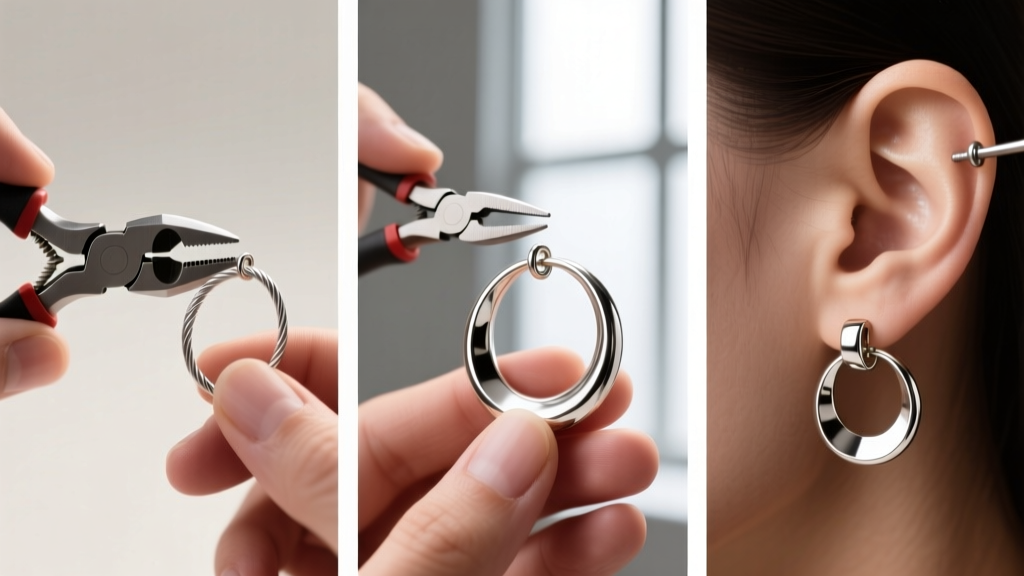
Pirate earrings often featured symbolic charms like coins, skulls, crosses, or tiny navigational instruments. Create a custom dangle by threading a brass coin or pewter skull onto an 18-gauge eye pin. Wrap a tight loop at the top using chain-nose pliers. Open a 6mm 18-gauge jump ring (always twist open laterally, never pull apart, to maintain the circle's structural integrity) and slide it onto the main hoop before closing the hoop's gap.

Step 3: The Antiquing Process (Liver of Sulfur)
Shiny brass screams modern manufacturing. To achieve a salvaged-from-a-shipwreck aesthetic, you need to oxidize the metal. Rio Grande's jewelry finishing guides recommend Liver of Sulfur (LOS) for brass and copper alloys.
- Mix a pea-sized amount of LOS gel into a cup of hot (not boiling) water.
- Submerge your finished earrings using copper or plastic tongs.
- Watch the metal shift from yellow to bronze, then to dark gunmetal black (usually 30 to 60 seconds).
- Immediately plunge the earrings into a baking soda and water bath to neutralize the chemical reaction.
- Once dry, use 0000 steel wool or a polishing cloth to buff the high points of the hoop and charm, leaving the dark oxidation in the recesses. This creates instant, realistic patina.
Clip-On vs. Pierced: Adapting for Cosplay Comfort
Not every cosplayer or stage actor has pierced ears, and heavy 14-gauge brass hoops can drag down standard earlobes over an 8-hour convention day. Here is how to adapt your findings for different wearers.
| Finding Type | Best For | Weight Capacity | Comfort Level |
|---|---|---|---|
| Standard Fishhook | Pierced ears, light to medium hoops | Up to 15g | High (with silicone lifters) |
| Leverback | Pierced ears, secure lock for active wear | Up to 25g | Very High |
| Paddle Clip-On | Unpierced ears, heavy theatrical props | Up to 40g | Moderate (requires padding) |
| Magnetic | Unpierced ears, lightweight dangles | Under 10g | Low (slip risk during stunts) |
For heavy clip-ons, adhere a small piece of moleskin or felt to the inside of the paddle back to prevent pinching the cartilage. If using fishhooks for pierced ears, always pair them with heavy-duty silicone earring support discs to distribute the weight across a wider area of the lobe.
Styling and Safety Tips for All-Day Convention Wear

When wearing large pirate hoops, safety and styling go hand-in-hand. If your costume involves a tricorn hat, ensure the hoop's diameter (e.g., 40mm) clears the brim so it does not catch and tear the ear. For stage combat or crowded convention floors, consider using a breakaway jump ring at the top of the ear wire. If the hoop snags on a prop sword or another attendee's costume, the jump ring will pop open, saving the wearer from a severely torn earlobe.
Finally, seal your oxidized brass with a micro-crystalline wax (like Renaissance Wax) or a clear jewelry shield spray. This prevents the copper alloys from reacting with the wearer's sweat, which can cause skin discoloration or contact dermatitis during long, hot days in heavy velvet or leather pirate coats.
Conclusion
Crafting your own pirate costume earrings elevates your historical or fantasy ensemble from amateur to artisan. By mastering wire gauges, utilizing liver of sulfur for authentic aging, and prioritizing ergonomic findings, you ensure your jewelry looks like it has survived a century on the high seas while remaining comfortable enough to wear from the morning muster to the final tavern toast.