The 2026 Gift Guide to Iridescent Earrings by Occasion
Discover the perfect iridescent earrings for every milestone. Our 2026 gift guide matches opal, labradorite, and anodized titanium to specific occasions.

The Allure of Iridescence in Modern Jewelry Gifting
When it comes to gifting jewelry, static gemstones often fall short of capturing the dynamic personality of the recipient. Enter iridescent earrings—a category of jewelry that shifts, flashes, and changes color depending on the angle of light and the movement of the wearer. In 2026, the shift toward personalized, emotionally resonant gifting has made iridescent pieces a top choice for milestones ranging from graduation to golden anniversaries. But iridescence is not a single material; it is an optical phenomenon achieved through vastly different geological and metallurgical processes. Gifting the wrong type of iridescent earring for a specific lifestyle or occasion can lead to damaged stones or unworn accessories. This guide decodes the science, sizing, and occasion-matching required to select the perfect pair.
The Science of the Shimmer: Why Materials Matter
Before selecting a gift, it is crucial to understand what causes the color-shifting effect, as this dictates the earring's durability, price point, and care requirements. Iridescence in jewelry generally falls into three categories:
- Diffraction (Opals): Precious opals consist of microscopic silica spheres arranged in a grid. As light passes through, it diffracts, creating the famous 'play-of-color'. According to the Gemological Institute of America (GIA), the size and uniformity of these spheres determine the spectral colors visible.
- Thin-Film Interference (Mother of Pearl & Anodized Titanium): Light waves bounce off multiple microscopic layers (nacre in pearls, or oxide layers on titanium), causing some wavelengths to amplify and others to cancel out.
- Light Scattering (Labradorite): Known as 'labradorescence', this occurs when light hits internal lamellar twin boundaries within the feldspar crystal, reflecting vivid blues, greens, and golds.
Understanding these mechanisms prevents costly gifting mistakes. For example, gifting a delicate mother-of-pearl piece to someone who wants to wear it daily in a cartilage piercing will result in rapid degradation, whereas anodized titanium will thrive in that exact environment.
Matching Iridescent Earrings to the Recipient & Occasion
The Romantic Milestone: Solid Australian Opal Drops
Best For: Anniversaries, Proposals, Valentine's Day
Material Profile: Mohs 5.5 - 6.5 | High Porosity | Requires Hydration
Price Range: $300 - $2,500+
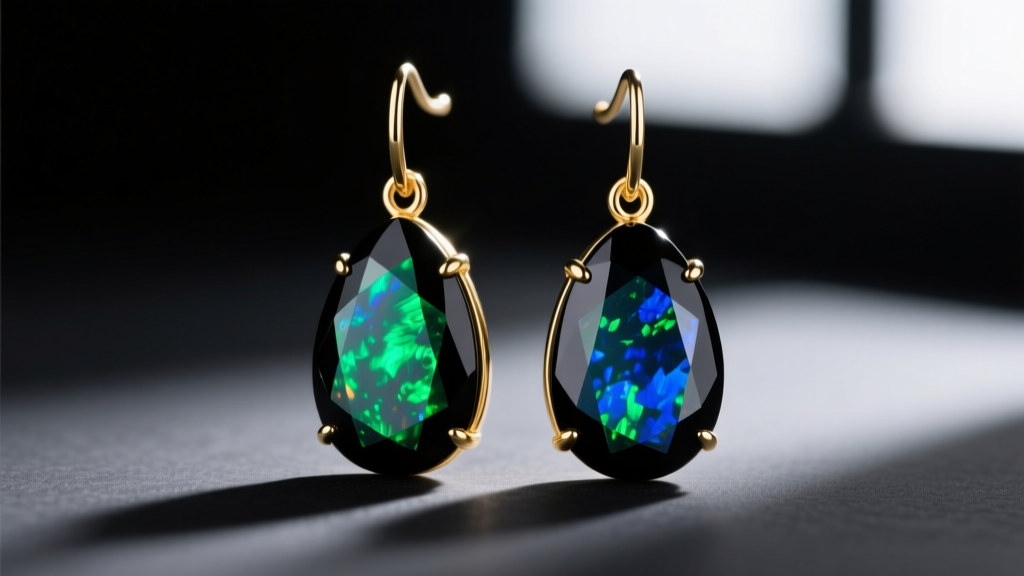
For profound romantic milestones, solid Australian black or boulder opals set in 18k yellow or rose gold remain the pinnacle of iridescent gifting. Unlike synthetic opals or doublets (which feature a thin slice of opal glued to a glass backing), solid opals carry intrinsic geological value. When gifting opal drop earrings, look for a 'pinfire' or 'broad flash' pattern. Because opals contain up to 20% water, they are susceptible to 'crazing' (cracking) if exposed to extreme heat or rapid humidity drops. Therefore, opal dangles or drops are superior to studs for this gemstone, as they keep the stone slightly away from the body's direct heat and allow for easier removal before showering or sleeping.
The Graduate’s Edge: Anodized Titanium Huggies
Best For: College Graduation, 18th/21st Birthdays, First Piercings
Material Profile: ASTM F136 Implant-Grade | Hypoallergenic | Oxide Layer Color
Price Range: $40 - $150
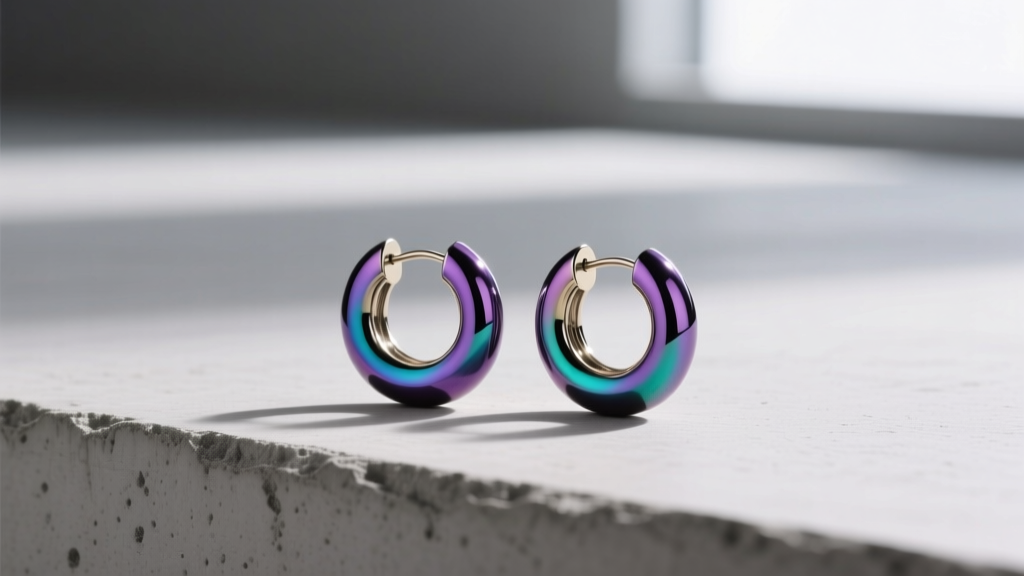
For the younger demographic or those with hyperactive lifestyles, anodized titanium offers a modern, indestructible iridescence. The color is not a dye or a plating; it is created by running an electrical current through the titanium in an electrolyte bath, thickening the natural oxide layer on the surface. A voltage of 20-30V yields a bronze/gold iridescence, while 90-100V produces a vibrant, shifting blue-to-purple spectrum. Because it is implant-grade (ASTM F136), it is the absolute safest metal for fresh piercings or sensitive cartilage. A pair of 16-gauge anodized titanium huggie hoops for a helix or tragus piercing is a highly practical, deeply thoughtful gift that will not tarnish, flake, or cause nickel allergies.
The Bohemian Birthday: Spectrolite Labradorite Dangles
Best For: Milestone Birthdays, Travel Lovers, Artistic Personalities
Material Profile: Mohs 6 - 6.5 | Cleavage Planes | Schiller Effect
Price Range: $60 - $250
Labradorite, particularly the 'Spectrolite' variety originating from Finland, offers a moody, mystical iridescence that appeals to bohemian and artistic recipients. The flashes of electric blue, peacock green, and metallic gold are caused by light scattering through internal crystal layers. As noted by mineralogical databases like Mindat.org, labradorite possesses distinct cleavage planes, meaning it can fracture if struck hard against a surface. For gifting, choose labradorite encased in protective bezel settings or suspended as teardrop dangles on sterling silver fishhook wires, which minimize the risk of the stone impacting hard surfaces during daily wear.
The Bridal Party: Mother of Pearl Inlay Studs
Best For: Bridesmaid Gifts, Mother of the Bride, Weddings
Material Profile: Mohs 2.5 - 4.5 | Organic Nacre | High Luster
Price Range: $80 - $350
Mother of pearl (nacre) provides a soft, milky iridescence that perfectly complements bridal aesthetics. Because it is an organic material secreted by mollusks, it is highly sensitive to acids, perfumes, and hairspray. Gifting mother of pearl studs set in 14k white gold or platinum offers a timeless, elegant look for the wedding day. However, you must include a gentle jewelry care kit (microfiber cloth and specific organic gem cleaner) with the gift, as standard ultrasonic cleaners will destroy the nacre layers.
Occasion-to-Material Comparison Chart
Use this quick-reference matrix to align your gifting budget, the recipient's lifestyle, and the physical properties of the iridescent material.
| Occasion | Ideal Material | Mohs Hardness | Durability Profile | Avg. Price Range |
|---|---|---|---|---|
| Anniversary / Proposal | Solid Black Opal | 5.5 - 6.5 | Moderate (fears heat/dryness) | $300 - $2,500 |
| Graduation / Youth | Anodized Titanium | N/A (Metal) | Exceptional (Implant-grade) | $40 - $150 |
| Bohemian Birthday | Spectrolite Labradorite | 6.0 - 6.5 | Moderate (cleavage fracture risk) | $60 - $250 |
| Bridal Party / Wedding | Mother of Pearl | 2.5 - 4.5 | Low (scratches/acid sensitive) | $80 - $350 |
| Everyday Office Wear | Mystic Topaz (Coated) | 8.0 | High (coating can wear over time) | $100 - $400 |
Sizing, Gauges, and Fitting Guidelines for Gifting
A beautiful iridescent earring becomes a failed gift if it does not fit the recipient's piercing. The jewelry industry relies on the American Wire Gauge (AWG) system, and guessing the wrong size will render the earring unwearable without a trip to a professional piercer.
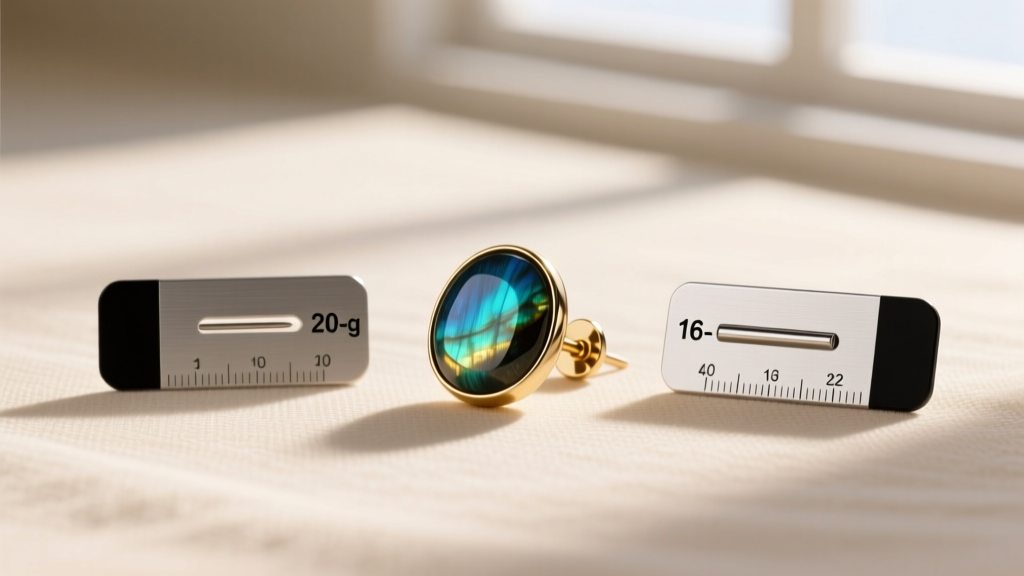
- Standard Earlobe Piercings: Typically pierced at 20g (0.81mm) or 18g (1.02mm). If you are buying opal or labradorite stud earrings for standard lobes, an 18g post is the safest bet, as it will fit comfortably through both 20g and 18g holes without stretching them.
- Cartilage (Helix, Tragus, Conch): Professional piercers almost exclusively use 16g (1.29mm) or 14g (1.63mm) for cartilage to prevent the 'cheese-cutter effect' (where thin wire migrates through the tissue). If gifting anodized titanium huggies or flat-back labrets for cartilage, you must verify the recipient's gauge. Furthermore, post length matters: standard tragus posts are 5mm to 6mm, while conch piercings often require 6mm to 8mm posts.
- Thread Types: For high-end iridescent gems, avoid 'push-pin' or friction-fit settings which can easily fall out and lose the stone. Opt for internally threaded or threadless (snap-together) mechanisms, which are the industry standard for secure, high-value body jewelry.
Care and Maintenance: The Giver's Responsibility
When gifting iridescent earrings, you are also gifting a maintenance routine. Include a handwritten note detailing the specific care requirements of the material you chose. Never recommend ultrasonic or steam cleaners for opals, labradorite, or mother of pearl; the high-frequency vibrations can shatter internal inclusions or strip organic nacre layers. Instead, gift a specialized, non-abrasive microfiber polishing cloth and a mild, phosphate-free jewelry soap. For anodized titanium, remind the recipient that while the metal is indestructible, the oxide layer causing the iridescence can be scratched by harder metals or diamond files. Advise them to store titanium pieces in individual soft pouches, separate from diamond or sapphire jewelry, to preserve the vibrant voltage-induced colors.
Final Thoughts on Gifting Light and Color
Iridescent earrings are more than just accessories; they are wearable optics that interact with the environment. By matching the geological and metallurgical realities of materials like opal, titanium, and labradorite to the specific lifestyle and piercing anatomy of your recipient, you elevate your gift from a simple trinket to a deeply considered, scientifically sound treasure that will be cherished for decades.


