Gold Italian Earrings: 14k vs 18k Material Properties
Compare 14k and 18k gold Italian earrings. Discover metallurgical properties, durability, pricing, and how to choose the right karat for your piercings.

The Metallurgy of Italian Gold: Why Karat Matters
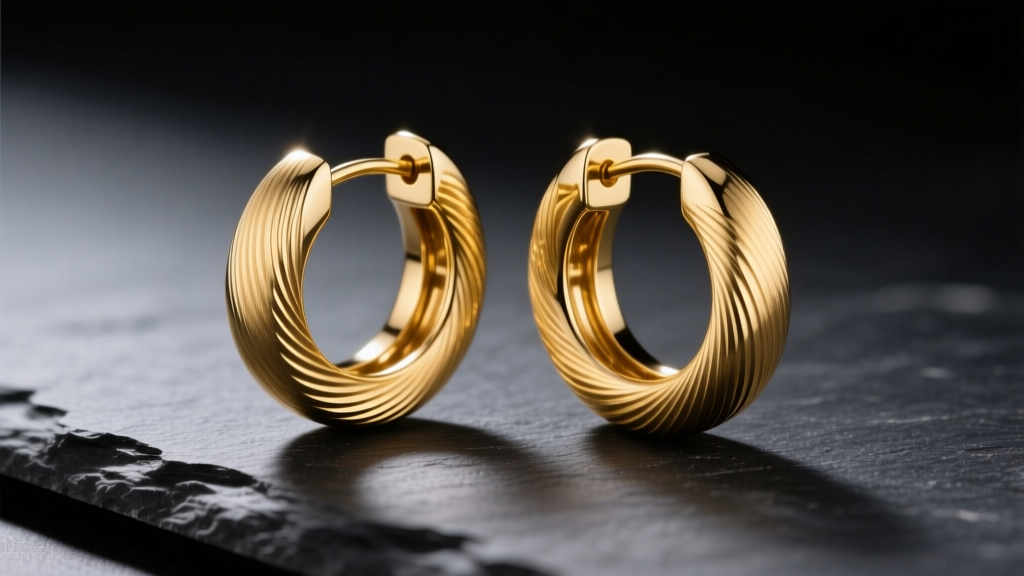
When collectors and jewelers discuss gold Italian earrings, they are referencing a legacy of metallurgical precision that dates back to the Etruscans. However, in the modern luxury market, the term 'Italian gold' is not just a geographic indicator; it represents specific alloy recipes, manufacturing techniques, and stringent hallmarking laws. To make an informed purchase, one must understand the material science separating 14k (585) and 18k (750) gold, particularly how these alloys interact with ear anatomy and daily wear.
According to the Gemological Institute of America (GIA), pure 24k gold is far too malleable for functional earring hardware. It bends under the weight of a heavy drop earring and fails to maintain the tension required for secure clasps. Therefore, Italian master goldsmiths in regions like Vicenza, Arezzo, and Valenza alloy pure gold with metals like copper, silver, zinc, and occasionally palladium to achieve the necessary Vickers hardness (HV) while maintaining the warm, saturated hue synonymous with Italian jewelry.
14k vs 18k Gold Italian Earrings: A Technical Breakdown
Choosing between 14k and 18k gold is not merely a budget decision; it is a metallurgical choice that dictates the earring's structural integrity, color profile, and biocompatibility. Below is a technical comparison of the two most prominent standards used in Italian earring manufacturing.
| Property | 14k Gold (585) | 18k Gold (750) |
|---|---|---|
| Pure Gold Content | 58.5% | 75.0% |
| Alloy Composition | 41.5% (Copper, Silver, Zinc) | 25.0% (Silver, Copper, Palladium) |
| Vickers Hardness (HV) | 140 - 160 HV | 120 - 135 HV |
| Color Profile | Palish yellow, slightly cooler | Rich, saturated 'Italian Yellow' |
| Biocompatibility | Moderate (copper/zinc can irritate) | Excellent (hypoallergenic standard) |
| Ideal Earring Style | Heavy hoops, structural huggies | Dangles, threaders, cartilage studs |
| Price Premium (vs Spot) | +25% to +40% craftsmanship markup | +45% to +70% craftsmanship markup |
14k Gold (585): The Durability Standard
In the United States, 14k gold is the default, but in Italy, it is specifically engineered for high-stress jewelry. Italian 14k gold utilizes a higher copper content in its alloy mix compared to American counterparts, yielding a slightly warmer tone and increased tensile strength. This makes 14k the superior choice for large-diameter continuous hoops and heavy geometric dangles. The higher Vickers hardness ensures that the earring post will not bend when inserting it through a tight piercing, and the omega-back clasps will retain their 'snap' tension over decades of use. However, the higher copper content means that individuals with highly acidic skin pH may experience mild oxidation (tarnish) on the earring backs over time.
18k Gold (750): The Luxury Benchmark
18k gold is the undisputed standard for fine Italian jewelry. With 75% pure gold, the alloy is inherently more resistant to tarnish and oxidation. The World Gold Council notes that 18k gold's higher noble metal content makes it the safest choice for sensitive piercings, particularly fresh cartilage piercings like the tragus, conch, or helix. While it is slightly softer than 14k, Italian artisans compensate for this by using thicker gauge wires and reinforced solder joints at the hinge points of leverback earrings. The resulting color is a deep, buttery yellow that cannot be replicated by lower-karat alloys or heavy gold plating.

Regional Italian Alloy Profiles & Manufacturing
The properties of gold Italian earrings are heavily influenced by the region in which they are crafted. Italy's jewelry industry is decentralized, with three main hubs specializing in different metallurgical techniques:
- Vicenza: Known for structural, architectural gold jewelry. Artisans here often use 18k gold in combination with advanced CNC milling and hand-chiseling to create lightweight but voluminous hoop earrings. The alloy is often mixed with a touch of palladium to increase fluidity during the casting process.
- Arezzo: The global capital of gold chain and mesh manufacturing. Earrings from Arezzo, such as intricate filigree drops or woven mesh huggies, rely on 14k or 18k gold alloys formulated for extreme ductility, allowing the gold to be drawn into microscopic wires without snapping.
- Valenza: The premier hub for high jewelry and gem-setting. Valenza goldsmiths prefer 18k gold alloys with a higher silver-to-copper ratio, creating a slightly paler, harder gold that provides a secure grip for diamond and gemstone prongs in drop earrings.
Hardware & Failure Modes: What to Inspect
When evaluating the material quality of Italian earrings, the hardware is just as critical as the gold purity. Italian manufacturing standards dictate specific gauge sizes and clasp mechanisms that differ from mass-market alternatives.
Post Thickness and Gauge Sizing
Standard US earring posts are typically 20-gauge (0.81mm). Authentic Italian gold studs, however, are frequently crafted at 18-gauge (1.02mm) or 19-gauge (0.91mm) to prevent the softer 18k gold from bending under the weight of a large bezel-set gemstone. Troubleshooting tip: If you are accustomed to 20g jewelry, forcing an 18g Italian post through a narrow lobe piercing can cause micro-tears and irritation. Always check the post gauge before purchasing heavy Italian studs.
Leverback and Omega Clasp Tension
Italian leverback earrings rely on a tension wire that snaps into a catch. Because 18k gold is relatively soft, repeatedly pulling the leverback wire past a 45-degree angle will anneal the metal, causing it to lose its 'memory' and fail to snap shut. Omega-back earrings (common in Italian clip-ons and heavy hoops) use a dual-spring mechanism. The failure mode here is usually the degradation of the internal steel spring, not the gold itself. High-end Italian makers encase these springs in 14k gold housings to prevent sweat corrosion.
Sourcing Authentic Pieces: Hallmarks and Pricing
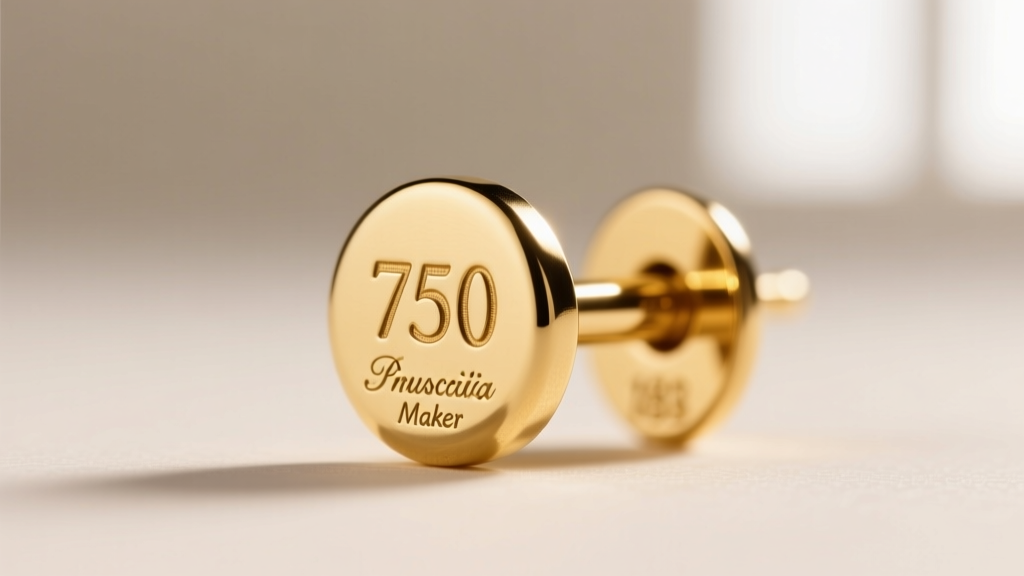
Italy has some of the strictest precious metals laws in the world, governed by Legislative Decree 251/1999. Authentic gold Italian earrings will never simply be stamped '18K' or 'Italy'. To verify the material provenance, look for the following dual-hallmark system:
- The Purity Mark: An octagonal or rectangular stamp reading 750 (for 18k) or 585 (for 14k).
- The Maker's Mark (Punzone): A unique alphanumeric code assigned to the specific manufacturing facility. It consists of a number followed by a two-letter provincial code. For example, 1234 VI indicates a registered goldsmith in Vicenza, while 1 AR points to Arezzo.
When pricing gold Italian earrings, expect to pay a significant craftsmanship premium over the raw melt value of the gold. While a basic mass-market 18k gold hoop might cost 20% above the spot gold price, hand-finished Italian pieces from regions like Valenza or Vicenza command a 50% to 80% premium due to the labor-intensive lost-wax casting, hand-polishing, and rigorous assay testing required by Italian law.
Final Verdict: Which Karat Suits Your Ear Anatomy?
If you are purchasing earrings for standard, fully healed lobe piercings and prioritize structural durability for heavy, oversized hoops, 14k Italian gold offers the perfect balance of tensile strength and warm color. However, if you are investing in intricate dangles, threaders, or jewelry for sensitive cartilage piercings, 18k Italian gold is non-negotiable. Its superior biocompatibility, rich saturation, and resistance to oxidation ensure that the earrings remain as pristine as the day they left the artisan's bench in Vicenza or Arezzo.


