Explore Unique Bead Earring Ideas: Step-by-Step Wire Wrapping Guide
Discover unique bead earring ideas with our step-by-step wire wrapping guide. Learn about hypoallergenic wires, gauges, and assembly techniques.

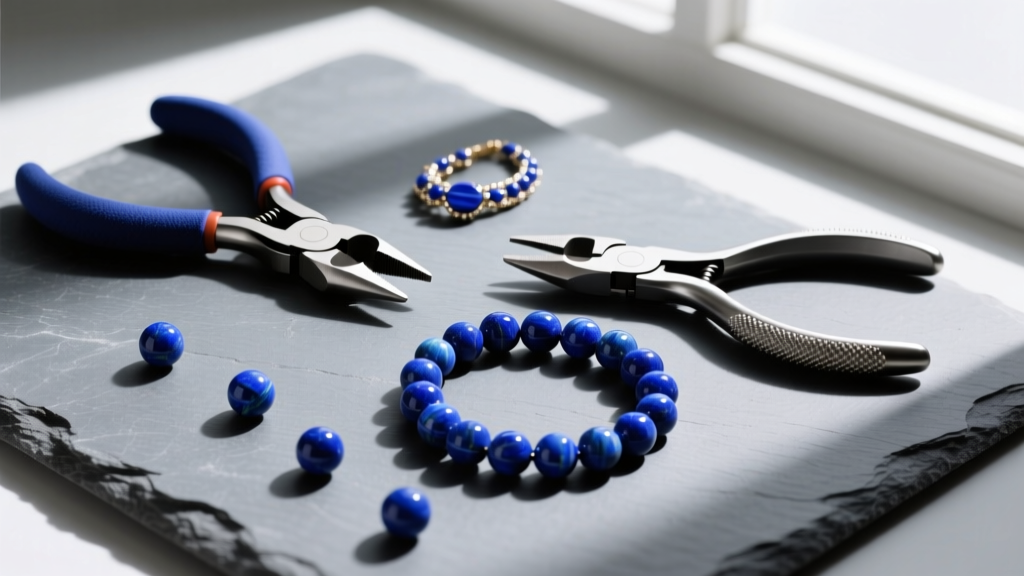
The Art of Crafting Custom Beaded Jewelry
When searching for unique bead earring ideas, mass-produced options often fall short, leaving you with nickel-laden alloys and generic designs that fail to reflect your personal style. Crafting your own wire-wrapped beaded earrings not only guarantees a one-of-a-kind aesthetic but also allows you to control the metallurgy, ensuring the final piece is entirely hypoallergenic and safe for sensitive piercings.
In this comprehensive guide, we will move beyond basic stringing techniques and dive deep into the structural engineering of wire-wrapped briolette drops. Whether you are working with fragile opals or durable sapphires, understanding the interplay between wire temper, gauge thickness, and gemstone hardness is critical for creating heirloom-quality ear wear.
Essential Materials: Selecting Hypoallergenic Wires and Beads
The foundation of any high-end earring is its metal. For ear wires that pass directly through the fistula (the piercing channel), you must prioritize biocompatibility. According to the Rio Grande Metals Guide, understanding the alloy composition is vital for preventing contact dermatitis.
Wire Gauge and Metal Grade Matrix
Selecting the correct wire gauge and material ensures your earrings are both durable and comfortable. Below is a professional matrix for material selection:
| Metal Type | Allergy Profile | Best Gauge for Ear Wires | Workability & Temper | Approx. Price / oz |
|---|---|---|---|---|
| ASTM F136 Titanium | Excellent (Implant Grade) | 20g (0.81mm) | Stiff; requires dead-soft temper for bending | $4.00 - $6.00 |
| Niobium | Excellent (Hypoallergenic) | 20g (0.81mm) | Malleable; can be anodized for color | $3.50 - $5.00 |
| Argentium Silver (935) | Good (Nickel-Free) | 20g (0.81mm) | Highly tarnish-resistant; fuses without solder | $35.00 - $45.00 |
| 24k Gold-Filled (14/20) | Very Good | 20g (0.81mm) | Thick gold layer; work-hardens quickly | $25.00 - $30.00 |
Note: Avoid "surgical steel" if you have severe nickel allergies, as the term is largely unregulated in the jewelry industry and often contains up to 8% nickel.
Step-by-Step Assembly: The Briolette Wire-Wrap Drop
The briolette (a teardrop-shaped, top-drilled bead) is a staple in fine jewelry. Wrapping it securely requires precision and the right tools. You will need a 20-gauge wire for the ear hook, a 24-gauge or 26-gauge dead-soft wire for the wrap, chain-nose pliers, flush cutters, and a mandrel.
Step 1: Forging the Custom Ear Wire
Cut a 3-inch length of 20-gauge dead-soft Argentium silver or Titanium wire. Using a stepped mandrel or a 3/8-inch wooden dowel, wrap the wire to form a uniform U-shape. The critical step here is finishing the insertion end. Use a cup bur attached to a rotary tool or a fine-grit needle file to round the tip of the wire. According to professional piercing standards, the insertion tip must be smoothed to a 0.2mm tolerance to prevent micro-tears in the delicate fistula tissue. Follow the detailed safety protocols outlined by Fire Mountain Gems Jewelry Making 101 for finishing wire ends safely.
Step 2: Threading and Securing the Focal Bead
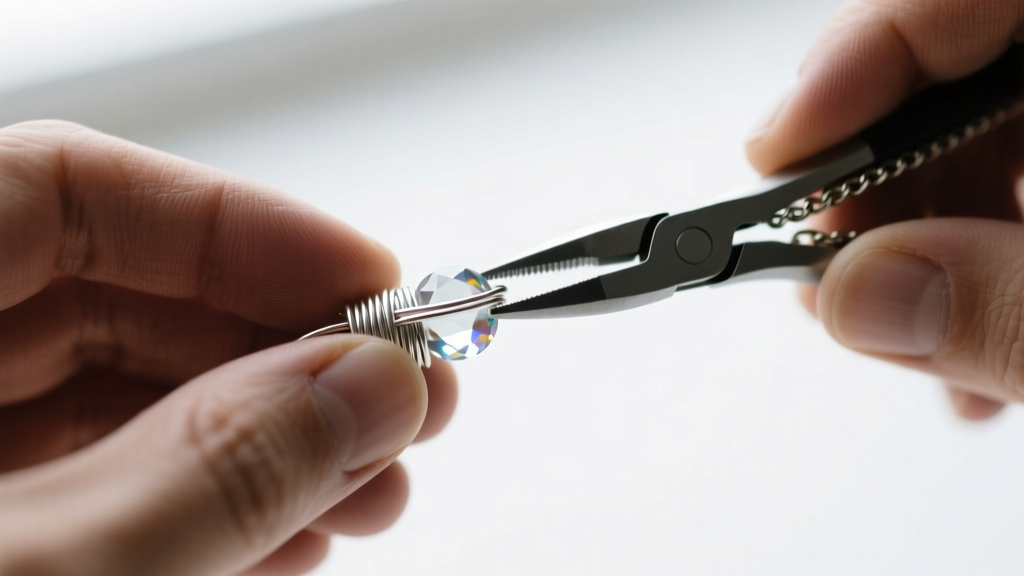
Take a 2-inch piece of 26-gauge dead-soft wire. Thread it through the top-drilled hole of your briolette. Pro-Tip: If you are using a fragile stone with a low Mohs hardness rating (like fluorite or opal, which sit around 4-5.5 on the scale), do not pull the wire taut against the edges of the drill hole, as the tension will fracture the stone. Leave a microscopic gap, or use a tiny piece of clear silicone tubing as an internal buffer.
Step 3: Executing the Wrapped Loop
Bring both ends of the wire up so they meet at the top of the bead. Bend one wire straight up, and wrap the other wire tightly around the base of the upright wire three times. Use nylon-jaw pliers to pull the wraps tight without marring the soft silver. Once wrapped, use flush cutters to trim the excess wrapping wire, and employ the flat nose of your chain-nose pliers to carefully tuck the sharp tail inward against the coil. Finally, create a simple loop at the top of the upright wire to attach it to your custom ear hook.
Pro-Tips for Flawless Finishing and Comfort
To elevate your bead earring ideas from amateur crafts to boutique-quality jewelry, focus on the finishing details:
- Work Hardening: Dead-soft wire becomes brittle as you bend it (work hardening). If your wire snaps during a wrap, you are bending it too slowly or re-bending the same spot. Make confident, single-pass bends.
- Tarnish Prevention: As noted in Calla Gold Jewelry Metallurgy, Argentium silver contains germanium, which forms a protective oxide layer. However, you should still store your finished pieces in anti-tarnish ziplock bags with 3M anti-tarnish strips.
- Ear Wire Tension: To prevent the earring from slipping off the earlobe, create a slight tension curve at the back of the ear wire, or add a tiny, decorative 2mm wire-wrapped bead at the very back tip as a natural stopper.
Troubleshooting Common Beading Mistakes
Even experienced jewelers encounter structural issues. Here is how to diagnose and fix the most common failures in wire-wrapped earrings:
Bead Slippage and Drooping
If your focal bead constantly faces backward or droops, the wire gauge used for the wrap is too thin, or the loop connecting the bead to the ear wire is too large. Solution: Upgrade from 28-gauge to 24-gauge wrapping wire for heavier gemstones (over 3 carats), and ensure the connecting loop is no larger than 2.5mm in diameter to restrict excessive pivoting.
Wire Discoloration at the Wraps
If your silver or gold-filled wire looks dark or burnt at the wrap points, your pliers have sharp, unpolished teeth that are gouging the metal, exposing the base metal underneath (in the case of gold-filled) or trapping dirt. Solution: Always use a brass brush to polish the wire after wrapping, or invest in high-quality Lindstrom or Wubbers pliers with perfectly smooth, flush jaws.
Conclusion
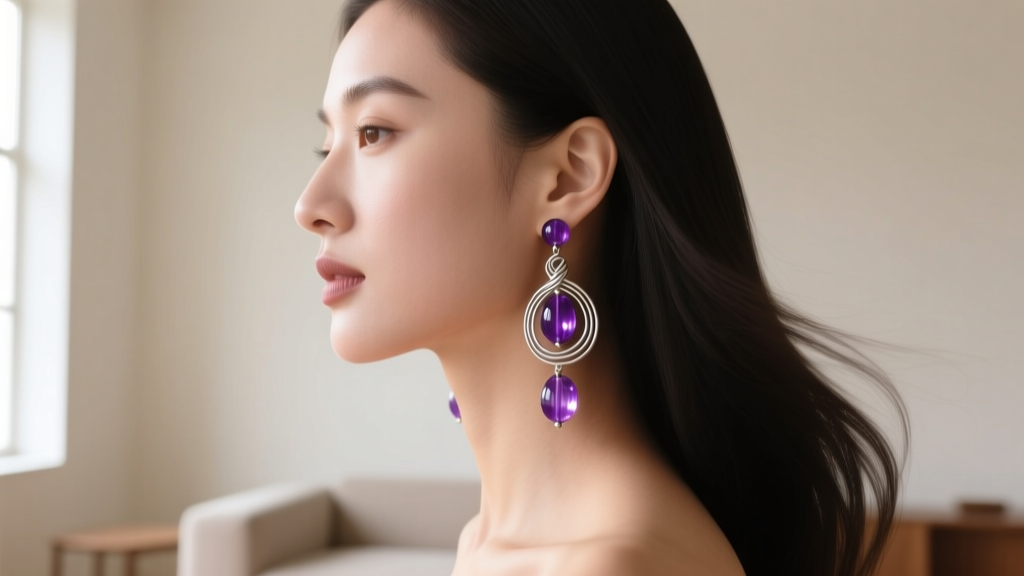
Mastering the art of wire wrapping opens up an endless array of bead earring ideas, allowing you to customize every facet of the design from the metallurgical grade to the gemstone cut. By prioritizing hypoallergenic materials like ASTM F136 titanium and Argentium silver, and adhering to precise gauge tolerances, you ensure that your creations are not only visually stunning but also structurally sound and comfortable for everyday wear. Grab your flush cutters, select your favorite briolettes, and begin engineering your next masterpiece.


