DIY Potara Earrings Dragon Ball Cosplay Guide for 2026
Learn how to craft lightweight, lobe-safe Potara earrings for Dragon Ball cosplay. Step-by-step guide covering materials, gauge sizes, and painting.


The Physics of Fusion: Why Anime Proportions Fail in Reality
In the expansive lore of the Dragon Ball universe, Potara earrings are far more than mere accessories; they are divine artifacts wielded by the Supreme Kais to facilitate permanent fusions. According to the Dragon Ball Wiki, these iconic yellow domes are depicted as roughly 1.5 to 2 inches (38mm to 50mm) in diameter. While this exaggerated scale looks phenomenal in 2D animation and manga panels, translating it into real-world cosplay presents a severe structural challenge: human anatomy.
A solid brass or stainless steel dome measuring 2 inches across weighs approximately 30 to 40 grams per earring. To put that into perspective, the Association of Professional Piercers (APP) notes that standard earlobes are only equipped to comfortably support 4 to 7 grams of sustained weight. Wearing heavy, solid metal Potaras for an eight-hour convention day will inevitably lead to lobe fatigue, micro-tears, and the dreaded 'cheese-cutter effect,' where the earring post slowly slices through the piercing channel. In 2026, the cosplay community has moved away from painful, heavy props in favor of engineered, lightweight alternatives that maintain the authentic Supreme Kai silhouette without compromising ear health.
Material Breakdown: Choosing the Right Potara Base
Before you begin crafting, you must select a base material that balances visual authenticity, weight, and structural integrity. Below is a comparison of the most common materials used by professional prop makers this year.
| Material | Avg. Weight (Pair) | Durability | Estimated Cost |
|---|---|---|---|
| Solid Brass / Bronze | 60g - 80g | Extremely High | $25 - $45 |
| Hollow Aluminum Bead Caps | 4g - 6g | Moderate (Dents easily) | $5 - $10 |
| Cast Polyurethane Resin | 8g - 12g | High (Shatter resistant) | $15 - $25 |
| 3D Printed PLA / Resin | 3g - 5g | Low to Moderate | $2 - $8 |
For the optimal balance of weight and convention-floor durability, hollow aluminum crafting domes (often sold as large bead caps or metal clay forms) are the gold standard for DIY Potaras. They provide a naturally metallic base that requires minimal prep work for painting and keep the total weight well within the safe zone for standard lobe piercings.
Step-by-Step Guide: Crafting Lobe-Safe Potaras
This guide assumes you are using 25mm hollow aluminum domes. The critical failure point in cosplay earrings is the junction where the post meets the dome. Standard butterfly-back earring posts use thin 20-gauge (0.8mm) wire, which will instantly bend under the torque of a 25mm dome. We will use a heavier gauge and a wider base to distribute the pressure.
Step 1: Sourcing the Correct Post and Hardware
Discard standard friction-back posts. Instead, purchase 14-gauge (1.6mm) or 12-gauge (2.0mm) implant-grade titanium flat-back labret posts. The flat disc at the base of the post serves two purposes: it provides a massive surface area for adhesive bonding inside the dome, and it acts as a counterweight and pressure distributor against the back of your earlobe. You will also need silicone O-rings (14G or 12G) to secure the post, as they grip better than metal butterfly backs and won't slip when bumped.
Step 2: Surface Preparation and Bonding
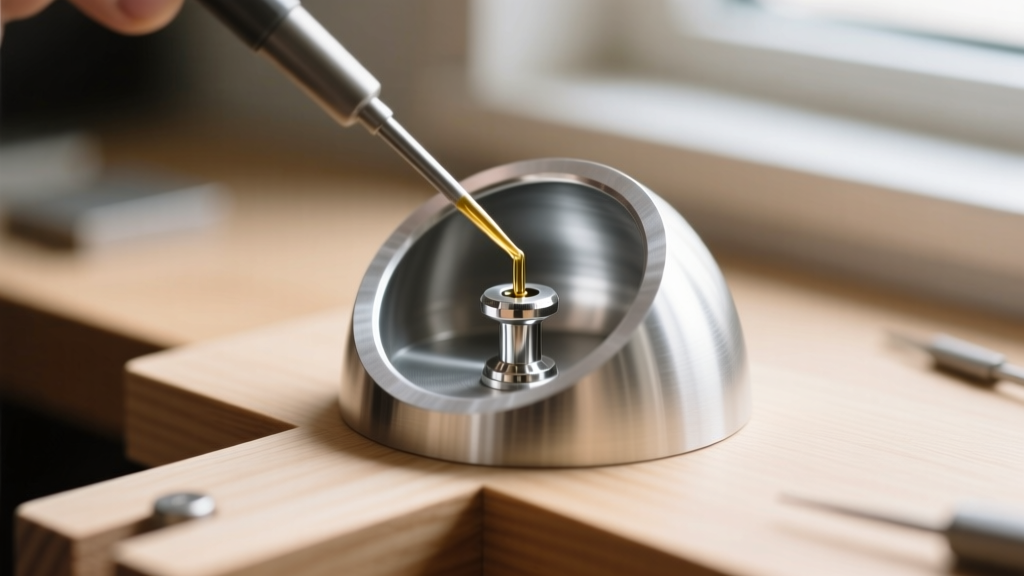
Cyanoacrylate (super glue) is strictly forbidden for this step; it is brittle and will fail under torsional stress. You must use a two-part structural epoxy, such as J-B Weld ClearWeld or a specialized jewelry UV resin.
- Sand the Interior: Use 220-grit sandpaper to rough up the inside center of the aluminum dome and the flat disc of the labret post. This creates a mechanical tooth for the epoxy.
- Clean: Wipe both surfaces with isopropyl alcohol to remove oils and metal dust.
- Mix and Apply: Mix your two-part epoxy. Apply a generous bead to the flat disc of the labret post.
- Seat the Post: Press the post firmly into the exact center of the dome's interior. Use a small piece of painter's tape across the outside of the dome to hold the post perfectly perpendicular while the epoxy cures for 24 hours.
Step 3: Priming and Painting for Authenticity
While the anime depicts the Potaras as a flat, bright yellow, real-world metallic finishes look vastly superior in cosplay photography. To achieve the iconic Supreme Kai look:
- Apply a self-etching primer to the exterior of the aluminum. Aluminum is non-porous, and standard primers will peel off in sheets if this step is skipped.
- Spray with a metallic gold or bright brass base coat (Tamiya TS-46 Light Sand or an automotive gold spray paint work beautifully).
- Finish with a 2K clear coat. A standard 1K clear coat will chip if your Potaras bump into a doorway or another cosplayer. A 2K clear coat provides a hardened, ceramic-like shell that protects the finish.
Troubleshooting Common Cosplay Earring Failures
Even with perfect construction, wearing oversized props requires maintenance and awareness. Here is how to troubleshoot the most common issues encountered on the convention floor.
- The 'Droop' Effect: If your earrings point downward instead of sitting flush, your piercing channel may be slightly stretched, or the post is too long. Switch to a shorter labret post (e.g., 6mm or 8mm length) so the flat back sits tightly against your lobe, eliminating the lever-arm effect that causes drooping.
- Lobe Fatigue and Redness: Even at 5 grams, wearing a large dome creates wind resistance. If a gust of wind catches your Potara, it will yank your lobe. Take a 15-minute break every three hours to let the blood flow return to your earlobes, and massage the tissue gently.
- Post Snapping: If you used a standard wire post instead of a flat-back labret, the wire will eventually suffer metal fatigue and snap at the solder joint. Always use CNC-machined or cast flat-back posts for large props.
How to Wear Potaras Without Piercings
Not every Dragon Ball fan wants to commit to a lobe piercing, and standard clip-on converters are notoriously unreliable for 25mm domes due to the leverage created by the prop's size. If you are non-pierced, you must modify your approach.
The Tension-Screw Clip Method: Purchase heavy-duty, adjustable tension clip-on findings (often used for vintage couture jewelry). Bond the flat pad of the clip-on finding to the inside of the Potara dome using the same two-part epoxy method described above. The key is to adjust the tension screw with a tiny jeweler's screwdriver so that it grips the thickest part of your ear cartilage/lobe junction without cutting off circulation. Line the inside of the clip with a 1mm silicone comfort pad to prevent slipping and pinching.
The Ear Cuff Illusion: For a more secure, non-pierced alternative, attach the Potara dome to a hinged, adjustable cartilage ear cuff. Position the cuff on the upper lobe or lower helix, where the cartilage is thicker and can support the clamping force required to hold the dome upright.
Subtle Styling: Potaras for Everyday Wear
While 25mm domes are perfect for the convention floor, they are impractical for daily wear or office environments. In 2026, minimalist anime-inspired jewelry has become a massive trend. For everyday styling, look for 'micro-Potaras'—4mm to 6mm enamel or gold-plated studs that mimic the silhouette of the Supreme Kai earrings without the theatrical scale. These can be worn as standard 18-gauge studs or incorporated into a curated ear stack alongside subtle huggies and helix cuffs. By scaling down the diameter and utilizing high-quality materials like 14k gold vermeil or surgical steel, fans can carry a piece of the Dragon Ball universe with them in a sophisticated, understated way.
Final Thoughts on Prop Engineering
Crafting your own Potara earrings is a masterclass in balancing aesthetic loyalty with biomechanical reality. By understanding gauge thicknesses, leveraging flat-back pressure distribution, and utilizing hollow lightweight materials, you can create a fusion-worthy accessory that survives the rigors of cosplay. For more precise measurements on wire and post thicknesses, always refer to a professional jewelry gauge conversion chart to ensure your hardware matches your piercing channel safely.