Magic Earring Ken Explained: The Ultimate Illusion Piercing Guide
Discover the Magic Earring Ken trend. Learn how magnetic and tension illusion earrings work, material safety, and styling tips for unpierced ears.


The Rise of the Magic Earring Ken Aesthetic
The term 'Magic Earring Ken' has rapidly evolved from a niche social media search query into a definitive category in modern jewelry. Blending the 'Magic Earring' concept—high-quality, non-pierced illusion jewelry—with the polished, high-fashion 'Ken' aesthetic, this trend caters to men, non-binary individuals, and anyone seeking the look of a curated ear stack without the commitment or healing time of a needle. In 2026, illusion earrings are no longer the painful, cheap clip-ons of the past. Today's market offers precision-engineered magnetic and tension-based alternatives that mimic the exact drape, gauge, and movement of traditional body jewelry.
For beginners, navigating the mechanics of faux piercings can be overwhelming. How do magnets hold through cartilage? Will tension springs cause necrosis? This comprehensive guide breaks down the metallurgy, physics, and styling frameworks behind the Magic Earring Ken trend, ensuring your unpierced ear stack is both visually flawless and dermatologically safe.
The Mechanics: Magnets vs. Tension Springs
Illusion earrings rely on two primary retention systems: magnetic attraction and mechanical tension. Understanding the difference is critical for selecting the right piece for specific ear anatomy.
Neodymium Magnet Grades and Pull Force
The gold standard for magnetic earrings is the N52 grade neodymium magnet. According to K&J Magnetics, N52 represents the highest commercially available magnetic flux density. A standard 6mm magnetic stud utilizes dual N52 disc magnets, generating approximately 1.8 pounds of pull force. This is the exact sweet spot required to compress a standard 2mm to 4mm earlobe securely without restricting capillary blood flow.
However, magnetic earrings fail when the tissue gap exceeds the magnet's effective field depth. If you have thicker lobes (over 5mm), the magnetic flux weakens exponentially, leading to dropped earrings. For cartilage placements like the helix or tragus, where tissue density and thickness vary wildly, magnets are generally not recommended due to the rigidity of the cartilage preventing proper compression.
Tension Spring Calibrations
For cartilage and thicker lobes, tension-based clip-ons are the superior choice. Modern 'Magic Earring' tension mounts use micro-spring hinges calibrated to exert between 45 and 60 grams of clamping force. Unlike vintage screw-backs that relied on brute friction, these springs distribute pressure evenly across a wider surface area.
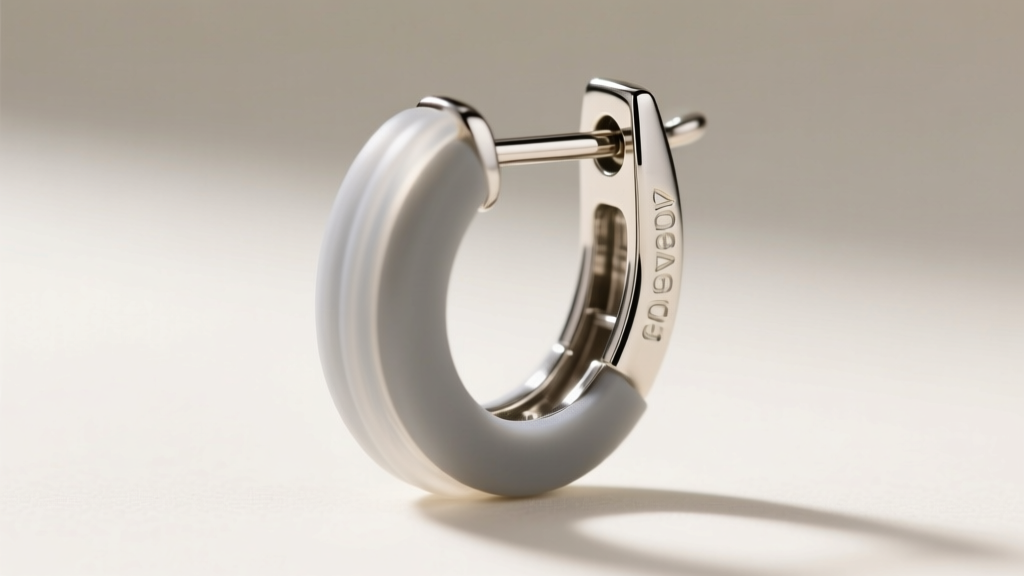
The interior of a high-quality tension clip is lined with medical-grade silicone grip pads. These pads serve a dual purpose: they increase the coefficient of friction to prevent sliding, and they act as a shock absorber to prevent the metal edge from pinching the skin. When shopping, always verify that the hinge features a 'click' or ratchet mechanism, which prevents the spring from slowly loosening throughout the day.
Material Safety and Skin Contact
The most common point of failure for beginners in the Magic Earring Ken space is contact dermatitis. Because illusion earrings rely on constant surface pressure, the skin's barrier function is slightly compromised, making it highly susceptible to metal ion leaching.
The Mayo Clinic warns that nickel allergy is one of the most common causes of allergic contact dermatitis. Raw neodymium magnets are inherently unstable and prone to oxidation, so manufacturers plate them in a Ni-Cu-Ni (Nickel-Copper-Nickel) layer. If this plating chips, or if you sweat heavily, nickel ions will transfer directly to your skin, resulting in severe blistering and hyperpigmentation.
To avoid this, you must look for earrings that utilize PVD (Physical Vapor Deposition) coating or epoxy-sealed magnets. The Association of Professional Piercers (APP) highly recommends implant-grade materials for any jewelry that maintains prolonged contact with compressed skin. Below is a comparison of common materials used in illusion jewelry:
| Material | Hypoallergenic Rating | Best Application | Maintenance Level |
|---|---|---|---|
| Grade 23 Titanium (Ti6Al4V) | Excellent | Sensitive lobes, daily wear, tension mounts | Low |
| 316L Surgical Steel | Moderate | Occasional wear, budget-friendly hoops | Moderate |
| PVD Gold over Titanium | Excellent | High-fashion aesthetic, luxury stacks | Low |
| Epoxy-Sealed Neodymium | Good (if unchipped) | Magnetic studs, lightweight dangles | High (inspect for chips) |
Sizing, Weight, and Gauge Illusions
Creating a convincing 'pierced' look requires matching the visual weight and gauge of traditional body jewelry. A standard healed lobe piercing is typically 18-gauge (1.0mm) or 16-gauge (1.2mm). However, magnetic hoops require a slightly thicker wire—usually 2mm to 2.5mm—to house the internal magnets or provide enough structural rigidity to prevent bending.
To bridge this visual gap, designers of Magic Earring Ken styles often use matte finishes, oxidized metals, or textured ropes to disguise the thicker wire. When styling a faux ear stack, the placement is just as critical as the jewelry itself.
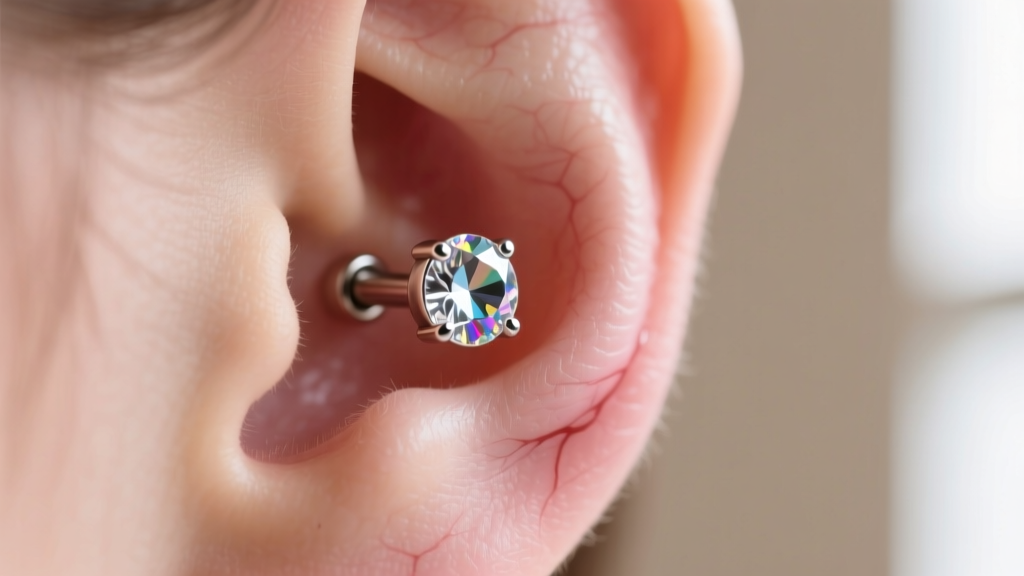
The Cartilage Illusion Framework
Faking a helix or forward helix piercing with tension clips requires precise anatomical mapping. The outer rim of the ear (the helix) is typically 3mm to 5mm thick. You must select a tension mount with a maximum jaw width of at least 6mm. If the jaw is too narrow, it will sit on the edge of the cartilage and constantly slip off. Furthermore, because cartilage lacks the fleshy give of a lobe, always opt for flat-back tension studs rather than curved hoops to minimize rotational torque.
Weight Distribution Limits
Gravity is the enemy of illusion jewelry. While a pierced 16-gauge titanium ring can easily support a 15-gram charm, a magnetic mount will detach under that same load due to the sheer downward vector. As a strict rule for beginners:
- Magnetic Studs: Maximum dangle weight of 3.5 grams.
- Magnetic Hoops: Maximum dangle weight of 2.0 grams (due to rotational leverage).
- Tension Clip-Ons: Maximum dangle weight of 8.0 grams (provided the silicone grip is clean).
How to Style and Maintain Your Illusion Earrings
The longevity of your Magic Earring Ken collection depends entirely on your maintenance routine. Magnets are essentially metal dust vacuums. Over time, microscopic iron particles from the environment will embed themselves into the magnetic field, creating a gritty paste that weakens the hold and scratches the skin.
To clean magnetic mounts, use a piece of Scotch tape or a lint roller to lift the metallic dust off the magnet face. Never use liquid cleaners or ultrasonic baths on raw or plated magnets, as moisture will accelerate the oxidation of the neodymium core if the plating has micro-fractures.
For tension springs, the silicone grip pads will accumulate sebum and dead skin cells, drastically reducing their friction coefficient. Once a week, wipe the silicone pads with an isopropyl alcohol swab. This degreases the surface and restores the tackiness required to keep the earring locked onto the cartilage.
Final Thoughts on the Faux Piercing Revolution
The Magic Earring Ken trend represents a massive leap forward in accessible, non-destructive body modification. By understanding the physics of N52 magnets, respecting the clamping force of tension springs, and prioritizing implant-grade materials like Grade 23 titanium, you can build a stunning, realistic ear stack without ever touching a needle. Whether you are testing out a new aesthetic before committing to a piercing, or simply prefer the flexibility of changing your ear layout daily, modern illusion jewelry offers a sophisticated, pain-free solution for the contemporary stylist.


