The Dog With a Pearl Earring: Technical Guide to Motif Studs
Explore the technical craftsmanship, pearl grading, and micro-casting methods behind the trending dog with a pearl earring motif stud earrings.

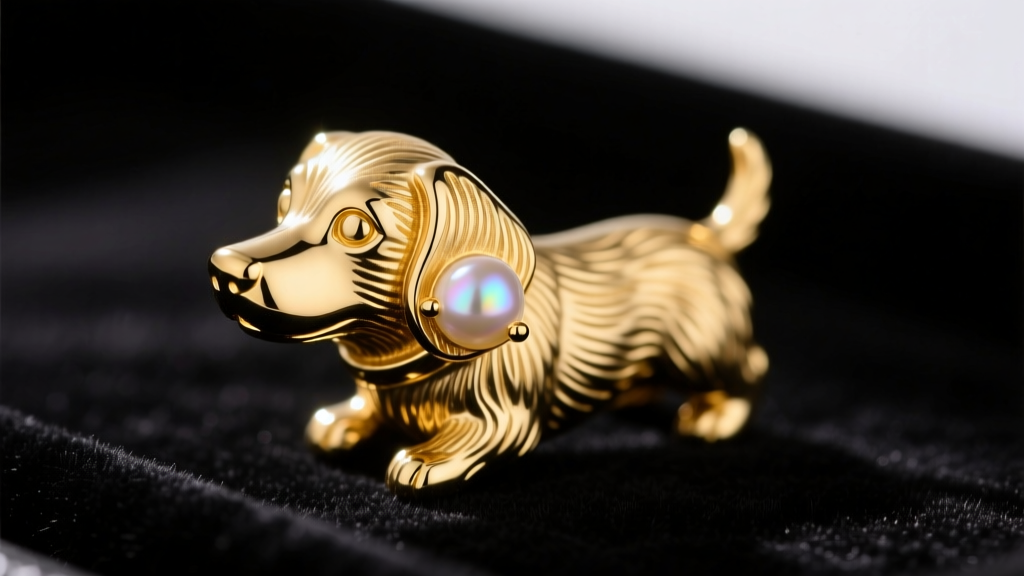
The Intersection of Fine Art and Micro-Jewelry Engineering
The whimsical concept of a dog with a pearl earring—a playful homage to Johannes Vermeer’s 1665 masterpiece—has evolved from a niche internet meme into a highly sought-after motif in contemporary fine jewelry. However, translating this asymmetric, mixed-media concept into a functional, durable earring requires rigorous micro-engineering. Unlike standard geometric studs, a canine motif featuring a suspended or integrated pearl presents unique challenges in weight distribution, metallurgical tensile strength, and organic gemstone setting. This guide deconstructs the technical specifications, casting tolerances, and material sciences required to produce a high-end dog with a pearl earring stud that maintains structural integrity and aesthetic brilliance over decades of wear.
Metallurgy and Lost-Wax Casting for Canine Motifs
Creating the intricate facial features, fur textures, and floppy ears of a canine motif demands exceptional casting resolution. Jewelers typically utilize the lost-wax casting method, but modern iterations rely on high-resolution 3D printing using castable wax resins (such as Formlabs Castable Wax 40) to achieve a master model with a dimensional accuracy of 25 microns. This ensures that micro-details, like the texture of a spaniel’s coat or the subtle curve of a terrier’s snout, are perfectly preserved.
When selecting the casting alloy, 14k gold is often preferred over 18k gold for novelty motif studs. While 18k gold offers a richer color, its higher pure gold content makes it softer (Vickers hardness of ~140 HV). 14k gold (Vickers hardness of ~170 HV) provides superior tensile strength, which is critical for the delicate prongs or micro-bezels used to secure the pearl, as well as the thin structural elements of the dog's ears. The burnout schedule for these intricate wax models requires a slow ramp-up to 750°C over 12 hours to ensure complete ash elimination, preventing porosity in the final gold casting.
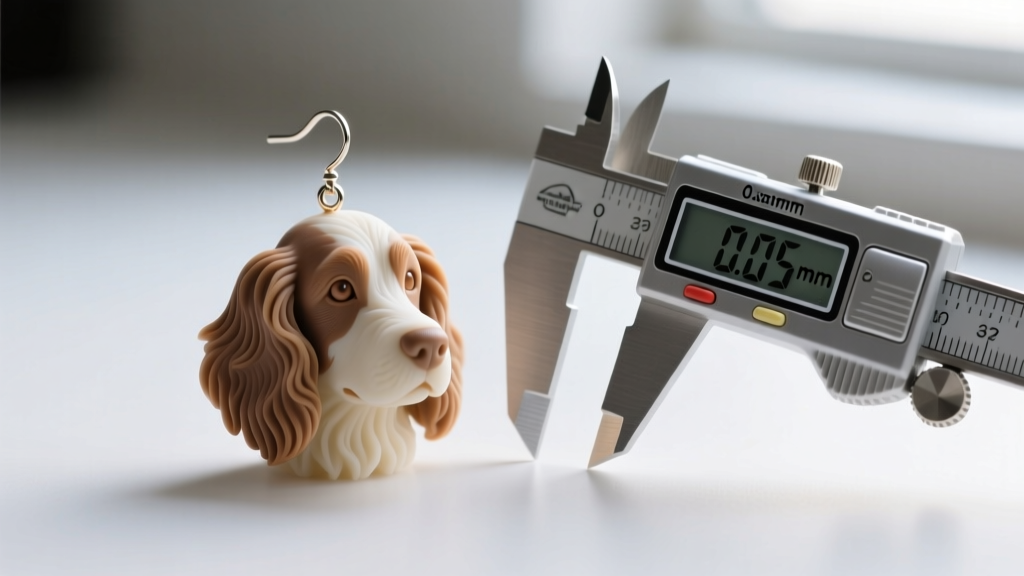
Pearl Selection and Micro-Drilling Mechanics
The 'pearl earring' component of the motif is not merely glued on; it requires precision lapidary work and specialized setting techniques. For a motif earring measuring between 8mm and 12mm in total height, the pearl typically ranges from 3.0mm to 5.0mm in diameter. According to the Gemological Institute of America (GIA), luster and surface cleanliness are the paramount quality factors for pearls of this micro-size.
To attach the pearl to the dog's earlobe, jewelers use a half-drilled pearl mounted on a micro-peg. The peg is soldered directly to the gold motif using hard solder (melting point ~788°C) before the pearl is set. The pearl is drilled to a depth of exactly 60% of its diameter using a 0.6mm diamond-coated twist bit, lubricated with water to prevent thermal shock and nacre cracking. The bonding agent used is a two-part jeweler's epoxy, specifically formulated to resist UV yellowing and thermal expansion differentials between the calcium carbonate pearl and the gold peg.
Pearl Grading Matrix for Micro-Motifs
| Pearl Type | Optimal Size | Luster Grade | Nacre Thickness | Wholesale Cost (per pc) |
|---|---|---|---|---|
| Akoya (Japanese) | 3.0mm - 4.5mm | Very High | 0.4mm+ | $12 - $28 |
| Freshwater (Round) | 4.0mm - 6.0mm | High | Solid Nacre | $3 - $9 |
| South Sea (White) | 5.0mm+ | Medium-High | 0.8mm+ | $45 - $110 |
Ergonomics: Gauge Sizes and Clutch Tension
A common failure point in novelty earrings is the 'droop'—where the weight of the motif causes the earring to tilt forward, pressing the post against the lower interior of the piercing fistula. A standard dog with a pearl earring motif cast in solid 14k gold weighs between 2.2 and 3.5 grams. This exceeds the weight threshold for standard 20-gauge (0.81mm) posts, which are prone to bending under lateral stress.
To counteract this, expert bench jewelers fabricate these studs with an 18-gauge (1.02mm) or even a 17-gauge (1.14mm) post. The post is laser-welded to the back of the motif at a precise 90-degree angle, often reinforced with a micro-butterfly pad at the solder joint to increase the surface area and distribute the shear stress. Furthermore, standard friction backs are insufficient for securing a 3-gram motif. We recommend specifying La Poussière screw-backs or Omega-clutches, which utilize a threaded post or a tension-spring mechanism to lock the earring flush against the earlobe, ensuring the canine profile remains perfectly upright and the pearl catches the light at the intended angle.
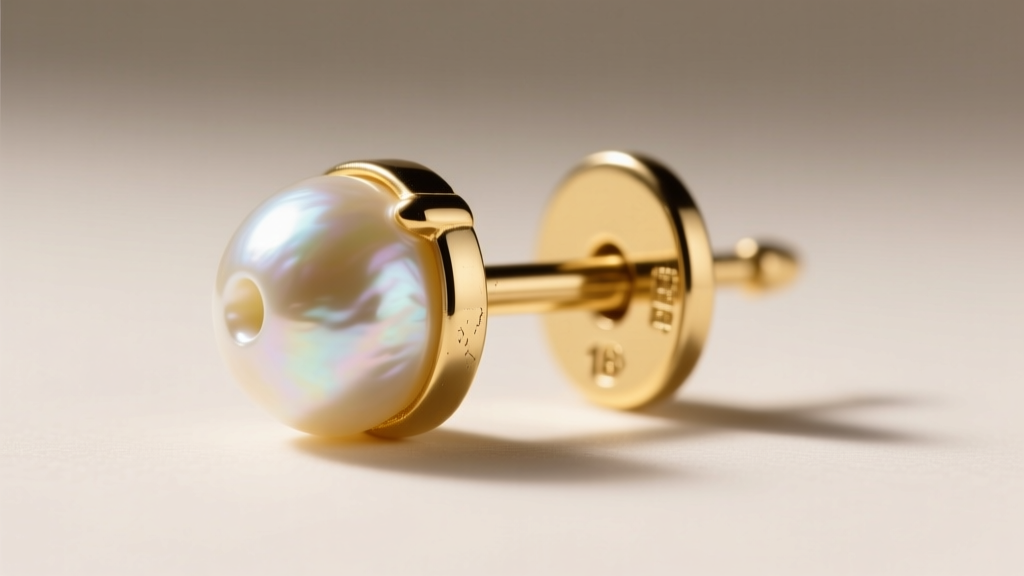
Custom vs. Production Casting Tolerances
When scaling the production of a dog with a pearl earring design, jewelers must account for the shrinkage rate of the casting alloy. 14k yellow gold typically shrinks by 1.25% to 1.5% during the cooling phase. If the master model is not scaled up by this exact percentage in the CAD software prior to 3D printing, the final cast piece will be slightly too small, and the pre-measured 3.5mm pearl will not seat flush against the micro-peg. Production runs also require the creation of a vulcanized rubber mold from the initial master cast. However, the pressure of the mold press (typically 2000 PSI at 165°C) can distort extremely fine details like the dog's eyelashes or whiskers. Therefore, high-end manufacturers often bypass rubber molds entirely, opting instead to 3D print a fresh wax master for every single casting tree to guarantee absolute fidelity to the original digital sculpture.
Long-Term Maintenance and Epoxy Degradation
Mixed-media jewelry requires specialized care protocols. The primary vulnerability of the dog with a pearl earring design is the epoxy bond securing the half-drilled pearl. While modern epoxies are highly stable, prolonged exposure to the ultrasonic frequencies of standard jewelry cleaners (typically 40-45 kHz) will cause microscopic cavitation bubbles to form at the pearl-peg interface, eventually shattering the epoxy seal and causing the pearl to detach.
Furthermore, the porous nature of pearls makes them highly susceptible to chemical degradation from the ammonia and sulfides found in commercial silver and gold dip cleaners. Owners must be instructed to clean these motif studs using only a soft, lint-free microfiber cloth and a mild, phosphate-free soap solution applied with a soft-bristled brush, carefully avoiding direct saturation of the pearl's drill hole. By adhering to these strict engineering and maintenance parameters, the whimsical charm of the motif is preserved without sacrificing the structural rigor expected of fine jewelry.


