The Boy With the Dangly Earring: Men's Dangle Guide
Explore the boy with the dangly earring trend. Our expert technical guide covers gauge sizes, weight limits, and secure metals for men's dangles.

The Cultural Shift: Redefining the Archetype
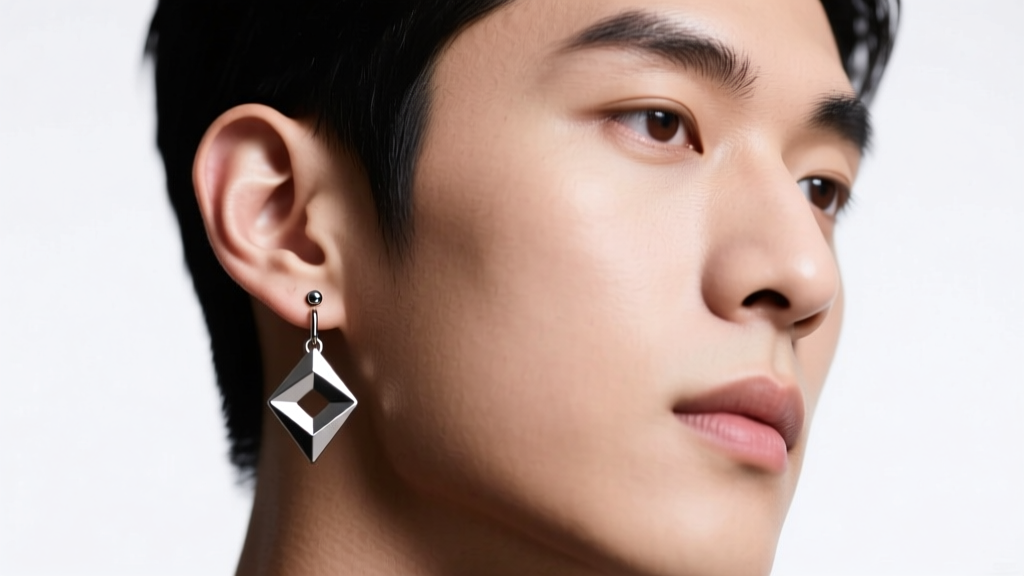
Historically, the concept of a male subject adorned with statement jewelry was rare in classical art, but as we navigate the style landscape of 2026, the "boy with the dangly earring" has emerged as a definitive cultural archetype. Moving far beyond the minimalist studs and small hoops of the early 2000s, modern men's jewelry embraces architectural dangles, kinetic drops, and articulated chains. This shift represents a broader movement toward gender-fluid self-expression and high-horology-inspired craftsmanship in male accessories.
However, transitioning from a lightweight 20-gauge stud to a dynamic, swinging dangle earring introduces significant biomechanical and metallurgical challenges. The male earlobe, while structurally similar to the female earlobe, often faces different environmental stressors—from athletic activities to frequent friction against collars and headphones. This expert deep dive dissects the technical specifications required to execute this look safely, comfortably, and durably.
Lobe Biomechanics and the "Cheese Wire" Effect
The most critical failure mode in men's dangle earrings is tissue necrosis, colloquially known in the piercing industry as the "cheese wire effect." This occurs when a thin wire (typically 20G or thinner) supports a heavy pendant, creating high localized tension that restricts capillary blood flow and slowly slices through the earlobe tissue.
Gauge Sizing and Tensile Strength
To counteract this, the wire gauge must scale proportionally with the drop weight. Standard lobe piercings are usually done at 18G (1.0mm) or 16G (1.2mm). For any dangle exceeding 6 grams, a minimum of 16G is mandatory. For statement pieces weighing 10 to 15 grams, upgrading to a 14G (1.6mm) or even 12G (2.0mm) wire is non-negotiable to distribute the static load across a wider surface area of the fistula (the piercing channel).
- Under 5 grams: 18G (1.0mm) wire is sufficient for static drops.
- 5 to 10 grams: 16G (1.2mm) wire required; leverback clasps recommended.
- 10 to 15 grams: 14G (1.6mm) wire mandatory; omega or locking screw-backs required.
- Over 15 grams: Not recommended for standard lobe piercings without specialized structural support or ear stretching.
Material Science: Hypoallergenic Metals for Active Wearers
Men's jewelry often endures higher rates of environmental exposure, including sweat, gym equipment, and outdoor elements. According to the Association of Professional Piercers, the internal porosity and alloy composition of the metal dictate both its biocompatibility and its structural integrity under kinetic stress.
While "surgical steel" (316L) is heavily marketed, it contains 8-10% nickel, which can trigger contact dermatitis—a risk amplified by the friction of a swinging dangle. As noted by the Mayo Clinic, repeated friction combined with nickel exposure is a primary catalyst for allergic contact dermatitis. Therefore, selecting the correct alloy is paramount.
| Metal Grade | Nickel Content | Tensile Strength | Best Use Case |
|---|---|---|---|
| ASTM F136 ELI Titanium | 0% | High (860 MPa) | Active lifestyles, sports, sensitive skin |
| 14k / 18k Solid Gold (Nickel-Free) | 0% | Medium (300-400 MPa) | Everyday luxury, formal dangles |
| Niobium (Unalloyed) | 0% | Medium (275 MPa) | Anodized color drops, lightweight statements |
| 316L Surgical Steel | 8-10% | High (515 MPa) | Occasional wear only (if no nickel allergy) |
Securing the Dangle: Clasp and Backing Mechanics
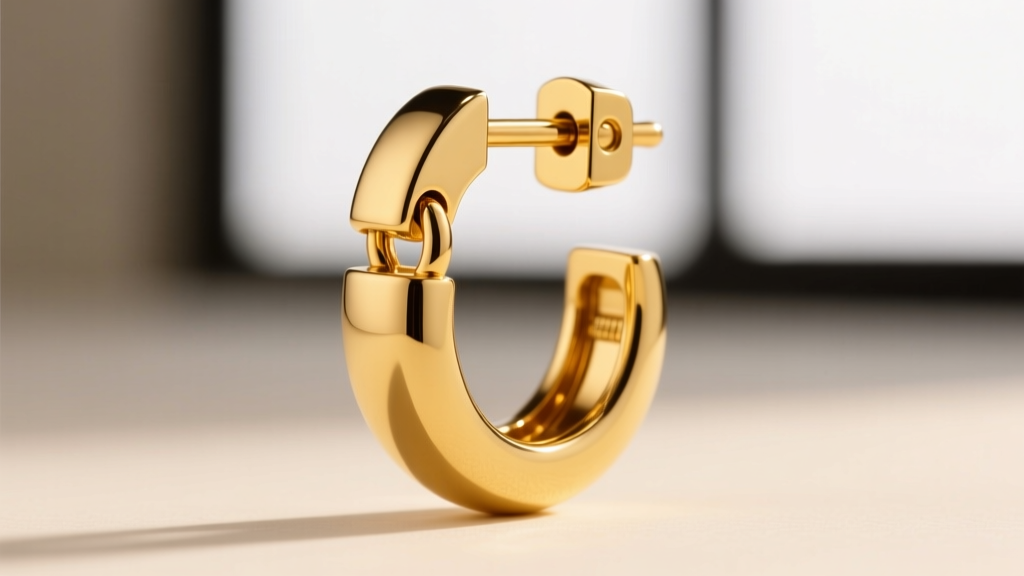
A heavy dangle earring generates momentum. Every time the wearer turns their head, the kinetic energy pulls outward and downward on the clasp. Standard friction backs (butterfly backs) are entirely inadequate for the "boy with the dangly earring" aesthetic, as the cumulative micro-tugs will eventually loosen the backing, leading to lost jewelry and damaged threads.
The Tear Risk Matrix & Clasp Solutions
To mitigate loss and lobe trauma, specific locking mechanisms must be employed based on the earring's design:
- Threaded Screw Backs: Utilizing a 0.8mm or 1.0mm thread pitch, these backs screw directly onto the post. They are ideal for heavy, static drop earrings where the post does not need to hinge.
- Locking Leverbacks (French Wire with Latch): Essential for swinging dangles. A secondary locking latch snaps over the wire tip, preventing the earring from unhooking when caught on clothing.
- Omega Backs: These feature a hinged, curved backing that snaps against the post, providing 360-degree support and distributing the weight of the earring across the entire back of the earlobe rather than just the piercing hole.
Styling Frameworks: Face Shape and Drop Length
Executing this trend requires an understanding of facial proportions. Unlike studs, dangle earrings alter the perceived geometry of the face by drawing the eye vertically.
- Square / Strong Jawlines: Opt for curved, articulated drops or circular kinetic pendants (1.5 to 2.5 inches). The curves soften the angularity of the jaw. Avoid rigid, geometric linear drops which can make the face appear overly boxy.
- Round / Soft Jawlines: Choose architectural, linear, or rectangular dangles (1 to 2 inches). The sharp vertical lines create an illusion of elongation and add structural definition to the profile.
- Oval / Diamond Faces: Highly versatile. Can support asymmetrical styling—such as a heavy 14G geometric dangle on one side paired with a flush 16G cartilage cuff on the opposite ear.
Maintenance and Lobe Rehabilitation
Wearing statement dangles daily will inevitably cause some degree of tissue fatigue. To maintain lobe health, implement a "rotation schedule." Never wear heavy dangles (over 8 grams) for more than 10 consecutive hours. Follow heavy wear days with 48 hours of rest, wearing only lightweight, internally threaded titanium studs or leaving the fistula empty to allow collagen remodeling.
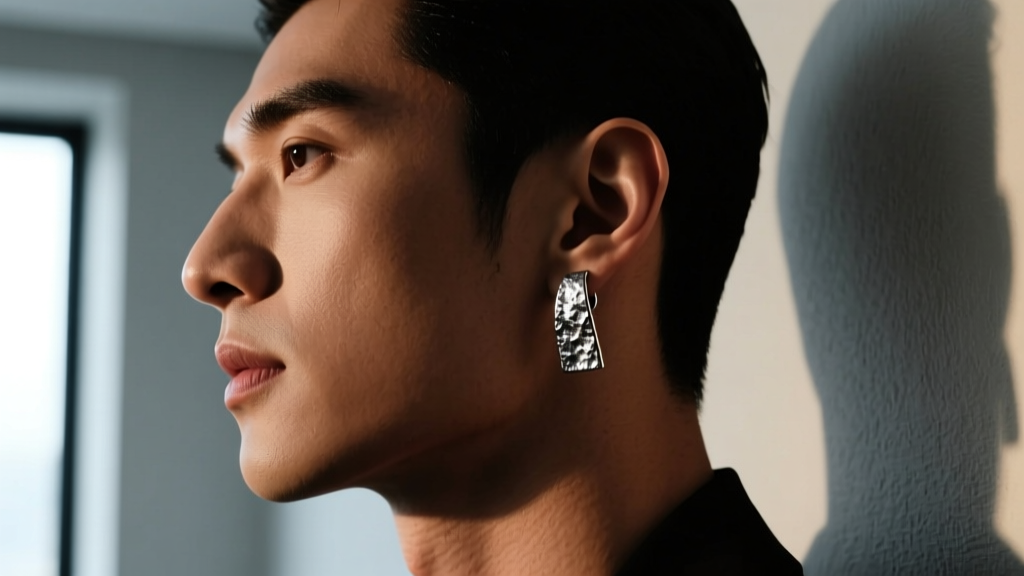
Cleaning the jewelry is equally vital. Oxidized silver and textured gold dangles trap sebum and environmental debris at the clasp hinges. Use an ultrasonic jewelry cleaner with a mild, ammonia-free solution for 3 minutes weekly, followed by a soft-bristle brush to clear the hinge mechanisms. By respecting the biomechanics of the earlobe and investing in precision-engineered clasps and implant-grade metals, the modern dangly earring becomes a sustainable, lifelong staple of male adornment.


