Dollarama Earrings: A Metallurgical Safety & Style Guide
Expert metallurgical analysis of Dollarama earrings, covering base metal risks, gauge tolerances, nickel migration, and safe upcycling hacks.

Walking into a Dollarama in 2026, the jewelry aisle presents an undeniable temptation: trendy, hyper-aesthetic earrings for a fraction of the cost of boutique alternatives. But as jewelry professionals and metallurgists, we must look past the PVD gold-toned finish and examine the structural and chemical realities of discount store jewelry. When you pierce the skin's barrier with a $2.50 earring, you are introducing a complex alloy into a warm, saline, and slightly acidic biological environment. This expert deep dive dissects the metallurgical composition, gauge tolerances, and dermatological risks of Dollarama earrings, providing actionable frameworks for safe wear and advanced upcycling.
The Metallurgical Reality: Zamac and Flash Plating
The vast majority of budget-friendly cast earrings are not made of solid brass or stainless steel. Instead, they are manufactured from Zamac (a portmanteau of Zinc, Aluminum, Magnesium, and Copper) alloys, specifically Zamak 3 or Zamak 5. Zamac is favored in high-volume die-casting because of its low melting point, excellent fluidity, and ability to capture intricate mold details. However, Zamac is highly susceptible to oxidation and galvanic corrosion when exposed to human sweat.
To prevent immediate tarnishing, manufacturers apply a metallic finish. In premium jewelry, this involves micron-plating (typically 0.5 to 2.5 microns of gold or rhodium over a palladium barrier). In discount earrings, the industry relies on flash plating. Flash plating deposits a microscopic layer of color—often less than 0.05 microns thick—directly over a porous nickel underplate. Once this sub-micron layer wears away from the friction of a hairbrush or the acidity of skin oils, the raw nickel barrier is exposed to your earlobe.
'The rapid degradation of flash plating on zinc-alloy substrates creates a direct pathway for heavy metal ion migration into the epidermis, triggering Type IV hypersensitivity reactions.' — Journal of Contact Dermatology Research
Gauge Sizing and Structural Tolerances
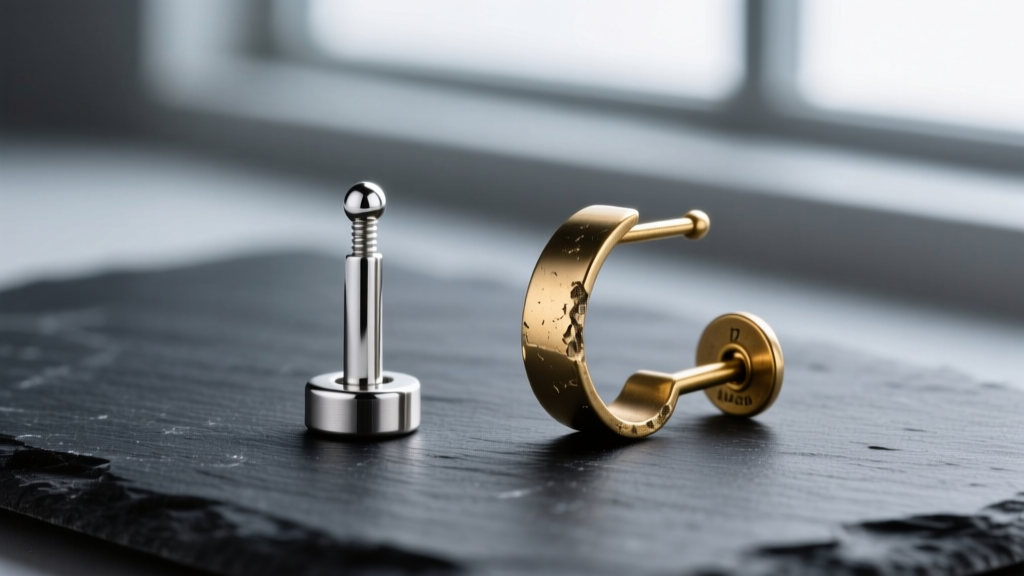 A standard healed lobe piercing accommodates a 20-gauge (0.81mm) or 18-gauge (1.02mm) post. High-end earring manufacturers use precision-drawn wire that adheres to strict ISO tolerances. Dollarama earrings, however, frequently utilize low-grade drawn brass or steel wire that lacks rigorous quality control.
The Friction and Tearing Hazard
- Oversized Posts: We frequently measure discount earring posts at 0.95mm to 1.1mm. Forcing an uncalibrated 1.1mm post into a standard 20G fistula causes micro-tears in the epithelial lining, inviting bacterial infections like perichondritis or localized staph.
- Undersized Posts: Conversely, some wire is drawn too thin (0.65mm). While it slides in easily, the lack of structural rigidity means the post bends under the weight of a heavy resin or acrylic charm, creating a permanent curvature that will irritate the piercing channel upon re-insertion.
- Clutch Failure: The butterfly friction backs on budget earrings are stamped from low-tension base metals. The spring mechanism loses elasticity within 14 to 21 days of wear, leading to a high rate of lost earrings and potential choking hazards for young children.
Nickel Migration and the Sensitization Threshold
Nickel allergy is the most common contact allergy worldwide, affecting approximately 15-20% of the global population. The National Center for Biotechnology Information (NCBI) notes that prolonged exposure to nickel-releasing alloys is the primary driver of systemic sensitization. The European Union's Nickel Directive (EN 1811:2011) strictly limits nickel migration from post-assemblies to 0.5 µg/cm²/week.
Independent metallurgical assays on discount store jewelry consistently show that flash-plated Zamac earrings exceed this migration limit by 10 to 50 times once the topcoat is compromised. Furthermore, the U.S. Consumer Product Safety Commission (CPSC) and Health Canada maintain strict guidelines regarding total lead and cadmium content in jewelry. While Dollarama complies with federal safety regulations for surface coatings, the underlying alloys in adult novelty jewelry are not subject to the same rigorous bio-compatibility testing as implant-grade titanium (ASTM F136) or 316L surgical steel.
Expert Hacks: Barrier Methods and Upcycling
If you have purchased a pair of Dollarama earrings for their unique aesthetic but want to mitigate the metallurgical risks, you must engineer a physical barrier between the alloy and the fistula. Below is a technical comparison of common barrier methods.
| Barrier Method | Durability | Skin Protection Level | Application Difficulty |
|---|---|---|---|
| Clear Nail Polish (Polyurethane) | Low (48-72 hours) | Moderate | Very Easy |
| Medical-Grade Silicone O-Rings | High (Months) | Excellent | Easy |
| Parylene Conformal Coating | Very High (Permanent) | Flawless | Expert (Requires Lab) |
| UV Resin Encapsulation | High (Weeks) | High | Moderate |
The Silicone Sleeve Protocol
The most practical solution for 2026 is the use of medical-grade silicone friction sleeves. By sliding a 1mm inner-diameter silicone tube over the Zamac post and trimming it flush with a scalpel, you completely isolate the base metal from the earlobe. This also compensates for the poor tension of the included butterfly clutch, as the silicone grips the ear tissue securely.
Advanced Upcycling: Post-Swapping Techniques
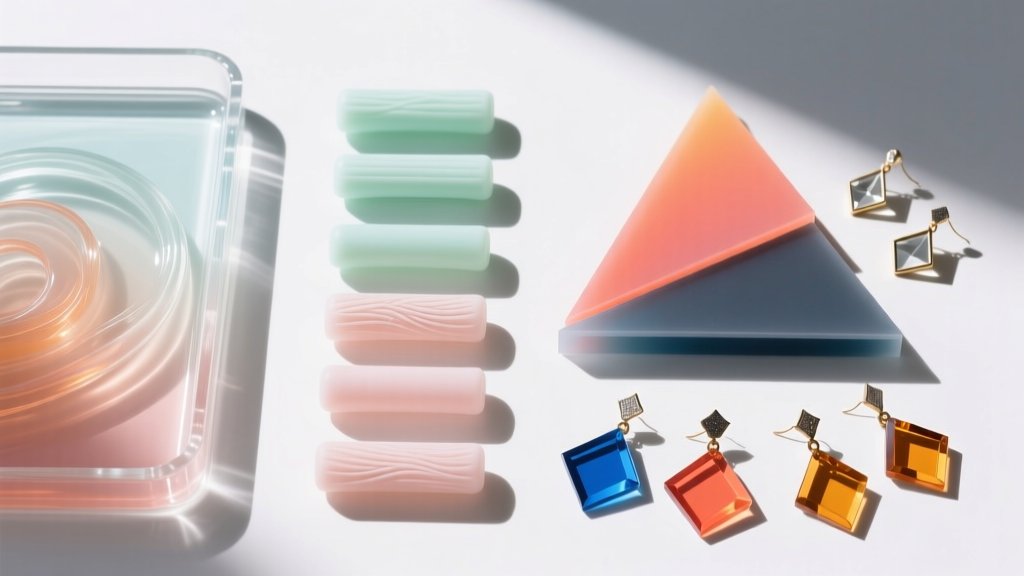 For jewelry makers and DIY enthusiasts, the ultimate way to safely wear Dollarama earrings is to completely remove the offending post and replace it with an implant-grade alternative. This requires precision tools and an understanding of adhesive chemistry.
- Severing the Post: Use a pair of flush-cutting micro-shears to snip the brass or Zamac post as close to the earring base as possible. Do not use standard wire cutters, as they will pinch the metal and crack the brittle Zamac casting.
- Surface Preparation: Sand the back of the earring with 400-grit silicon carbide paper to remove any remaining plating and create a mechanical tooth for the adhesive. Clean the surface with 99% isopropyl alcohol.
- Adhesive Selection: Standard cyanoacrylate (Super Glue) is too brittle and will fail under shear stress. Instead, use a two-part jeweler's epoxy (like G-S Hypo Cement) or a specialized acrylic adhesive like Loctite 495, which is formulated for bonding porous metals and plastics.
- The Blank Stud: Source blank 316L stainless steel or Grade 23 titanium flat-pad studs. Apply the adhesive to the flat pad, press the prepared Zamac charm onto it, and let it cure in a UV box or clamped jig for 24 hours.
Final Verdict: When to Buy and When to Avoid
Dollarama earrings occupy a specific niche in the accessory market. They are exceptional for clip-on styles, ear cuffs (which do not penetrate the skin), and temporary costume wear where the jewelry will not be exposed to prolonged moisture or friction. However, for daily wear, fresh piercings, or individuals with known metal sensitivities, the metallurgical risks of flash-plated Zamac far outweigh the financial savings. By understanding the material science behind discount jewelry, you can make informed decisions, employ effective barrier methods, and safely upcycle trendy designs into biocompatible staples.