Sterling Silver Christmas Earrings: Alloy Properties
Discover the metallurgy behind sterling silver Christmas earrings. Compare 925, Argentium, and tarnish-resistant alloys for holiday wear.

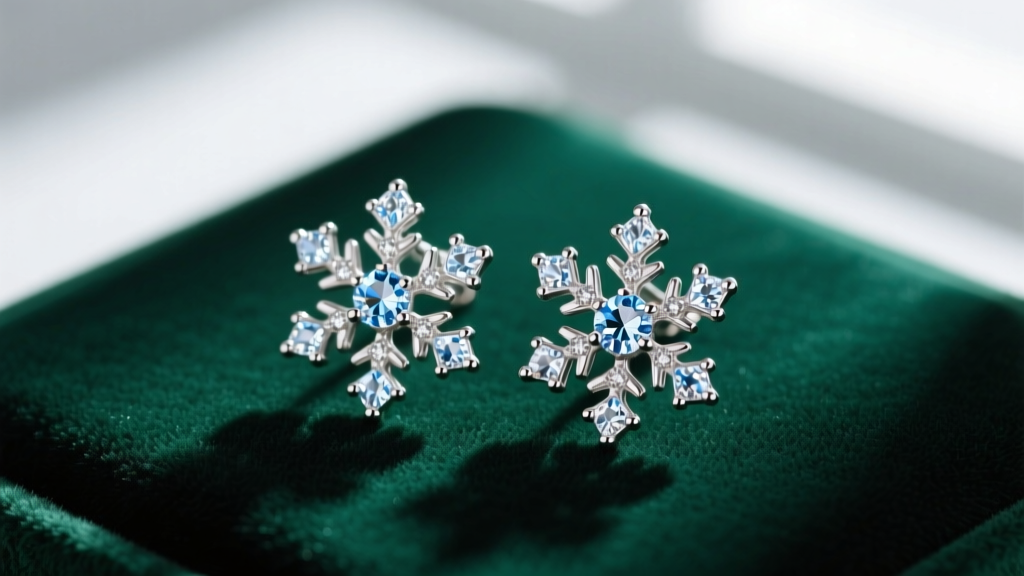
The Metallurgy of Holiday Sparkle: Understanding 925 Silver
When curating a festive jewelry collection, sterling silver Christmas earrings remain a perennial favorite due to their brilliant luster, affordability, and versatility. However, from a metallurgical standpoint, pure silver (99.9%) is far too soft to hold the intricate shapes of holiday motifs like snowflakes, reindeer, or ornate Christmas trees. To achieve the necessary structural integrity, jewelers alloy pure silver with other metals, most commonly copper.
Standard sterling silver consists of exactly 92.5% pure silver and 7.5% copper. This specific ratio, often stamped as "925", increases the Vickers hardness (HV) of the metal from roughly 25 HV in its pure state to about 65 HV when annealed, and up to 120 HV when work-hardened. This hardness is critical for die-striking the sharp, crisp edges required for geometric snowflake designs or casting the delicate branches of a holiday tree. According to the Gemological Institute of America (GIA), this copper alloy provides the perfect balance between malleability for manufacturing and durability for daily wear.
Argentium vs. Traditional Sterling: A Modern Comparison
While traditional 925 sterling silver has dominated the market for centuries, modern metallurgy has introduced advanced alloys that address the primary flaw of copper-alloyed silver: tarnish. Argentium silver, developed in the 1990s, replaces a portion of the copper with germanium. This alteration fundamentally changes how the metal reacts with oxygen and sulfur, making it a superior choice for heirloom-quality holiday jewelry that is only worn once a year.
| Alloy Type | Silver Content | Alloying Elements | Tarnish Resistance | Best Holiday Application |
|---|---|---|---|---|
| Traditional 925 | 92.5% | 7.5% Copper | Low (Prone to Ag2S) | Cast snowflakes, basic studs, budget-friendly sets |
| Argentium 935 | 93.5% | Copper, Germanium | High (Germanium oxide barrier) | Intricate filigree, heirloom pieces, unworn seasonal stock |
| Fine 999 | 99.9% | Trace elements | Medium (No copper to oxidize) | Soft enamel bezels, delicate wire-wrapped ornaments |
For jewelers manufacturing premium sterling silver Christmas earrings, Argentium 935 offers a distinct advantage: it is highly resistant to firescale during the soldering process. When attaching a post to a complex 3D holiday ornament, traditional sterling requires pickling in acid to remove dark copper oxide firescale. Argentium forms a transparent germanium dioxide layer instead, saving hours of finishing labor and preserving the sharpest details of the holiday design.
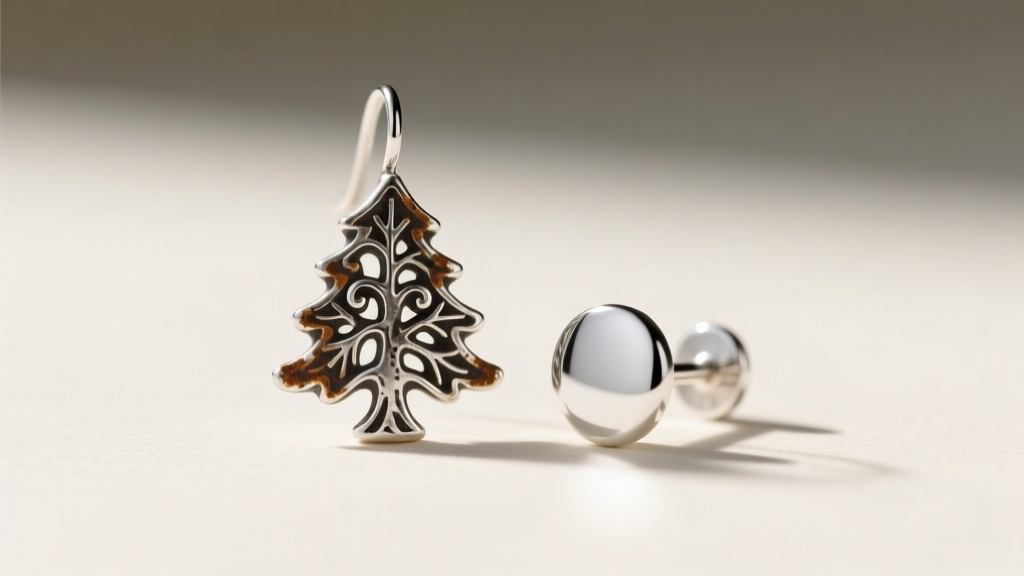
The Tarnish Factor: Winter Environments and Copper Oxidation
Tarnish on sterling silver is not a sign of poor quality; it is a predictable chemical reaction. The copper in the 7.5% alloy reacts with sulfur compounds in the air to form silver sulfide (Ag2S), which manifests as a dull yellow, brown, or black film. Winter holidays introduce unique environmental triggers that accelerate this process.
"Tarnish is a surface-level chemical reaction, not a structural defect. The presence of sulfur-rich environments, combined with fluctuating humidity, dictates the rate of silver sulfide formation on copper-alloyed jewelry."
Specific Winter and Holiday Triggers
- Holiday Cooking: Preparing Christmas dinner often involves boiling sulfur-rich foods like onions, garlic, and cruciferous vegetables. The airborne sulfur compounds can rapidly tarnish silver earrings worn in the kitchen.
- Indoor Heating: Central heating drastically reduces indoor humidity. While dry air slows some oxidation, the static electricity generated in dry, heated rooms attracts microscopic dust and airborne pollutants directly to the electrostatic surface of the earrings.
- Winter Skincare: Heavier winter moisturizers, body butters, and holiday perfumes contain complex organic compounds and trace sulfur that cling to the porous surface of unpolished silver.
Finishes and Platings on Festive Designs
To combat tarnish and enhance the visual appeal of Christmas motifs, manufacturers apply various surface treatments to sterling silver. Understanding these finishes is crucial for both buyers and sellers of holiday jewelry.
- Rhodium Plating: A member of the platinum group, rhodium is electroplated over the silver to a thickness of 0.5 to 1.0 microns (approx. 20-40 micro-inches). It provides a brilliant, cool-white finish that mimics white gold and completely seals the copper alloy from the air. This is the industry standard for high-end snowflake and starburst studs.
- E-Coating (Electrophoretic Lacquer): A clear, nano-ceramic or polymer coating applied via an electrical current. It is much thinner than rhodium and preserves the natural, slightly warmer tone of bare silver while offering excellent anti-tarnish protection for up to two years in storage.
- Oxidized (Antiqued) Silver: Jewelers intentionally accelerate the tarnishing process using liver of sulfur, then polish the high points while leaving the recesses dark. This technique is exceptionally popular for vintage-style Christmas ornament earrings, as the dark recesses highlight the intricate engraving and filigree work.
Gauge and Post Thickness for Winter Wear
The structural design of the earring post must match the weight and aerodynamics of the holiday motif. Christmas earrings often feature dangling elements like jingle bells, large enameled ornaments, or heavy gemstone clusters. Using an incorrect wire gauge will result in the earring drooping forward, causing discomfort and stretching the earlobe piercing over time.
Standard earlobe piercings are typically done at 20-gauge (0.812 mm) or 18-gauge (1.024 mm). For lightweight sterling silver Christmas studs (under 3 grams), a standard 20-gauge post is perfectly adequate. However, for heavy holiday dangles or large hoop earrings featuring suspended charms, an 18-gauge post provides the necessary rigidity to keep the earring sitting flush against the earlobe. For cartilage piercings, such as a helix piercing sporting a small silver star, a 16-gauge (1.29 mm) post is recommended to prevent the "cheese-cutter effect," where thin wire migrates through the tissue under the weight of the jewelry.
Verifying Authenticity: Stamps and Hallmarks
Because sterling silver Christmas earrings are highly popular seasonal gifts, the market is flooded with silver-plated base metals masquerading as solid silver. The Federal Trade Commission (FTC) Jewelry Guides strictly regulate the use of the terms "Sterling" and "925". By law, an item stamped with these marks must contain at least 925 parts per thousand of pure silver.
When inspecting holiday earrings, look for the hallmark on the back of the stud pad, the inside of a hoop, or the tip of the post. Be wary of stamps like "925" on heavily lacquered items where the stamp appears blurred or stamped over a base metal seam. Professional jewelers verify authenticity using X-ray Fluorescence (XRF) analyzers, which can penetrate surface platings to read the exact elemental composition of the core alloy without damaging the festive finish.
Expert Care Protocol for Seasonal Silver
Because Christmas earrings are often worn for only a few weeks each year, they spend the remaining 11 months in storage. Improper storage is the leading cause of severe tarnish. Avoid storing silver in cardboard boxes or wrapping it in newspaper, as the acids and sulfur in the paper will cause rapid blackening.
If your traditional 925 sterling silver holiday earrings have developed a heavy black tarnish, avoid abrasive polishing cloths that can wear away rhodium plating or scratch high-polish finishes. Instead, use the electrochemical reduction method to safely convert silver sulfide back into pure silver:
- Line a glass bowl with aluminum foil, shiny side up.
- Place the tarnished silver earrings on the foil, ensuring they touch the metal.
- Sprinkle a tablespoon of baking soda and a pinch of salt over the jewelry.
- Pour boiling water into the bowl until the earrings are submerged. You will smell a faint sulfur (rotten egg) odor as the chemical reaction occurs.
- After 3 to 5 minutes, remove the earrings with wooden tongs, rinse thoroughly in distilled water, and pat dry with a microfiber cloth.
This process uses the aluminum as a sacrificial anode, pulling the sulfur away from the silver without removing any of the precious metal itself. For long-term storage, place the cleaned, completely dry earrings in an airtight polyethylene ziplock bag along with a silica gel desiccant packet and an anti-tarnish 3M silver protector strip to ensure they remain brilliant until the next holiday season.


