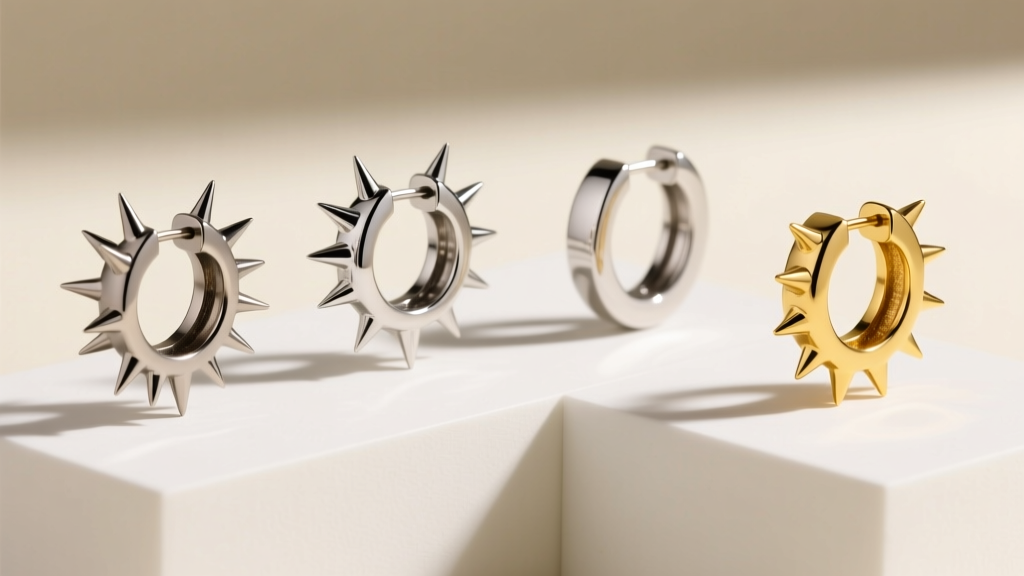
Circular Earrings Value Guide: Best Materials & Prices in 2026
Discover the true cost per wear of circular earrings. We analyze material grades, hinge mechanics, and pricing tiers to help you buy smart in 2026.

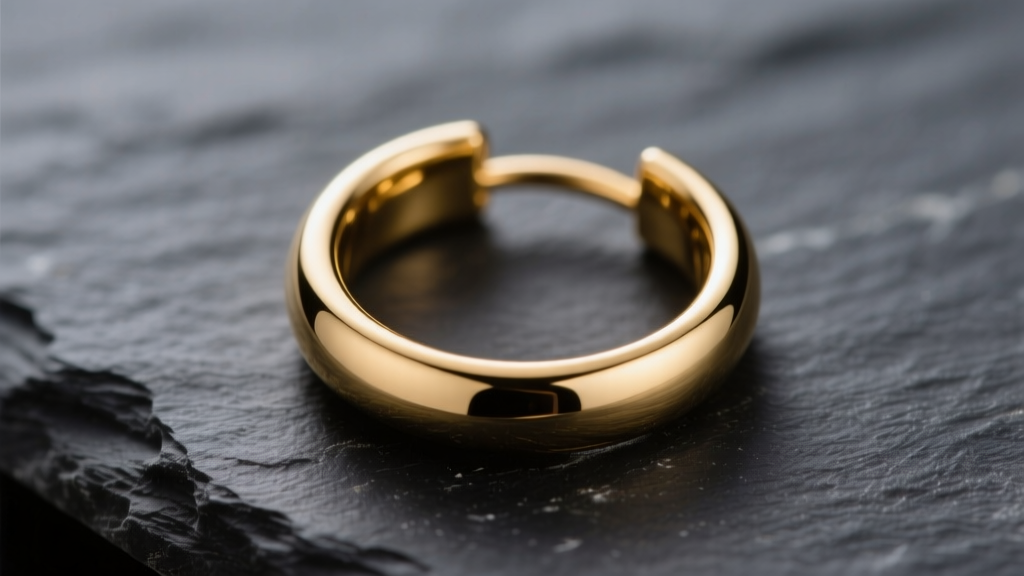
When evaluating circular earrings—spanning classic hoops, snug huggies, and seamless continuous rings—the initial price tag is often a poor indicator of true value. The market is saturated with $15 alloy options that oxidize within weeks and $250 solid gold pieces that offer diminishing returns for everyday wear. As we navigate the jewelry market in 2026, smart collectors and everyday wearers alike are shifting their focus toward a rigorous cost-per-wear (CPW) analysis, prioritizing material science and structural engineering over brand markups.
This comprehensive value assessment breaks down the exact material grades, hinge mechanics, and pricing tiers you need to know. Whether you are outfitting a fresh cartilage piercing or building a capsule wardrobe of lobe hoops, understanding the intersection of metallurgy and price is essential for maximizing your jewelry budget.
The Material Hierarchy: Where Your Money Actually Goes
The primary driver of cost and longevity in circular earrings is the base metal and the method of surface finishing. Circular earrings endure significantly more friction than studs; they catch on hair, rub against winter scarves, and are frequently touched during adjustments. This high-friction environment rapidly exposes subpar materials.
Gold Vermeil vs. Gold-Filled: The Friction Test
According to the Federal Trade Commission (FTC) Jewelry Guides, gold vermeil must consist of a sterling silver base plated with at least 2.5 microns of gold (typically 14k or 18k). While vermeil is a massive step up from brass-plated fashion jewelry, the 2.5-micron layer is still vulnerable to the constant rubbing inherent to hoop earrings. Expect a high-quality vermeil hoop to last 1 to 2 years with daily wear before the silver base begins to show at the friction points.
Gold-filled jewelry, by contrast, requires the gold layer to constitute at least 1/20th (5%) of the total weight of the item, mechanically bonded to a brass or copper core under extreme heat and pressure. This results in a gold layer that is up to 100 times thicker than standard plating. For circular earrings, 14k gold-filled is the undisputed champion of the mid-tier budget, offering a lifespan of 5 to 10 years at a fraction of the cost of solid gold.
The Titanium Standard for Cartilage
If you are purchasing circular earrings for cartilage piercings (such as the conch, tragus, or helix), gold-filled and vermeil are contraindicated for fresh or healing tissue due to the rougher surface finish of the bonded layers. You must look for ASTM F136 implant-grade titanium. This specific alloy is highly biocompatible, entirely nickel-free, and polished to a mirror finish that prevents bacterial adhesion. While slightly more expensive than surgical steel, titanium eliminates the risk of contact dermatitis, a common issue detailed by the Mayo Clinic regarding nickel exposure in body jewelry.
Price-to-Longevity Matrix (2026 Market Data)
To visualize the true value proposition, we must look beyond the retail price and calculate the expected lifespan based on daily wear. The following matrix categorizes the current market tiers for standard 15mm to 20mm circular hoops.
| Material Category | Average Price (Pair) | Expected Lifespan (Daily Wear) | Best Use Case | Primary Failure Mode |
|---|---|---|---|---|
| Plated Brass / Alloy | $12 - $25 | 1 - 3 Months | Occasional evening wear | Plating rubs off; base metal oxidizes green/black. |
| Gold Vermeil (Sterling Base) | $45 - $85 | 1 - 2 Years | Office wear, low-friction environments | Friction wear at the clasp and lower hoop curve. |
| 14k Gold-Filled | $60 - $110 | 5 - 10+ Years | Everyday lobe wear, travel, sleeping | Hinge failure (if poorly constructed); gold layer remains intact. |
| Implant-Grade Titanium (F136) | $35 - $70 | Lifetime | Cartilage, sensitive lobes, healing piercings | Loss of tension in seamless rings; structural fatigue. |
| Solid 14k / 18k Gold | $180 - $450+ | Lifetime / Heirloom | Investment pieces, high-end everyday wear | Bending of the post/wire if gauge is too thin (e.g., 22g). |
The Cost-Per-Wear (CPW) Formula:
A $20 pair of plated hoops worn 15 times before tarnishing costs $1.33 per wear. A $90 pair of 14k gold-filled hoops worn 300 times over two years costs $0.30 per wear. Investing in the mid-to-high tier consistently yields superior financial value.
Structural Integrity: Hinges, Clickers, and Tension
A premium material is entirely wasted if the structural engineering of the circular earring is flawed. The closure mechanism is the most frequent point of catastrophic failure in hoops and huggies. When assessing value, scrutinize how the earring closes.
Cast vs. CNC Machined Hinges
Budget-friendly huggies and hinged hoops (typically under $40) are usually created via lost-wax casting. This process often leaves microscopic air bubbles within the metal, particularly at the delicate hinge joint. Over time, the repeated stress of opening and closing causes these cast hinges to snap cleanly off.
Higher-value circular earrings utilize CNC (Computer Numerical Control) machining. Machined clicker hinges are milled from a solid block of metal, resulting in a crisp, audible "click" and a joint that can withstand thousands of articulation cycles without fatigue. If a product description does not specify a machined or precision-engineered hinge, assume it is cast and adjust your budget expectations accordingly.
Seamless and Continuous Rings
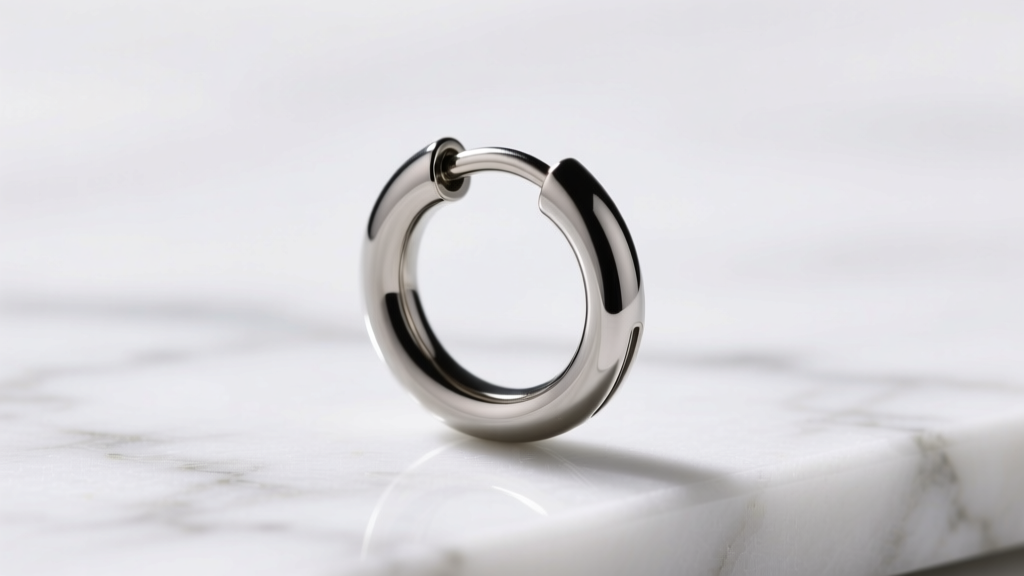
Seamless rings rely entirely on metal tension to stay closed. The value here lies in the tempering of the metal. High-quality titanium or solid gold continuous rings are heat-treated to maintain their "spring back" memory. Cheap alloy rings lose their tension within weeks, resulting in the hoop sliding out of the piercing unnoticed. For continuous rings, always opt for 16g or 14g thicknesses; 20g continuous rings lack the structural mass to maintain adequate tension.
Gauge Sizing and Fit: Avoiding the "Return Tax"
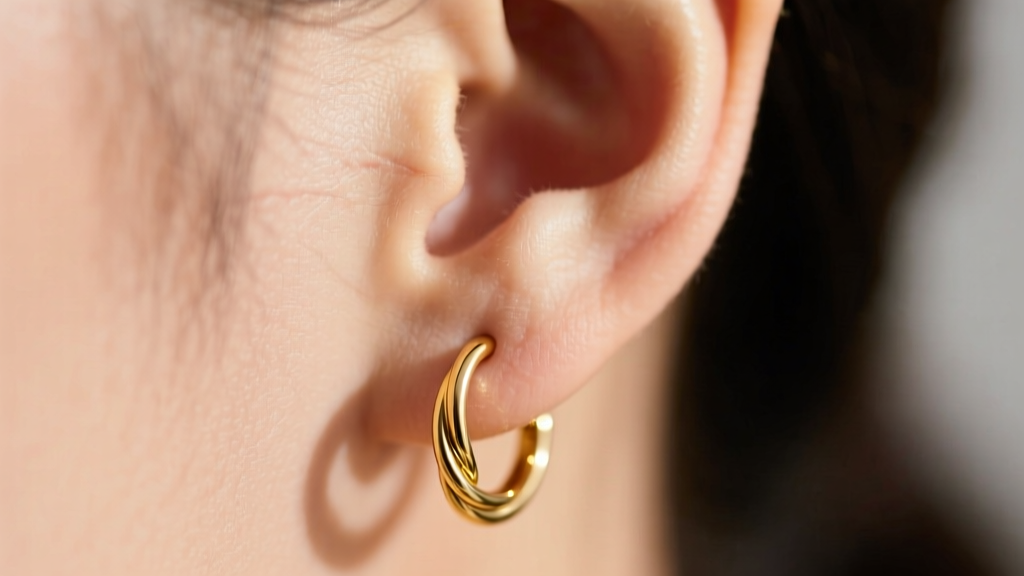
One of the most common ways consumers destroy the value of their jewelry purchase is by ordering the incorrect gauge (thickness) or inner diameter (ID), rendering the earring unusable and forcing a return. Unlike straight barbells, circular earrings must accommodate the curvature of the ear.
- Standard Lobe Piercings: Usually pierced at 20g (0.8mm) or 18g (1.0mm). For lightweight hoops, 20g is acceptable. For heavier circular earrings or huggies, 18g provides better support and prevents the "cheese-cutter effect," where thin wire slowly migrates through the earlobe tissue.
- Cartilage (Helix / Forward Helix): Typically pierced at 16g (1.2mm) or 18g (1.0mm). Never force a 20g hoop into a 16g cartilage piercing; the thin wire will cause severe irritation and potential tearing.
- Conch & Tragus: Often require specialized inner diameters. A standard 15mm hoop will likely be too tight for a conch piercing, which often requires a 20mm to 25mm ID to sit flush against the ear without pressing into the cartilage ridge.
Red Flags in Product Descriptions
When shopping online, brands will often use obfuscating language to hide low-value materials. Protect your budget by watching out for these deceptive terms:
- "Gold Plated" without a base metal specified: This almost always means a microscopic flash of gold over a nickel-heavy brass or zinc alloy. It is a guaranteed trigger for contact dermatitis.
- "Surgical Steel" without a grade: True implant-grade steel is 316L. Unguarded "surgical steel" often contains enough nickel to cause allergic reactions in sensitive wearers.
- "Hypoallergenic": This is a marketing term, not a medical or metallurgical standard. The FTC has repeatedly warned against its use because almost any metal can cause an allergy in someone. Demand specific alloy names (e.g., Niobium, ASTM F136 Titanium, .925 Sterling Silver) instead.
The Verdict: Building a High-Value Circular Collection
Assessing the value of circular earrings requires looking past the initial aesthetic and interrogating the metallurgy and mechanics. For the ultimate budget-conscious collector in 2026, the sweet spot lies in 14k gold-filled hinged hoops with machined clickers for the lobes, and ASTM F136 titanium seamless rings for any cartilage placements.
By allocating your budget toward thicker gold layers and precision-machined hinges, you transition from a cycle of replacing tarnished fashion jewelry to curating a permanent, high-value collection that maintains its structural integrity and finish for years. Calculate your cost-per-wear, demand transparency in material grades, and never compromise on the hinge mechanism.