Fix Slipping Full Ear Earrings: The Ultimate Troubleshooting Guide
Stop your full ear earrings and cuffs from slipping. Expert troubleshooting for fit, grip, and comfort across cartilage and lobe wraps.

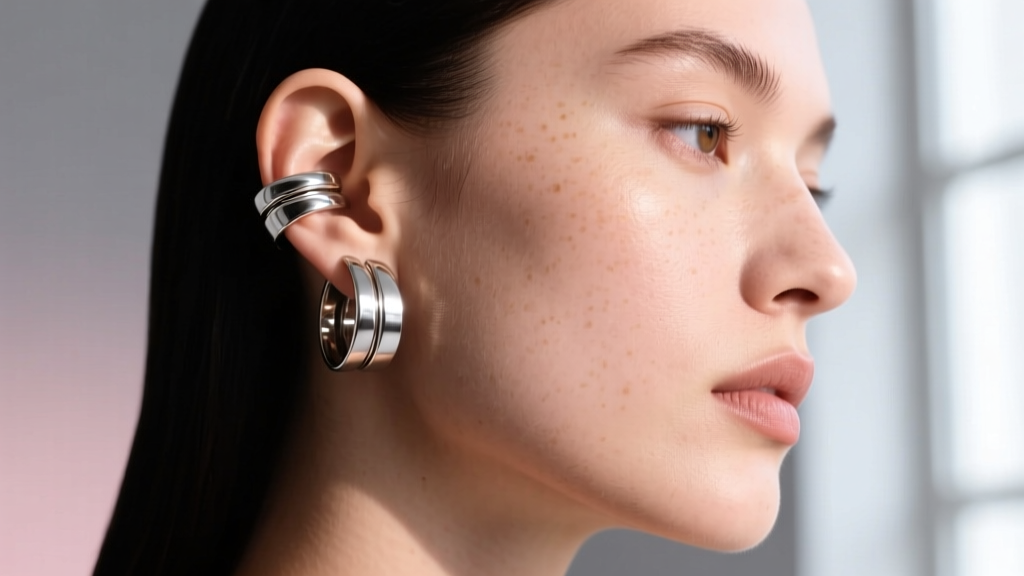
Full ear earrings—encompassing ear wraps, continuous cartilage cuffs, and multi-point ear crawlers—offer the striking aesthetic of a heavily curated ear party without the commitment of multiple piercings. However, the most common complaint among wearers is mechanical failure: the jewelry slips, pinches, or drags heavily on the lobe. Unlike a standard stud that passes entirely through a fistula (piercing channel), full ear wraps rely entirely on tensile strength and friction against the highly variable topography of human cartilage.
If your favorite full ear earrings constantly migrate down the helix or cause dull aching by the end of the day, the issue is rarely your ear shape. It is almost always a mismatch between the jewelry's metallurgical properties and the biomechanics of your ear. In this troubleshooting guide, we break down the exact engineering fixes, material upgrades, and adjustment techniques required to secure your full ear wraps comfortably.
The Biomechanics of Ear Wraps and Why They Fail
To troubleshoot a slipping ear cuff, you must first understand the surface it grips. The outer rim of the ear (the helix) is not a uniform cylinder. It tapers, curves, and varies in thickness from 3mm to over 8mm depending on the individual. Most mass-produced full ear earrings are cast in rigid molds with a fixed inner diameter, usually around 10mm to 12mm.
When a rigid cuff encounters a section of cartilage thicker than its fixed diameter, it creates excessive outward pressure, leading to pain and eventual slipping as the body's natural oils act as a lubricant to push the foreign object away. Conversely, if the cartilage is thinner than the cuff's gap, gravity and minor facial movements (like chewing or talking) will cause the earring to rotate and fall off. The solution is not to buy a smaller or larger size, but to introduce adjustable tension and proper metallurgical malleability.
Troubleshooting the Cartilage Slip: The Pliers Method
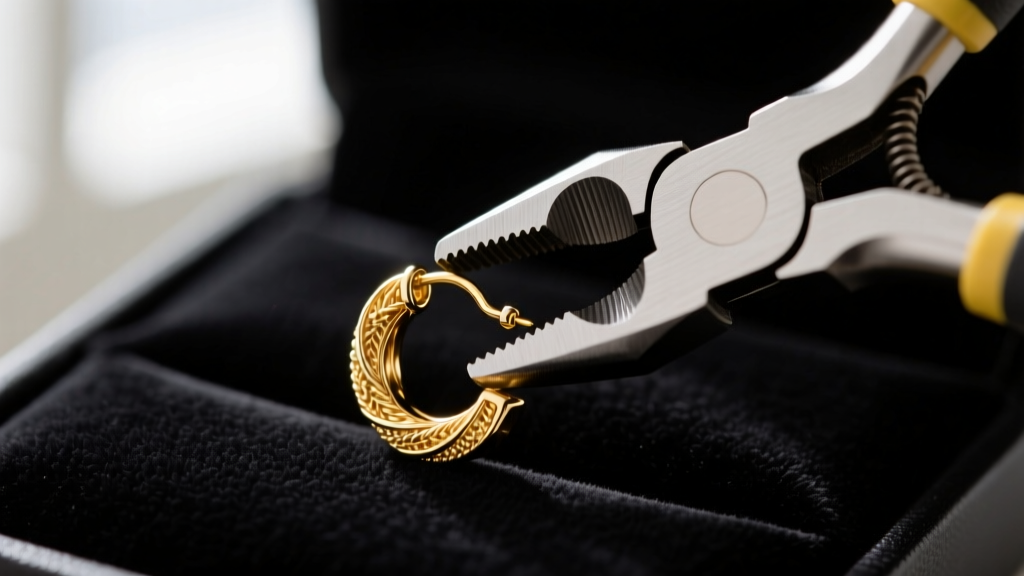
The most effective way to customize a full ear wrap is by manually adjusting its tension gap. However, doing this with your fingers often results in asymmetrical warping, and using standard metal jewelry pliers will permanently mar the finish of the metal.
Step-by-Step Tension Adjustment
- Use Nylon-Jaw Pliers: You must use pliers with nylon or padded rubber jaws. This protects the plating (especially crucial for gold vermeil or rhodium-plated pieces) from scratching.
- Identify the Stress Points: Grip the cuff at the base (the thickest part of the curve), not at the delicate tapered ends. Bending the ends will cause them to snap due to metal fatigue.
- Micro-Adjustments: Squeeze the gap closed by no more than 1mm at a time. Test the fit on the thickest part of your upper helix. The cuff should slide on with mild resistance and snap gently into place.
- Beware of Work-Hardening: Metals like brass and sterling silver work-harden when bent. This means they become harder and more brittle with each adjustment. If you bend a sterling silver cuff back and forth more than three or four times, it will fracture. Adjust it once, get the fit right, and leave it alone.
Solving Lobe Drag in Ear Crawlers
Many full ear earrings utilize an ear crawler or ear climber design, where a post anchors in the lobe and a decorative wire climbs up the cartilage. The primary failure mode here is lobe drag—the weight of the climbing wire pulls the lobe piercing downward, causing irritation and an unsightly droop.
This is a physics problem dictated by gauge thickness and material density. A 16-gauge (1.2mm) brass crawler is simply too heavy for a standard 20-gauge (0.8mm) lobe piercing to support over several hours. To solve this, you must look for specific gauge and material combinations.
| Material | Standard Gauge for Crawlers | Weight Profile | Troubleshooting Verdict |
|---|---|---|---|
| Brass / Copper | 16g - 18g | Heavy | Avoid for full ear spans; causes severe lobe drag. |
| Sterling Silver (925) | 18g - 20g | Moderate | Acceptable for short crawlers, but prone to work-hardening. |
| ASTM F136 Titanium | 20g - 22g | Ultra-Light | Ideal. High strength-to-weight ratio prevents lobe pulling. |
| Niobium | 18g - 20g | Light | Excellent malleability for custom bending without snapping. |
If you already own a heavy crawler, you can mitigate lobe drag by swapping the standard butterfly backing for a silicone O-ring backing or a flat-back labret post. Flat-backs distribute the weight across a wider surface area of the lobe tissue, providing a much more stable anchor for the climbing wire.
Friction, Sweat, and Contact Dermatitis
Full ear earrings cover a massive surface area of the skin. When metal sits flush against the cartilage and concha for hours, it traps heat and sweat. If the jewelry contains nickel—a common alloying agent in cheap surgical steel and white gold—this trapped moisture accelerates the leaching of nickel ions into the skin, triggering allergic contact dermatitis.
According to the American Academy of Dermatology, nickel allergy is one of the most common causes of allergic contact dermatitis, presenting as red, itchy, and scaly patches exactly where the metal rests. Because full ear wraps rest against the thin, sensitive skin behind the helix and tragus, reactions here can be particularly severe.
Expert Rule of Thumb: If a full ear wrap leaves a dark gray or greenish shadow on your cartilage after removal, it is undergoing rapid oxidation due to sweat acidity. Switch immediately to implant-grade titanium (ASTM F136) or solid 14k/18k yellow gold, which are entirely inert to human sweat.
The Association of Professional Piercers (APP) strictly recommends implant-grade titanium for any jewelry that sits in or tightly against the body for prolonged periods. When shopping for full ear cuffs, look for brands that explicitly state ASTM F136 rather than vague terms like hypoallergenic or surgical steel, which are unregulated marketing terms.
The Adhesive Debate: When to Use Jewelry Glue
In the theater and bridal styling industries, makeup artists frequently use spirit gum or specialized cosmetic adhesives to keep full ear cuffs from slipping during performances. While this is a viable short-term troubleshooting tactic, it is highly discouraged for daily wear.
Cosmetic adhesives trap dead skin cells and sebum against the metal, creating a breeding ground for staphylococcus bacteria on the cartilage. Furthermore, peeling the adhesive off delicate ear cuffs often bends the metal, ruining the tension you worked so hard to calibrate. If you must use an adhesive for a specific event, use a tiny dot of Pros-Aide (a water-based, medical-grade adhesive used for prosthetics) on the inner curve of the cuff, and remove it immediately afterward with a dedicated adhesive remover, never by pulling.
Storage and Tension Preservation
The final piece of the troubleshooting puzzle is how you store your full ear earrings. Tossing an adjustable ear cuff into a communal jewelry box is a guaranteed way to ruin its fit. The pressure from other items will warp the tension gap, and the delicate prongs holding any inset cubic zirconia or opals will catch on fabric or chains.
Store full ear wraps individually in soft, velvet-lined compartments. If the cuff has an open, C-shaped profile, gently stuff the inner gap with a small piece of acid-free tissue paper or a soft foam insert. This maintains the structural integrity of the curve and prevents the metal from experiencing creep (slow deformation under persistent environmental stress) over months of non-use.
Final Thoughts on Curated Fits
Troubleshooting full ear earrings requires a shift in mindset: you must treat them less like traditional accessories and more like customizable prosthetics. By understanding the yield strength of your metals, utilizing the correct nylon-jaw tools for micro-adjustments, and prioritizing ultra-light titanium for ear crawlers, you can eliminate slipping and lobe drag entirely. A properly fitted full ear wrap should feel entirely weightless, allowing the striking, continuous line of the jewelry to take center stage without the constant annoyance of pushing it back up your helix.