Best Metals for Spiky Earrings: A Material Comparison Guide
Discover the best metals for spiky earrings. We compare titanium, steel, silver, and gold for safety, weight, and durability in punk and edgy styles.
The Unique Material Demands of Spiky Earrings
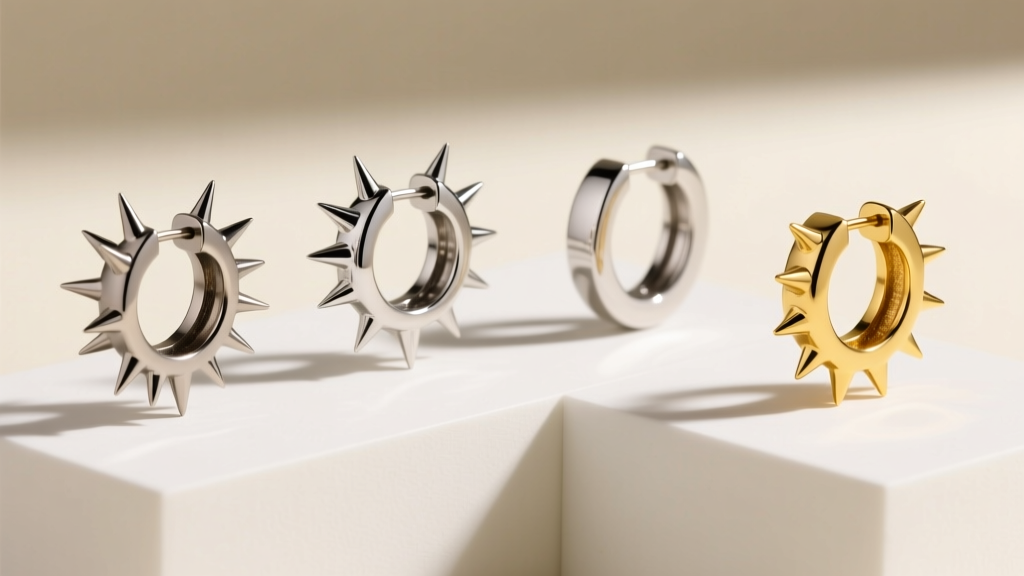
When curating an edgy, avant-garde, or punk-inspired jewelry collection, the spiky earring remains an iconic staple. However, as structural jewelry trends continue to evolve through 2026, both designers and consumers are realizing that not all metals are created equal when it comes to sharp, protruding silhouettes. Unlike smooth hoops or flat studs, spiky earrings introduce complex physical challenges: extreme leverage on the earlobe, high center-of-gravity weight distribution, and an increased risk of skin micro-abrasions at the friction points.
Choosing the wrong material for a spiked design can lead to bent posts, severe allergic contact dermatitis, or even lobe tearing. The sharp points of these earrings act as levers; a heavy spike catching on a sweater will transfer immense shear force directly to the piercing fistula. Furthermore, the crevices where the spike meets the base post are prime locations for sweat accumulation and bacterial growth, making corrosion resistance a non-negotiable property. In this comprehensive guide, we break down the metallurgical properties, structural integrity, and biocompatibility of the most common metals used in spiky earrings to help you make an informed, safe, and stylish choice.
Material Breakdown: Which Metal Wins?
Implant-Grade Titanium (ASTM F136)
For sensitive ears and heavy spike clusters, Implant-Grade Titanium (specifically ASTM F136 or ELI - Extra Low Interstitial) is the undisputed champion. Titanium is roughly 45% lighter than stainless steel, which drastically reduces the "pendulum effect" that causes elongated piercings when wearing long spiky dangles. Despite its lightweight nature, it boasts an exceptional strength-to-weight ratio and a Vickers hardness of approximately 350 HV, meaning the sharp tips will not easily blunt or bend under pressure. Most importantly, it is 100% nickel-free and highly biocompatible, making it the only recommended metal for fresh piercings or cartilage spikes. According to the Association of Professional Piercers (APP), implant-grade titanium is the gold standard for body jewelry safety, ensuring zero toxic leaching even when trapped against the skin in humid environments.
316L Surgical Stainless Steel
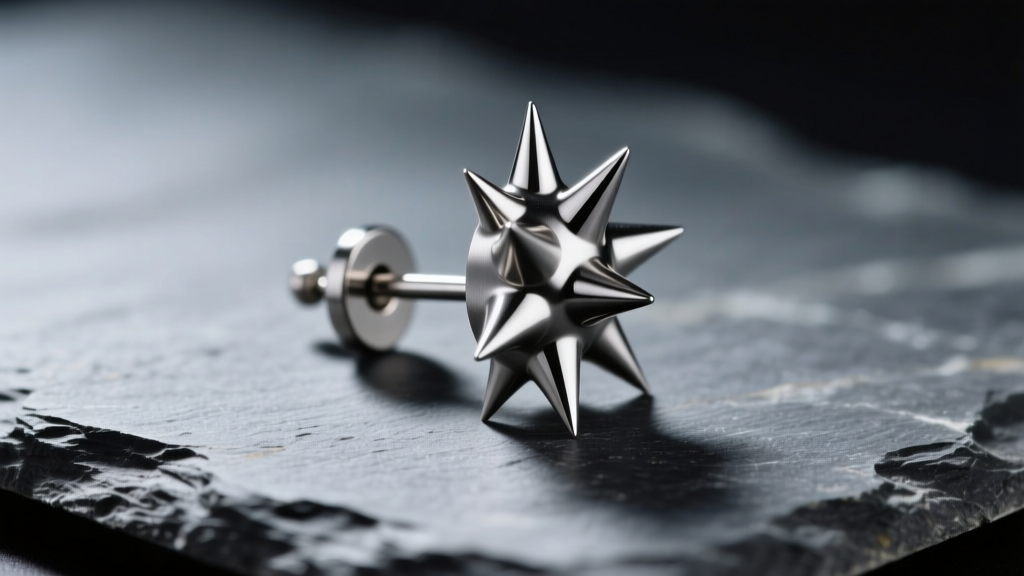
316L stainless steel is the most common material for budget-friendly spiky earrings. The "L" stands for low carbon, and the alloy includes molybdenum for enhanced corrosion resistance. However, it contains between 8% and 10% nickel. While the nickel release rate is generally low (often falling under the EU Nickel Directive limit of 0.5 µg/cm²/week), the sharp edges and friction points of spiky designs can cause microscopic skin breaks, allowing nickel ions to bypass the skin barrier and trigger contact dermatitis. Steel is also significantly denser than titanium; a solid steel spike cluster can easily exceed the safe weight limit for a standard 20-gauge lobe piercing, leading to discomfort and migration over time.
Sterling Silver (925)
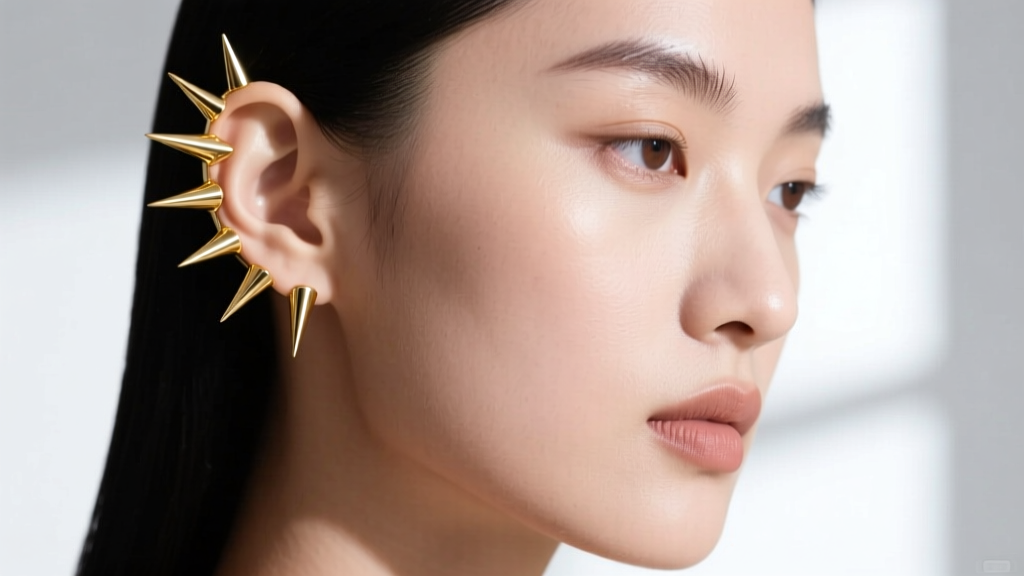
Sterling silver offers a beautiful, bright luster that complements gothic and grunge aesthetics, but it is structurally problematic for spiky earrings. Composed of 92.5% silver and 7.5% copper, this alloy is relatively soft. Long, thin silver spikes are highly susceptible to bending if bumped. Furthermore, the copper content causes silver to oxidize and tarnish rapidly when exposed to sweat and sulfur in the air. If a silver spike scratches the skin behind the ear, the resulting oxidation can temporarily stain the skin gray or green (argyria), a harmless but highly undesirable cosmetic effect. Silver should be strictly reserved for small, lightweight stud spikes worn in fully healed lobes.
Solid Gold (14k vs 18k)
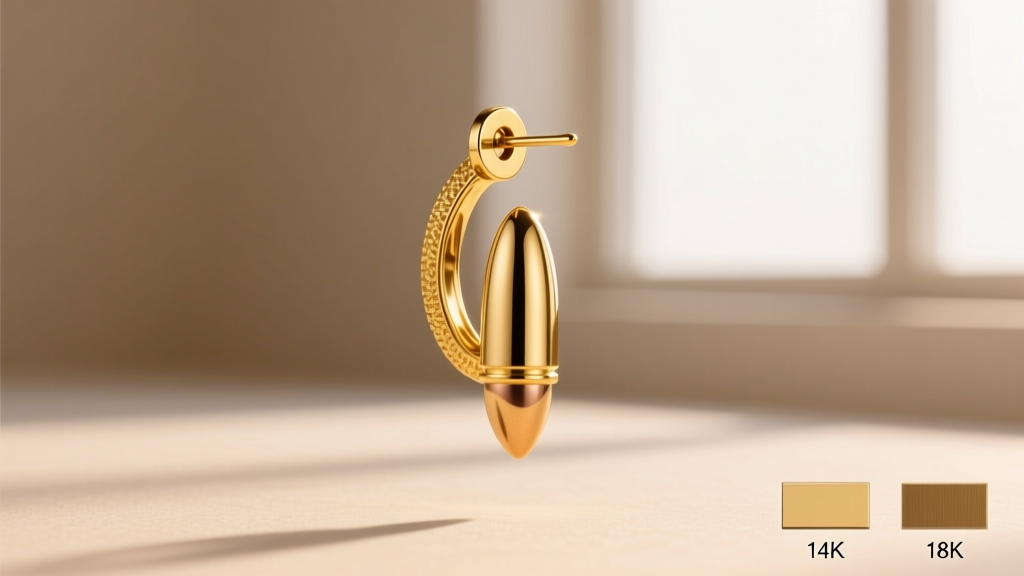
Gold is a premium choice, but karat weight dictates its viability for spiked designs. Pure 24k gold is far too soft for jewelry. 18k gold (75% gold) offers a rich yellow hue but remains relatively soft and malleable; an 18k gold spike will dent or warp if dropped on a hard surface. 14k gold (58.5% gold), however, is alloyed with higher amounts of copper, zinc, or silver, significantly increasing its tensile strength and Vickers hardness. As noted by the Gemological Institute of America (GIA), 14k gold provides the ideal balance of precious metal value and structural durability, making it the superior choice for intricate, sharp-edged gold jewelry that must withstand daily wear and tear without losing its dangerous aesthetic.
Comprehensive Metal Comparison Chart
To visualize how these materials stack up against one another specifically for spiky and structural earring designs, refer to the data table below.
| Material | Weight / Density | Nickel Content | Hardness & Durability | Avg. Price Range (Pair) | Best Use Case |
|---|---|---|---|---|---|
| ASTM F136 Titanium | Very Light (4.43 g/cm³) | 0% (Nickel-Free) | High (350 HV) | $35 - $120 | Heavy spikes, cartilage, sensitive ears |
| 316L Surgical Steel | Heavy (8.00 g/cm³) | 8-10% (Low Release) | Medium (220 HV) | $15 - $45 | Budget fashion spikes, healed lobes only |
| 925 Sterling Silver | Medium (10.49 g/cm³) | 0% (Contains Copper) | Low (70 HV) | $25 - $80 | Small, short spike studs, occasional wear |
| 14k Solid Gold | Heavy (13.50 g/cm³) | Varies by Alloy | Medium-High (140 HV) | $150 - $600+ | Luxury spikes, heirloom pieces, daily wear |
Gauge Sizing and Structural Integrity
The material is only half the battle; the thickness of the post (gauge) dictates whether your spiky earrings will survive daily life. The leverage created by a 1-inch spike demands a thicker post than a standard flat stud. Most fast-fashion earrings use 20-gauge (0.81mm) or even 22-gauge (0.64mm) posts. If a heavy steel spike on a 20g post catches on a hairbrush, the post will likely bend permanently, or worse, slice through the earlobe tissue.
- 20 Gauge (0.81mm): Only suitable for micro-spikes or lightweight titanium studs under 5mm in length.
- 18 Gauge (1.02mm): The standard for most quality body jewelry. Safe for medium spikes (up to 12mm) in standard lobe piercings.
- 16 Gauge (1.29mm): Highly recommended for heavy spike clusters, long dangles, or cartilage placements like the helix or conch where structural support is vital.
- 14 Gauge (1.63mm): Essential for industrial spikes or heavy daith piercings where the jewelry spans across the ear.
When shopping, always verify the gauge size. If a retailer does not list the gauge thickness for a heavy spiky earring, assume it is a flimsy 20g or 22g and avoid it for long-term wear.
Maintenance and Edge Preservation
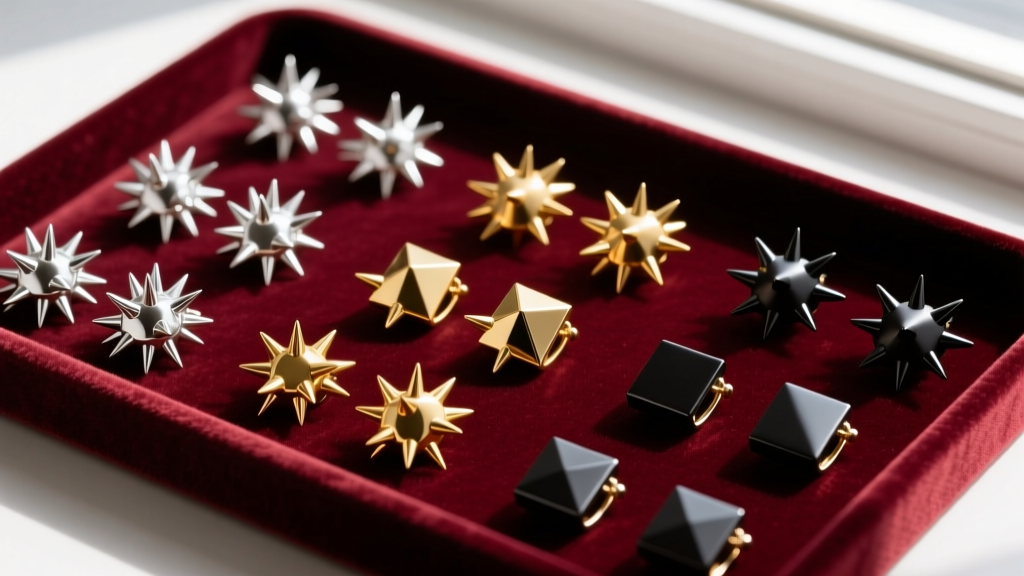
Spiky earrings require specific maintenance protocols to preserve both their dangerous aesthetic and their structural integrity. The junction where the spike is soldered or glued to the base is a primary failure point. Avoid using harsh ultrasonic cleaners on spiky earrings that feature glued components (common in budget black steel or rhinestone-accented spikes), as the high-frequency vibrations will shatter the adhesive bond, causing the spike to detach.
Instead, utilize a manual cleaning method. Create a solution of warm distilled water and a few drops of pH-neutral castile soap. Use a soft-bristled detailing brush (like a clean makeup spoolie or a baby toothbrush) to gently agitate the crevices around the spike bases. This removes sebum, dead skin cells, and environmental pollutants without stressing the solder joints. For titanium and steel, an occasional wipe with 70% isopropyl alcohol will disinfect the sharp points, ensuring that if a spike accidentally grazes your neck or ear, it does not introduce bacteria into a micro-abrasion. Always store spiky earrings individually in hard-shell cases or silicone pouches; tossing them loosely into a jewelry box will result in the spikes scratching softer metals or dulling against one another.
Final Verdict: Choosing Your Armor
Spiky earrings are more than just an accessory; they are wearable armor that demands respect for material science. If your priority is biocompatibility, lightweight comfort, and absolute structural reliability, Implant-Grade Titanium is the ultimate choice, especially for cartilage or stretched lobes. For those seeking a luxury, heirloom-quality piece that can withstand the rigors of daily wear without bending, 14k Solid Gold offers the perfect marriage of prestige and tensile strength. Avoid cheap, heavy stainless steel for large spike clusters, and reserve sterling silver for small, occasional-wear studs. By matching the metallurgical properties of your jewelry to the physical demands of the design, you ensure your spiky earrings remain as sharp, safe, and striking as the day you bought them.