Double Huggie Earrings: 2026 Material & Metal Guide
Discover the best metals for double huggie earrings in 2026. Compare titanium, gold, and platinum properties, gauge sizes, and healing safety.

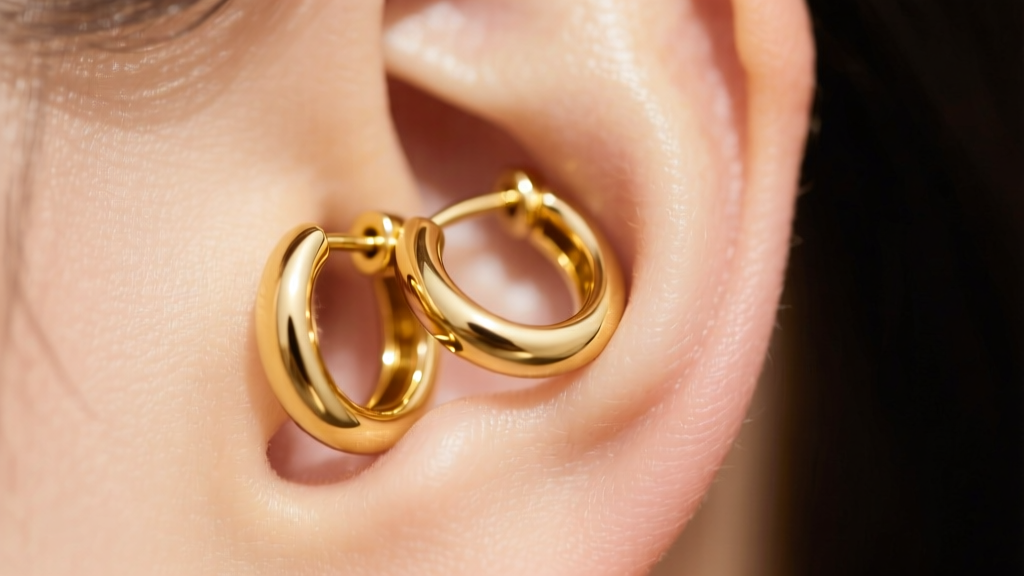
The Anatomy of Double Huggie Earrings: Why Material Matters
The 'double' aesthetic in huggie earrings is achieved either through a single continuous cast piece featuring a double-row channel, or via two physically interlocking micro-hinges. Because the inner diameter (ID) typically ranges from 8mm to 12mm, these pieces sit flush against the earlobe or helix. This snug fit creates a micro-environment that traps sebum, dead skin cells, and moisture. Consequently, the biocompatibility of the metal is not just a preference; it is a dermatological necessity.
According to the Association of Professional Piercers (APP), prolonged contact with porous or reactive metals in tight-fitting jewelry can trigger contact dermatitis or localized infections. When selecting double huggie earrings, you must evaluate the metal's density, Vickers hardness, and nickel release rates to ensure both structural longevity and tissue health.
Metal Comparison Matrix: Durability, Weight, and Biocompatibility
Not all precious metals perform equally under the mechanical stress of a hinged hoop. Below is a technical comparison of the most common materials used in premium double huggies.
| Material | Density (g/cm³) | Vickers Hardness (HV) | Nickel Content | Best Placement |
|---|---|---|---|---|
| ASTM F136 Titanium | 4.43 | 310-360 | Zero | Helix / Lobe |
| 14k Solid Gold | 12.9 - 14.6 | 130-170 | Trace (if alloyed) | Lobe |
| 18k Solid Gold | 15.2 - 15.9 | 120-150 | Trace (if alloyed) | Lobe |
| 950 Platinum | 20.5 - 21.4 | 110-130 | Zero | Lobe (Heavy) |
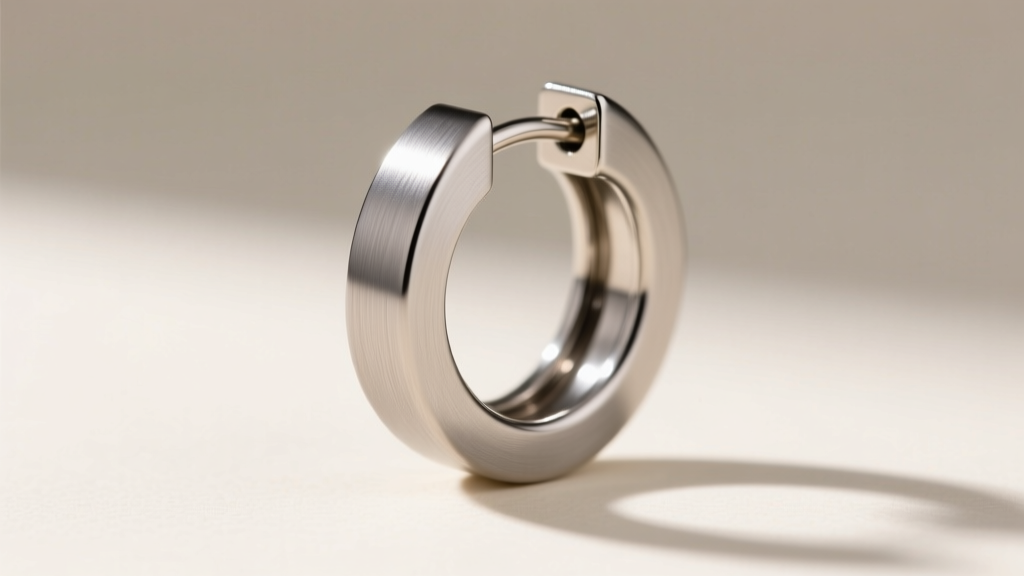
Deep Dive: Top Materials for Double Huggie Earrings
Implant-Grade Titanium (ASTM F136)
For sensitive ears and fresh cartilage piercings, Implant-Grade Titanium (Ti6Al4V ELI) is the undisputed champion. The ASTM International F136 Standard dictates that ELI (Extra Low Interstitial) titanium must have strictly minimized oxygen, nitrogen, carbon, and iron impurities. This enhances fatigue strength and guarantees zero nickel release. Because titanium's density is exceptionally low (4.43 g/cm³), double huggies crafted from this metal will not weigh down the earlobe or cause migration in helix piercings, making it the premier choice for everyday wear.
Solid 14k vs. 18k Gold
Pure 24k gold is far too soft to withstand the mechanical tension of a huggie clasp. The Gemological Institute of America (GIA) notes that alloying is required for structural integrity. 14k gold (58.5% pure gold) offers a Vickers hardness of up to 170 HV, making it highly resistant to scratching and ideal for the clicker hinge mechanism. 18k gold (75% pure) offers a richer color but is softer, meaning the hinge pin may experience accelerated wear over years of daily snapping. Crucially, ensure the gold is alloyed with palladium or silver; nickel-white gold alloys are a primary culprit for allergic contact dermatitis in tight-fitting hoops.
Platinum 950
Platinum 950 (95% pure, usually alloyed with 5% ruthenium or iridium) is incredibly dense and will never tarnish, oxidize, or wear away. However, its extreme weight (over 21 g/cm³) makes it a poor choice for cartilage double huggies. The constant downward drag can cause piercing migration or lobe stretching over time. Platinum is best reserved for smaller, lightweight double huggie designs worn strictly on well-established earlobe piercings.
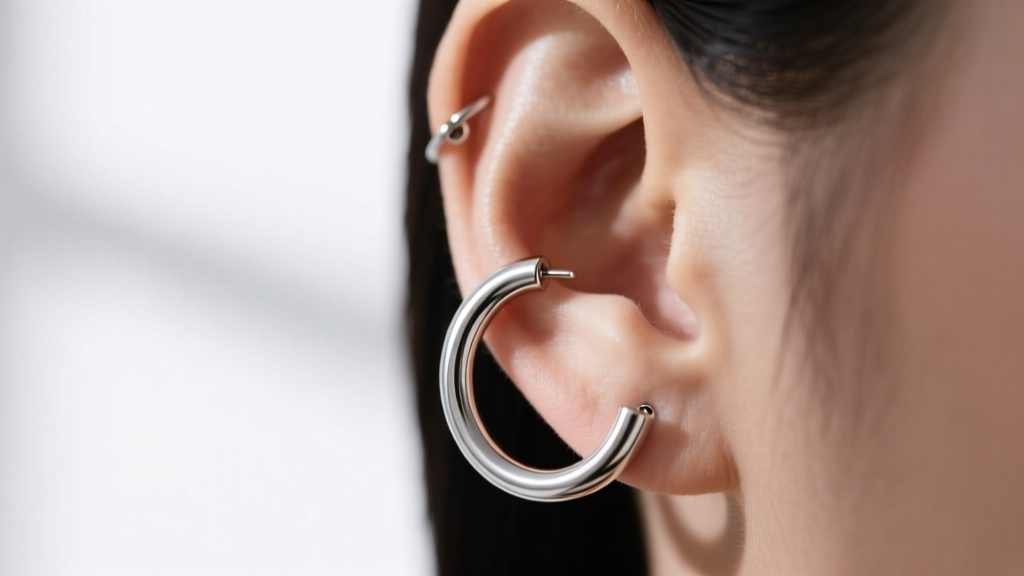
Gauge Sizes, Hinge Mechanics, and Failure Modes
A critical failure point in double huggie earrings is the hinge mechanism. Continuous wire hoops rely on tension, which can warp and lose its snap over time. Modern premium double huggies utilize a 'clicker' hinge—a spring-loaded pin that locks into a receiving tube. The microscopic hinge pin must resist shear stress failure during daily snapping and unsnapping, which is why high-tensile metals like 14k gold and titanium outperform softer metals like platinum or 18k gold in hinged designs.
Gauge thickness is equally vital for structural and biological safety. While standard lobe earrings often use 20-gauge (0.81mm) wire, double huggies require thicker wire to support the dual-row aesthetic and hinge weight without bending.
- 20-Gauge (0.81mm): Too thin for double huggies; risks the 'cheese-cutter effect' where thin wire slowly migrates through tissue.
- 18-Gauge (1.02mm): The standard baseline for earlobe double huggies, offering a balance of delicate aesthetics and structural support.
- 16-Gauge (1.29mm): Mandatory for helix or cartilage placements to prevent migration and support the heavier double-stack visual weight.
2026 Pricing Tiers and Market Benchmarks
Understanding current market pricing helps you identify genuine precious metals versus overpriced plated alternatives. In 2026, expect the following price ranges for authentic, solid-material double huggie earrings from reputable jewelers:
- Implant-Grade Titanium: $45 – $95 per pair. (Highly accessible; price varies based on anodization and gemstone inlays).
- Solid 14k Gold: $140 – $280 per pair. (The most common tier for fine jewelry huggies).
- Solid 18k Gold: $250 – $450 per pair. (Premium pricing due to higher raw gold content).
- 950 Platinum: $500 – $900+ per pair. (Niche market, heavily dependent on brand markup and diamond pave accents).
Warning: If you see 'gold double huggies' priced under $40, they are vermeil or gold-plated over brass or surgical steel. The friction of the hinge will quickly wear away the plating, exposing the reactive base metal to your piercing.
Expert Maintenance and Longevity
To maximize the lifespan of your double huggie earrings, you must adapt your cleaning routine to the mechanical realities of the jewelry. Avoid ultrasonic cleaners for hinged double huggies. The high-frequency cavitation can degrade the microscopic tension spring inside the clicker mechanism and loosen pave-set gemstones.
Pro-Tip: Instead of ultrasonic baths, use a mild, phosphate-free dish soap and a soft-bristled infant toothbrush to gently scrub the inner diameter of the hoop. This removes the sebum and skin cell buildup that accumulates where the metal hugs the ear, preventing both odor and localized skin irritation.
By prioritizing biocompatible materials, appropriate gauge thicknesses, and robust clicker mechanics, you can ensure your double huggie earrings remain a secure, comfortable, and stylish staple in your rotation for decades.


