Double Pierced Earrings: A Budget & Value Buying Guide
Maximize your jewelry budget with our expert guide to double pierced earrings. Learn cost-per-wear metrics, metal grades, and lobe pairing strategies.

The Economics of the Second Hole: Allocating Your Jewelry Budget
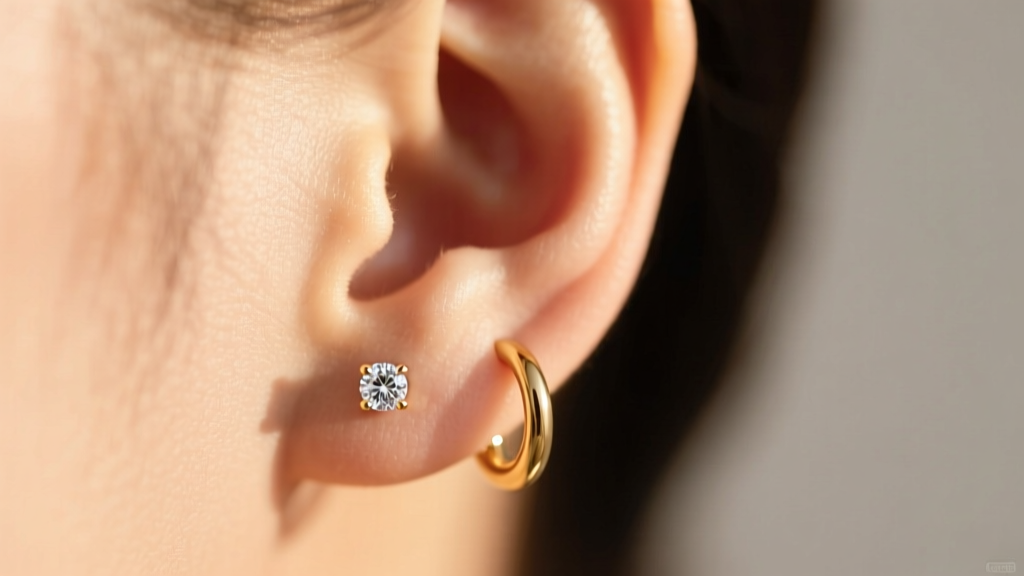
Getting a second lobe piercing is a universal style milestone, but curating the perfect set of double pierced earrings often leads to a common financial trap: splitting your budget evenly across both holes. As we navigate the 2026 jewelry market, smart collectors are abandoning the 50/50 split in favor of strategic budget allocation. When you treat both piercings as equal visual anchors, you end up with two mediocre pieces rather than one stunning focal point and one complementary accent.
The most financially sound approach to double pierced earrings is the 70/30 Allocation Rule. Dedicate 70% of your budget to the primary lobe (the first hole), which will house your 'Anchor' piece—typically a high-quality stud, solitaire, or structured huggie. The remaining 30% is allocated to the secondary hole for an 'Accent' piece, such as a minimalist threadless end, a delicate chain drop, or a seamless micro-hoop. This framework not only maximizes your visual impact but also ensures your investment is concentrated on the piece that will endure the most wear and tear.
Material Value Matrix: What to Buy for Healing vs. Healed Lobes
The second hole is notoriously temperamental. Because it is often pierced months or years after the first, and frequently subjected to heavier sleeper hoops or neglected during cleaning, the tissue is more prone to irritation bumps and migration. Therefore, the metallurgical value of your jewelry is just as important as its aesthetic price tag. According to the Association of Professional Piercers (APP), implant-grade materials are non-negotiable for fresh or easily irritated piercings.
| Material Grade | Avg. Price (Pair) | Hypoallergenic Safety | Best Use Case |
|---|---|---|---|
| ASTM F136 Titanium | $30 - $65 | 100% Safe (Nickel-Free) | Healing second holes, hypersensitive lobes |
| 14k Solid Gold | $120 - $350 | High (If nickel-free alloy) | Daily wear anchors, long-term investments |
| Surgical Steel (316L) | $15 - $40 | Moderate (Contains Nickel) | Fully healed, non-reactive lobes only |
| Gold Vermeil / Plated | $25 - $60 | Low (Degrades over time) | Seasonal trends, occasional evening wear |
While gold vermeil might seem like a budget-friendly way to get the 'double gold' look, the base metal (usually sterling silver) will eventually oxidize, and the thin gold layer will wear off, exposing your second hole to reactive alloys. For true long-term value, 14k solid gold or implant-grade titanium offers the lowest cost-per-wear.
Gauge Sizing and the 'Cheese Cutter' Effect
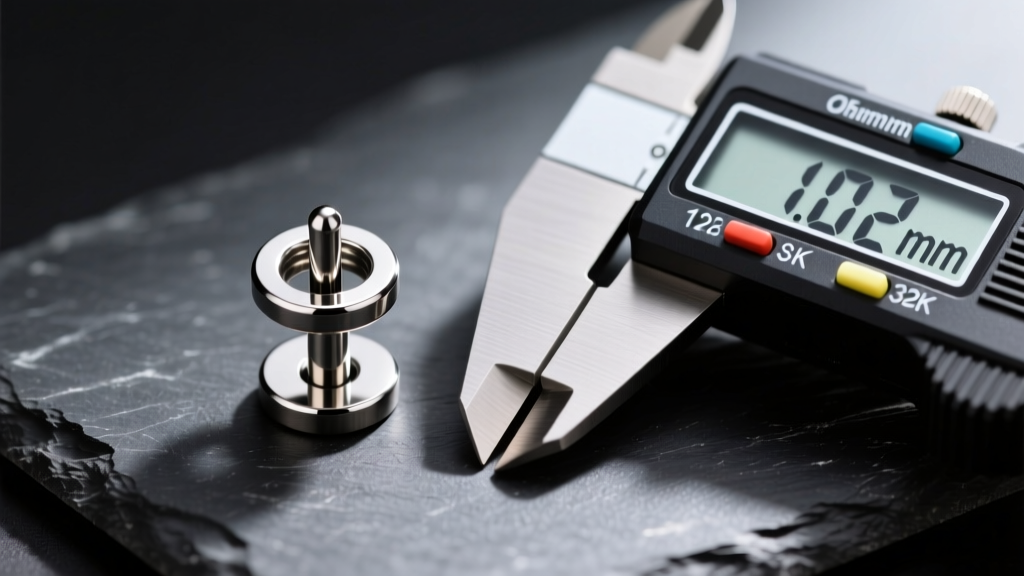
A critical, often overlooked aspect of budget assessment is gauge thickness. Standard first-lobe piercings are usually done at 20-gauge (0.81mm) or 18-gauge (1.02mm). However, professional piercers frequently recommend piercing the second hole at 18-gauge or even 16-gauge (1.2mm). Why? Because the second hole sits lower on the lobe margin and is more susceptible to the 'cheese cutter effect'—where a thin, heavy earring slowly slices through the tissue.
Why Thicker Posts Save You Money
- Weight Distribution: An 18-gauge post distributes the weight of a diamond stud or gold hoop over a wider surface area, reducing downward drag.
- Tear Prevention: Repairing a torn earlobe surgically costs anywhere from $500 to $1,500 per ear. Spending an extra $15 on an 18-gauge titanium labret post is a fractional insurance premium against catastrophic lobe damage.
- Shrinkage Mitigation: Second holes close up significantly faster than first holes when left empty. A slightly thicker post keeps the fistula (the piercing channel) more stable during periods when you aren't wearing jewelry.
Cost-Per-Wear (CPW) Analysis: Studs vs. Huggies
To truly assess the value of double pierced earrings, we must apply the Cost-Per-Wear (CPW) formula: Total Price ÷ (Wears Per Week × Weeks Owned). Let us compare two common pairing strategies over a three-year period (156 weeks).
Scenario A: The Fast-Fashion Huggie & Stud Set ($45 total)
You buy a trendy, gold-plated huggie and stud set. Due to mild itching in the second hole, you only wear them twice a month (0.5 times a week). After 8 weeks, the plating tarnishes.
CPW: $45 ÷ (0.5 × 8) = $11.25 per wear.Scenario B: The 14k Gold Anchor & Titanium Accent ($220 total)
You invest $180 in a 14k solid gold bezel stud for the first hole and $40 in an ASTM F136 titanium threadless end for the second. You wear them daily (7 times a week) for 3 years without removal.
CPW: $220 ÷ (7 × 156) = $0.20 per wear.
The data is undeniable. High-integrity metals drastically reduce the cost-per-wear, making premium double pierced earrings a financially superior choice over disposable fashion jewelry.
The Hidden Cost of Contact Dermatitis
Budgeting for jewelry must also account for biological rejection. The American Academy of Dermatology (AAD) notes that nickel allergy is one of the most common causes of allergic contact dermatitis, affecting roughly 10-20% of the population. The second piercing is often more reactive because the tissue is denser and the immune response in that specific localized area can be heightened by previous trauma.
When you buy cheap 'mystery metal' double pierced earrings from online marketplaces, you risk developing a localized nickel allergy. Once your body develops an antibody response to nickel, you will never be able to wear surgical steel or white gold (which often contains nickel alloys) again. The 'hidden cost' of a $20 pair of alloy earrings is the permanent loss of access to entire categories of mid-tier jewelry, forcing you to exclusively buy premium platinum or high-karat yellow gold in the future.
Strategic Brand Pairings by Price Tier
To execute the 70/30 rule effectively, you need to know which brands offer the best material integrity at specific price points. Here is a curated framework for building your double pierced earrings collection in 2026:
1. The Budget-Conscious Collector (Under $80 Total)
Strategy: Prioritize safety over precious metals. Skip the plated gold and opt for high-polish titanium.
First Hole: 18k Gold PVD-coated Titanium Stud ($35).
Second Hole: Seamless Implant-Grade Titanium Micro-Hoop ($25).
Value Verdict: Excellent for sensitive ears, though PVD coating may eventually wear down over 3-5 years of continuous wear.
2. The Mid-Tier Everyday Wearer ($150 - $250 Total)
Strategy: Solid 14k gold for the anchor, minimalist titanium or 14k for the accent.
First Hole: 14k Solid Gold Bezel-Set Diamond or Moissanite Stud ($140).
Second Hole: 14k Gold Threadless Pin or Delicate Chain Drop ($60).
Value Verdict: The sweet spot for cost-per-wear. These pieces will last a lifetime and can be slept in without causing lobe irritation.
3. The Investment Curator ($400+ Total)
Strategy: Designer craftsmanship and premium gemstones.
First Hole: Designer 18k Gold Signature Motif Stud (e.g., Maria Tash or Anita Ko) ($350).
Second Hole: Matching 18k Gold Clicker Huggie with Pavé Details ($180).
Value Verdict: High upfront cost, but retains intrinsic gold value and offers unparalleled aesthetic cohesion.
Final Verdict: Where to Splurge and Where to Save
Mastering the art of double pierced earrings is less about buying two of everything, and more about understanding the structural and biological demands of your earlobes. Splurge on the first hole with a high-quality, solid gold anchor piece that defines your personal style. Save on the second hole by opting for minimalist, highly functional pieces in implant-grade titanium or delicate solid gold accents. By respecting the 70/30 budget rule, adhering to proper 18-gauge thickness, and avoiding reactive alloys, you will build a curated, double-pierced aesthetic that is both financially sound and dermatologically safe for decades to come.


