Anatomy & Gauge Guide: Choosing the Right Style of Earrings
Discover how to match every style of earrings to your unique ear anatomy, piercing gauge, and lobe thickness with our expert technical guide.

Beyond Aesthetics: The Biomechanics of Ear Jewelry
When selecting a new style of earrings, most consumers focus exclusively on face shape, metal color, and gemstone aesthetics. However, from a clinical and structural perspective, the longevity and comfort of your ear jewelry are dictated by biomechanics, tissue tolerance, and metallurgy. Wearing the wrong gauge or backing mechanism for your specific piercing placement can lead to tissue migration, chronic irritation bumps, and permanent lobe stretching. In 2026, the shift toward curated, multi-piercing ear projects demands a rigorous understanding of how different earring styles interact with human anatomy. This guide bypasses generic fashion advice to deliver a technical deep dive into gauge sizing, clutch mechanics, and material grades.
Decoding the Style of Earrings by Piercing Placement
The human ear is not a uniform canvas; it consists of distinct tissue types that require entirely different structural supports. The Association of Professional Piercers (APP) emphasizes that jewelry must be matched to both the anatomical location and the initial piercing gauge to prevent rejection and scarring.
Standard Lobe (0.8mm - 1.2mm)
Standard lobe piercings are typically performed at 20-gauge (0.81mm) or 18-gauge (1.02mm). Because lobe tissue is soft and highly vascular, it can accommodate a wide variety of earring styles, from lightweight studs to moderate dangles. However, the primary failure mode in lobes is the 'cheese-cutter effect,' where a heavy earring on a thin 20G wire slowly slices through the tissue. For any drop or dangle style exceeding 4 grams, upgrading to an 18G or 16G post is a non-negotiable structural requirement.
Cartilage & Helix (1.2mm - 1.6mm)
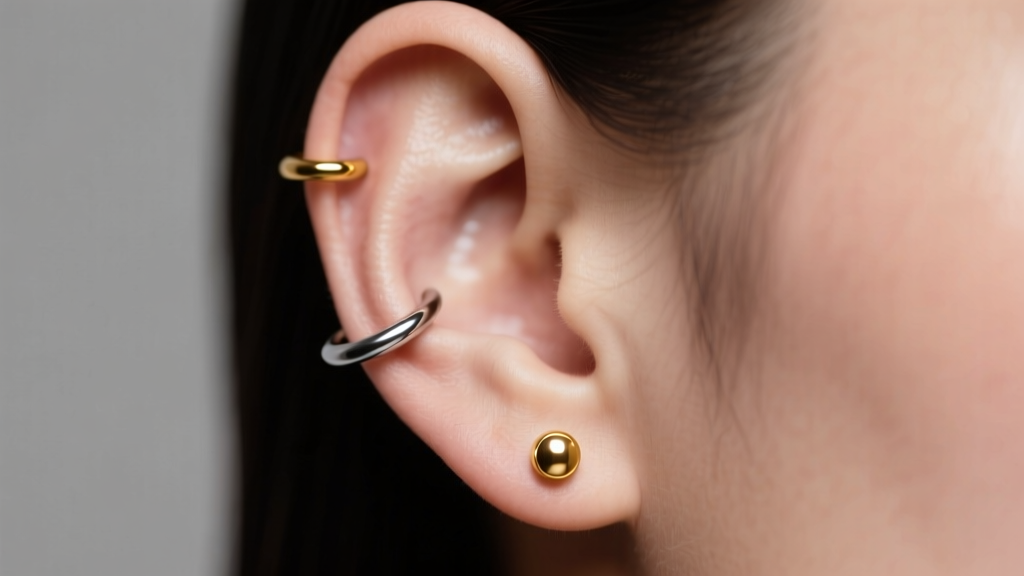
Cartilage piercings, including the helix, forward helix, and tragus, are denser and lack direct blood flow, making them highly susceptible to pressure necrosis and irritation. These are universally pierced at 16-gauge (1.29mm) or 14-gauge (1.6mm). While the hoop is a popular style of earrings for the helix, introducing a curved ring into a straight fistula (piercing channel) creates constant rotational torque. This mechanical friction is the leading cause of hypertrophic scarring (irritation bumps). The optimal style for cartilage is a flat-back labret stud, which sits flush against the tissue and eliminates movement.
Conch, Daith, and Rook (Curvature & Depth)
Inner ear piercings require precise spatial calculations. A daith piercing, situated in the innermost cartilage fold, requires a specific style of earrings—typically a captive bead ring or a clicker segment ring. The inner diameter (ID) is critical here; a standard 5/16-inch (8mm) ID is usually required to accommodate the thickness of the crus of the helix. Using a hoop with an ID that is too small will compress the tissue, cutting off circulation and causing severe swelling.
Technical Specifications: Posts, Wire, and Clutch Mechanics
The backing mechanism (clutch) is just as vital as the decorative front. The traditional butterfly clutch is notorious for trapping moisture, dead skin cells, and bacteria against the ear, creating an anaerobic environment that breeds infection. Furthermore, the uneven pressure points of a butterfly back can cause localized tissue ischemia (restricted blood flow).
| Gauge Size | Millimeter (mm) | Optimal Clutch / Backing | Recommended Style of Earrings |
|---|---|---|---|
| 20G | 0.81mm | La Pousette / Silicone O-Ring | Lightweight studs, small sleepers |
| 18G | 1.02mm | Screw-back / Flat Disc | Standard studs, medium drops |
| 16G | 1.29mm | Internally Threaded Flat-Back | Cartilage studs, heavy lobe drops |
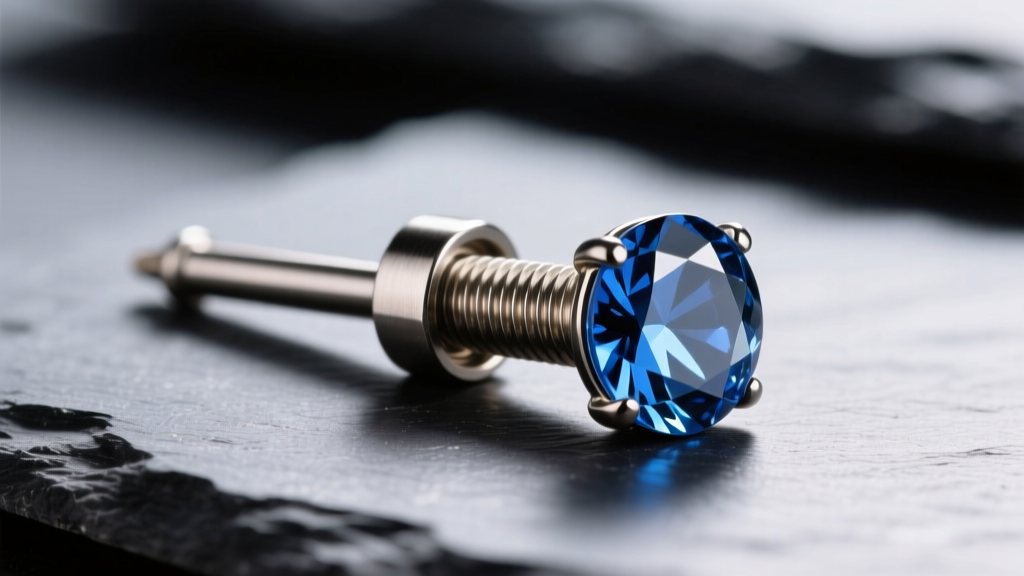
| 14G | 1.60mm | Internally Threaded Flat-Back | Conch studs, industrial bars, daith clickers |
For high-end fine jewelry, the La Pousette clutch is the gold standard. Utilizing a dual-spring locking mechanism, it grips the post securely without pressing tightly against the back of the earlobe, allowing for essential lymphatic drainage and airflow.
Weight Distribution and the Fulcrum Effect
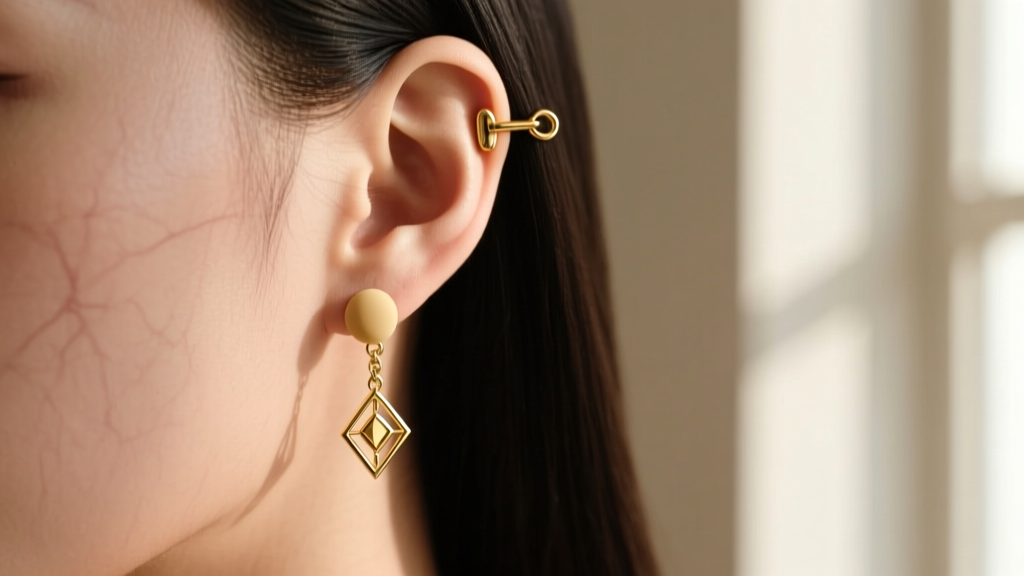
When evaluating a heavy drop or chandelier style of earrings, you must account for the fulcrum effect. The piercing hole acts as a pivot point. A long, heavy earring creates downward torque at the bottom of the hole and upward pressure at the top. Over time, this mechanical stress causes the fistula to elongate vertically, resulting in permanent lobe sagging.
To mitigate this, jewelry engineers and stylists utilize several technical solutions:
- Silicone Support Pads: Placed behind the earlobe, these distribute the upward pressure across a wider surface area of tissue.
- Ear Patches (Lobe Tape):strong> Adhesive strips applied to the back of the lobe to reinforce the tissue matrix against stretching.
- Counter-Balancing: Designing the earring with a heavier decorative element at the very top of the post to offset the pendulum swing of the drop.
Metallurgy: Material Grades for Long-Term Wearability
The market is flooded with misleading terms like 'surgical steel' and 'hypoallergenic.' According to dermatological studies published by the National Center for Biotechnology Information (NCBI), nickel contact dermatitis remains one of the most common allergic reactions globally, frequently triggered by low-grade jewelry.
ASTM F136 Implant-Grade Titanium
This is the absolute benchmark for biocompatibility. Unlike commercially pure titanium (ASTM F67), F136 is an alloy specifically engineered for surgical implants, containing zero nickel. It is highly polished to a mirror finish (minimum 0.2 Ra surface roughness) to prevent microscopic tissue adhesion. Expect to pay $30 to $80 for high-quality, internally threaded titanium basics.
316L Surgical Steel vs. Fine Gold
316L steel contains 8-10.5% nickel. While the nickel is often bound within the alloy matrix, the polishing process can expose it at the surface level, making it unsuitable for unhealed piercings or highly sensitive ears. If opting for gold, ensure it is 14k or 18k solid gold that is specifically alloyed with palladium or silver, rather than nickel or zinc. High-quality 14k gold cartilage studs typically range from $150 to $400+ per piece, reflecting the cost of nickel-free alloying and precision CNC machining.
Expert Troubleshooting: Common Fit Issues
Even with the correct style of earrings, anatomical variations can cause fit issues. Here is how to troubleshoot them like a professional:
- Issue: The earring continuously tilts forward or droops.
Cause: The post is too long for your lobe thickness, or your piercing angle is slightly off-axis.
Solution: Have a professional piercer 'downsize' the post length. If the angle is the culprit, switch to a flat-back labret style, which provides a wider structural base than a standard wire post. - Issue: Persistent irritation bump on a helix piercing.
Cause: You are wearing a hoop style, and the curvature of the ring is pulling the jewelry at an angle through the straight fistula.
Solution: Immediately swap to a 16G or 14G flat-back labret stud. The bump will typically resolve within 2 to 4 weeks once the mechanical friction ceases. - Issue: The clutch keeps falling off during sleep.
Cause: Standard friction notches on the post are worn down, or the butterfly clutch springs have lost tension.
Solution: Upgrade to an internally threaded post with a screw-on flat disc back, or utilize a silicone O-ring which grips the entire circumference of the post via friction rather than relying on metal notches.
True jewelry expertise lies at the intersection of aesthetic design and anatomical engineering. The perfect style of earrings is one that respects the biomechanical limits of your tissue while delivering uncompromising visual impact.
By prioritizing precise gauge matching, biocompatible metallurgy, and advanced clutch mechanics, you can curate an ear project that is not only visually stunning but structurally sound for decades of continuous wear.


