Ultimate Ear Support for Heavy Earrings: Fix Lobe Droop
Discover the best ear support for heavy earrings. Learn how to fix lobe droop, prevent tearing, and distribute weight using specialized backs and patches.

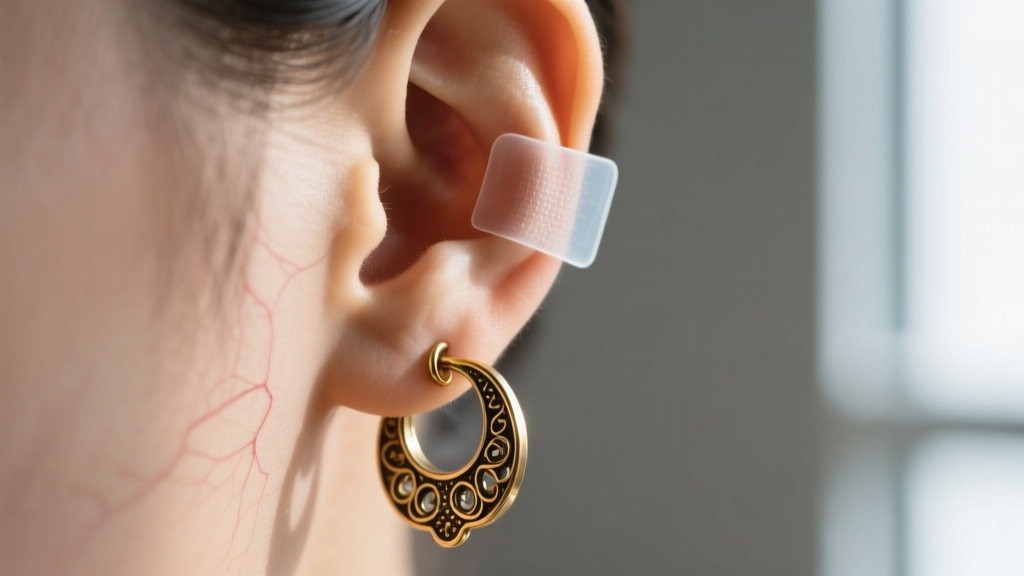
The Biomechanics of Lobe Droop and Tearing
Heavy statement earrings, chandelier drops, and solid brass hoops are staples of bold styling, but they wage a silent war on your earlobes. When gravity meets the delicate collagen matrix of the earlobe, the result is the dreaded forward tilt, micro-tearing, and eventually, permanent lobe stretching. Finding the right ear support for heavy earrings is not just about comfort; it is about preserving your tissue integrity. The earlobe is composed of adipose (fat) tissue and a fibroareolar matrix, lacking the rigid cartilage found in the upper ear. When a 15-gram earring hangs from a standard 20-gauge (0.81mm) post, the pressure exerted on the inferior wall of the fistula (the piercing channel) is immense. Over time, this localized stress causes elastin fibers to snap, leading to irreversible elongation. According to guidelines from the Association of Professional Piercers, continuous downward traction on soft tissue piercings is the primary catalyst for migration and rejection-like stretching. To combat this, we must shift the physics of how the weight is distributed.
Tier 1: Upgrading Earring Backs (The First Line of Defense)
Standard butterfly clutches rely on friction. Under 10+ grams of downward torque, they slip, forcing the earring post to rest entirely on the bottom edge of the piercing hole. The immediate troubleshooting fix is to replace standard backs with high-surface-area alternatives.
Jumbo Silicone Discs vs. Locking Levers
Flat silicone discs (typically 10mm to 12mm in diameter) increase the posterior surface area against the skin by up to 400%. This disperses the gravitational load across a wider swath of the posterior lobe, preventing the post from acting as a lever that tilts the earring forward. Brands like Blomdahl and generic jumbo O-rings cost between $8 and $15 for a multi-pack. Alternatively, locking lever-backs or LaPousette push-clip backs ($15–$30 per pair) provide a mechanical lock that prevents the earring from sliding down the post, ensuring the decorative head remains flush against the anterior lobe.
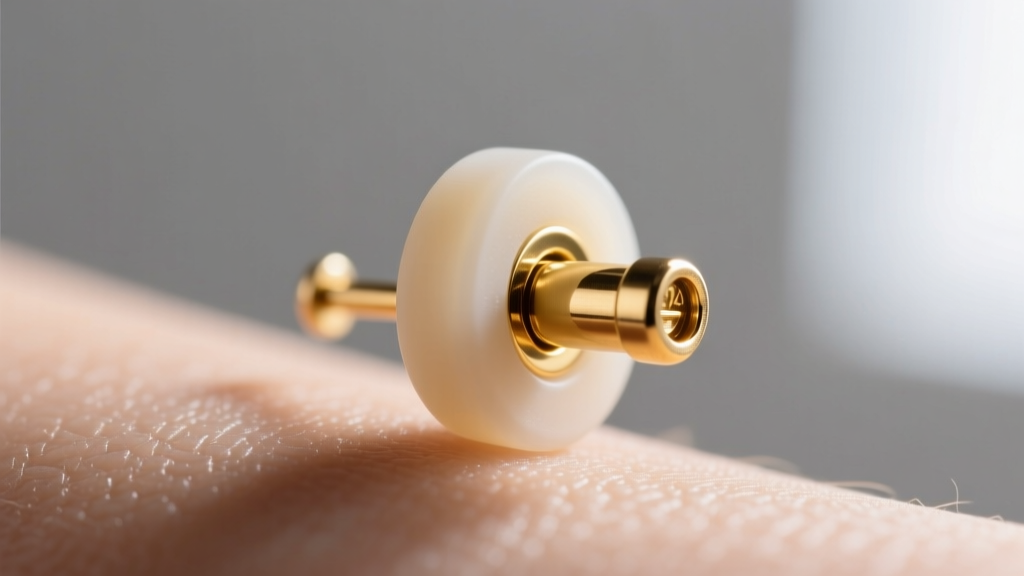
Tier 2: Adhesive Lobe Support Patches (The Invisible Fix)
When the fistula is already stretched, or the earring exceeds 20 grams, mechanical backs are not enough. Adhesive lobe support patches (such as LobeWonder or EarLobe Support Patches) are the gold standard for invisible reinforcement. These are made of medical-grade, hypoallergenic polyurethane and cost roughly $12 to $15 for a box of 60 pairs.
Expert Troubleshooting Tip: The number one reason adhesive patches fail within two hours is improper skin preparation. The American Academy of Dermatology notes that sebum and sweat break down acrylic adhesives rapidly. You must cleanse the posterior lobe with 70% isopropyl alcohol and let it dry for 30 seconds before application. Never apply patches over moisturized skin.
To apply, peel the backing, align the pre-cut slit with your piercing hole, and press firmly for 10 seconds. The patch acts as a synthetic fascia layer, absorbing the shear force and preventing the metal post from cutting into the bottom of the stretched hole.
Tier 3: Modifying the Post Gauge and Wire Structure
The 'Cheese-Cutter' Effect and Gauge Upgrades
Most commercial heavy earrings use 20-gauge (0.81mm) or 18-gauge (1.02mm) wires to save on precious metal costs. This thin wire acts like a cheese-cutter through soft tissue. If you own a pair of heavy, high-quality earrings that constantly droop, take them to a bench jeweler. Upgrading a 20g post to a 14-gauge (1.63mm) or 12-gauge (2.05mm) post typically costs $30 to $50. This modification increases the load-bearing surface area inside the fistula by over 300%, drastically reducing the pressure per square millimeter on the earlobe.
| Post Gauge | Diameter (mm) | Max Unassisted Weight | Best Support Type |
|---|---|---|---|
| 20g (Standard) | 0.81mm | 4 - 6 grams | Adhesive Patches + Silicone Discs |
| 18g (Medium) | 1.02mm | 8 - 10 grams | Jumbo Silicone Discs |
| 16g (Thick) | 1.29mm | 12 - 15 grams | Locking Lever-backs |
| 14g (Heavy) | 1.63mm | 20+ grams | Standard Butterfly or O-rings |
For French wire (fishhook) styles, the curved wire easily slips and pulls on the lowest point of the lobe. Have a jeweler solder a tiny 2mm gold or silicone stopper bead near the base of the wire to catch the back of the lobe, or use clear silicone tubing sleeves (cut to 4mm lengths) to create friction against the skin.
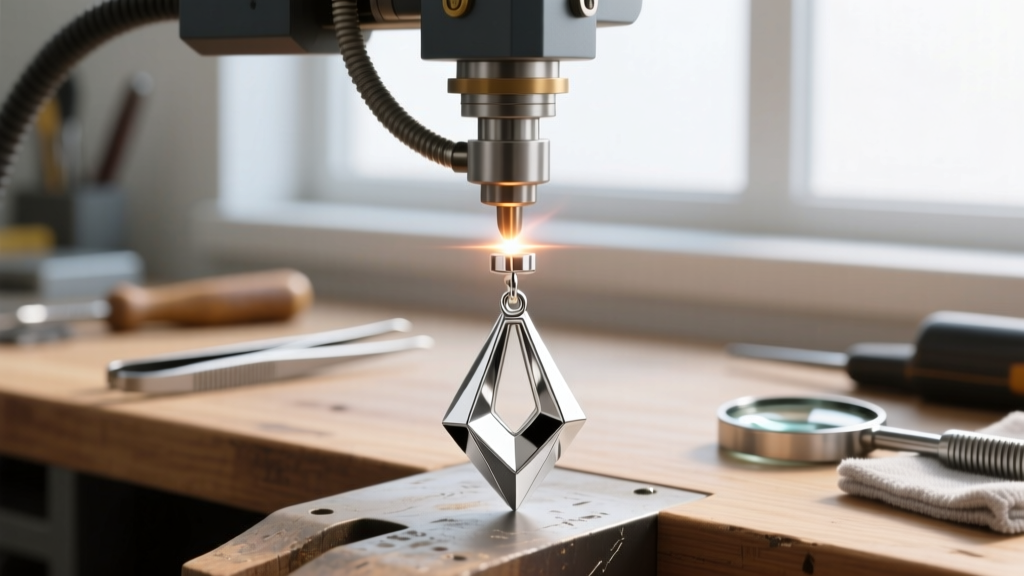
Tier 4: Material Swaps for Visual Weight vs. Actual Weight
If you are designing or commissioning heavy statement pieces, material density is your most critical variable. The Gemological Institute of America and metallurgical standards highlight massive discrepancies in jewelry materials. Solid brass and bronze have a density of roughly 8.5 g/cm³, making them incredibly heavy for large-volume designs. By contrast, Grade 5 Titanium (Ti-6Al-4V) has a density of 4.4 g/cm³—nhalf the weight of brass—while retaining superior tensile strength and hypoallergenic properties. For massive sculptural earrings, consider electroforming (which creates hollow, lightweight metal shells) or incorporating high-grade acrylic and carved resin elements to maintain visual volume without the gravitational penalty.
Troubleshooting Common Failure Modes
- Problem: The earring tilts forward, pointing at the floor.
Cause: The post is too long for your lobe thickness, or the fistula is stretched, creating a fulcrum effect.
Fix: Use a shorter post, or add a small silicone O-ring in front of the lobe (between the earring head and the skin) to act as a spacer and eliminate the gap. - Problem: Contact dermatitis or redness from support patches.
Cause: Allergy to the acrylic adhesive or trapped moisture.
Fix: Switch to PTFE (Teflon) piercing tape, which is completely inert, or rely exclusively on 100% medical-grade silicone locking discs that require no adhesive. - Problem: The earring back keeps popping off despite using locking clutches.
Cause: The post notches are worn down or the post gauge is too thin for the locking mechanism's internal grip.
Fix: Replace the post entirely. Locking mechanisms require a pristine, thick post (16g or 14g) to engage the internal ball-bearings properly.
Expert Verdict: Building a Support System
Achieving proper ear support for heavy earrings requires a multi-tiered approach. You cannot rely on a single solution for a 25-gram chandelier earring. The ultimate protocol involves combining a structural upgrade (a 14g titanium post) with a wide-load back (a 12mm silicone disc) and, if the tissue is already compromised, an anterior polyurethane support patch. By understanding the biomechanics of your earlobes and investing in these specific, low-cost modifications, you can wear dramatic, heavyweight jewelry comfortably for hours without sacrificing the long-term health of your piercings.


