2026 Earbud Earrings Guide: Budget vs Value Assessment
We assess the true value of earbud earrings in 2026, comparing budget alloys to solid gold tech-wear styles for durability, comfort, and cost.

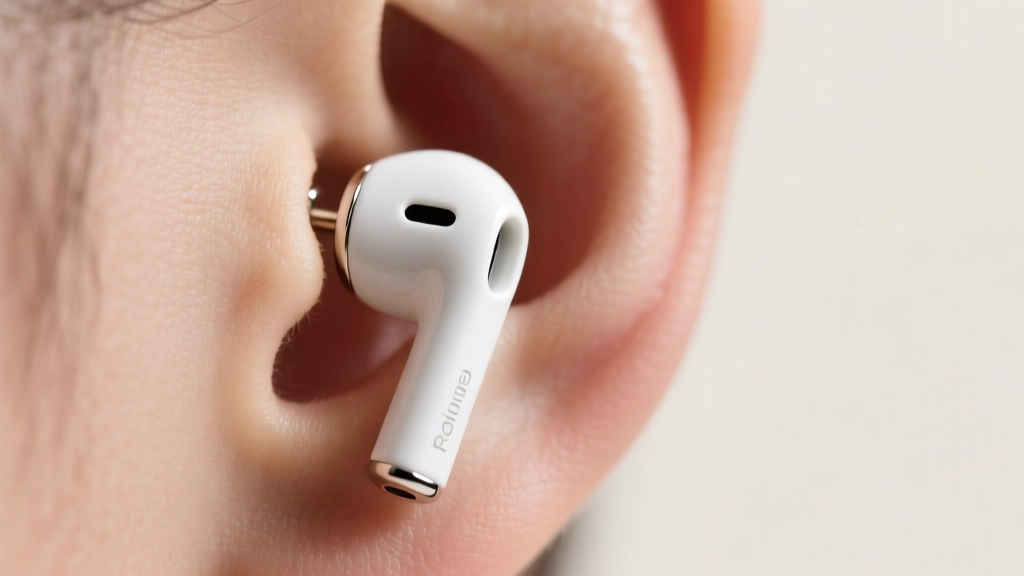
The Rise of Earbud Earrings: Aesthetic Mimicry vs. Functional Utility
The term "earbud earrings" has bifurcated in 2026 into two distinct jewelry categories. The first is purely aesthetic: ceramic, enamel, or pearl studs engineered to mimic the sleek, white profile of wireless tech earbuds, playing into the enduring cyberpunk and tech-wear fashion movements. The second category is functional: ultra-low-profile earrings designed specifically to coexist with daily in-ear monitor (IEM) or wireless earbud usage without breaking the acoustic seal or causing cartilage trauma.
As a senior style analyst at Jewel Style Radar, I frequently see consumers misallocate their budgets on these pieces. Buying a $20 brass "tech-wear" ear cuff might seem like a steal, but when subjected to the friction, sweat, and heat generated by daily earbud use, budget materials fail rapidly. This comprehensive value assessment breaks down the metallurgy, profile depths, and long-term cost-per-wear of earbud earrings to help you make an informed investment.
Material Breakdown: What You Actually Get for Your Money
When evaluating earbud earrings, the base metal and plating methodology dictate both the lifespan of the piece and its biocompatibility. The ear is a high-friction zone, especially when silicone earbud tips are repeatedly inserted and removed.
Budget Tier ($15 - $40): Flash-Plated Brass and Zinc Alloys
Budget earbud earrings are typically cast from zinc alloy or brass and finished with "flash plating"—a microscopically thin layer of gold or rhodium (usually under 0.1 microns). While they look convincing on a screen, the moment these pieces are subjected to the friction of an earbud's silicone tip, the plating wears through to the base metal within weeks. Furthermore, budget alloys frequently contain nickel as a hardening agent. According to the American Contact Dermatitis Society, nickel exposure in the confined, warm environment of the ear canal perimeter is a primary trigger for allergic contact dermatitis.
Mid-Tier ($45 - $120): Vermeil and 316L Surgical Steel
Stepping up, you will find heavy gold vermeil (a minimum of 2.5 microns of gold over a sterling silver base) and 316L surgical steel. Vermeil offers a richer aesthetic for the "faux earbud" pearl styles, but sterling silver is inherently soft. If you are wearing functional huggies alongside actual earbuds, the repetitive pressure can slightly warp thin vermeil hoops. 316L steel is highly durable and resists warping, but it contains trace amounts of nickel, which can still cause reactions in highly sensitive individuals during prolonged, sweaty commutes.
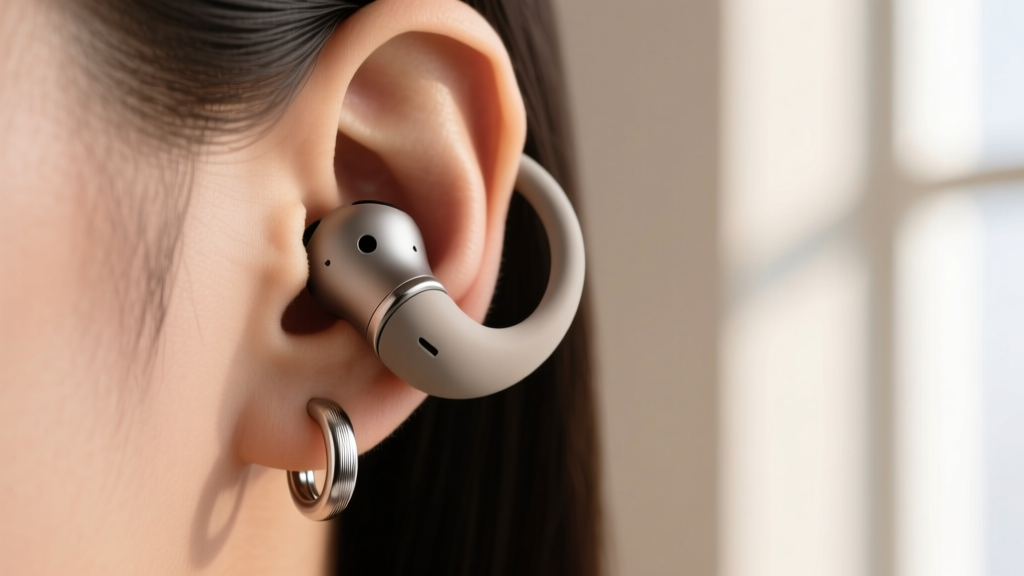
Investment Tier ($150 - $400+): Solid Gold and Implant-Grade Titanium
For daily tech-wearers, the investment tier is where true value lies. Solid 14k or 18k gold offers permanent durability without plating wear. However, the undisputed champion for functional earbud earrings is Implant-Grade Titanium (specifically Ti6Al4V ELI). As outlined by ASTM International standard F136, this specific titanium alloy is completely nickel-free, highly corrosion-resistant, and possesses a strength-to-weight ratio that allows for incredibly thin, rigid jewelry profiles that will never bend when pressed against an earbud.
The "Earbud Compatibility" Factor: Gauge and Profile Depth
If your goal is to wear earrings comfortably while using wireless earbuds, the physical geometry of the jewelry is just as critical as the material. Standard butterfly-back studs and thick huggie hoops create physical interference, preventing the silicone tip of your earbud from forming a proper acoustic seal. This results in a loss of bass response and constant physical discomfort.
"The ideal functional earring for an earbud wearer must have a total profile depth of less than 3 millimeters from the skin's surface, and must utilize a flat-back labret post rather than a traditional butterfly clutch."
Flat-back labrets (often used in cartilage piercings) sit completely flush against the back of the earlobe or helix. This eliminates the "poke" of a traditional earring post when you rest your head on a pillow or wear over-ear noise-canceling headphones over your earbuds. For the front-facing aesthetic, bezel-set stones or flush-mounted ceramic discs mimic the tech-earbud look without protruding more than 2mm.
Structured Comparison: Earring Profiles and Tech Interference
| Earring Style | Average Profile Depth | Backing Type | Earbud Interference Level | Best Use Case |
|---|---|---|---|---|
| Standard Butterfly Stud | 8mm - 12mm | Butterfly Clutch | High (Severe acoustic leak) | Occasional wear, no earbuds |
| Thick Huggie Hoop | 4mm - 6mm | Hinged Clicker | Moderate (Cartilage pressure) | Lobe wear with shallow earbuds |
| Flat-Back Bezel Labret | 1.5mm - 2.5mm | Flat Titanium Disc | Zero (Flush fit) | Daily commute, IEMs, active wear |
| Ceramic Tech-Mimic Stud | 3mm - 5mm | Push-Pin or Screw | Low (Depends on earbud stem) | Aesthetic tech-wear styling |
Failure Modes: Where Budget Earbud Earrings Fall Short
Understanding how cheap jewelry fails is essential for assessing value. When budget earbud earrings are exposed to the micro-environment created by wearing in-ear tech, three specific failure modes occur:
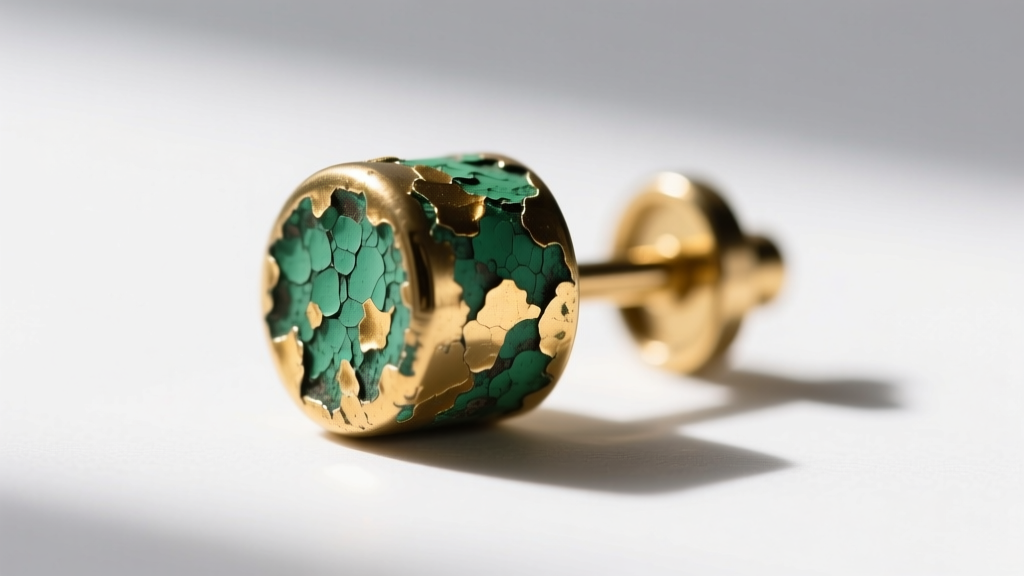
- Galvanic Corrosion: Sweat acts as an electrolyte. When cheap, mixed-metal alloys sit against the skin in a warm, humid environment (trapped by over-ear headphones or hoodies), rapid oxidation occurs. This results in the dreaded "green ear" and structural pitting of the earring post.
- Friction Delamination: The silicone tips of wireless earbuds create repetitive micro-abrasions against the earlobe and concha. On flash-plated earrings, this friction literally sands the gold or rhodium layer off the brass core within a month of daily use.
- Acoustic Seal Degradation: Budget earrings often feature poorly machined, oversized backing discs to save on manufacturing costs. These thick discs push the earlobe outward, altering the angle of the tragus and concha, which physically prevents custom or foam-tipped earbuds from sealing properly.
Final Verdict: How to Allocate Your Jewelry Budget
So, are earbud earrings worth the investment? The answer depends entirely on your primary use case.
If you are purchasing aesthetic mimicry earrings purely for occasional editorial photoshoots, tech-wear cosplay, or weekend styling, the budget tier ($15 - $40) is perfectly acceptable. The ceramic and enamel "faux earbud" studs in this price range look fantastic on camera and do not require long-term biocompatibility.
However, if you are seeking functional, daily-wear earrings that will comfortably coexist with your $250 wireless earbuds during commutes, workouts, and office hours, you must bypass the mid-tier and invest in the $150+ range. Purchasing a pair of 14k solid gold or ASTM F136 titanium flat-back labrets with a sub-2mm profile is not just a jewelry purchase; it is an acoustic and ergonomic upgrade. As the Gemological Institute of America (GIA) notes regarding gold durability, solid alloys resist the friction and environmental wear that destroys plated alternatives, ensuring your jewelry lasts as long as your premium tech gear.
Stop sacrificing your acoustic seal and your skin's health for the sake of a $20 aesthetic trend. Invest in precision-machined, low-profile metals, and experience the true intersection of high jewelry and modern technology.


