Earring Push Back Materials: Durability & Property Guide
Discover the material properties of earring push backs. Compare gold, platinum, titanium, and silicone for tension, durability, and allergy safety.

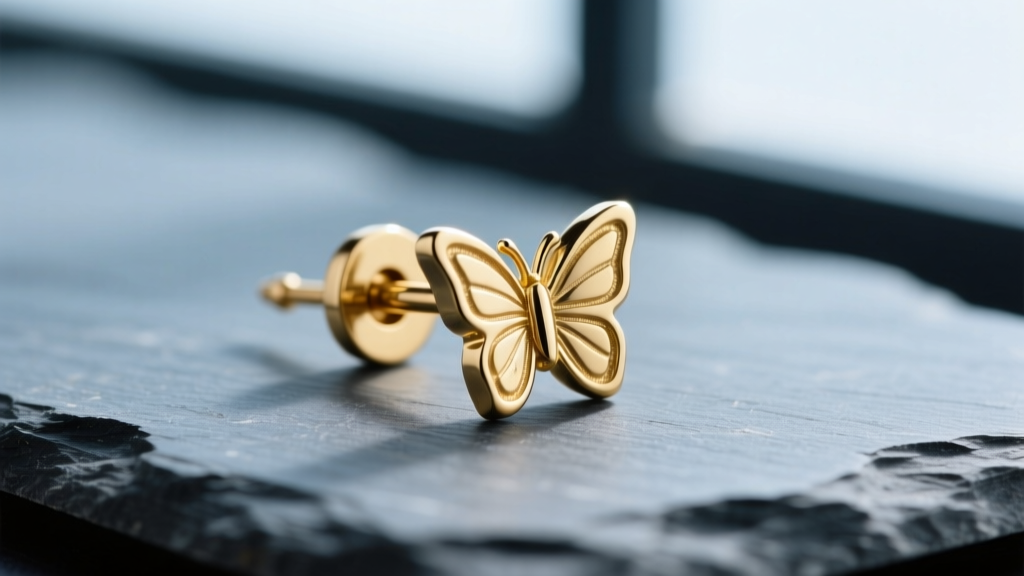
The earring push back—commonly referred to as a butterfly back or friction back—is arguably the most critical, yet frequently overlooked, component of stud jewelry. While the gemstone or front-facing design captures the aesthetic appeal, the push back is solely responsible for mechanical retention. As we navigate the jewelry market in 2026, understanding the metallurgical and polymer properties of these tiny fasteners is essential for preventing lost jewelry, avoiding allergic contact dermatitis, and ensuring long-term comfort.
This comprehensive guide breaks down the material science behind earring push backs, comparing precious metals, biocompatible alloys, and synthetic polymers to help you make an informed decision based on tension memory, hardness, and biological safety.
The Physics of the Friction Fit
Before analyzing specific materials, it is crucial to understand the mechanics of the earring push back. The retention force relies on a mechanical interference fit. The post of a standard stud earring features a circumferential groove, typically 0.5mm to 0.8mm deep. The internal prongs of a metal push back, or the inner core of a silicone push back, compress against this groove.
The effectiveness of this grip is dictated by two factors: the coefficient of friction between the post and the back, and the yield strength of the push back material. If the material lacks adequate yield strength, the prongs will undergo plastic deformation, permanently bending outward and losing their grip. Standard stud posts are usually 20-gauge (0.81mm) or 18-gauge (1.02mm), meaning the push back must exert precise radial pressure without causing metal fatigue.
Precious Metal Push Backs: Gold and Platinum
14k vs. 18k Gold: The Hardness Trade-off
Gold is the traditional standard for fine jewelry, but pure 24k gold is far too soft for friction mechanisms. Therefore, gold earring push backs are alloyed with metals like copper, zinc, and silver. According to the Gemological Institute of America (GIA), the karat weight directly impacts the Vickers hardness (HV) of the alloy.
- 14k Gold (58.5% pure): With a Vickers hardness of approximately 140 HV, 14k gold offers superior rigidity. The higher copper content provides excellent tensile strength, making 14k gold push backs highly resistant to the daily stress of insertion and removal.
- 18k Gold (75% pure): Softer and more malleable (approx. 125 HV), 18k gold push backs are more prone to prong spreading. Over time, the tension prongs can suffer from metal fatigue, requiring periodic professional re-tensioning by a jeweler.
Platinum: The Pinnacle of Tension Memory
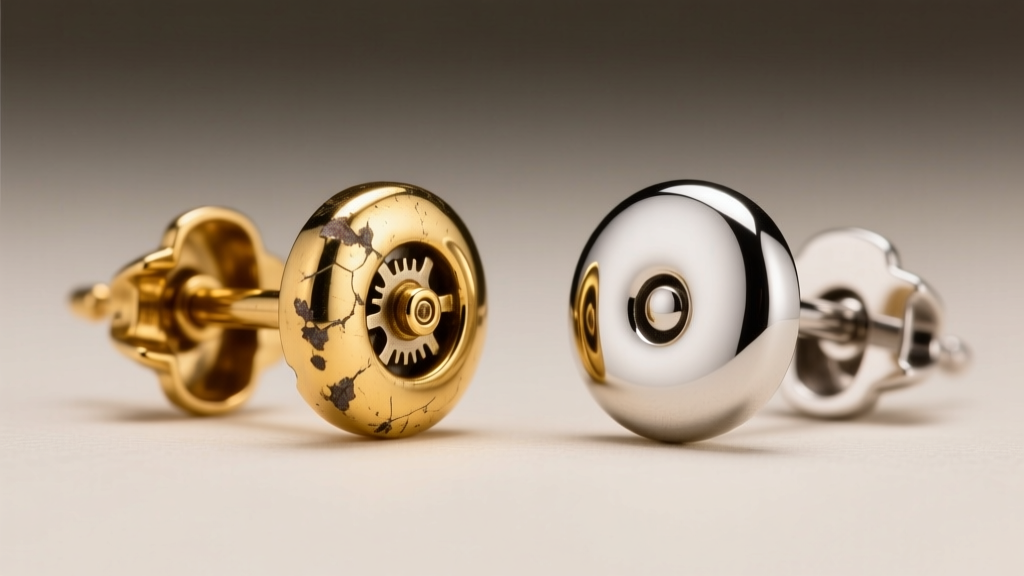
Platinum (typically alloyed with 5% ruthenium for jewelry) is exceptionally dense (21.45 g/cm³) and possesses a unique property known as "metal memory." Unlike gold, which can permanently deform when bent, platinum has a high yield strength that allows it to return to its original shape. A platinum earring push back will maintain its radial grip for decades without the prongs spreading. However, this durability comes at a premium, often costing 3 to 4 times more than a 14k gold equivalent.
Hypoallergenic & Budget Alternatives
Implant-Grade Titanium (ASTM F136)
For individuals with metal sensitivities, implant-grade titanium (specifically Ti-6Al-4V ELI, designated as ASTM F136) is the gold standard. Unlike commercial "surgical steel," ASTM F136 titanium contains zero nickel. With a Vickers hardness of around 330 HV, it is significantly harder than gold or platinum.
Because titanium is so stiff and difficult to stamp, high-quality titanium earring push backs are CNC-machined from solid billets. This ensures the internal grooves are cut with microscopic precision, providing a secure, ratcheting click when pushed onto an 18-gauge or 16-gauge titanium post. In 2026, CNC-machined titanium backs have become the industry standard for high-end body jewelry and fresh lobe piercings.
Silicone and Polymers: The Friction Paradox
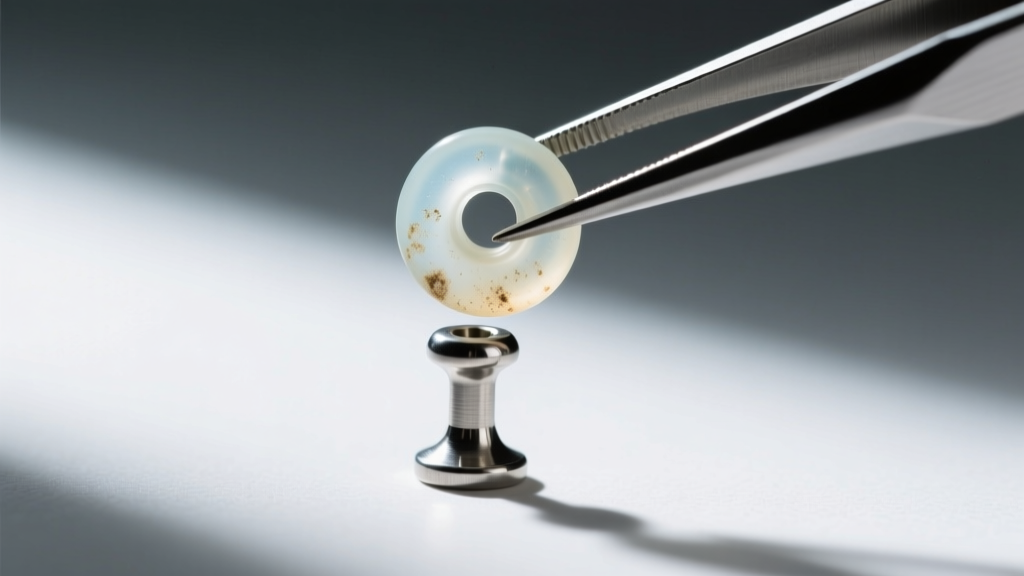
Silicone push backs, usually made from Polydimethylsiloxane (PDMS) or medical-grade O-rings, offer an incredibly high coefficient of friction (μ > 1.0 against steel). They grip the post aggressively, making them popular for heavy gemstone studs or active lifestyles.
However, silicone is a porous elastomer. It traps sebum, dead skin cells, and bacteria within its micro-texture. Furthermore, cleaning silicone with isopropyl alcohol (IPA) causes the polymer chains to break down, leading to micro-fissures. A degraded silicone push back will eventually tear or stretch out, resulting in sudden jewelry loss.
Surgical Stainless Steel (316L)
316L stainless steel is the most common material for budget-friendly jewelry. While it is highly corrosion-resistant, it contains between 10% and 14% nickel. The Mayo Clinic notes that prolonged contact with nickel alloys can trigger allergic contact dermatitis in sensitized individuals. If the protective chromium oxide layer on a steel push back is scratched during insertion, nickel ions can leach into the piercing channel, causing localized swelling and rejection.
Comprehensive Material Property Matrix
The following table synthesizes the critical material properties that dictate the performance and safety of various earring push backs.
| Material | Alloy / Grade | Hardness (HV) | Tension Memory | Nickel Risk | Avg. Price Range |
|---|---|---|---|---|---|
| Platinum | 95% Pt / 5% Ru | 135 HV | Excellent | None | $80 - $150+ |
| 14k Gold | 58.5% Au Alloy | 140 HV | Good | None (usually) | $25 - $45 |
| 18k Gold | 75% Au Alloy | 125 HV | Fair | None | $35 - $60 |
| Titanium | ASTM F136 (ELI) | 330 HV | Excellent | None | $15 - $30 |
| Stainless Steel | 316L Surgical | 150 HV | Good | High (10-14%) | $2 - $8 |
| Silicone | PDMS / O-Ring | N/A (Shore A) | Poor (Stretches) | None | $1 - $5 |
Failure Modes and Maintenance Protocols
Understanding how an earring push back fails is the first step in preventing the loss of a valuable diamond or gemstone stud. Here are the most common failure modes and their respective maintenance protocols.
Metal Fatigue and Prong Spreading
The Failure: Repeatedly forcing a push back onto a post that is slightly too thick (e.g., forcing a 20g back onto an 18g post) will overextend the metal prongs. Once the yield point is exceeded, the prongs will not snap back, resulting in a loose fit.
The Fix: For gold and platinum backs, a jeweler can use a specialized mandrel and pliers to gently squeeze the prongs back into their original conical shape. Titanium backs, due to their stiffness, rarely suffer from this but can snap if bent forcefully.
Polymer Degradation in Silicone
The Failure: Exposure to UV light, sweat, and harsh chemicals causes silicone to become brittle or gummy. The inner core loses its elasticity and tears upon removal.
The Fix: Silicone push backs should be treated as consumable items. Replace them every 3 to 6 months. Clean them only with warm water and mild, fragrance-free antibacterial soap. Never use alcohol-based cleaners or ultrasonic machines on silicone.
Expert Maintenance Tip: To safely clean metal earring push backs without damaging the tension prongs, place them in an ultrasonic cleaner filled with a mild alkaline jewelry solution for exactly 3 minutes. Follow with a distilled water rinse and dry with compressed air to prevent water spots in the friction grooves.
Final Recommendations by Piercing Stage
Selecting the correct earring push back material should be dictated by the healing stage of the piercing and the value of the jewelry being secured.
- For Fresh Piercings (0-6 months): Exclusively use ASTM F136 Titanium push backs or flat-back labret nuts. The zero-nickel guarantee and biocompatibility are non-negotiable for healing tissue.
- For High-Value Heirloom Studs: Invest in Platinum or 14k Gold push backs. The superior tension memory of platinum ensures that a $10,000 diamond remains securely fastened to the earlobe during physical activity.
- For Heavy or Oversized Gemstones: Use a dual-locking system. A silicone O-ring can be pushed over the post first, followed by a metal push back, creating a redundant friction lock that prevents the metal back from sliding off under the weight of the stone.
- For Budget or Fashion Jewelry: 316L Stainless Steel is acceptable for fully healed lobes, provided the wearer has no known nickel sensitivities. If irritation occurs, immediately switch to titanium or silicone alternatives.
By matching the material properties of your earring push back to your specific anatomical needs and jewelry value, you ensure both the security of your investment and the long-term health of your piercings.


