How to Remove Earring Stuck in Piercing: Material Science Guide
Learn how to remove earring styles stuck in piercings due to metal corrosion, threading failure, or friction back degradation. Expert material guide.

Knowing how to remove earring jewelry that has become lodged in a piercing requires more than just brute force; it demands an understanding of material science, metallurgy, and human biology. When an earring refuses to budge, the culprit is rarely just 'swelling.' It is usually a complex interaction between the specific metal alloy, the polymer components of the backing, and the biochemical environment of your fistula (the piercing channel). In this comprehensive 2026 guide, we break down the exact material properties that cause earrings to stick, seize, and embed, providing actionable, science-backed removal protocols for every jewelry type.
The Chemistry of a Stuck Fistula: Why Metals and Plastics Fail
To safely extract stuck jewelry, you must first diagnose the material failure. The human body is a highly reactive, warm, and moist environment. When jewelry remains in the ear for extended periods, three primary material degradation processes occur:
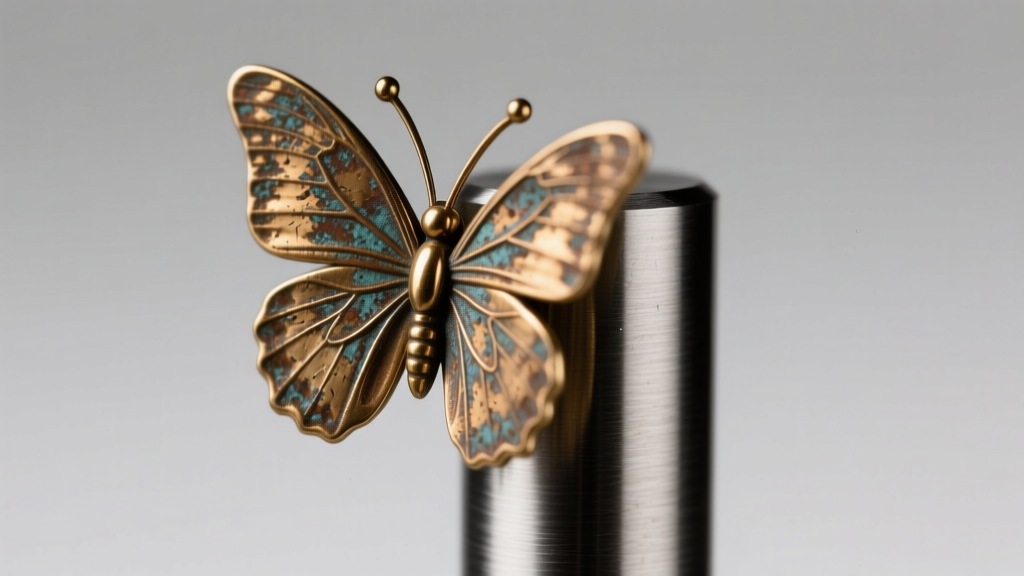
- Sebum-Metal Oxidation: Human sebum contains squalene, triglycerides, and sulfur compounds. When sulfur interacts with copper-containing alloys (like brass, copper, or low-karat gold), it forms copper sulfide. This creates a hard, dark, cement-like crust that physically bonds the butterfly back to the earring post.
- Galvanic Corrosion: If your earring post is surgical steel but the friction back contains a different metal (like a nickel-silver alloy), the saline environment of a healing or irritated piercing acts as an electrolyte. This creates a micro-galvanic cell, leading to rapid corrosion and pitting at the contact point, essentially welding the two pieces together.
- Polymer Hydrolysis: Silicone and rubber O-rings or friction backs undergo hydrolysis and oxidative degradation over time. The polymers break down, turning gummy and sticky, increasing the friction coefficient against the metal post and making removal nearly impossible without chemical lubrication.
Material Friction & Degradation Matrix
Understanding the baseline properties of your jewelry materials will dictate your removal strategy. The table below outlines the failure modes of common earring components as of current industry standards.
| Material Component | Primary Failure Mode | Friction Coefficient Shift | Best Removal Lubricant |
|---|---|---|---|
| Brass/Alloy Butterfly Backs | Copper sulfide crusting | Increases by 400% over 6 months | Warm saline & Jojoba oil |
| Surgical Steel (316L) | External thread stripping | Mechanical bind (no chemical shift) | Nitrile glove grip (dry) |
| Silicone Friction Backs | Polymer hydrolysis (gummy) | Increases by 800% when degraded | Isopropyl alcohol (to dissolve) |
| ASTM F136 Titanium | Thread cross-threading | Mechanical bind | Warm water & gentle torque |
| Threadless Push-Pins (Gold) | Tensile lock over-tension | Static friction lock | None (requires bend technique) |
Step-by-Step: How to Remove Earring Styles Based on Material
The technique for extraction must match the material's mechanical and chemical state. Never use pliers or excessive pulling, which can cause a fistula blowout or severe tissue tearing.
Dealing with Corroded Alloy Butterfly Backs
If you are dealing with cheap fashion jewelry where the butterfly back is cemented by sebum and copper oxidation, do not pull. The post will likely bend or snap before the crust breaks.
- Saline Soak: Soak a cotton pad in sterile warm saline (0.9% sodium chloride) and hold it against the back for 5-10 minutes. This softens the biological matrix.
- Oil Application: Apply a single drop of pure jojoba oil or squalane oil to the junction where the post meets the back. These oils mimic natural sebum and can penetrate the microscopic gaps in the corrosion.
- Twist, Don't Pull: Grip the front of the earring stud securely. Using a tissue for grip on the back, apply gentle counter-rotational torque. Once the crust breaks, the back will slide off.
Unscrewing Stripped Titanium or Steel Threaded Ends
Internally threaded jewelry (where the screw is on the ball, and the post is hollow) is the standard for high-quality body jewelry, as recommended by the Association of Professional Piercers (APP). However, if the threads strip or your fingers slip due to natural skin oils, removal becomes difficult.
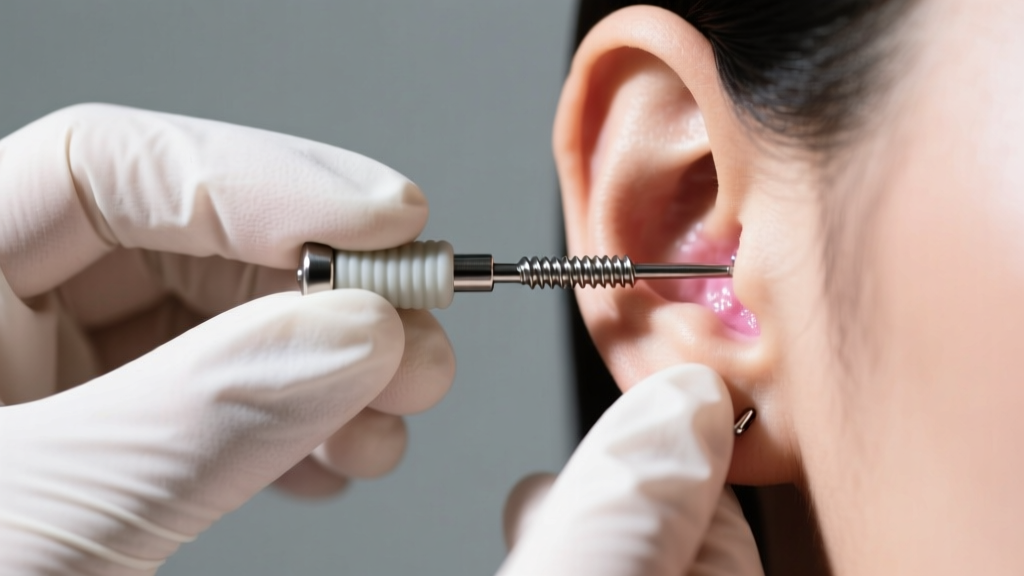
"The number one mistake clients make with threaded ends is trying to pull them apart. Threaded jewelry requires rotational force. If your fingers are slipping, the issue is a lack of surface friction, not a lack of strength." — Senior Piercer, 2026 Industry Symposium
The Nitrile Trick: Put on a pair of textured nitrile medical gloves. Ensure the jewelry is completely dry (water or oil will cause the rubber to slip). The nitrile provides an immense grip advantage, allowing you to apply the necessary torque to break the thread lock without damaging the metal.
Releasing Threadless (Push-Pin) Tension Locks
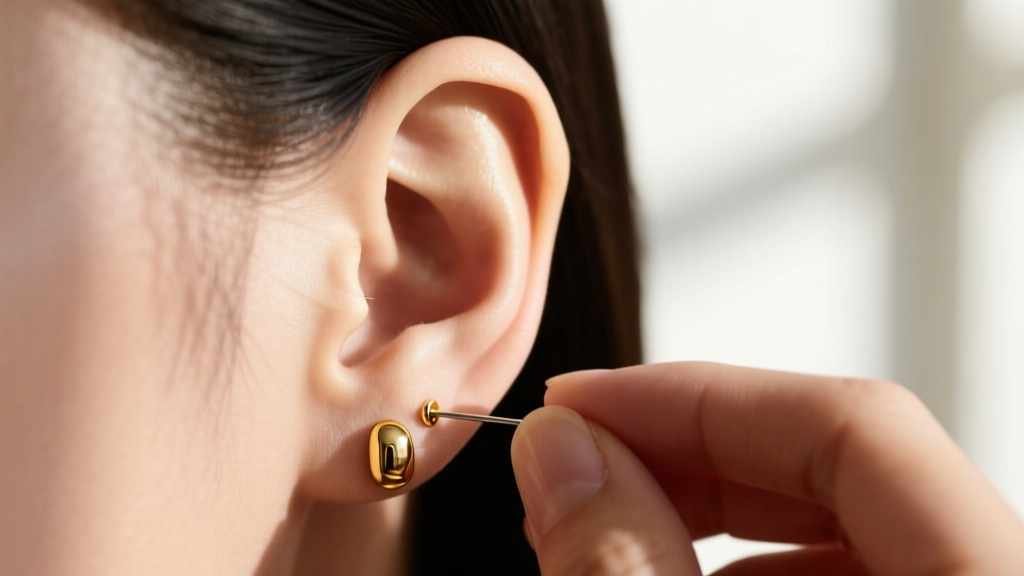
Threadless jewelry, often made from solid 14k/18k gold or titanium, relies on tension. The pin on the decorative end is slightly bent before being pushed into the hollow post. The metal's natural tendency to straighten out creates outward pressure against the inner wall of the post.
How to remove earring styles of this type:
- Grip the front decorative piece and the flat back disc securely.
- Do not pull straight out immediately. Instead, push the two ends slightly together while simultaneously bending the front piece at a 10 to 15-degree angle.
- This bending motion breaks the internal tension lock. Once the tension is released, the pieces will slide apart effortlessly.
Cartilage vs. Lobe: Tissue Swelling and Metal Reactivity
The anatomical location of the piercing drastically alters how material properties affect removal. Earlobes are highly vascularized, meaning they can swell rapidly but also drain fluid quickly. Cartilage (like the helix, tragus, or conch) is avascular and relies on surrounding tissue for immune responses.
According to dermatological research on contact dermatitis and nickel allergies, if a cartilage piercing is exposed to low-grade metals containing nickel, a Type IV hypersensitivity reaction occurs. This causes localized edema (swelling) that tightly compresses the fistula around the jewelry post. In cartilage, this swelling is rigid and unyielding compared to the softer lobe tissue.
Protocol for Swollen Cartilage: If the tissue has swallowed the jewelry due to metal reactivity, apply a cold compress to the surrounding area to induce vasoconstriction and reduce edema. Once the swelling subsides slightly, use the nitrile glove grip method to unscrew the end. If the jewelry is embedded (the skin has grown over the flat back), do not attempt home removal; seek a professional piercer or dermatologist immediately to avoid cartilage necrosis.
2026 Material Upgrades to Prevent Sticking
The most effective way to manage stuck jewelry is to eliminate the material variables that cause sticking in the first place. As of 2026, the industry has largely moved away from external threading and cheap friction backs for long-term wear. Consider upgrading your jewelry to the following specifications:
- ASTM F136 Implant-Grade Titanium: This specific alloy contains zero nickel and is highly resistant to galvanic corrosion and sebum oxidation. It will not pit, rust, or bond to your skin.
- Niobium: A highly malleable, hypoallergenic reactive metal that can be anodized to various colors without using surface coatings or paints that can chip and increase friction.
- Threadless or Internally Threaded Designs: Eliminating external threads prevents tissue tearing during insertion and prevents the 'cross-threading' mechanical binds that make removal a nightmare.
- Solid 14k or 18k Gold (Nickel-Free): Ensure the gold is alloyed with silver, copper, or palladium, and explicitly certified nickel-free to prevent allergic swelling that traps the jewelry.
By understanding the metallurgy and biology of your piercings, you transform the frustrating experience of a stuck earring into a manageable, predictable process. Always respect the material limits, use proper lubrication for chemical binds, and rely on mechanical grip for threaded components.


