Earrings Circle Gold Buying Guide: Hoops, Huggies & Sizing
Discover what to look for when shopping earrings circle gold styles. Compare karats, gauge sizes, clasp types, and diameters for hoops and huggies.

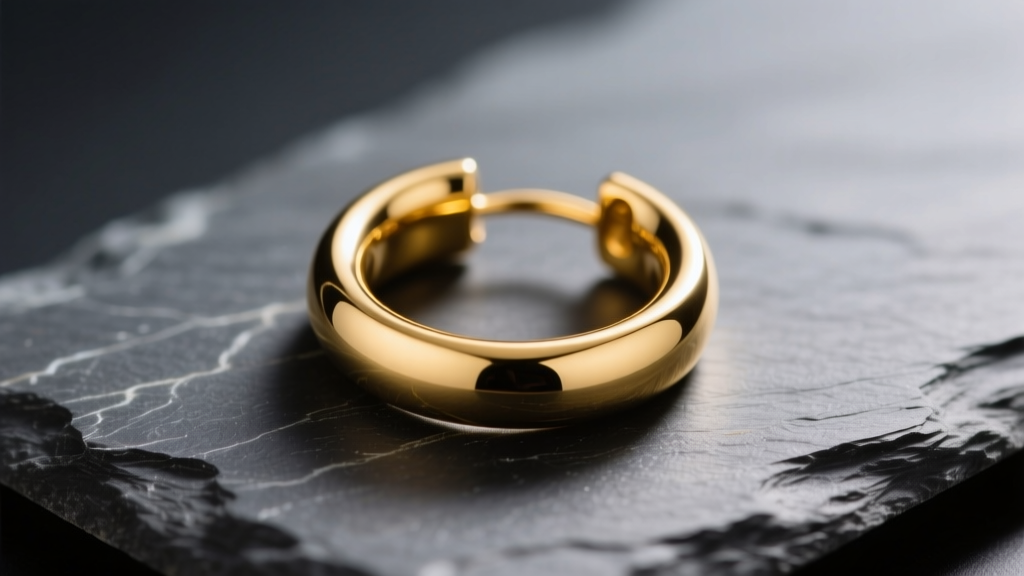
When building a timeless jewelry wardrobe, few pieces carry the enduring versatility of circular gold earrings. Whether you are searching for delicate huggies, statement-making large hoops, or continuous wire circles, understanding the structural and material nuances is critical. The market for earrings circle gold designs is vast, but distinguishing between a high-quality investment piece and a poorly constructed accessory requires a deep dive into metallurgy, gauge thickness, and clasp engineering. This comprehensive 2026 buying guide breaks down exactly what to look for to ensure your circular gold earrings are both beautiful and biologically compatible with your piercings.
The Metallurgy of Circular Gold Earrings
Gold in its purest form (24K) is highly malleable and far too soft to hold the structural integrity required for a circular hoop or huggie earring. To create durable jewelry, gold is alloyed with metals like copper, silver, zinc, and palladium. According to the Gemological Institute of America (GIA), the karat weight dictates not only the color but the tensile strength of the earring—a crucial factor for circle shapes that endure constant pulling and tension.
| Karat | Gold Content | Durability & Tensile Strength | Best Use Case for Circles |
|---|---|---|---|
| 24K | 99.9% | Very Low (Soft, bends easily) | Investment pieces; avoid for structural hoops |
| 22K | 91.6% | Low (Prone to warping) | Thick, heavy, small-diameter huggies |
| 18K | 75.0% | Moderate (Rich color, scratches) | Luxury small-diameter circles, clicker rings |
| 14K | 58.5% | High (Excellent durability) | Everyday medium/large hoops, active lifestyles |
| 10K | 41.7% | Very High (Stiff, tarnish risk) | Budget-friendly, high-tension clasp mechanisms |
Pro Tip for 2026 Buyers: If you prefer rose gold, note that the higher copper content naturally increases the alloy's tensile strength. A 14K rose gold continuous wire hoop will resist bending significantly better than a 14K yellow gold hoop of the exact same gauge.
Diameter, Gauge, and Piercing Compatibility
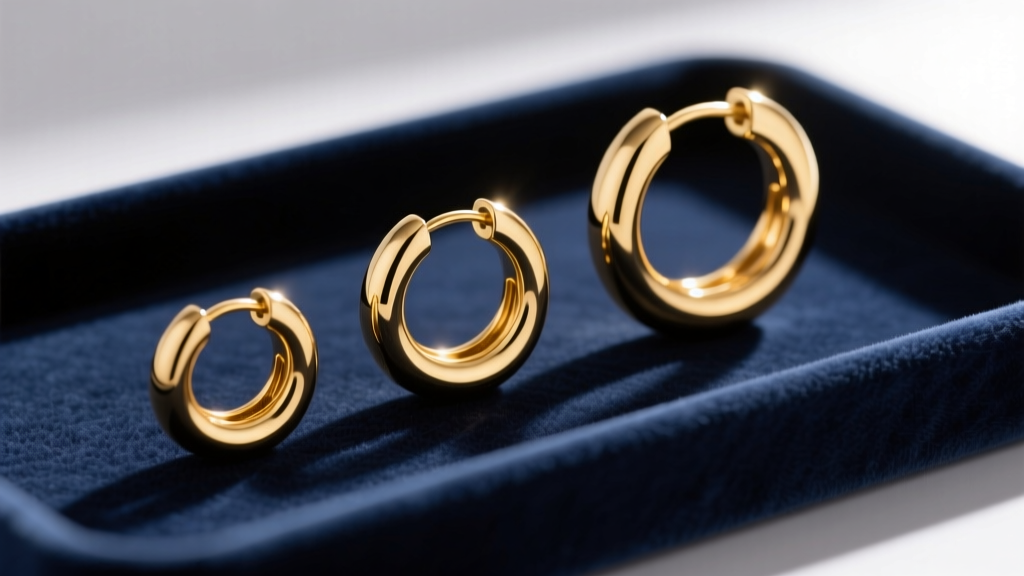
The two most critical measurements for any circular earring are the inner diameter and the wire gauge. Misjudging either will result in an earring that either doesn't fit through your piercing or hangs at an awkward, uncomfortable angle.
Standard Inner Diameters
- Micro Huggies (8mm - 10mm): Designed to "hug" the earlobe tightly. Best for secondary or tertiary lobe piercings.
- Standard Huggies (11mm - 15mm): The most versatile size for primary lobe piercings, offering a snug fit with slight movement.
- Small Hoops (16mm - 25mm): Classic everyday circles that clear the earlobe but don't graze the jawline.
- Medium Hoops (26mm - 40mm): Statement pieces that frame the face. Require thicker gauges to prevent warping.
- Large Statement Hoops (50mm+): Bold, lightweight designs. Often crafted from hollow tubing rather than solid wire to reduce earlobe strain.
Wire Gauge Thickness Guide
The Association of Professional Piercers (APP) notes that standard lobe piercings are typically done at 20G (0.81mm) or 18G (1.02mm), while cartilage piercings are usually 16G (1.29mm) or 14G (1.60mm). When buying gold circle earrings, the wire must be slightly thinner than your piercing gauge to allow for comfortable insertion and rotation.
- 22G (0.64mm): Extremely thin. Only suitable for small, lightweight continuous hoops. High risk of "cheese-cutter" effect (tearing the piercing) if snagged.
- 20G (0.81mm): The standard for most commercial fashion hoops. Fits standard lobe piercings comfortably.
- 18G (1.02mm): Ideal for high-quality huggies and cartilage hoops. Provides excellent structural support without being overly heavy.
- 16G (1.29mm): The gold standard for helix, tragus, and conch circle earrings. Thick, durable, and promotes healthy fistula maintenance.
Clasp Engineering: Security Meets Comfort
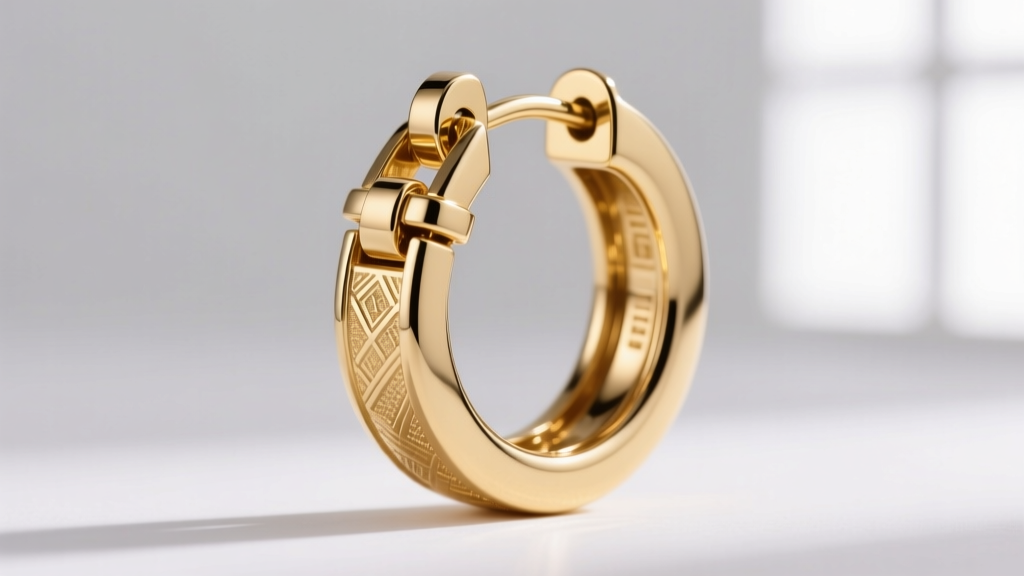
The clasp is the most common point of failure in circular gold earrings. A poorly machined clasp will loosen over time, leading to lost jewelry. Modern CNC machining has vastly improved clasp reliability, but you must choose the right mechanism for your lifestyle.
Hinged Snap-Back (Latch-Back)
The most common mechanism for medium to large hoops. A hinged wire snaps into a V-shaped groove. What to look for: Listen for a distinct, audible "click" when closing. If the wire requires excessive force to snap in, or if it slides in without resistance, the tolerance is poorly machined and will eventually fail.
Continuous (Endless) Wire Hoops
Features a thin, slightly curved wire that threads through the piercing and snaps into a hollow receiving tube on the opposite end. What to look for: The wire must have a slight tension bend. If the wire is perfectly straight, it will slip out during sleep. Never bend the wire yourself to adjust the tension, as this work-hardens the gold and causes it to snap.
Clicker Rings (Hinged Segment Rings)
The premium choice for huggies and cartilage circles. A segment of the hoop hinges open and clicks securely into a flush, hidden latch. What to look for: Ensure the seam is completely flush when closed. A visible gap indicates poor manufacturing and will catch on hair and clothing.
Proportional Styling: Face Shapes and Circle Sizes
Beyond the technical specifications, selecting the right earrings circle gold profile involves understanding how geometric shapes interact with facial proportions.
The Rule of Contrast: Circular earrings are universally flattering because they introduce soft curves. However, the scale of the circle should contrast with your face shape to create balance. Avoid circles that perfectly mimic your face's natural outline.
- Round Faces: Opt for medium-to-large hoops (30mm - 50mm) that elongate the face. Avoid tight, chunky huggies, which can emphasize facial width.
- Square/Angular Faces: Medium circles (20mm - 35mm) and rounded huggies soften strong jawlines. Textured or hammered gold circles work exceptionally well here to diffuse harsh angles.
- Heart-Shaped Faces: Teardrop-shaped circles or bottom-heavy oval hoops balance a narrower chin. Standard 15mm huggies are also a safe, elegant choice.
- Oval Faces: The universal canvas. You can comfortably wear anything from 8mm micro-huggies to 60mm statement hoops.
Maintenance and Long-Term Care
While pure gold does not tarnish, the alloys mixed into 14K and 18K gold can oxidize or accumulate environmental debris, dulling the reflective surface of your circular hoops. Lotions, perfumes, and natural skin oils create a film that reduces light refraction.
The Weekly Clean: Submerge your gold circles in a bowl of warm water with a few drops of mild, phosphate-free dish soap. Let them sit for 10 minutes. Use an ultra-soft baby toothbrush to gently agitate the inside of the clasp mechanism and the inner curve of the hoop, where dead skin cells and sebum accumulate. Rinse with distilled water and dry with a microfiber cloth. Never use ultrasonic cleaners on hollow-tube gold hoops, as the high-frequency vibrations can compromise the soldered seams.
By prioritizing precise gauge sizing, high-quality clasp engineering, and appropriate karat weights, your investment in circular gold earrings will yield a lifetime of effortless, secure wear.


