Are Salt and Pepper Diamond Earrings Worth It? 2026 Value Guide
Evaluate the true cost, durability, and investment value of salt and pepper diamond earrings. Expert pricing data and setting advice for 2026 buyers.

The Allure vs. The Ledger: Understanding S&P Diamond Pricing
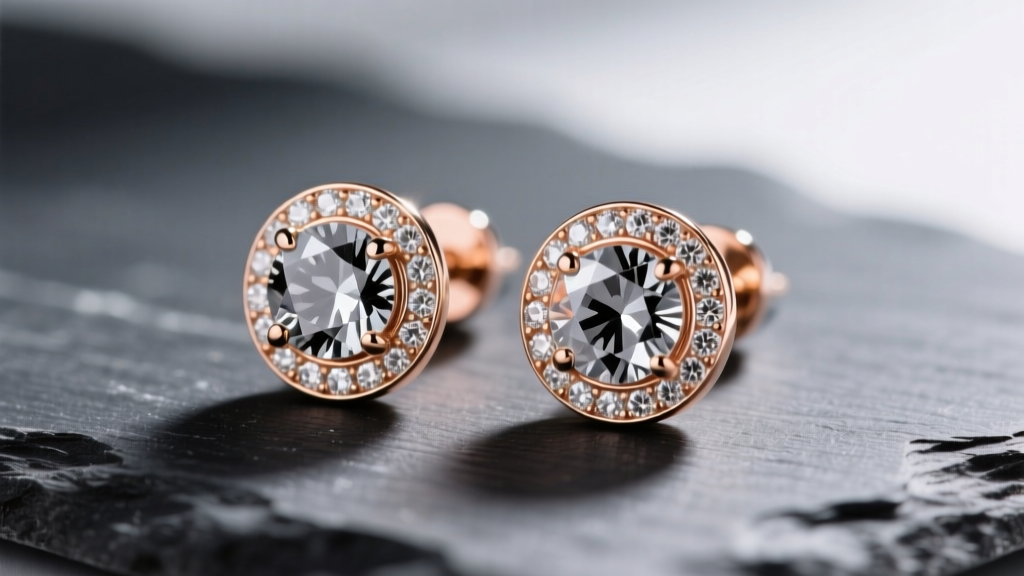
Salt and pepper diamond earrings have dominated alternative bridal and everyday fine jewelry markets for the better part of a decade. Characterized by their striking, galaxy-like inclusions—ranging from stark black carbon spots to milky white fractures—these gems offer an edgy, organic aesthetic that traditional white diamonds simply cannot replicate. But from a strict budget and value assessment perspective, do they hold up as a smart financial choice in 2026?
When evaluating fine jewelry, we must separate intrinsic resale value from aesthetic and cost-per-wear value. Traditional white diamonds (graded by the 4Cs) are heavily commoditized. A pair of 1.00 Carat Total Weight (CTW) white diamond studs with VS clarity and G color set in 14k gold will easily command between $3,500 and $5,500 at retail. Conversely, salt and pepper diamond earrings of the exact same carat weight and metal composition typically retail between $700 and $1,400.
This massive price discrepancy exists because S&P diamonds are heavily included, placing them at the very bottom of the traditional GIA clarity scale (usually I1, I2, or I3). However, what the traditional gemological market views as "flaws," the contemporary jewelry market views as "character." For the budget-conscious buyer, this means you can secure a significantly larger, more visually unique stone for roughly 20% to 30% of the cost of a traditional white diamond.
Structural Integrity: How Inclusions Impact Earring Longevity
The most critical factor when assessing the value of any gemstone is its durability. A common misconception is that because diamonds rank a 10 on the Mohs scale of hardness, they are indestructible. Hardness refers only to scratch resistance. Toughness—a material's resistance to chipping, breaking, and cleaving—is an entirely different metric. According to the GIA Diamond Clarity Grading standards, heavy inclusions directly compromise a diamond's structural toughness.
Earrings are particularly vulnerable to impact. Unlike rings, which face constant friction, earrings are prone to sudden, sharp impacts (e.g., snagging on a heavy winter sweater, getting hit while taking off a shirt, or dropping them on a granite vanity).
Carbon Spots vs. Feathers: A Durability Breakdown
Not all "salt and pepper" patterns are created equal. When selecting your earrings, you must identify the type of inclusions present:
- Carbon Spots (The "Pepper"): These are uncrystallized carbon deposits. While they make the stone opaque or speckled, they generally do not compromise the crystal lattice structure. A stone heavily saturated with carbon spots is relatively safe for daily wear.
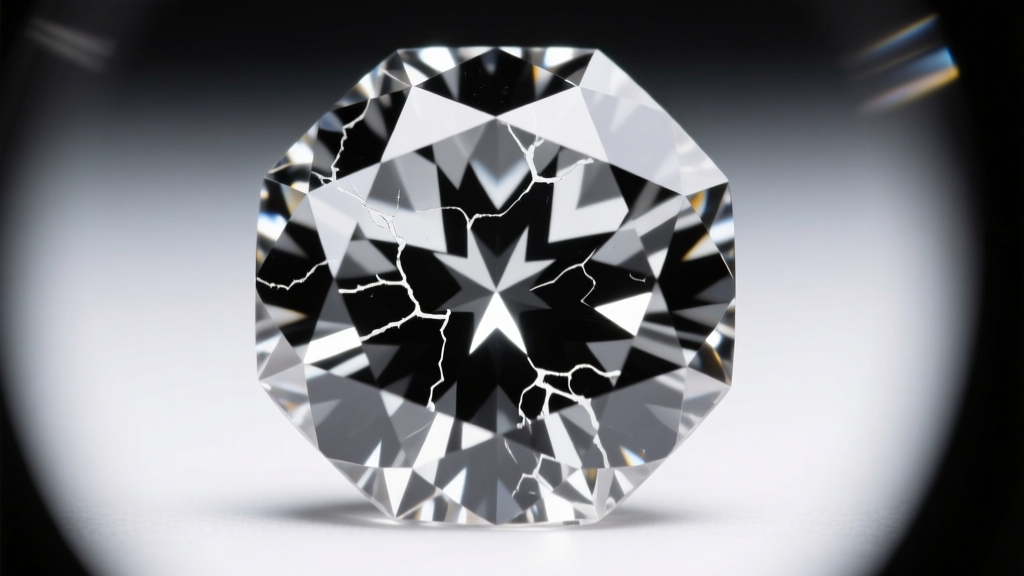
- Feathers and Cleavage Planes (The "Salt"): Milky white patches are often clusters of microscopic internal fractures (feathers). If a prominent feather reaches the girdle (the outer edge of the stone), the diamond has a high risk of cleaving in half upon impact.
Expert Advice: Never purchase prong-set S&P drop earrings if the primary stone has a surface-reaching feather at the girdle. The tension of the prong alone can crack the stone during setting or daily wear.
Setting Styles and Metal Choices for Maximum Value
To maximize the lifespan and value of your salt and pepper diamond earrings, the setting style is non-negotiable. Because S&P diamonds are frequently cut as "rose cuts" (featuring a flat, unfaceted base and a domed top) to preserve carat weight and highlight the inclusion patterns, they require specialized mounting.
| Setting Type | Durability Rating | Cost Impact | Best For |
|---|---|---|---|
| Full Bezel | Excellent | +$150 - $300 | Daily wear studs, active lifestyles |
| Prong (4 or 6) | Poor | Baseline | Occasional wear, high-clarity S&P |
| Halo | Good | +$400 - $800 | Adding sparkle, protecting center girdle |
A full bezel setting wraps a continuous rim of metal entirely around the girdle of the diamond. This protects the most vulnerable edges from chipping and secures shallow rose cuts far better than prongs. While a bezel setting may add $150 to $300 to the custom fabrication cost, it prevents the catastrophic financial loss of a cracked center stone.
Regarding metals, 14k Rose Gold offers the highest aesthetic and financial value for S&P diamonds. The warm, coppery tones of rose gold harmonize beautifully with the brown, grey, and black hues of the inclusions. Platinum, while highly durable, adds $600+ to the base price of a pair of studs, severely diluting the "budget-friendly" appeal of choosing an alternative diamond in the first place.
Cost Comparison: S&P Diamonds vs. Alternatives
If your primary goal is a dark, moody, or unique aesthetic on a strict budget, how do salt and pepper diamonds compare to other popular alternative gemstones? As detailed in comprehensive gemological care and durability guides, diamond remains the only gemstone that resists scratching from everyday dust (which contains quartz, ranking a 7 on the Mohs scale).
| Material | Avg. Retail Price (14k Gold) | Mohs Hardness | Toughness / Cleavage Risk | Long-Term Value |
|---|---|---|---|---|
| Salt & Pepper Diamond | $800 - $1,400 | 10 | Moderate (Depends on feathers) | Moderate |
| Opaque Black Diamond | $600 - $1,100 | 10 | High (Highly porous/fractured) | Low |
| Grey Moissanite | $400 - $700 | 9.25 | Excellent (No cleavage planes) | Low |
| Salt & Pepper Sapphire | $900 - $1,800 | 9 | Good (Better toughness than diamond) | Moderate |
While grey moissanite is cheaper and structurally tougher due to its lack of cleavage planes, it lacks the refractive index and the prestige of a natural diamond. Opaque black diamonds are heavily irradiated and fractured, making them surprisingly brittle. S&P diamonds strike the best balance between natural origin, unique optical character, and scratch resistance, provided they are set correctly.
The 2026 Buyer’s Checklist for Salt and Pepper Earrings
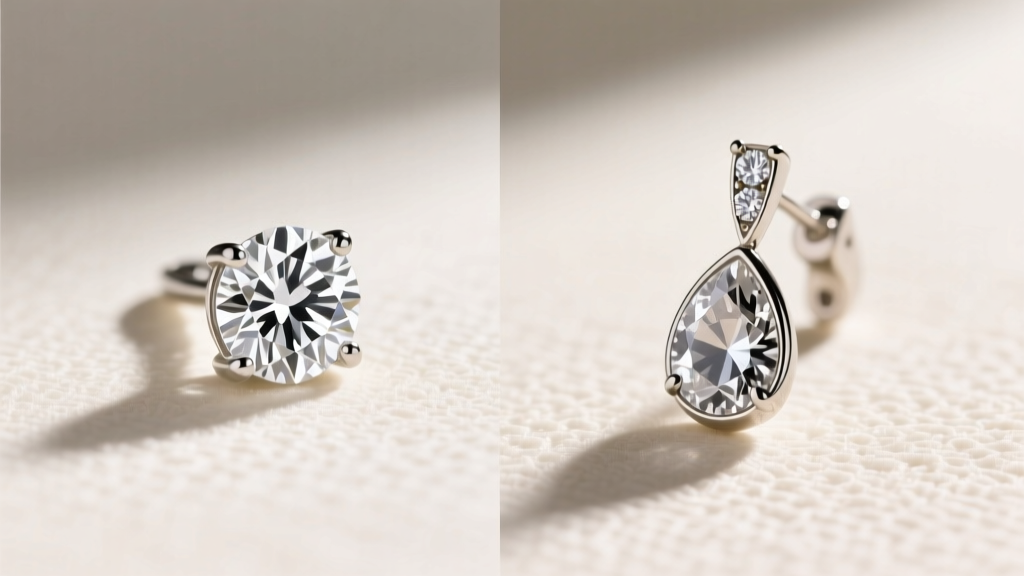
Before you finalize your purchase, run the earrings through this rigorous value-assessment checklist to ensure you are getting a piece that will survive the test of time:
- Demand High-Resolution Video: Never buy S&P earrings from a static photo. You must see the stone in motion under varied lighting to identify if the "white" areas are surface-reaching fractures.
- Check the Post Gauge: S&P diamonds, especially rose cuts, can be wide and shallow, distributing weight awkwardly. Ensure the earring post is at least 18-gauge (1.0mm) rather than the flimsy standard 20-gauge (0.8mm) to prevent the heavy stone from drooping and bending the metal.
- Verify the Backing: Standard butterfly friction backs are easily lost and fail to support the weight of a 1.5mm thick bezel setting. Opt for la pousette backs or secure screw-backs to protect your investment.
- Inspect the Girdle Thickness: If you are buying a brilliant-cut S&P diamond (rather than a rose cut), ensure the girdle is rated "Medium" to "Slightly Thick." An "Extremely Thin" girdle on an included diamond is a guaranteed chip waiting to happen.
Final Verdict: Are They a Smart Investment?
If you define "investment" strictly as an asset that will appreciate or retain its exact monetary value upon resale, salt and pepper diamond earrings are a poor choice. The secondary market for heavily included diamonds is incredibly niche, and you will likely recoup only 20% to 30% of your retail purchase price if you attempt to sell them to a pawn shop or diamond buyer.
However, if you define value through the lens of cost-per-wear, aesthetic uniqueness, and material longevity, they are an exceptional budget buy. By allocating $1,000 toward a pair of bezel-set, 14k rose gold S&P diamond studs, you are acquiring a genuine, earth-mined diamond that will not scratch, cloud, or dull over decades of wear. You bypass the inflated premiums of traditional clarity grading while securing a one-of-a-kind piece of wearable art. For the pragmatic buyer who prioritizes striking design over traditional resale metrics, S&P earrings remain one of the smartest allocations of a jewelry budget in the modern market.


