2026 Style Guide: Rose Gold Flower Earrings & Floral Piercing Trends
Discover 2026 floral piercing trends. Our expert guide to rose gold flower earrings covers alloy grades, gauge sizing, and cartilage styling.

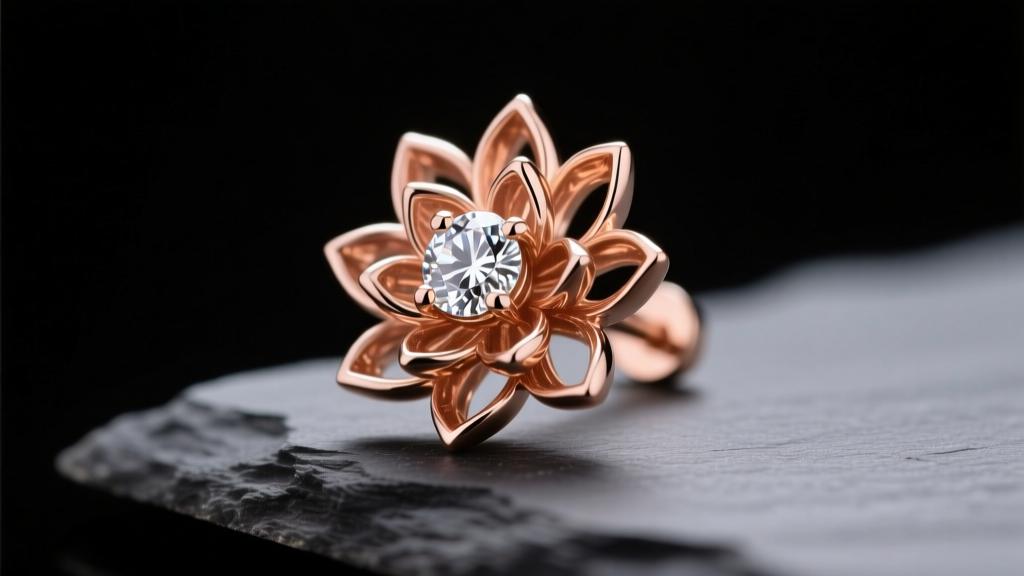
The 2026 Botanical Shift: Beyond Basic Florals
The jewelry landscape of 2026 has seen a definitive pivot away from stark, industrial minimalism toward what trend forecasters are calling "Botanical Quiet Luxury." At the forefront of this movement are rose gold flower earrings. No longer relegated to vintage replicas or juvenile designs, today's floral motifs are architectural, anatomical, and deeply integrated into advanced ear-stacking curation. Whether you are adorning a standard lobe or curating a complex cartilage constellation, understanding the metallurgy, gauge dynamics, and styling frameworks of botanical jewelry is essential for the modern collector.
Unlike the ubiquitous yellow gold hoops of the early 2020s, rose gold offers a warm, skin-flattering contrast that makes intricate petal textures and micro-pavé gemstones pop. But as demand surges, the market has been flooded with both master-crafted fine jewelry and deceptive, low-quality plated alternatives. This guide dissects the anatomy of the modern floral earring, providing actionable metrics for your next piercing upgrade.
Metallurgy Matters: 14K vs. 18K Rose Gold Alloys
To understand the premium placed on high-end botanical jewelry, one must examine the alloy. According to the Gemological Institute of America (GIA), rose gold is not a naturally occurring metal but a precise alloy of yellow gold, copper, and sometimes silver. The ratio of these metals dictates not only the color but the structural integrity of the earring.
- 18K Rose Gold (75% Gold, 22.25% Copper, 2.75% Silver): Yields a soft, peachy-pink hue that flatters olive and deep skin tones. However, it is relatively soft, making it less ideal for ultra-thin prongs securing micro-diamonds in intricate floral clusters.
- 14K Rose Gold (58.3% Gold, ~31% Copper, ~10% Silver/Zinc): Offers a deeper, richer pink and superior tensile strength. This is the preferred alloy for threadless floral ends and huggie hinges. However, the higher copper content can accelerate oxidation when exposed to the sulfur in human sweat, occasionally leading to skin discoloration if the jewelry lacks a proper anti-tarnish barrier.
- PVD-Coated Titanium: For hypersensitive cartilage piercings, 2026's top-tier body jewelry brands are utilizing implant-grade titanium with PVD (Physical Vapor Deposition) rose gold coating. This offers the coveted botanical aesthetic without the alloy reactivity, ensuring safe healing in fresh piercings.
Anatomy of a Floral Earring: From Studs to Climbers
Floral earrings have evolved far beyond the simple 5-petal friction-back stud. Modern ear curation requires specialized backing mechanisms and structural designs tailored to specific ear anatomy. Below is a comparative breakdown of the dominant floral styles dominating 2026 piercing trends.
| Style | Ideal Placement | Standard Gauge | Backing Mechanism | Price Range (Fine) |
|---|---|---|---|---|
| Micro-Bloom Stud | Tragus / Mid-Helix | 18G - 16G | Threadless Push-Pin | $120 - $350 |
| Floral Huggie | Standard Lobe / Daith | 18G - 16G | Hinged Snap-Click | $180 - $500 |
| Botanical Climber | Outer Helix Rim | 18G | Tension Wire / Cuff | $90 - $280 |
| Statement Conch Bloom | Flat / Conch | 14G - 12G | Internally Threaded | $400 - $1,200+ |
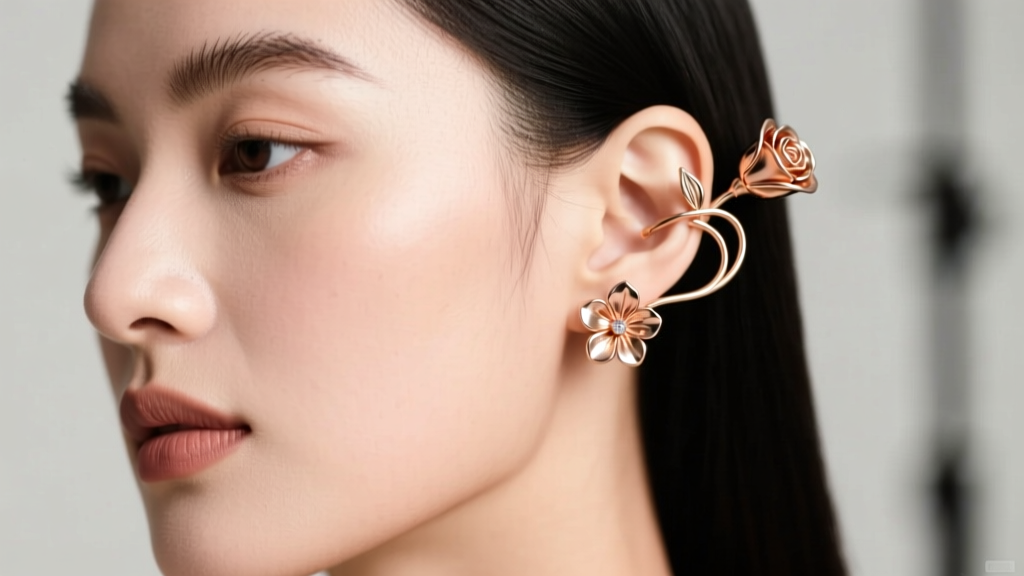
Gauge Sizing and Cartilage Dynamics
The most common failure mode in styling cartilage with floral motifs is ignoring gauge disparity. The Association of Professional Piercers (APP) strictly advises against wearing 20G or 18G jewelry in 16G cartilage piercings. A thin 20G post in a larger fistula creates the "cheese-cutter effect," where the jewelry slowly migrates and slices through the tissue due to the uneven weight distribution of a heavy floral head.
Solving the Weight-to-Post Ratio
When sourcing rose gold flower earrings for the flat or conch, always verify the post thickness. High-end body jewelry brands now offer 16G and 14G threadless ends featuring intricate floral faces. The larger surface area of a 16G post distributes the weight of a 10mm botanical cluster evenly, ensuring the heavy head remains perfectly flush against the ear without dragging the piercing channel downward or causing irritation bumps.
"A beautifully crafted 14K rose gold lotus stud is useless if the post is too thin for the piercing gauge. Always match the jewelry post to the fistula size to prevent migration and tissue tearing." — Senior Piercer, APP Certified Member
Curating Your 2026 Ear Stack: A Step-by-Step Framework
Integrating rose gold flower earrings into a multi-piercing stack requires a deliberate approach to visual weight. The "Rule of Three" is the prevailing methodology among celebrity piercers this year:
- The Anchor (The Bloom): Select one primary floral piece to serve as the focal point. A 9mm rose gold rose or lotus in the upper lobe or flat piercing works best. This piece should feature the highest karat gold and, if applicable, the finest gemstone pavé.
- The Satellite (The Bud): Complement the anchor with a smaller, secondary floral motif. A 4mm micro-bloom in the tragus or a delicate floral huggie on the mid-helix creates a thematic link without overwhelming the ear's real estate.
- The Negative Space (The Geometric): To prevent the stack from looking like a costume, balance the organic curves of the flowers with stark, minimalist geometry. A simple 16G rose gold titanium barbell in the industrial or a seamless hoop in the rook provides necessary visual breathing room.
Identifying Quality and Avoiding Plated Pitfalls
As the botanical trend peaks, fast-fashion retailers are flooding the market with "rose gold" floral earrings that are actually brass or stainless steel with a microscopic layer of electroplated copper and gold. These pieces suffer from rapid failure modes.
The Plating Failure Mode: Electroplated rose gold wears away rapidly in high-friction areas like the daith or rook, exposing the reactive base metal to the piercing channel. This leads to localized contact dermatitis, greenish skin discoloration, and in severe cases, piercing rejection. Always look for the "14K" or "18K" hallmark stamped directly onto the post or the back of the floral face. If purchasing for a cartilage piercing, demand a solid gold or PVD-coated implant-grade titanium guarantee from the jeweler.
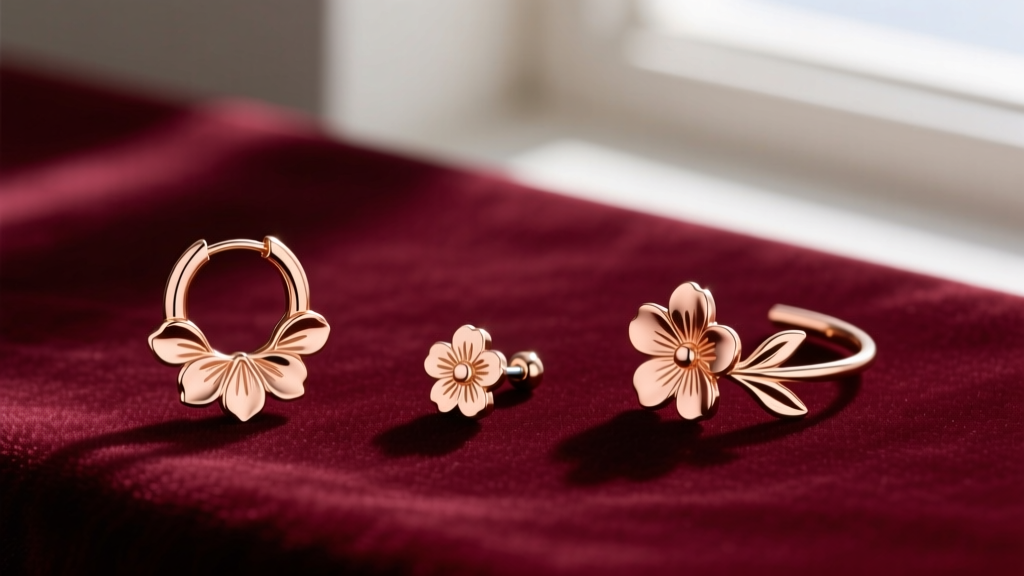
Investment Tiers: Where to Spend in 2026
When building a collection of rose gold flower earrings, allocate your budget based on the piercing's visibility and movement:
- High Investment ($500+): Reserve solid 18K rose gold and natural diamond pavé for primary lobe studs or conch statement pieces. These areas experience less snagging and offer the highest visual return on investment.
- Mid-Tier ($150 - $400): Opt for high-quality 14K rose gold or solid 14K gold with synthetic moissanite accents for helix and tragus placements. The 14K alloy provides the necessary durability to withstand daily hair-brushing and phone-use snagging.
- Entry-Level ($40 - $100): For non-pierced ear cuffs or temporary lobe clip-ons meant to test the botanical aesthetic, gold vermeil (thick gold plating over sterling silver) is an acceptable, low-risk entry point.
Final Verdict: The Enduring Appeal of Botanical Jewelry
The 2026 resurgence of rose gold flower earrings is not a fleeting fad; it is a maturation of the floral motif into a sophisticated, anatomical art form. By prioritizing correct gauge sizing, understanding the metallurgical differences between 14K and 18K alloys, and applying structured stacking frameworks, you can curate an ear constellation that is both biologically safe and aesthetically timeless. Whether you are opting for a delicate micro-bloom in the tragus or a sweeping botanical climber along the helix, the key to mastering this trend lies in the precision of the details.


