Troubleshooting Your Earring Rack: Stop Tangles & Damage
Discover how to troubleshoot common earring rack failures. Learn which materials, weights, and designs prevent tangles, tarnish, and lost jewelry.

The Hidden Dangers of the Wrong Earring Rack
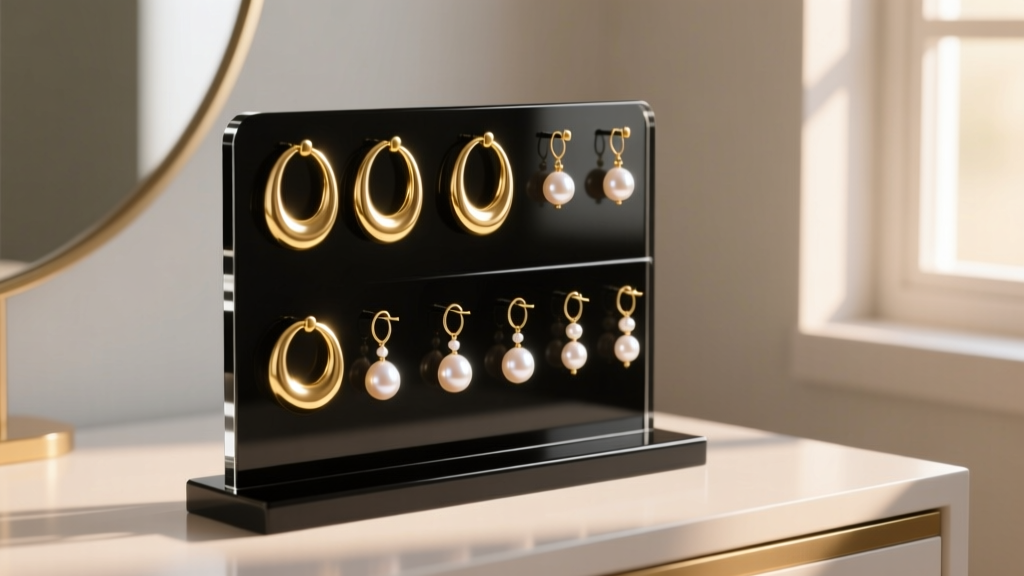
You have finally invested in a curated collection of 14k gold huggies, 925 sterling silver drops, and delicate 20-gauge threader earrings. Yet, every morning, you are greeted by a chaotic scene: chains hopelessly knotted, heavy gemstone dangles dragging on the dresser, and worst of all, a mysterious gray tarnish creeping up your silver posts. The culprit is rarely your jewelry; it is almost always your earring rack. Treating jewelry storage as an afterthought is a critical mistake that leads to mechanical damage and chemical degradation. As of 2026, the shift towards sustainable, non-reactive storage has highlighted just how damaging cheap organizers can be. In this comprehensive troubleshooting guide, we dissect the exact failure modes of standard jewelry organizers and provide engineering-level solutions to protect your investment.
Failure Mode 1: Center of Gravity and the Toppling Hazard
The most common complaint regarding freestanding jewelry trees is instability. When you hang multiple pairs of heavy brass or 14k gold statement hoops—which can easily weigh 8 to 15 grams per pair—the center of mass on a tall wire rack shifts upward and outward. A standard 4-inch circular wire base simply cannot counteract the torque generated by top-heavy dangles. When the rack topples, it drags delicate chains and gemstone settings across hard vanity surfaces, leading to micro-scratches on soft metals and chipped stones.
The Physics of a Stable Base
To solve this, you must evaluate the base-to-height ratio and overall weight of the rack. For a rack taller than 8 inches, the base must either weigh a minimum of 1.5 lbs or feature an L-shaped acrylic design with a base depth of at least 4 inches. Weighted marble bases are excellent for lowering the center of gravity, ensuring that even when fully loaded with heavy chandelier earrings, the structure remains completely anchored to your tabletop.
Failure Mode 2: Galvanic Corrosion and Tarnish Transfer
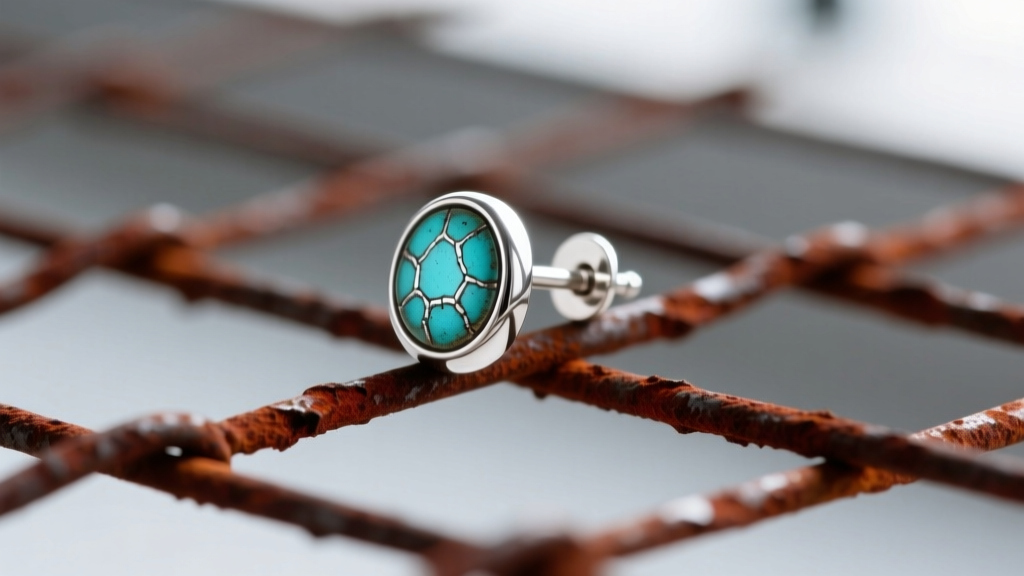
Cheap metal racks are often manufactured from iron or low-grade steel and finished with a microscopic layer of nickel or chrome plating. Over time, this plating micro-fractures from the friction of inserting and removing earring posts. Once the underlying iron is exposed to ambient humidity, oxidation occurs. When your 925 sterling silver earrings touch this rusted iron, a galvanic reaction accelerates tarnishing, leaving black silver sulfide marks on your posts.
The Sulfur Problem in Cheap Velvet
Furthermore, many budget-friendly wooden racks are lined with synthetic velvet glued to MDF board using sulfur-rich industrial adhesives. According to the Jewelers of America, sulfur is the primary catalyst for silver tarnish. Storing sterling silver in these environments guarantees rapid oxidation. The solution is to exclusively use racks lined with anti-tarnish treated flannel, or to opt for inert materials like cast acrylic or solid brass, which do not off-gas reactive chemicals.
Failure Mode 3: Hole Diameter vs. Post Gauge Mismatches
This is where most mass-produced organizers fail mechanically. Standard earring posts range from 20-gauge (0.81mm) to 18-gauge (1.02mm), while heavier cartilage pieces might use 16-gauge (1.29mm) wires. Many cheap wooden or acrylic racks are drilled with 2mm or even 3mm holes to accommodate thick fish-hook styles. When you place a heavy drop earring with a thin 20-gauge post into a 3mm hole, the post droops at a severe 45-degree angle.
The Mechanics of Post Bending
The downward pull of a heavy gemstone bezel on an unsupported, angled post will permanently bend soft metals like high-purity gold or silver. Worse, the angle forces the gemstone setting to scrape against the hard edge of the acrylic or wood hole, gradually wearing away the metal prongs. The Gemological Institute of America (GIA) frequently notes that improper storage friction is a leading cause of prong degradation and subsequent stone loss. To prevent this, your rack must feature precision-drilled 1mm holes for standard studs, or utilize a slotted silicone insert that grips the post securely regardless of gauge.
Material and Design Matrix: What Actually Works
Choosing the right material is critical for long-term jewelry preservation. Below is a comparison of the most common earring rack materials available on the market today, evaluated on chemical reactivity, structural integrity, and suitability for different earring types.
| Material Type | Reactivity Risk | Best For | Failure Prone To |
|---|---|---|---|
| Cast Acrylic | None (Inert) | Studs, heavy drops, hoops | Surface scratching over time |
| Solid Brass | Low (Can patina) | Gold jewelry, heavy dangles | Tarnish transfer to silver if unlacquered |
| Powder-Coated Steel | Low (If intact) | Hoop trees, high-volume storage | Chipping leads to rust and galvanic corrosion |
| Untreated Wood / MDF | High (Acids/Sulfur) | None (Avoid for fine jewelry) | Chemical tarnishing, moisture trapping |
| Silicone-Lined Inserts | None (Food-Grade) | Thin 20g posts, diamond studs | Dust accumulation in grip slots |
Step-by-Step Rack Optimization Strategy
If you already own a beautiful but mechanically flawed earring rack, you do not necessarily need to throw it away. As a domain expert in jewelry curation, I recommend the following retrofitting strategies to salvage your current storage setup and protect your fine jewelry.
- Install Silicone Tubing: For wire racks with thin, abrasive horizontal bars, slide 2mm inner-diameter food-grade silicone tubing over the wires. This creates a soft, high-friction grip that prevents heavy hoops from sliding together and tangling, while protecting gold plating from micro-scratches.
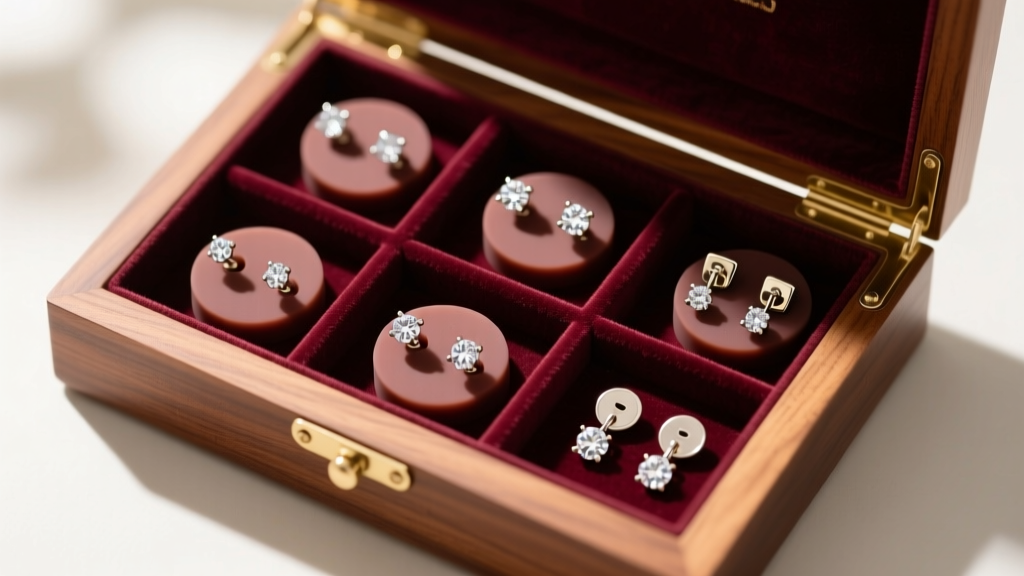
- Use Felt Barrier Pads: If your wooden rack has wide shelves where drop earrings lay flat, line the shelves with 100% wool felt. Wool is naturally low-sulfur and provides a soft landing pad that prevents gemstone culets from chipping against hard wood.
- Apply Anti-Tarnish Strips: For enclosed earring boxes or racks with a dust cover, place 3M anti-tarnish strips in the corners. These strips absorb airborne sulfur and hydrogen sulfide, extending the time between required polishing sessions by up to six months.
- Segregate by Metal Type: Never store sterling silver and 14k yellow gold on the same un-lined metal tier. Micro-movements can cause the harder gold alloys to scratch the softer silver. Dedicate specific tiers or zones to specific metal compositions.
Expert Sources & Further Reading
Proper jewelry maintenance extends far beyond simple cleaning; it requires a fundamental understanding of metallurgy and spatial organization. By upgrading your earring rack to a structurally sound, chemically inert system, you eliminate the daily frustration of tangles and the hidden costs of jewelry repair. For further reading on preserving the structural integrity of your fine jewelry, consult the GIA Gemstone Jewelry Care Guide and the Jewelers of America Care Guidelines. Investing in the correct storage architecture is the final, crucial step in honoring the craftsmanship of your collection.


