Beginner Guide to Earlobe Big Hole Earrings and Stretching
Discover everything about earlobe big hole earrings. Learn gauge sizes, safe stretching methods, and the best materials for stretched lobes in our guide.


What Are Earlobe Big Hole Earrings?
When you first step into the world of body modification, standard piercings usually hover around 18-gauge or 16-gauge. However, as the desire for more expressive, bold jewelry grows, many enthusiasts transition to stretched lobes. "Earlobe big hole earrings" is the colloquial search term for the vast category of body jewelry designed specifically for stretched piercings—ranging from subtle 14-gauge enlargements to massive 1-inch lobes. In 2026, the stigma around stretched ears has entirely vanished, replaced by a sophisticated market of artisan-crafted plugs, tunnels, and hangers.
Unlike standard earrings that rely on friction backs or fishhook wires, earrings for big holes require a deep understanding of anatomy, material science, and tissue elasticity. The fistula (the tube of healed skin inside the piercing) behaves differently under pressure, meaning the jewelry you choose must support the tissue rather than degrade it. Whether you are looking to begin your stretching journey or you already have healed lobes and need safe, everyday wear, this guide covers the exact specifications you need to know.
Understanding the Gauge System for Stretched Lobes
The most confusing hurdle for beginners is the gauge system. In body jewelry, the gauge scale is inverse: the lower the number, the thicker the jewelry. A standard earlobe piercing is usually 20g or 18g. Once you pass 0-gauge, the industry typically switches to fractional inches or millimeters to describe the diameter of the hole.
It is crucial to understand the "point of no return." While every ear is different, most professional piercers agree that once you stretch past 2-gauge (6mm) or 0-gauge (8mm), the earlobe is unlikely to shrink back to its original, un-pierced size without surgical intervention. Always stretch with the assumption that the modification is permanent.
Gauge to Millimeter Conversion Chart
| Gauge Size | Millimeters (mm) | Inches (Fraction) | Stretching Difficulty |
|---|---|---|---|
| 14g | 1.6mm | N/A | Easy (Standard healing) |
| 12g | 2.0mm | N/A | Easy |
| 10g | 2.5mm | N/A | Easy |
| 8g | 3.0mm | N/A | Moderate |
| 6g | 4.0mm | N/A | Moderate |
| 4g | 5.0mm | N/A | Moderate |
| 2g | 6.0mm | N/A | Hard (Point of no return) |
| 0g | 8.0mm | 5/16" | Hard |
| 00g | 10.0mm | 3/8" | Advanced |
| 1/2" | 12.7mm | 1/2" | Expert |
Top Styles of Earrings for Large Holes
Once your lobes are stretched, the variety of earlobe big hole earrings available is staggering. Here are the primary categories you will encounter:
Plugs vs. Tunnels
Plugs are solid cylinders that fill the entire hole. They are excellent for colder weather, sleeping, and maintaining the round shape of the fistula. Plugs typically feature O-rings (small rubber gaskets) on the ends to keep them from falling out, or they utilize a screw-fit threading in the middle for a seamless look.
Tunnels, also known as eyelets, are hollow cylinders. They allow you to see through the earlobe and are significantly lighter than solid plugs, making them ideal for larger sizes (00g and above) where the weight of solid jewelry could cause tissue thinning.

Ear Weights and Hangers
For those who miss the dangling effect of traditional earrings, hangers and ear weights are the go-to choice. These are usually crafted from heavy materials like borosilicate glass, brass, or stone. However, they should not be worn daily. The constant downward pull of heavy weights causes the "cheese-cutter effect," where the jewelry slowly migrates downward, thinning the bottom of the lobe and potentially causing a tear. Limit heavy hangers to a few hours for special occasions, and return to lightweight tunnels or plugs for everyday wear.
Safe Stretching Methods: Tapers vs. Taping
If you are actively working your way up the gauge chart, the method you choose dictates the health of your earlobes. The Association of Professional Piercers (APP) strongly advocates for slow, controlled tissue expansion.
The Taper Method
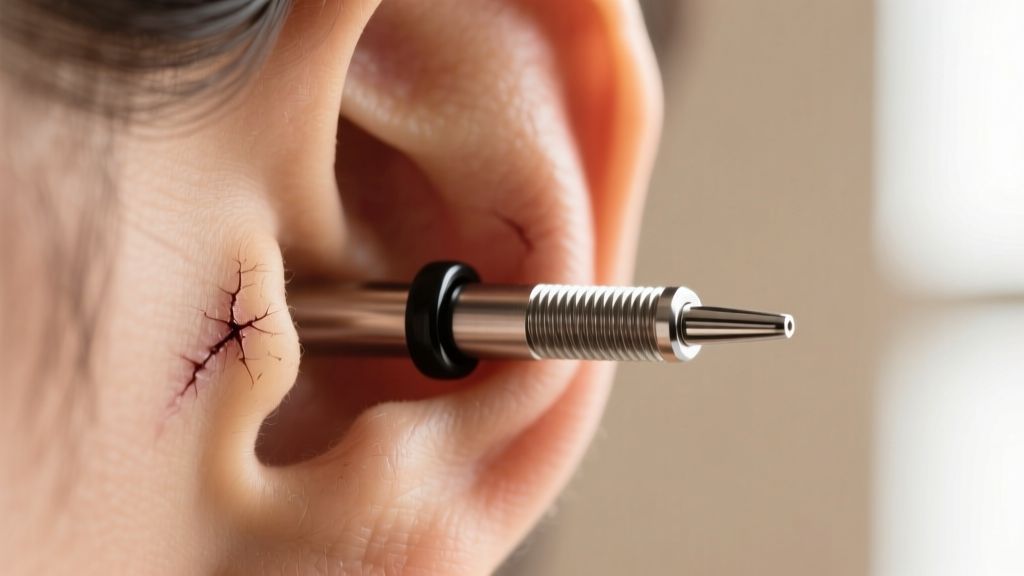
Tapers are conical rods used to gradually push a larger piece of jewelry through the fistula. While popular, tapers carry risks. If forced, they can cause micro-tears, leading to scar tissue buildup or "blowouts" (where the inner tissue pushes out the back of the ear). Furthermore, acrylic tapers are porous and harbor bacteria; always use surgical steel or glass tapers, and only move up one size (1mm to 1.5mm) every 4 to 8 weeks.
The PTFE Taping Method (The Gold Standard)
For stretches beyond 8-gauge, the dead-wrap or taping method is considered the safest approach in modern body modification. By wrapping PTFE (Teflon) tape around your current jewelry, you incrementally increase the diameter without forcing the tissue.
- Remove your current plug and clean it thoroughly.
- Wrap 1 to 2 layers of sterile PTFE tape around the wearable area of the plug.
- Apply a drop of organic jojoba oil to lubricate the jewelry.
- Gently reinsert the plug. It should feel snug, but never painful.
- Wait 2 to 3 weeks, then add 1 or 2 more layers of tape.
- Once you have built up 4 to 6 layers of tape, remove the tape, wait a few days for the tissue to settle, and insert the next solid gauge size.
Material Science: What to Wear in Stretched Lobes
The material of your earlobe big hole earrings is non-negotiable, especially during the active stretching phase or if your lobes are prone to irritation. In 2026, the body jewelry industry has largely moved away from questionable alloys in favor of biocompatible standards.
- Implant-Grade Titanium (ASTM F-136): The absolute best choice for fresh stretches and sensitive ears. It is completely nickel-free, lightweight, and will not react with the body's chemistry.
- Borosilicate Glass: Incredibly smooth, non-porous, and easy to sterilize. Glass is perfect for the taping method and for wearing heavy hangers occasionally.
- 316L Surgical Steel: Acceptable for fully healed lobes only. It contains trace amounts of nickel, which can cause contact dermatitis in large surface-area piercings.
- Organics (Wood, Bone, Horn): Beautiful and lightweight, but highly porous. Never wear organics in a healing stretch, as they can absorb moisture, swell, and trap bacteria, leading to severe infections. Only wear them in mature, fully healed lobes.
- Silicone and Acrylic: Avoid these entirely for active stretching. Silicone can trap moisture against the skin, causing bacterial overgrowth, while acrylic can leach chemicals into micro-tears in the tissue.
"Tissue expansion should never be rushed. The goal is to encourage the skin to grow new cells to accommodate the larger diameter, not to forcefully tear the existing fistula." — Professional Piercing Standards Guidelines
Common Mistakes and Troubleshooting
Even with the best intentions, beginners often encounter issues when wearing earrings for big holes. Here is how to troubleshoot the most common failure modes:
Dealing with a Blowout
A blowout occurs when the pressure of stretching forces the inner lining of the fistula out the back of the ear, creating a painful, fleshy ring. Immediate action is required. Downsize your jewelry by two or three sizes immediately to relieve the pressure. Massage the lobe daily with pure, unrefined jojoba oil or Vitamin E oil to encourage tissue remodeling. Do not attempt to stretch again until the blowout is completely reabsorbed, which can take several months.
Lobe Thinning and Pointy Lobes
If the bottom of your earlobe looks noticeably thinner than the top, or if the hole is stretching into an oval or "pointy" shape, you are likely wearing heavy ear weights too often, or you stretched too quickly. Switch to lightweight glass or titanium tunnels immediately. Gentle daily massage can help stimulate blood flow and collagen production, but severe thinning may require surgical correction if you wish to downsize later.
Final Thoughts on Earlobe Big Hole Earrings
Transitioning to stretched lobes opens up a spectacular world of artisan jewelry, from hand-carved wooden plugs to intricate brass hangers. However, the foundation of beautiful stretched ears is patience and strict adherence to hygiene and material safety. By understanding the gauge system, utilizing the PTFE taping method, and choosing implant-grade materials, you ensure your earlobes remain healthy, elastic, and ready to showcase your favorite earlobe big hole earrings for a lifetime. Always consult with an APP-certified professional piercer if you experience prolonged pain, excessive swelling, or signs of infection during your stretching journey.


