Earring Backing Replacement Guide: Best Types & Buying Tips
Discover the best earring backing replacement options. Compare silicone, screw-back, and locking clutch types for secure, hypoallergenic wear.

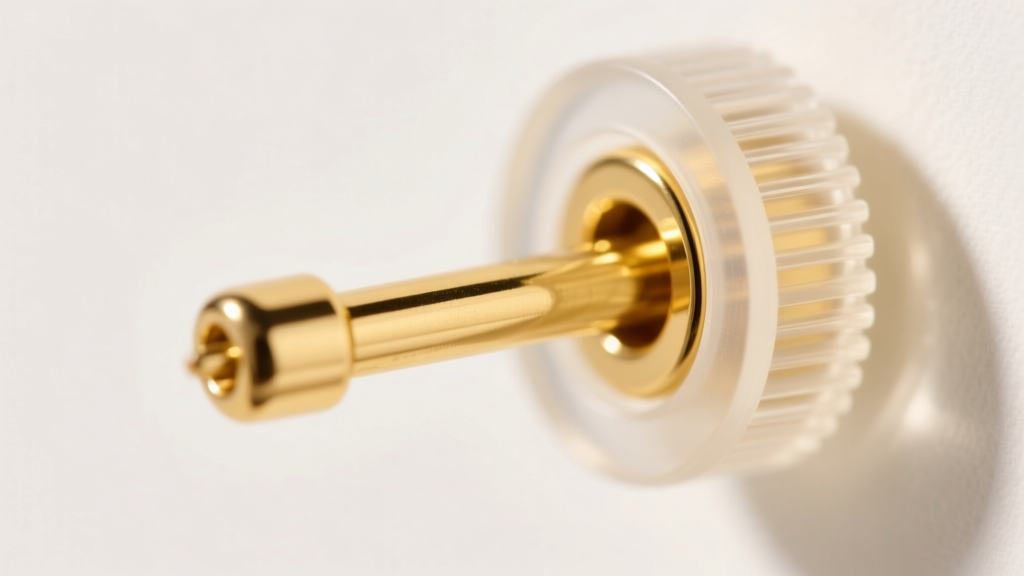
There is a hidden hero in every pair of fine jewelry: the earring backing. Whether you are securing a vintage diamond stud, stabilizing a heavy gemstone drop, or simply trying to stop your cartilage hoops from irritating your skin, the right hardware is non-negotiable. Yet, most consumers only think about an earring backing replacement after a costly loss or an allergic flare-up. As of 2026, the jewelry industry has seen a massive shift toward specialized, ergonomic, and hypoallergenic securing mechanisms, moving far beyond the standard stamped-metal butterfly clutch.
This comprehensive buying guide will decode the material science, gauge compatibilities, and mechanical failure points of earring backings. By understanding exactly what to look for, you can protect your investments, prevent contact dermatitis, and ensure your earrings sit perfectly on your lobe.
Why Standard Backings Fail: The Anatomy of Loss
Before purchasing a replacement, it is vital to understand why your current backings are failing. The traditional friction back (commonly called a butterfly clutch or scroll) relies on the spring tension of two stamped metal loops gripping the earring post. Over time, this metal undergoes fatigue. After roughly 50 to 100 insertion cycles, the loops lose their temper, widening the gap and reducing the gripping force.
Furthermore, standard friction backs suffer from the "tuning fork" effect. As the backing loosens, the earring post vibrates slightly against the inner wall of the backing during daily movement. This micro-abrasion slowly shaves down the post's notch, eventually leading to a catastrophic failure where the earring slides off and is lost.
Common Failure Modes
- Metal Fatigue: Loss of tension in stamped alloy clutches.
- Thread Stripping: Cross-threading on cheap, externally threaded screw-backs.
- Silicone Degradation: Micro-tears caused by cleaning silicone O-rings with harsh isopropyl alcohol.
- Post Notch Erosion: Worn grooves on the earring post preventing friction backs from clicking into place.
Decoding Earring Backing Types: A Buyer's Comparison
When sourcing an earring backing replacement, you must match the mechanism to the weight and style of the earring. Below is a structural comparison of the most reliable options available on the market.
| Backing Type | Security Level | Best Use Case | Avg. Price Range | Pros & Cons |
|---|---|---|---|---|
| Friction (Butterfly) | Low-Medium | Lightweight studs, temporary wear | $5 - $15 / pair | Pros: Cheap, universal. Cons: High loss rate, metal fatigue. |
| Silicone O-Ring | Medium | Active lifestyles, wire earrings | $8 - $12 / 50-pack | Pros: Hypoallergenic, cheap. Cons: Degrades with alcohol. |
| Screw-Back | High | High-value diamond studs, children | $40 - $90 / pair | Pros: Extremely secure. Cons: Slow to put on, threads can strip. |
| Locking Clutch (e.g., La Pousette) | Very High | Heavy drops, luxury fine jewelry | $60 - $150 / pair | Pros: Mechanical lock, lifetime durability. Cons: Expensive, requires specific post notches. |
| Jumbo Silicone Disc | Medium-High | Heavy statement earrings, sagging lobes | $10 - $20 / 10-pack | Pros: Distributes weight. Cons: Can trap moisture against the skin. |
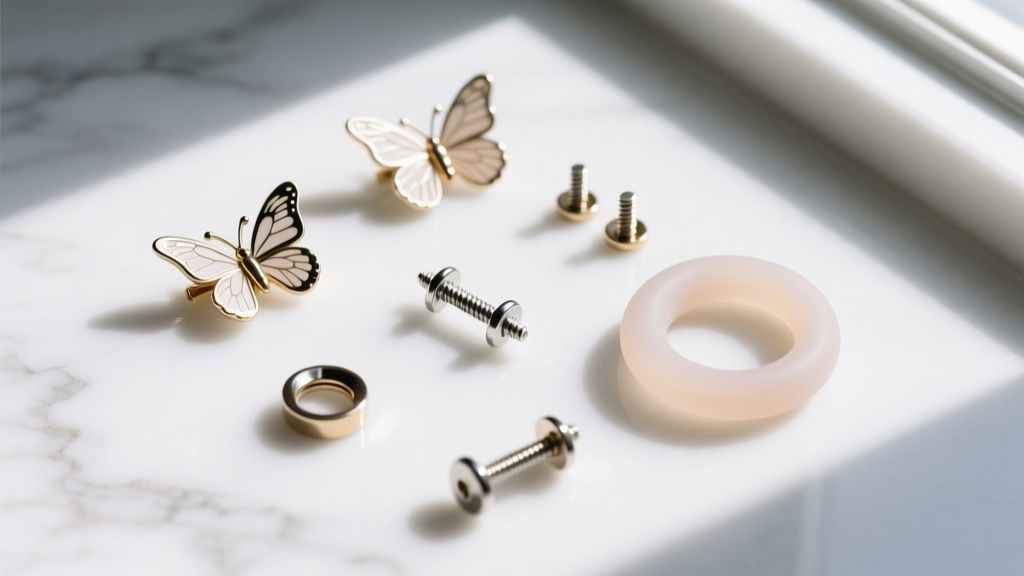
Material Grades: Avoiding Contact Dermatitis
The skin directly behind the earlobe is highly susceptible to allergic contact dermatitis, primarily triggered by nickel exposure. According to the American Academy of Dermatology, nickel allergy is the most common cause of allergic contact dermatitis, affecting up to 20% of the population. When buying an earring backing replacement, the term "hypoallergenic" is largely a marketing buzzword. Instead, you must look for specific metallurgical standards.
The Gold Standard: ASTM F136 Titanium
If you have sensitive skin or are replacing backings for newly healed piercings, Implant-Grade Titanium (ASTM F136) is the undisputed champion. Unlike standard "surgical steel" (316L), which contains up to 10-14% nickel that can leach into the skin, F136 titanium is entirely nickel-free and biocompatible. The Association of Professional Piercers (APP) strictly recommends ASTM F136 for any jewelry or hardware that remains in prolonged contact with the body.
Precious Metals: 14k and 18k Gold
For fine jewelry, ensure your replacement backings are cast in solid 14k or 18k gold that is specifically alloyed to be nickel-free (often using palladium or silver as the alloying agents for white gold). Avoid gold-plated brass backings, as the microscopic plating will wear off within months, exposing the reactive base metal to your skin.
Gauge Sizes and Post Thickness Compatibility
An earring backing replacement will only function if it matches the exact diameter (gauge) of your earring post. Forcing an 18-gauge backing onto a 16-gauge post will strip the internal mechanisms, while placing a 20-gauge backing on an 18-gauge post will result in immediate loss.
- 22-Gauge (0.64mm): Extremely thin, mostly found in cheap fashion jewelry or vintage pieces. Hard to find secure locking replacements.
- 20-Gauge (0.81mm): The standard for most fine jewelry diamond studs and lightweight gold hoops.
- 18-Gauge (1.02mm): Common for slightly heavier studs, cartilage jewelry, and standard body jewelry.
- 16-Gauge (1.29mm): The standard for cartilage piercings (helix, tragus) and heavier structural earrings.
"Always measure the post with a digital caliper before ordering custom locking backings. A discrepancy of just 0.1 millimeters is enough to compromise a mechanical locking mechanism." — Master Bench Jeweler
Internal vs. External Threading: A Critical Distinction
If you are upgrading to a screw-back earring backing replacement, you must understand threading. External threading means the screw pattern is cut into the earring post itself. This is a flawed design; dragging sharp metal threads through your piercing channel can cause micro-tears and scar tissue buildup.
Always seek out internally threaded replacements. In this design, the earring post is perfectly smooth, and the threading is hidden inside the backing itself. The smooth post glides through the ear, and the backing screws onto the post from the outside, protecting your tissue and providing a vastly superior mechanical grip.
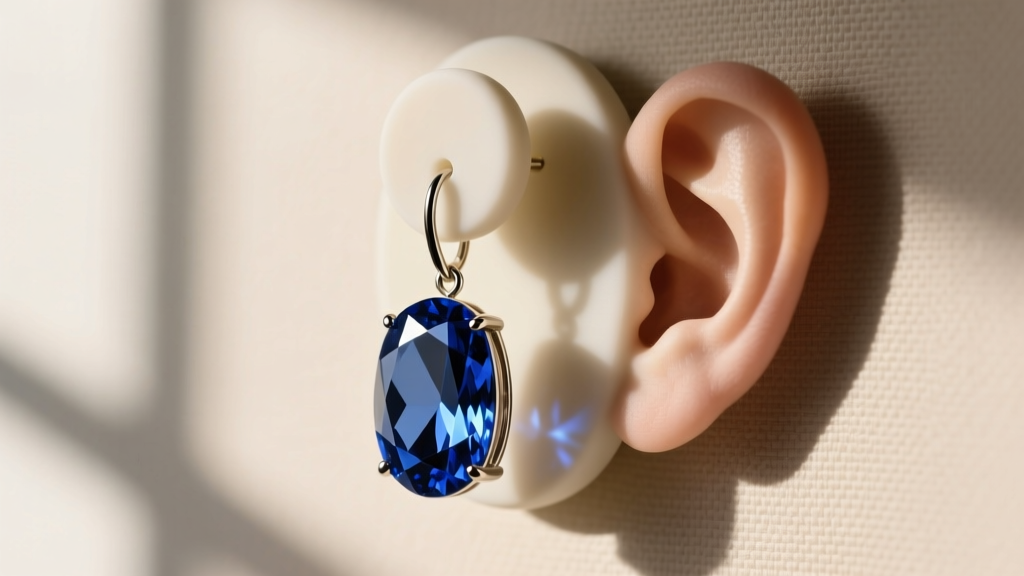
Solving the Heavy Earring Dilemma
Heavy gemstone drops and oversized hoops often cause the earlobe to droop forward, making the jewelry face downward rather than outward. This is not just an aesthetic issue; the concentrated pressure on the fistula (the piercing hole) can cause tissue thinning and permanent lobe stretching over time.
The Jumbo Silicone Disc Solution
For heavy earrings, a standard butterfly clutch concentrates all the weight onto a 3mm point of contact. Replacing this with a jumbo silicone support disc (typically 10mm to 14mm in diameter) distributes the weight across a much larger surface area of the rear lobe. When purchasing these, look for medical-grade silicone with a durometer rating of around 40A-50A, which provides enough rigidity to support the metal without being uncomfortably hard against the skin.
Step-by-Step: How to Measure and Order
- Identify the Post Type: Is it smooth, notched, or threaded? This dictates whether you need a friction, locking, or screw-back replacement.
- Measure the Gauge: Use digital calipers to measure the post thickness. If you lack calipers, compare the post to standard wire gauges or consult the original jeweler's documentation.
- Check the Post Length: Ensure your replacement backing does not require more clearance than your post provides. Standard posts are 10mm to 12mm long; locking mechanisms often require at least 8mm of exposed post behind the lobe to engage properly.
- Verify Material Certs: If buying titanium, ensure the retailer explicitly states "ASTM F136" rather than just "titanium steel," which is often a deceptive term for low-grade alloys.
Maintenance: Prolonging Your Replacement's Lifespan
Even the highest quality earring backing replacement requires proper care. For silicone components, never use isopropyl alcohol or harsh ultrasonic cleaners. Alcohol extracts the plasticizers from medical-grade silicone, causing it to turn brittle, crack, and lose its grip within weeks. Instead, wash silicone backings weekly with warm water and a mild, fragrance-free antibacterial soap. For metal locking clutches, use a soft-bristled jewelry brush and a few drops of mild dish soap to clear out sebum and dead skin cells that can jam the internal spring mechanism.
By treating your earring hardware with the same respect as the gemstones they secure, you ensure that your jewelry remains safe, comfortable, and perfectly positioned for years to come.


